
Quick answer: Lake Guntersville offers bass, crappie, catfish and other freshwater fishing opportunities along the Tennessee River in northern Alabama. Largemouth bass are especially associated with its grass beds, shallow flats and creek channels; the best technique changes with water level, season and weather.
Match your method to your target species: bass anglers may use Texas rigs, jigs, crankbaits or finesse presentations, while catfish anglers generally use different tackle and bait. See our Lake Guntersville bass techniques for a bass-focused companion guide.
In this article, we’ll explore the roughly 67,900-acre Lake Guntersville fishery, its major species, seasonal patterns and practical trip-planning details.
Overview of Lake Guntersville
Lake Guntersville’s been attracting professional and seasoned anglers, trollers, and schoolers for years! You can find Lake Guntersville in North Alabama, between Guntersville and Bridgeport.
It is set between two Dams—from the Guntersville Dam to the Nickajack Dam. It stretches for 75 miles and covers 69.100 acres of water surface, making it the biggest lake in the state. The lake’s depth can vary from 1–60 feet depending on the location.
Water Clarity
The clarity patterns can alter depending on the seasonal and temperature conditions. Generally, the lake is clear and is ideal for largemouth, smallmouth, bluegill, walleye, catfish, and other species which prefer clear and clean waters.
In fact, every fishing report for Guntersville Lake states there’s exceptional clarity of the water near Waterfront Bay. However, there are less clear waters found near the dams.
Water Temperature
The water temperature of Guntersville Lake usually varies between 29F and 90F. However, it can sometimes go even below 20F. During such colder months, the various fish species hover up the water column, and you can catch them with Texas or Carolina rigs.
The best to fish and hang around Lake Guntersville is May and June. It gets even more exciting because the various bass species, such as the largemouths, smallmouths, and Alabama bass, are most active during these two months (their post-spawning season).
Where to Fish on Lake Guntersville?
Some of the best places to go to Guntersville Lake fishing are the following:
- Siebold Creek
- Town Creek
- South Sauty
- North Sauty
- Brown’s Creek
Other popular locations for Lake Guntersville fishing are the Trail of Tears, Short Creek, and the beach complex.
Lake Guntersville Fishing: What to Expect
As we’ve mentioned, fishing in Lake Guntersville is quite popular among Alabama’s professional and seasoned anglers, and there are several reasons for this.
Abundance of Fish Species
You can target and catch numerous fish species native to Alabama’s river systems, lakes, and creeks. For example, you can target freshwater species, such as largemouth, smallmouth, and spotted bass. But that’s not all—there are other kinds, too, like blue and flathead catfish, black and white crappie, walleye, and sunfish.
At Lake Guntersville, you can also target various fish species in different water and seasonal conditions at creeks, shores, and near the dams. Lake Guntersville fishing will allow you to experiment and fish near structured areas, freshwater creeks such as Siebold Creek and Brown’s Creek, and around Guntersville Dam and Nickajack Dam.
Fishing Tournaments
If you read the fishing report Guntersville Lake, you’ll be amazed by the number of annual tournaments. There, you can find professional anglers from all over the United States competing to catch the largest bullhead catfish, bass, or walleye.
Up until now, the largest bass that anglers caught weighed an astounding 15 plus lbs. Guntersville Lake holds two additional angling records—the 4 lbs crappie and a yellow bass weighing 2 lbs.
Seasonal Fishing
The trick with Lake Guntersville fishing is that you can take advantage of every season. For instance, if you want to fish in spring and fall, you can easily target smallmouths and largemouths.
On the other hand, if you prefer to fish during the summer, you can go after the monstrous blue and flathead catfish. Winter is also great for fishing at Guntersville because you can use drop shot or Texas rig combined with your favorite lures, such as live baits and soft plastics.
The Fish Species of Lake Guntersville
The fishing report for Guntersville Lake can give us all the answers on the various fish species hovering above the water bed of the 69.100 acres of water. As we’ve mentioned, the seasonal and temperature conditions are optimal for the spawning of the different fish species, providing them with food and shelter year-round.
Guntersville supports a diverse Tennessee River fish community. TVA sampling has documented dozens of species, including largemouth and spotted bass, crappie, bluegill, sunfish, freshwater drum, catfish, carp, gar, shad and other forage species. TVA also highlights the reservoir’s shallow average depth, stable pool and aquatic vegetation as major habitat features. The sections below focus on the species most relevant to anglers.
The Guntersville Bass
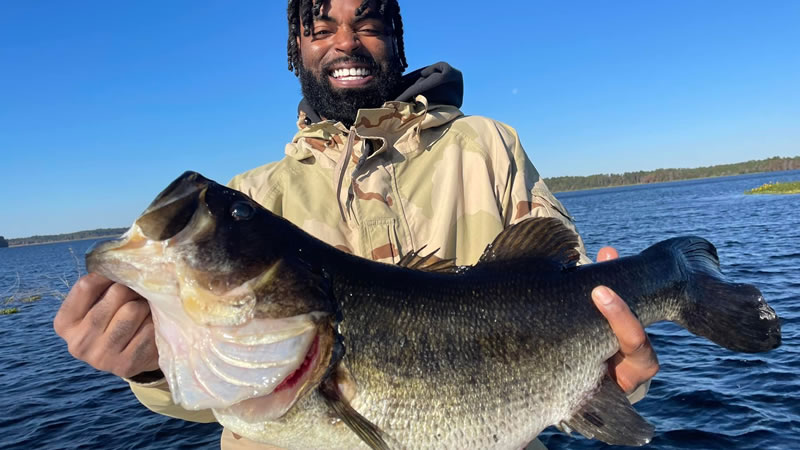
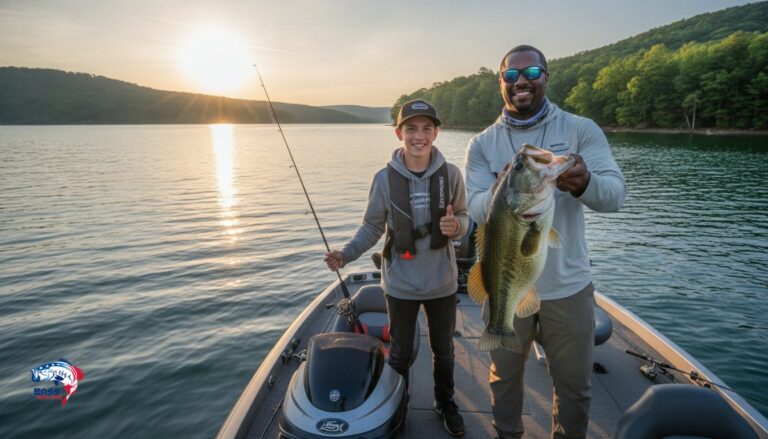
Largemouth bass are one of Lake Guntersville’s signature sport fish. TVA highlights the reservoir’s relatively shallow average depth, stable water level and extensive aquatic vegetation as major reasons bass thrive here. Productive depth changes by season, current, vegetation, forage and weather, so anglers should follow where bait and bass are holding instead of relying on a fixed shallow-or-deep rule.
 The Guntersville Crappie
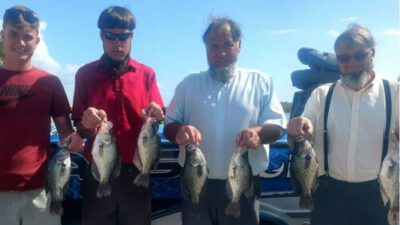
Lake Guntersville fishing for many, includes strong crappie opportunities. Alabama’s current statewide rule is a 30-fish daily creel with a 9-inch minimum length on most public waters. Crappie location changes with season, water temperature, forage and cover, so creek channels, bridges, docks, brush and deeper structure can all matter at different times of year.
The Guntersville Catfish
Catfish are another important part of the Tennessee River fishery. Channel and flathead catfish are documented in the reservoir, and summer can be productive around current, channel edges, deep holes and structure. Cut bait, legal live bait and other bottom presentations are more typical catfish approaches than soft plastics.
The Guntersville Bluegills
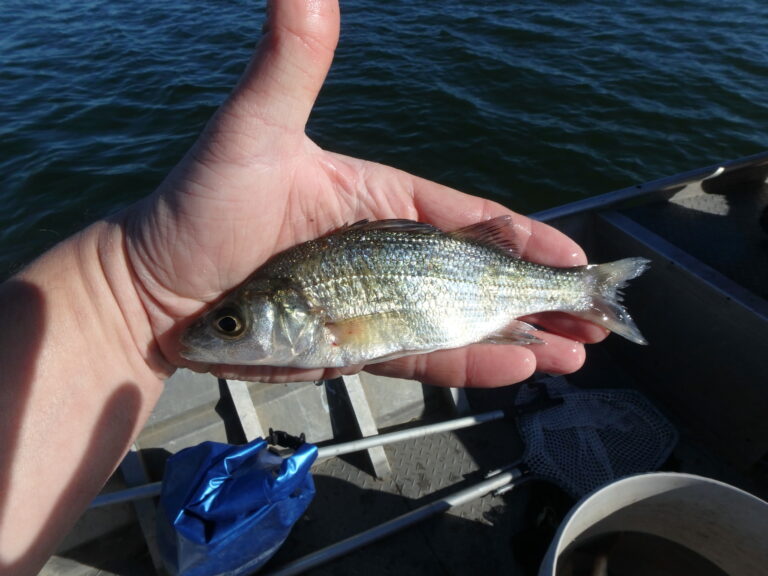
Lake Guntersville fishing gives you a chance to catch bluegills as well—as one of the most populous fish species hovering above the weed beds. Bluegill can be especially visible around shallow spawning areas in late spring, but productive timing depends on water temperature and local conditions. Vegetation, docks, shoreline cover and protected pockets are practical places to look.
The Guntersville Sunfish
Fishing Lake Guntersville is also popular because of the sweet but challenging treat for professional anglers—the Guntersville sunfish. You can target six sunfish specimens at Lake Guntersville: longear, redear, green, redbreast, bluegill, and warm-mouth sunfish. All of them prefer shallower water areas and weeded beds. Their diet mainly consists of snails, insects, plankton, and worms, so the best lure you can use is live bait or soft plastic worms.
The Guntersville Carp
Fishing Guntersville Lake is nothing without the carp! Common carp occur in the reservoir, and grass carp may also be present in managed waters. Carp are more commonly targeted with bait presentations such as corn, dough, pack bait or other legal offerings than with bass rigs such as Texas rigs or drop shots.
The Guntersville Gar
Gar are part of the broader Tennessee River fish community, with spotted gar documented in TVA reservoir sampling. Exact species and size vary, so avoid relying on exaggerated maximum-size claims. Gar often use backwaters, slow current, shallow cover and areas with abundant forage.
The Best Time to Go Fishing at Lake Guntersville
There is no single best time to go Guntersville Lake fishing because seasonal conditions favor different species and techniques. Bass anglers often focus heavily on spring and fall transitions, while summer current, vegetation and deeper structure can also produce excellent fishing.
To help you understand when you can visit Lake Guntersville for a fun angling trip, we’ve detailed all seasons and the fish you can expect to catch then.
Summer
The Guntersville Lake summers can be quite hot and ideal for drum and catfish spawning. During this time of the year, you can use live bait and poppers to attract as many fish as possible.
The most alluring Lake Guntersville fishing for summer fishing is shallow water angling, schooling, and trolling. Moreover, during summer, you can use Texas rigs with soft plastics or poppers for maximum effect.
Fall
During fall, you can target the most abundant and intriguing bass species—the smallmouth and largemouth. However, fall is also a great period for other fish species, such as the rainbow trout, drum, spotted, striped, white, and yellow bass.
You can use medium-to-heavy or heavy-action rods and rigs like the Texas, Carolina, or Alabama rig. The best places to fish at Lake Guntersville during fall are near the dams and the creeks.
Winter
Sauger, walleye, and bluegill should be on your bucket list if you go for winter fishing in Lake Guntersville. These fish are most active and aggressive between December and March because of their feeding and spawning patterns.
Moreover, you can use floating rapalas, jigs, spinnerbaits, rubber worms, and jerk baits. They are most effective during this time of the year, and you can combine them with medium or light-action rods.
Spring
Out of all the seasons, spring might be the top time to go Lake Guntersville fishing! Although we said there isn’t one, we can’t deny that this one is the optimum for both fish and anglers. During spring months, the weather is mostly sunny and breezy, allowing you to plan the perfect picnic day around the lake, only made better with a couple of hours of fishing.
As spring water temperatures rise, bass move through prespawn, spawning and postspawn phases at different times across the reservoir. In the spring, you can expect to catch largemouths, smallmouths, striped, yellow, spotted, Alabama, and white bass.
Nonetheless, other fish species are also active during this period, such as catfish, sunfish, bluegill, and crappie. To top it all, spring is the time of the year when you can combine all types of rigs, rods, and lures.
Tips & Tricks for Fishing Lake Guntersville
As you know, fishing in the US has restrains depending on the state and place. The same goes for Lake Guntersville, as it is subject to several restrictions and size limits. Moreover, different gear is efficient during different parts of the year.
That’s why we’ve separated some tips and tricks for Lake Guntersville fishing that will surely make your trip more pleasant. Here is what you need to be careful of:
 Fishing licenses and limits – If you want to fish at Guntersville Lake, you should get an Alabama state (daily, weekly, or annual) fishing license. You will also have to keep an eye on the various restrictions per fish species. Alabama’s current statewide black-bass creel is 10 fish in combination, with no more than five smallmouth. On Guntersville Reservoir and Town Creek, largemouth and smallmouth bass under 15 inches may not be possessed. Check the current Outdoor Alabama creel and size limits before fishing.
- Baits and rod – Before you go to Lake Guntersville fishing, equip your tackle box with Texas, drop shot, and Alabama rigs. You can also take at least two rods—light and medium-to-light ones.
- Lures and baits – Choose the right angling lures (color, size, weight, and length) for targeting particular fish, as not all species go for the same one.
- Learn more about the species – Go into depth and learn about the various species, their spawning and feeding patterns, and their most active periods of the year. This way, you can know where to find them and when.
- Learn the different locations – As mentioned above, learn what fish roam in what Guntersville locations, like creeks, submerged logs, channels, dams, and near the coastline.
- Equip your tackle box according to the seasonal conditions – Each season has its most active fish and best places to angle. Equip your tackle box according to those conditions.
- Utilize your skills & learn new ones! – Use your trolling, schooling, or angling skills in the best way possible, and always try to improve them and learn something new.
Final Words on Fishing Guntersville Lake
Guntersville Reservoir covers about 67,900 acres according to TVA and extends along the Tennessee River through northeast Alabama into Tennessee. It supports a diverse fish community, but not every freshwater species occurs here. However, knowing that is not enough—you should learn more about each fish to know what to prepare in your tackle box.
Fishing at Lake Guntersville can prompt you to use different rigs, like the Texas lure or drop shot, and multiple others, such as crankbaits, spinnerbaits, and poppers. The only aspect you should be careful about is acquiring an Alabama state fishing license and following the specific rules and regulations on the daily catch based on different species.

Great information, one day I want to fish Lake Guntersville. Look forward to reading more content in this area!
Syaak, thanks for being a reader and fan. More to come soon!