
Published: April 28, 2023 | Updated: September 10, 2026
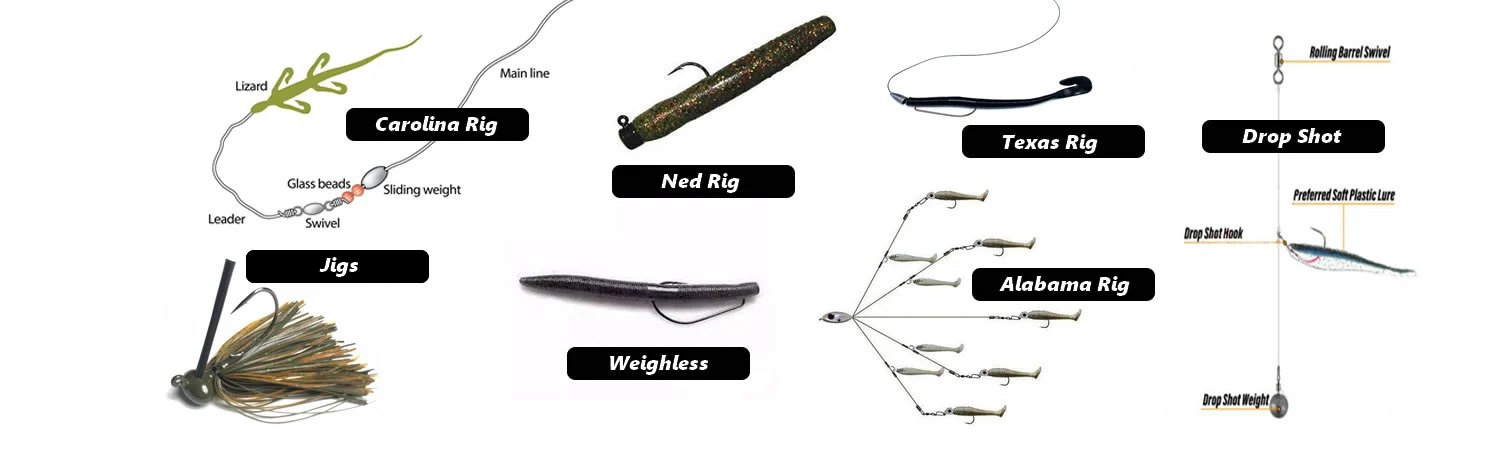
Bass fishing rigs are tools for presenting a lure at a particular depth, speed, and type of cover. The best rig is the one that solves the day’s problem: a Texas rig for heavy cover, a Carolina rig for covering bottom, a drop shot for precise depth control, or a Ned rig when bass want a smaller profile.
Table of Contents
Quick Answer
If you need one place to start, rig a soft plastic Texas style with a bullet weight light enough to maintain contact without killing the lure’s action. It fishes through grass, brush, wood, and around docks with fewer snags than many exposed-hook presentations. When bass move offshore, switch to a Carolina rig or drop shot. When the bite gets difficult around rock, downsize to a Ned rig.
No rig catches every species of bass in every lake. Largemouth, smallmouth, spotted, and striped bass are not one interchangeable “bass family,” and a rig should be chosen for the target species and situation. This guide centers on black bass, especially largemouth, smallmouth, and spotted bass. For striper-specific terminal tackle, use our striped bass rig guide.
Choose a Bass Rig by Cover and Depth
Start by identifying the depth, cover, bottom, and activity level of the fish. Water temperature and season influence those conditions, but they do not create a single mandatory rig. A cold front may push fish tight to cover; wind may activate a moving-bait bite; summer bass may be shallow at dawn and offshore later.
| Condition | Starting rig | Why |
|---|---|---|
| Grass, brush, docks, or laydowns | Texas rig or jig | Compact, weed-resistant presentations enter cover cleanly. |
| Points, flats, and offshore bottom | Carolina rig | Separates the bait from the weight and covers water along bottom. |
| Deep or suspended fish | Drop shot | Keeps a soft plastic at a controlled height above the weight. |
| Tough bite around rock | Ned rig | A small profile stays near bottom with subtle movement. |
| Shallow, calm water | Weightless or wacky rig | Slow fall and natural movement suit visible targets and sparse cover. |
| Suspended bass chasing baitfish | Alabama rig where legal | Imitates a small group of forage fish and covers open water. |
Use this table as a starting point, then let bites, missed strikes, snags, and lure condition guide the next adjustment. Changing weight, hook, leader length, or bait profile can be more productive than abandoning a rig that is already reaching the right zone.
Texas Rig
The Texas rig pairs a soft plastic with a worm-style hook and usually a sliding bullet weight. The hook point rests against or just beneath the plastic, giving the rig a streamlined, weed-resistant profile. It is one of the best choices for pitching into vegetation, brush, dock shade, and other cover where an exposed hook would snag.
A free-sliding weight gives the bait more independent movement. Pegging the weight keeps it close to the plastic when punching thick vegetation or making repeated vertical presentations. Use the lightest weight that reaches the target and maintains useful contact.
How to Rig It
- Slide a bullet weight onto the line with the narrow end toward the rod.
- Tie on an offset worm hook or straight-shank flipping hook suited to the bait and cover.
- Insert the hook point into the nose of the plastic, exit after a short distance, and slide the bait over the hook eye.
- Rotate the bait, measure where the hook should enter, and pass the point through the body so the plastic lies straight.
- Rest the hook point against the surface or skin-hook it lightly when extra weed resistance is needed.
Carolina Rig
The Carolina rig places a sliding weight, bead, and swivel ahead of a separate leader and soft plastic. Unlike the Texas rig, the weight is not fixed at the bait. That separation lets the lure follow behind the sinker as the rig moves across points, flats, shell beds, and offshore structure.
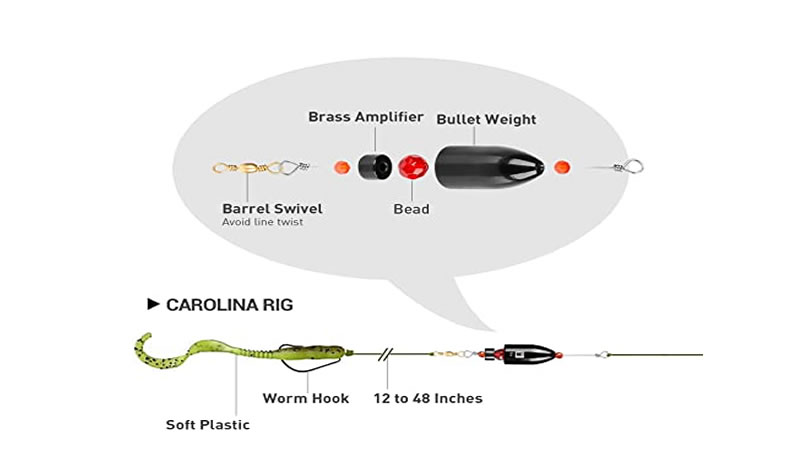
Leader length changes how freely the bait moves, but longer is not always better. Shorten the leader around brush, steeper breaks, or current when control matters. Lengthen it over relatively clean bottom when a slower, freer presentation is useful. Our dedicated Carolina rig guide covers setup and fishing details.
Drop Shot Rig
A drop shot places the hook above the weight, allowing the bait to remain at a controlled height while the sinker maintains bottom contact. It can be fished vertically, cast, dragged, or held nearly still. The technique works in deep water, but it is also effective around shallow docks, grass edges, bed fish, and pressured bass.
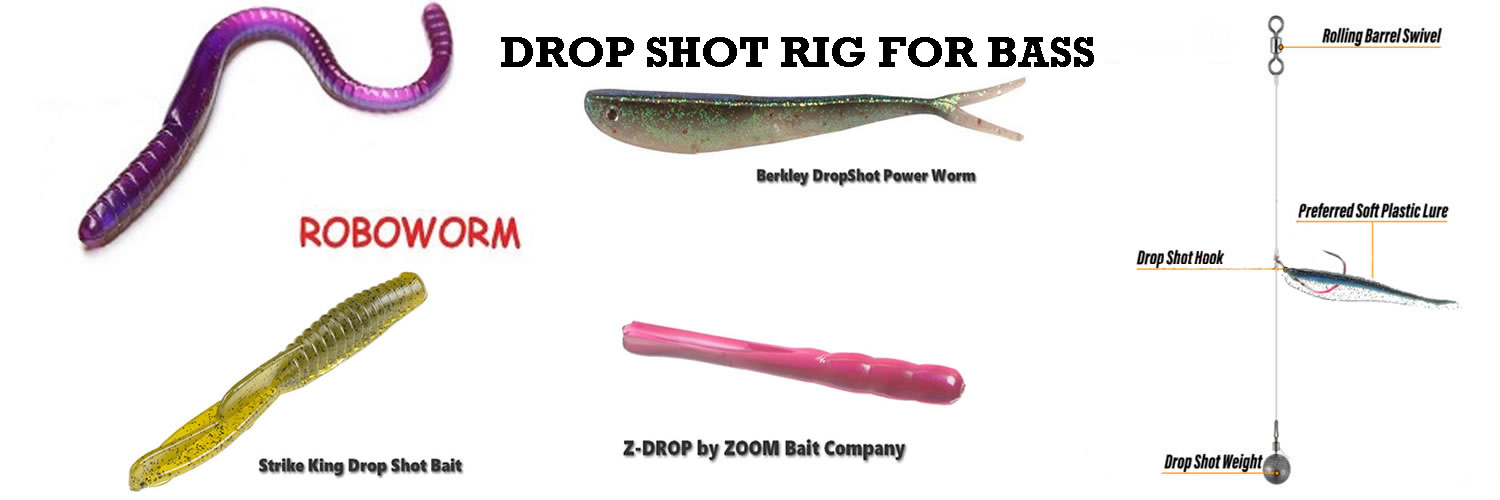
Tie the hook so it stands perpendicular to the line, then pass the tag end back through the eye before attaching the weight. The distance between hook and sinker controls the bait’s height above bottom. See the complete drop shot setup and technique guide for tackle, knots, and retrieves.
Ned Rig
The Ned rig combines a short buoyant or semi-buoyant soft plastic with a light mushroom-style jighead. Its small profile and subtle movement make it a strong choice for smallmouth, spotted bass, and pressured largemouth around rock, gravel, sparse grass, and open bottom.
A Ned rig is not only a winter or shallow-water tool. It can work throughout the year wherever its size and fall rate match the forage and conditions. Keep the weight light enough to preserve the presentation, but heavy enough to feel bottom and avoid losing control in wind or current.
Wacky and Neko Rigs
A wacky rig hooks a stick bait near the middle so both ends move as the lure falls. It excels around docks, isolated cover, shade lines, and visible targets. A Neko rig adds weight to one end of a wacky-style bait, creating a head-down posture and faster fall.
Use an O-ring or reinforced saddle when repeated casts tear soft plastics. An exposed hook gives reliable hookups in open water, while a weedless wacky hook is helpful near grass or brush. These rigs are especially useful when bass follow faster lures but refuse to commit.
Jig and Trailer
A jig combines a weighted hook, skirt, and soft-plastic trailer. Football jigs suit rock and offshore structure, flipping jigs enter wood and vegetation, and compact finesse jigs provide a smaller profile. The head shape, guard, hook, and trailer should match the cover rather than follow one universal formula.
Maintain bottom contact when the fish are relating to structure, or swim the jig through grass and around cover when bass are feeding higher in the water. A jig is a versatile presentation, but its exposed weight and hook still require accurate casts and careful line control.
Weightless Soft Plastic
Weightless stick baits, flukes, and soft jerkbaits fall slowly and move naturally. They are useful in calm shallows, over submerged grass, beside docks, and around schooling fish. The lack of added weight limits depth and wind control, so move to a weighted rig when the lure no longer reaches or tracks through the strike zone.
Alabama Rig
An Alabama rig, also called a castable umbrella rig, presents several swimbaits around a central head. It is designed to imitate a small forage school and can be effective for suspended bass in open water. It also creates more drag than a single lure, so use a rod, reel, line, and knot capable of handling the full rig.
Hook-count rules and seasonal restrictions vary by state and water body. Some configurations require dummy baits or fewer hooks. Check the current regulations before assembling or casting one. The rig is an option for a specific open-water job, not a default answer for every lake.
Match Line, Hook, and Weight to the Rig
Monofilament provides stretch and buoyancy, fluorocarbon is dense and abrasion resistant, and braid offers high strength with little stretch at a small diameter. None is automatically best for all water. Topwater and shock absorption may favor mono; sensitivity and depth can favor fluorocarbon; vegetation and long casts may favor braid, often with a leader.
Match hook style and gap to the bait and cover. Heavy flipping hooks need tackle strong enough to drive them home, while light-wire finesse hooks pair with lighter line and controlled drag. Hook color is a minor variable compared with sharpness, size, gap, lure alignment, and presentation.
Weight controls depth, fall rate, contact, and snagging. Heavy weight is not inherently better in deep water, and light weight is not automatically more natural. Use the least weight that still gives you control, then adjust when wind, current, vegetation, or bottom composition changes.
Fishing Rigs in Lakes and Ponds
Lake fishing does not require a special category of rigs. It requires choosing among proven rigs according to the part of the lake being fished. The same reservoir can call for a Texas rig in shoreline grass, a Carolina rig on a point, and a drop shot above a deep brush pile during one day.
Shallow Cover
Around reeds, hydrilla, pads, bushes, laydowns, and docks, start with a Texas rig, jig, wacky rig, or weightless soft plastic. Favor weed-resistant hooks and compact profiles where contact is heavy. Cast beyond the target when possible so the bait enters quietly and naturally.
Deep Structure
On ledges, humps, long points, shell beds, and offshore rock, Carolina rigs, football jigs, drop shots, and heavier Texas rigs provide bottom contact and depth control. Boat position and casting angle can change the effective presentation more than a small color adjustment.
Open Water and Suspended Fish
When bass suspend around baitfish, bottom-oriented rigs may pass underneath them. A drop shot can reach a measured depth, while an Alabama rig, swimbait, or other moving lure can cover open water. Electronics help identify depth, but the lure still needs the right speed and angle.
Seasonal Starting Points
- Spring: use Texas, wacky, Neko, and weightless rigs around warming shallows and cover; respect closed or protected spawning areas where applicable.
- Summer: probe shade and grass early, then use Carolina rigs, jigs, Texas rigs, or drop shots on deeper structure as fish move.
- Fall: follow baitfish movement and mix moving presentations with Texas rigs, jigs, and finesse options around feeding areas.
- Winter: slow down with Ned rigs, drop shots, jigs, and carefully controlled soft plastics, but adjust for regional climate and active warm periods.
Season is context, not a guarantee. Florida grass lakes, northern natural lakes, highland reservoirs, and rivers can behave very differently on the same date.
Common Rigging Mistakes
- Using one rig everywhere instead of matching depth, cover, and fish position.
- Rigging a soft plastic crooked so it spins or tracks unnaturally.
- Choosing a weight too heavy for the rod or too light to maintain control.
- Pairing a heavy hook with line and rod power that cannot drive it effectively.
- Leaving the hook point buried too deeply or exposing it where every stem will snag.
- Assuming red hooks, beads, or one lure color create bites regardless of presentation.
- Ignoring local hook-count, lead-tackle, seasonal, and protected-area rules.
The Florida Fish and Wildlife Conservation Commission bass tips reinforce the value of matching tactics to habitat and conditions. For species background, see the U.S. Fish and Wildlife Service largemouth bass profile.
Frequently Asked Questions
What Is the Best All-Around Bass Rig?
A Texas rig is the most versatile starting point for largemouth bass because it can be fished shallow or deep and through many types of cover. That does not make it best for every situation. Use a drop shot for controlled finesse depth, a Carolina rig for covering bottom, and a Ned rig for a compact presentation.
Which Rig Is Easiest for Beginners?
A weightless Texas-rigged stick bait is simple to assemble and teaches line watching, fall control, and bite detection. A basic weighted Texas rig is the next step. Both can be cast from shore and adjusted without carrying specialized tackle.
What Rig Works Best From Shore?
Texas, Carolina, Ned, wacky, and weightless rigs can all work from shore. Choose by access and cover: Texas rigs around vegetation and wood, Carolina rigs across open bottom, and finesse rigs around rock or pressured fish. Our bank fishing guide covers positioning and shoreline strategy.
What Rig Catches the Most Bass?
No reliable evidence supports one rig catching the most bass across all waters and seasons. The most productive rig is the one that reaches the fish cleanly, resembles available forage, and can be worked at the speed they will respond to that day.
Do Hook Color and Red Beads Matter?
They can change a presentation, but they are secondary factors. Bass do not universally interpret red as blood, and red hardware does not replace correct depth, speed, lure action, or location. Start with a sharp hook and balanced rig, then test color as one controlled variable.
Start With the Job, Not the Name
Choose bass fishing rigs by the work they need to do. Identify where the fish are holding, what cover stands between you and them, and how fast the bait should move. Select the Texas, Carolina, drop shot, Ned, wacky, Neko, jig, weightless, or Alabama rig that best solves that problem.
Change one variable at a time and pay attention to the result. Better rig selection comes from clear observation, not rigid seasonal charts or claims that one color, species, or setup always wins.

I like what you guys are up also. Such smart work and reporting! Carry on the excellent works guys I’ve incorporated you guys to my blogroll. I think it’ll improve the value of my website :)
Thanks
I cling on to reading great content about bass fishing. So I have been looking around this most excellent site, great job well done!
Thank you for your comment, so glad you enjoyed the article! More to come!
Magnificent website. Lots of helpful info here. I am sending it to some friends and also sharing in delicious.
Thank you, appreciate the comment!
Most usefully info tanks.
Thank you Jeffrey
On the top of the article, you’ll see 2 Carolina rigs.
Shuiyuan, all fixed. Thanks for reading and comment!