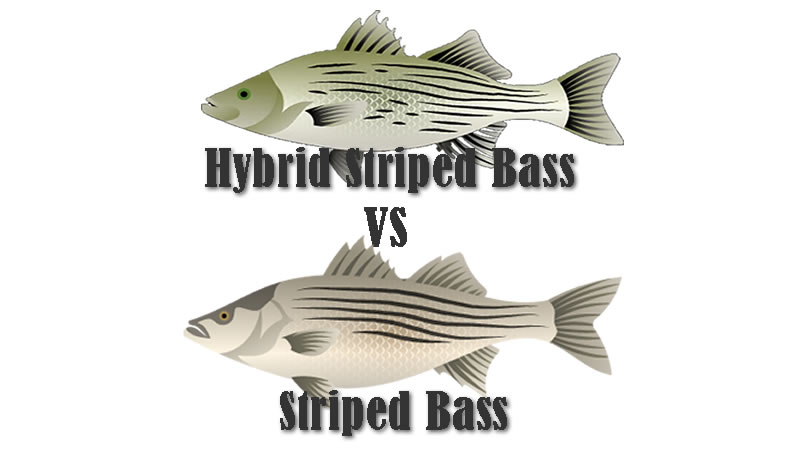

It is not rare to find fish that are a cross between two different species. There are many such crosses, but we will concentrate on the hybrid vs striped bass case here. People who like fishing bass due to its wide popularity among sport and recreational anglers are eager to learn their main differences and how to recognize one from the other.
They differ in appearance, but there are also other significant differences, like their biology, size, feeding habits, natural habitats, and other important characteristics. Read on to learn how to distinguish between the two.
What Is a Hybrid Bass?
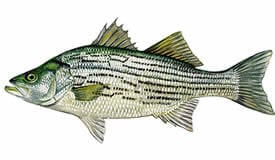 You’ve heard of sunshine and Palmetto bass. These are hybrid bass species which are a combination of striped bass (Morone Saxatilis) and white bass (Morone Chrysops). But there is a slight difference. The sunshine bass is a cross between a male striper and a female white bass, while the Palmetto bass is a cross between a female striped bass and a male white bass.
These hybrid species have a similar appearance to their parent species, but if you look at the striped bass vs hybrid bass, one prominent difference is the patterns on their body. The hybrid bass body is thick, coved with silver and white scales and dark stripes.
The hybrid bass has a large spiny dorsal fin and a soft-rayed small dorsal fin. Additionally, the lower jaw of the hybrid striped bass extends further than the upper jaw, and it has a sizable mouth that expands past its eyes.
The average matured hybrid bass has a length of 15 to 20 inches, and it weighs between 4 to 6 lbs.
What Is a Striped Bass?
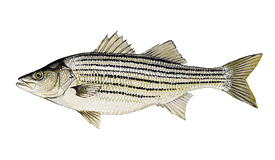
The striped bass is a piscivorous species that like warmer waters and is prone to migration. Its appearance is quite distinctive. The species has a sturdy and wide body with a dark olive-green back, silvery sides, and 7 to 8 horizontal stripes along its sides from gills to tail. It has a forked tail, an adipose, and two dorsal fins. A similar trait in almost all fish in the bass family is that they have a bottom jaw extending beyond their eyes.
Striped bass can have a long life, and their lifespan can be divided into three stages: larvae, juvenile, and adult. The adult phase of the striped bass is achieved quickly, around 2 to 3 years of age for males and 4 to 8 years for females.
They are an anadromous species that can migrate from the coastline to inshore rivers for breeding and then return to salt waters.
Hybrid vs Striped Bass: The Differences
Talking about Striper vs hybrid identification, the first noticeable thing in hybrid bass is that the horizontal strips on their bodies are uneven compared to the elegantly and evenly spread ones of the striped bass. Another Striper vs hybrid difference is the striped bass’s slender body over the thicker body of the hybrid. And then there is the body’s length, where the hybrid bass is shorter than the striped bass.
When comparing hybrid vs striped bass, the colors are also noticeable. The hybrid bass has an almost black back, and the colors can vary from black to gray with a white belly. Comparatively, the striped bass has an olive-green to steel blue and even grayish look with metallic to silvery-green sides and a white belly.
Let’s compare striped bass vs hybrid bass in terms of size. The hybrid bass is between 5 to 20 inches, weighing around 10 lbs, with a possibility to reach 22 lbs. The striped bass’s average length is 25 to 35 inches, weighing 10 to 20 lbs. However, striped bass is known to get a lot bigger than hybrid bass, up to 125 lbs and 6 feet long.
Note that these two species live in opposite water environments. Striped bass are found along the East Coast of the US, Canada, Florida, the Mexican Gulf, and inland in lakes, ponds, and reservoirs across the US. Hybrid bass are found in slow-moving streams, larger reservoirs, lakes, and ponds, rarely in shallow water.
And another critical distinction between Striped bass vs hybrid is their lifespan. The striped bass can live 30 years, while the hybrid bass usually lasts 3 to 5 years.
For a better overview, we underlined the specific differences in the following table:
| Features | Hybrid Bass | Striped Bass |
| Stripes | Uneven, appear almost broken | Elegant lines across the sides |
| Color | Black and gray shades with a white belly | Olive green, steel blue, gray shades, and silver shades with a white belly |
| Length | 5 to 20 inch | 25 to 35 inch |
| Weight | Around 10 lbs with the potential to reach 22lbs | 10 to 20 lbs with a possibility of reaching 125lbs |
| Habitat | Slow streams, rivers, lakes, ponds, reservoirs | Ocean, sea, rivers, lakes, ponds, reservoirs |
| Diet | threadfin and gizzard shad, blueback herring, yellow perch, and other | tomcod, smelt, silversides, lobsters, crabs, soft clams, small mussels, sea worms, squid, and other |
| Lifespan | 3-5 years | Up to 30 years |
| Body type | Thick | Slim |
What to Target: Striped Bass vs Hybrid
Both types of bass, the striped bass and the hybrid bass, are well-known game fish. They are sought after as food and recreational sport. Targeting one over the other of the species is genuine for every angler’s desire.
Anglers that want to fish inland in slow-moving waters can target hybrid bass. A smaller boat or kayak can be helpful when fishing for hybrid bass. Hybrids should be hunted in low light, such as dawn and dusk. You can also consider bass fishing at night. The hybrids congregate around deeper water columns along flowing streams in the winter, and in spring, you can find them in upstream areas.
Additionally, we recommend a spinning rod for great casting, 10 to 12-lb monofilament, or 10 to 20-lb braided fishing line, light types of lures, and swimbaits will be quite enough to catch a hybrid bass. Anglers wanting a real challenge and a brutal battle lasting more than an hour should target striped bass.
Many pro anglers choose the water around Montauk and Block Island to target large trophy fish. We recommend a trolling technique when it comes to catching striped bass. The gear needed to catch a big fish is a medium heavy rod 7.5 to 8 ft long, from 5,000 to 8,000 series reel, and a 40 lbs braided line or 30 to 50 lbs monofilament line and bigger live bait!
Striped Bass vs Hybrid Bass: Final Thoughts
The striped and hybrid bass are famous game fish offering anglers memorable experiences. While the striped bass is the more widespread species, hybrid bass can provide a kayak or boat exploration adventure, making them a more exciting catch for many anglers.
The striped bass is the apparent winner for those looking for exceptional bass fishing trips that can bring you a trophy fish. However, hybrid bass is still desirable for anglers looking for a reliable and rewarding fishing trip. Ultimately, it all depends on the preference of the individual angler.
FAQs
What is a hybrid bass fish?
A hybrid bass fish is a cross-breed between striped bass and a white bass species.
Do hybrid bass fight hard?
The combination of striped and white bass makes the hybrid bass an aggressive game fish. They can grow big because of their genetics and are a challenge for any angler because they fight really hard. Most believe a smallmouth bass does fight harder.
Does hybrid bass taste good?
Hybrid bass has translucent white raw meat turning opaque once cooked. It offers a sweet, delicate flavor and a medium flaxy texture. They can be baked, grilled, or broiled.
People Also Ask
Can hybrid striped bass live in saltwater?
There are examples of hybrid striped bass that can survive in saltwater. However, they like slower, calmer waters like ponds, streams, lakes, etc.
What fish is similar to striped bass?
Fish like salmon, halibut, black sea bass, and cod resemble striped bass. They all have the same meaty texture and are a great substitute.
If you are interested in other bass species, we suggest you look at largemouth bass, smallmouth bass, and spotted bass.

Hey! Your site is really grabbing my interest. I’m loving the informative content and the laid-back design—it’s like the friendliest spot around. Huge shoutout for your dedication!
Much appreciated!
I Use Nightcrawler Minnows Crickets And Cutbait To. But How Do I Catch Stripes And Crappies Without Using Jig’s?
Aaron, please read some of the past striper articles, it will help you with more choices! Also, keep watching as we have more on both species coming in the future!
The smallmouth bass is the best bass fishing day that you’ll ever experience
Lance, thanks for commenting; I to love the smallmouth fight!