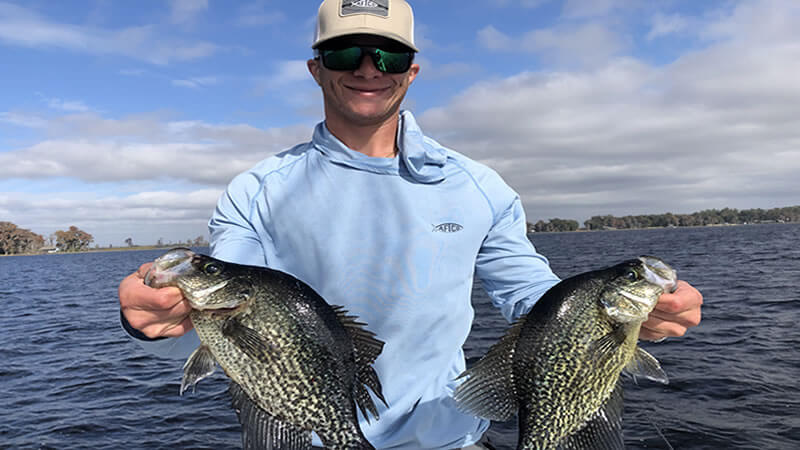

North Florida crappie fishing charters give anglers a chance to target black crappie—often called specks or speckled perch—on fisheries that also hold trophy largemouth bass. Two of the strongest destinations in this part of Florida are Rodman Reservoir and Lake Santa Fe.
This guide explains where to fish, when crappie are most active, which techniques work best, and what anglers can learn from Bass Online’s historical trips on both fisheries. If you are comparing other regional waters, start with our North Florida lakes and rivers guide. For statewide options, see our Florida crappie lakes guide.
Why Fish for Crappie in North Florida?
North Florida offers a different freshwater experience from the large shallow lakes farther south. Cooler seasonal weather, river-connected systems, submerged timber, vegetation, channels and open-water structure create several ways to target crappie during the year.
Crappie are schooling fish, so the biggest challenge is usually locating the fish rather than simply choosing a bait. Once anglers find a productive depth, piece of structure, or group of baitfish, the action can become fast. That is why electronics, boat positioning and the ability to adjust quickly are so valuable on a guided trip.
Anglers who want to understand the species in more detail can also review our crappie species guide and our practical how to fish for crappie guide.
Best North Florida Crappie Fishing Destinations
Rodman Reservoir
Rodman Reservoir is one of North Florida’s most recognizable freshwater fisheries. The reservoir’s flooded timber, old river channel, vegetation and canal structure create excellent habitat for both crappie and largemouth bass.
For anglers who enjoy mixed-species fishing, Rodman can be especially interesting because a day spent locating crappie can also produce quality bass and other freshwater species. The same structure that makes Rodman productive can also make it challenging to navigate and pattern without local knowledge.
Water levels can change the fishery significantly during management drawdowns. Before planning a trip, check our current Rodman Reservoir drawdown guide and the main Rodman Reservoir fishing page.
Lake Santa Fe
Lake Santa Fe near Melrose offers a different style of crappie fishing. Its open water, connected lake sections, deeper areas and productive baitfish zones can reward anglers who cover water carefully and use electronics to identify schools.
Historically, Bass Online guides have used multi-rod spider-rig setups with minnows on Lake Santa Fe to cover water efficiently. Once fish were located, several rods could pass through the productive depth at the same time. The lake can also produce largemouth bass, making it a useful option for anglers who want more than one target species during a North Florida trip.
Best Time for North Florida Crappie Fishing
Cooler months are traditionally an important crappie period in North Florida. As water temperatures fall, crappie often become easier to pattern around schools of bait, channels, deeper structure and seasonal staging areas. Winter and early spring can be especially useful windows for anglers who want to focus specifically on specks.
Conditions still matter more than the calendar. A cold front, rapid temperature change, strong wind or changing water level can move fish or change the depth at which they feed. A guided trip helps shorten the search because the captain can adjust to current conditions rather than relying on a single seasonal rule.
Best Baits and Techniques for North Florida Crappie
North Florida crappie can be caught with both live bait and artificial presentations. The best choice depends on where fish are holding and how actively they are feeding.
- Live minnows: A proven option for suspended or schooling crappie and a strong choice for multi-rod presentations.
- Small jigs: Useful for covering water, probing structure and matching smaller forage.
- Spider rigging: Multiple rods can be used to present baits across a controlled spread while the boat moves slowly through productive water.
- Vertical presentations: Effective when fish are concentrated around timber, channel edges or clearly defined schools.
- Electronics: Sonar can help identify bait, depth changes and suspended schools before time is spent fishing unproductive water.
The key is not simply putting more rods in the water. Depth control, speed, bait position and boat direction all matter. Small adjustments can turn scattered bites into a consistent pattern.
Historical Rodman Reservoir Crappie Field Results
Bass Online’s historical Rodman trips provide useful field evidence for how productive the reservoir can be when anglers locate the right water.
On one scouting trip with Capt. Ken Walker, the day produced 14 largemouth bass up to about 6 pounds along with several crappie. One crappie weighed approximately 1 pound 13 ounces. The same outing also produced a large alligator gar, demonstrating the variety of species that can be encountered on Rodman.
On another historical Rodman trip with local angler Chuck Decker, the crappie bite was much stronger. More than 50 crappie were caught, with 15 fish reported over 2 pounds. The two largest were reported at approximately 2 pounds 14 ounces and 2 pounds 9 ounces. Jigs and minnows were the productive presentations after the anglers located the right structure and bait.
Those catches are historical examples, not guarantees of current results, but they illustrate an important lesson: once a school is located on Rodman, crappie action can become fast and concentrated.
Historical Lake Santa Fe Crappie Field Results
Lake Santa Fe has also produced useful historical examples. On one Bass Online scouting trip, Capt. David Lang used spider rigs and minnows to cover water while relying on electronics to track productive areas. The group caught more than 15 crappie in a relatively short period and kept only a portion of the catch.
The durable lesson from that trip is the value of covering water methodically. Instead of fishing one visible piece of shoreline all day, the anglers used a controlled multi-rod spread to search different depths until they found active fish.
What to Expect on North Florida Crappie Fishing Charters
A guide can be especially helpful for crappie because fish location can change quickly. An experienced captain already knows the boat-access points, productive depth zones, seasonal movement and the safest routes through complicated fisheries such as Rodman Reservoir.
Guided trips are also useful for anglers who want to learn techniques they can use on their home waters. Ask questions about sonar interpretation, spider-rig speed, bait depth, jig size and how the captain decides when to leave an unproductive area.
To compare available captains, browse our Florida fishing guides. For Lake Santa Fe specifically, see Capt. David Lang.
Plan Your North Florida Crappie Fishing Charter
Before you go, confirm current crappie regulations, bag limits and freshwater license requirements with the Florida Fish and Wildlife Conservation Commission. Official regulations can change, so use FWC as the final authority for current rules.
If your goal is a dedicated North Florida crappie charter, start by deciding what type of fishery you want to experience. Choose Rodman Reservoir if you want a rugged, structure-rich fishery with trophy-bass potential mixed into the trip. Choose Lake Santa Fe if you want an open-water crappie option where spider rigging and electronics can play a larger role.
Whichever fishery you choose, confirm current conditions before the trip. Water level, weather, recent cold fronts and bait movement can all change the best starting area. A local guide can help turn those variables into a plan instead of guesswork.