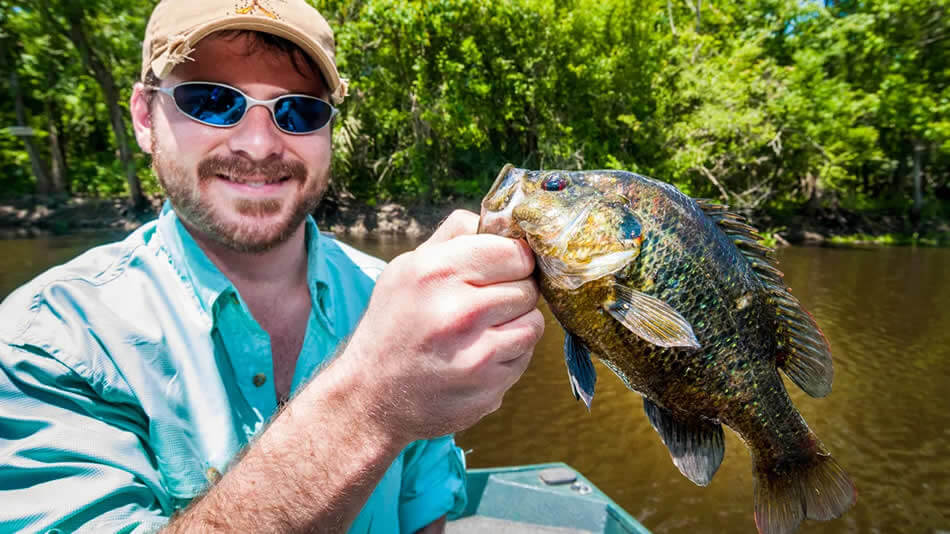

Panfishing in Florida can mean working a shaded canal for bluegill, fishing hard-bottom shellcracker beds, or following winter schools of black crappie across an open lake. These species are approachable with light tackle, but success still depends on matching the fish, habitat, season and presentation.
Published: March 17, 2021 | Updated: September 9, 2026
This guide focuses on where and how to catch Florida panfish. If you need the broader definition, taxonomy and national species examples, begin with what is a panfish?
Table of Contents
Florida Panfish at a Glance
Florida anglers use the word panfish for several small freshwater sport fish, especially bluegill, redear sunfish, warmouth, redbreast sunfish and related species. Black crappie are also widely treated as panfish in ordinary fishing language, although Florida’s statewide regulations list crappie separately from the combined panfish limit.
- Bluegill: common in lakes, ponds, rivers and canals, often near vegetation, docks and other cover.
- Redear sunfish: called shellcracker because snails and clams are important foods. They often favor hard bottoms and somewhat deeper water than bluegill.
- Black crappie: called speckled perch or specks in Florida. They school, suspend and make strong seasonal movements.
- Other sunfish: warmouth, redbreast sunfish, spotted sunfish, flier and related species add variety by region and habitat.
- South Florida exotics: Oscars and Mayan cichlids may be caught with panfish-sized tackle, but anglers should identify them and check the rules that apply to nonnative species.
Panfish Species in Florida
Bluegill
Bluegill are a practical starting point for Florida panfishing. Look for them around submerged grass, pad edges, docks, brush and shaded banks. Their small mouths favor compact hooks, insects, worms and small artificials.
Redear sunfish or shellcracker
Redear sunfish often relate to firmer bottom and feed heavily on snails and clams. The FWC redear sunfish profile notes that spawning activity often peaks around full moons in March and April, although local water temperature and conditions determine the actual timing.
Black crappie or speckled perch
Black crappie use open water, vegetation, brush, timber and drop-offs. Florida anglers commonly call them speckled perch or specks. They may be caught year-round, but winter and spring concentrate much of the state’s directed fishing effort.
Warmouth and other sunfish
Warmouth tolerate vegetated, slow-moving and stained environments and may strike worms, small crayfish imitations and compact jigs. Redbreast and spotted sunfish are more important in some rivers and spring-fed systems. Learn the local species mix before choosing bait or keeping a catch.
Best Seasons for Florida Panfishing
Florida’s long warm season creates opportunities throughout the year, but the best pattern changes by species.
- Winter: black crappie become a primary target on many lakes. Watch electronics or drift likely depths until you contact a school.
- Early spring: warming shallows can concentrate crappie, bluegill and shellcracker. Cold fronts may push fish back to the nearest deeper cover.
- Late spring and summer: sunfish spawning activity can be strong. Fish early, focus on shade and healthy vegetation, and handle fish quickly in warm water.
- Fall: cooling water can renew shallow feeding, while crappie begin organizing around bait and deeper structure.
Calendar dates are a planning guide, not a promise. Water temperature, rainfall, flow, clarity and recent weather can advance or delay a pattern.
Where to Find Panfish in Florida
Panfish live across Florida, from small neighborhood ponds to major lakes and river systems. The most productive location is often the one with safe access, healthy cover and a species population that matches your goal.
- Lake Okeechobee: vegetation, canals and open-water crappie patterns create multiple options. Review the Lake Okeechobee guide before choosing an access point.
- Kissimmee and Orlando waters: chains of lakes, canals and residential ponds can hold bluegill, shellcracker and crappie. See our Orlando fishing destination page for the broader area.
- North and Central Florida lakes: lakes with brush, grass, pads and defined drop-offs can support productive sunfish and crappie fisheries.
- Rivers and canals: bends, eddies, bridge shade, vegetation edges and current seams help concentrate food and fish.
Consult the FWC freshwater sites and forecasts for agency information on access, habitat and seasonal expectations at individual waters.
Best Baits and Techniques
Live bait under a float
A worm, cricket or small minnow under a float is easy to control and lets you suspend the bait above grass or brush. Adjust the depth until the bait travels just over cover or through the level where fish are holding.
Small jigs and soft plastics
Compact jigs cover water without overwhelming small mouths. Cast and retrieve them beside vegetation, swim them slowly over brush, or lower them vertically to a school. Crappie often prefer a steady horizontal presentation, while bluegill may respond to short pauses and subtle movement.
Dabbling and current presentations
In canals and rivers, a light bait can be held near a current seam, eddy or vegetation edge so the flow supplies natural movement. Use only enough weight to maintain control, and keep the bait away from debris that can hide a bite.
Simple tackle
A light or ultralight spinning outfit with 4- to 8-pound line handles most Florida panfish situations. A long rod helps place a bait beside cover, while a shorter outfit can be easier for a young angler. Match hook size to the bait and the fish’s mouth.
Florida Crappie Fishing Tips
The old Florida tips page contributed several sound crappie fundamentals worth preserving. Start with small minnows or minnow-shaped jigs, search different depths, and use a controlled hookset. Crappie have delicate mouth tissue, so a hard sweep can tear the hook free.
- Find the school: crappie often group around baitfish, brush, standing timber, grass edges and changes in depth.
- Control depth: count a jig down, use a float stop, or watch electronics so repeated casts return to the productive level.
- Keep moving: cover water until one fish reveals the school, then repeat the exact angle and depth.
- Use a gentle lift: reel down and raise the rod smoothly instead of striking as if setting a heavy bass hook.
- Expect seasonal movement: fish may use shallower cover during spawning periods and suspend or move deeper when surface conditions become less comfortable.
FWC describes Florida’s black crappie fisheries as seasonal, with much of the activity occurring in winter and spring. Our full crappie fishing guide covers rigs, lure choices and boat positioning in more detail.
Bluegill and Shellcracker Tips
For bluegill, begin around shallow cover with a worm, cricket or small jig. If bites are absent, move to the first break outside the cover and vary depth. Small floats make subtle takes easier to see.
Shellcracker often favor hard bottom and feed close to the bottom. Earthworms are a reliable starting bait. Around the spring spawning period, look for groups of beds, but approach quietly and avoid running the boat across the area you plan to fish.
Bluegill can gather in colonies during spawning, while shellcracker may concentrate around a shorter seasonal window. Keep only what you will use, and release larger breeders carefully if conservation is part of your goal.
Florida Panfish Limits and Licenses
Check current rules before every trip. As of this update, Florida’s general statewide freshwater limits list a combined daily bag of 50 for named panfish species and a separate daily bag of 25 crappie. Special bag or length limits apply on some lakes, rivers and Fish Management Areas, so the page for the specific water controls when it differs from the general rule.
License needs depend on residency, age, location, exemptions and how you fish. Use the official FWC licensing system for the legal answer, and review our plain-language Florida fishing license guide before your trip.
Panfishing With Kids
Panfishing is a strong way to teach casting and bite detection because the tackle is light and many fishing spots are reachable from shore. Choose a safe bank or pier, use barbless or pinched-barb hooks when appropriate, and keep the first session short.
- Rig rods before arriving so more time is spent fishing.
- Use a float so children can see a bite develop.
- Bring eye protection, drinking water and a small first-aid kit.
- Teach wet-hand handling and careful release.
- Never promise a catch. Celebrate casting, observation and safe fish handling.
A local Florida fishing guide can shorten the learning curve on unfamiliar water, but conditions still control the day. A responsible guide explains the pattern and adjusts the plan rather than guaranteeing fish.
Florida Panfishing Questions
What is the best bait for Florida panfish?
Worms and crickets are versatile for bluegill and shellcracker. Small minnows and compact jigs are reliable crappie choices. The best bait is the one presented at the depth and cover the fish are using.
When is crappie season in Florida?
Crappie can be caught during multiple seasons, but Florida’s strongest directed fisheries are commonly in winter and spring. Check the forecast for the specific lake and adjust to recent weather.
Can I keep 50 panfish and 25 crappie?
That is the current general statewide framework, but special waterbody rules may differ and regulations can change. Confirm the applicable FWC page on the day you fish.
Do I need a boat?
No. Ponds, canals, piers and accessible banks can provide productive fishing. A boat expands the water you can search, especially for suspended crappie, but it is not required for panfishing.