
Published: May 4, 2017 · Updated: September 8, 2026
Shiner fishing for bass is one of the most approachable ways for a first-time angler to experience Florida largemouth bass fishing. Instead of spending the day learning a long list of artificial-lure techniques, anglers can focus on presenting live bait naturally around grass, edges, docks, current breaks and other fish-holding cover.
This guide explains how first-time shiner fishing works, when to free-line a bait, when a float can help, what tackle to bring and what anglers can learn from a real Bass Online trip on Lake Monroe, part of the wider St. Johns River system.
What Is Shiner Fishing for Bass?
Shiner fishing means using a live baitfish to target predatory fish such as largemouth bass. In Florida, anglers commonly use shiners because bass naturally respond to moving forage. The bait does much of the presentation work, but success still depends on where it is placed, how much freedom it has to swim and whether the angler reacts correctly when a fish takes it.
For beginners, the biggest advantage is simplicity. A local guide can handle bait care, rigging, boat position and location choices while the angler concentrates on watching the bait, feeling the strike and learning how bass use cover.
First-Time Shiner Fishing on Lake Monroe
Lake Monroe near Sanford is a broad St. Johns River lake with grass, shoreline cover, open-water structure and current influence. Those features give bass multiple feeding zones and make it a useful place to learn live-bait fishing.
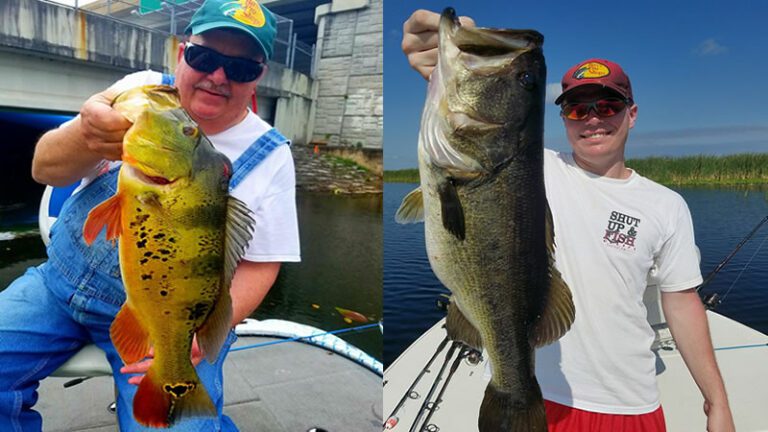
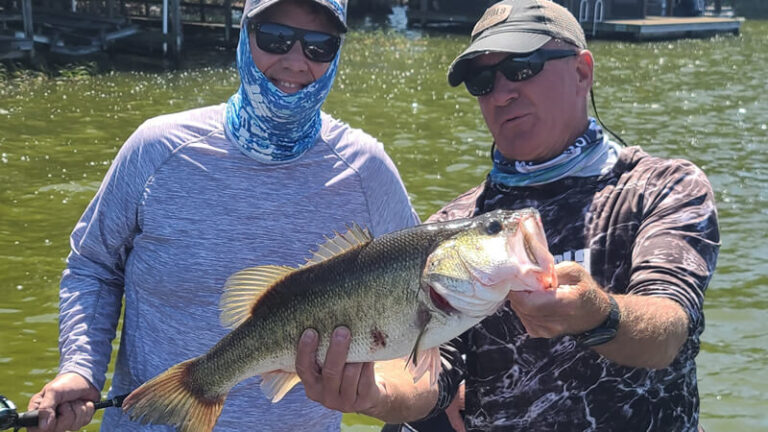
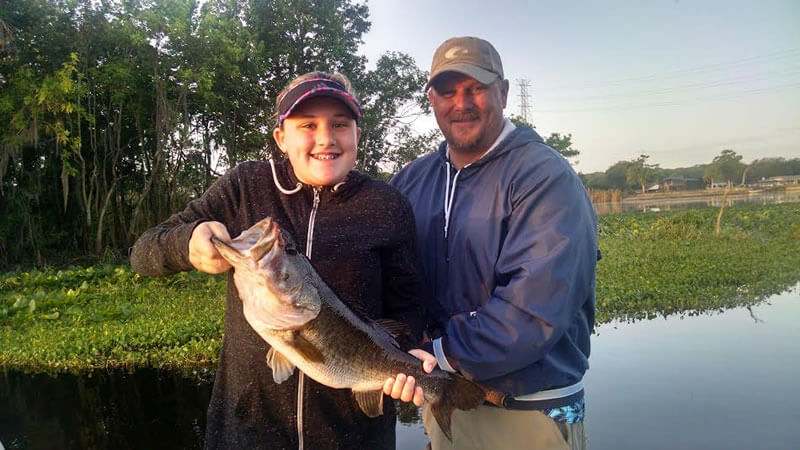
On the original Bass Online trip behind this article, John and his daughter Caitlyn traveled to Florida and tried shiner fishing for largemouth bass for the first time. The morning bite was strong: they put about 20 bass in the boat before 10 a.m., and the largest fish weighed about 6 pounds. The trip also showed two practical techniques that still matter today: free-lining shiners and fishing them under corks around grass.
The durable lesson is not the exact catch count. It is that a simple live-bait presentation can help new anglers learn where bass hold, how fish react around vegetation and how quickly conditions can change during a Florida morning.
Free-Lining vs. Fishing Shiners Under a Float
Free-Lining Shiners
Free-lining gives a live bait more freedom to swim naturally. This can be useful around open grass edges, sparse vegetation, current seams and places where adding a float would restrict the bait too much. Boat position matters because the bait can travel farther than expected.
Using a Cork or Float
A cork helps control depth and makes the bait easier to monitor. It can be useful around thicker grass, defined edges, docks or other places where the angler wants the shiner to stay in a smaller strike zone. A float can also make the bite easier for a beginner to see.
Best Tackle for Shiner Fishing for Bass
A balanced live-bait setup should be strong enough for Florida largemouth bass without being so heavy that the bait cannot move naturally. The exact rod, line and hook size should match the cover, bait size and expected fish.
- Medium-heavy or heavy spinning or casting tackle for most bass situations.
- Line strong enough for grass, wood and docks when those hazards are present.
- A hook sized to the bait rather than automatically using the largest hook available.
- A float only when depth control or visual strike detection adds value.
- A landing net and fish-handling tools ready before the bite occurs.
A guide can adjust the rig throughout the day as wind, current, vegetation and fish position change.
Where to Fish Live Shiners on Lake Monroe
Productive water changes with season and weather, but anglers can begin by looking for places that combine food, cover and a nearby depth change. Grass edges, points, docks, creek or river influence and transitions between shallow and deeper water can all deserve attention.
Lake Monroe is only one part of a much larger system. Anglers planning a North Florida trip can compare other fisheries in our North Florida lakes and rivers guide and review current field information in the St. Johns River fishing reports.
When Is Shiner Fishing Most Effective?
Live bait can work throughout the year, but conditions influence where and how it should be presented. Cooler periods can move bass toward spawning or staging areas, while warmer periods may favor deeper edges, shade, current or vegetation. Wind can improve some feeding situations while making boat control more difficult.
The better strategy is to match the presentation to the conditions rather than assume one season guarantees success. Current regulations and freshwater rules should always be checked through the Florida Fish and Wildlife Conservation Commission.
What Should a First-Time Shiner Angler Expect?
A first live-bait trip is usually less complicated than many anglers expect. The guide keeps the bait healthy, chooses the area, positions the boat and explains whether to let the shiner swim freely or keep it under a float. The angler watches the bait and follows the guide’s instructions when a bass takes it.
The St. Johns River Water Management District provides broader information about the St. Johns River system, which helps explain why connected lakes such as Monroe behave differently from isolated ponds.
Shiner Fishing for Bass FAQ
What are shiners used for in fishing?
Shiners are live baitfish used to attract predatory fish. In Florida freshwater fishing, they are commonly used for largemouth bass because they provide natural movement and forage cues.
Is shiner fishing good for beginners?
Yes. It removes much of the lure-selection learning curve and lets a first-time angler focus on strikes, fish behavior and basic boat-side technique.
Should I free-line a shiner or use a cork?
Both can work. Free-lining gives the bait more freedom, while a cork helps control depth and keeps the bait in a defined zone. Cover, depth, wind and fish location should determine the choice.
Can I use shiners on Lake Monroe?
Live bait is a common Florida bass-fishing method, but anglers should always check current FWC regulations and any applicable local rules before fishing.
Do I need a fishing license?
License requirements depend on residency, age, exemptions and where you fish. Review our Florida fishing license guide and verify current requirements with FWC before your trip.
Plan a Lake Monroe Shiner Fishing Trip
If your goal is to learn live-bait bass fishing without spending the entire day experimenting with techniques, Lake Monroe and the St. Johns system can provide a practical introduction. A local guide can help with bait, tackle, boat position and safe navigation while you focus on learning how bass react to live shiners.
Start with the Lake Monroe fishing guide or browse our Florida fishing guides to plan a trip.