
The Best Time For Fishing With Topwater Lures: Tips From The Experts
Fishing with topwater lures and seeing an explosive topwater strike from an aggressive bass is every bass fisherman’s dream. The best thing an angler can do to ensure they witness those topwater strikes more often is to learn when the best time for topwater fishing is and incorporate these tips from the experts.
There’s nothing more exciting than catching bass with topwater lures because of the adrenaline-producing explosion that happens. Still, topwaters are also one of the best ways to catch giant trophy largemouth bass!
The best times for topwater bass fishing are early morning, nighttime, or overcast days.
However, there are other times when topwater baits can be just as effective, depending on the location and weather. Certain topwater baits will often be the most effective in some situations.
Read along to see what the experts say about when and how to land a fish with topwater lures!
The Best Time For Topwater Fishing
In general, fishing with topwater lures for bass they will strike a topwater plug the most consistently during low light times when the water temperature is cooler, such as early morning, evening, night, or on overcast days—but learning how to read the water to decide which topwater lure to use and how to work it will significantly increase your chances at getting that aggressive topwater bite during any conditions.
Time of Day
The main reason why early morning and late evening or night are best for topwater fishing is that the midday sun will increase the water temperature forcing the bass to move deeper, making it harder to get them to hit topwater lures. So if midday is the only time you can go fishing, it’s best to go on overcast days, especially if the water you are fishing gets extremely deep. In areas with relatively shallow water throughout it, anglers may have luck getting bass to hit topwater lures while fishing during the midday sun.
Wind
Choppy water usually requires an angler to make more intricate pops, while smooth water often requires a quieter, more gentle presentation. On some days, swimming a soft plastic erratically near edges, rocks, deadfall, or weeds will work, while on other days, when strong wind creates a chop, aggressively fishing with topwater lures like chugging a popper near these same areas will produce.
Temperature
Extreme hot and cold water temperatures will reduce the amount of oxygen in the water, making the fish more sluggish and picky about what they eat. This is because all fish are cold-blooded animals meaning they can’t regulate their body temperature to keep it at a constant level. So the temperature of their aquatic environment influences their body temperature and bodily functions.
Therefore, a good starting point when deciding the best times for topwater fishing is avoiding extreme temperatures.
Water temperature gauges and fish finders can help give anglers a more accurate analysis of the water temperature conditions by providing up-to-the-minute feedback.
The Best Topwater Baits
Poppers
Poppers are the most popular topwater lure because they are easy to cast and very effective at enticing bass near shoreline cover. They have a concave face that makes a big splash when you twitch it sharply on the surface. Making a cast with a popper near any cover, such as stumps, docks, and grass patches, will often produce good results.
Tips
After you cast near shallow cover, let the topwater bait settle, then work it back, varying the tempo of the pops by mixing up the lengths of your pauses. Most bass strikes come within a few feet of the cover, so it’s most efficient to work the topwater lure for about 5 feet, then bring it in and cast again.
Buzz Baits
Using a buzz bait when topwater fishing is a great idea when the bass is feeding shallow. Work a buzz bait along shallow grass, docks, and loose pads since they are relatively weedless.
Tips
Cast your topwater bait to the structure you are fishing, then reel it past slow enough to make a solid bubble trail but fast enough to keep the buzz bait on the surface. If you’re getting short strikes, try adding a trailer hook.
Frogs
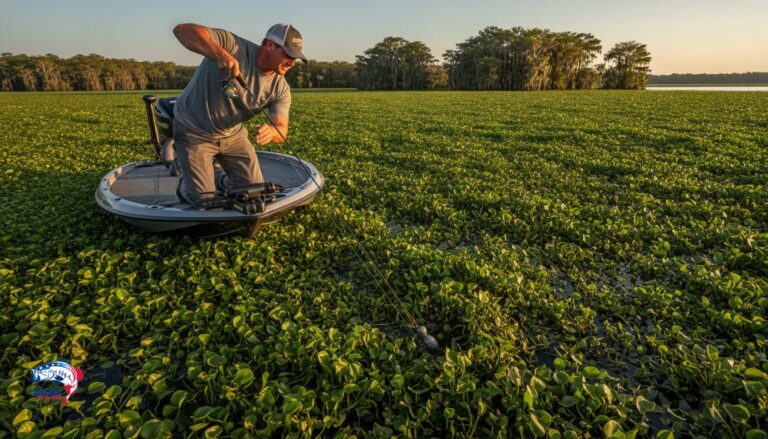
Fishing with a hollow-bodied frog is the best topwater lure whenever the bass is holding around thick grass or in matted vegetation. A frog will also be practical near thick bank grass and underneath docks. They are weedless, allowing them to come through these areas clean.
Tips
Cast your frog out, then slowly twitch it along the vegetation. If you come across an open spot of a hole, pause, then twitch the frog in place. When you see and feel the strike, ensure the frog is wholly submerged before reeling down and setting the hook hard.
Walking Baits
Topwater walk-the-dog stick baits are the best topwater lures to catch bass in open water or during the gizzard shad spawn. Walk the dog topwater lures shake their head back and forth when anglers twitch their rod tip in a rhythm. This shaking motion mimics a dying baitfish on the water surface that the bass can’t resist. Work your walking bait along riprap, grass lines, over points, and anywhere the largemouth bass is ambushing baits.
Tips
Cast your topwater bait past the structure you are fishing, then start walking it by twitching your rod tip while reeling in the slack. This technique takes some practice, but be ready for a hard topwater bite once you get it. It’s also helpful to mix in a pause occasionally, especially if you have a bass swirl on it.
Perfect Your Topwater Skills With A Local Expert
It takes anglers a lot of time and practice to perfectly understand water features and weather conditions to choose the best topwater lure to use daily. Then learning the best techniques and tricks to work the bait to entice a strike is another thing.
One of the significant benefits of fishing with a professional is cutting the trial and error time in half for those looking to improve their fishing skills. Bassonline guides love teaching what they’ve learned over the years to help prepare anglers for their local waters or anywhere else they fish in the future after their charter.
Anglers of all ages and any fishing skill level can enjoy a serene day on the water learning all the top fishing tips with their friends and family throughout the year. Our favorite freshwater fish can be caught with a topwater lure at many locations throughout the United States, including largemouth bass, smallmouth bass, peacocks, and more!
But the largemouth bass spawning season is approaching in Florida, and there’s no better time to try and get that topwater bite from a trophy bass. Additionally, fishing for Stripers top water can be just as effective!
Topwater fishing is one of the best ways to catch bass during late fall, early spring, and late spring when they are in their spawning areas. Topwater baits will often entice a reaction strike from the bass during this time, creating some of the most memorable fishing moments. Equally, here’s some additional information on how to catch bass in summer, types of bass, different lure types for bass, bass fishing at night, and even how to fish for crappie!

Love that top water bite. Usually slay them on the Zman Pop Shadz. Also like the original Snag Proof frogs. The hook up ratio with those is off the charts. They have the best hook position, right out of the package, for never missing a hit. I have also had great success slowly twitching a Rapala floating, shallow diving, jointed minnow. Looks like a struggling bait fish.
Michael, couldn’t agree more. Rapala is an all-time great, appreciate your comments!