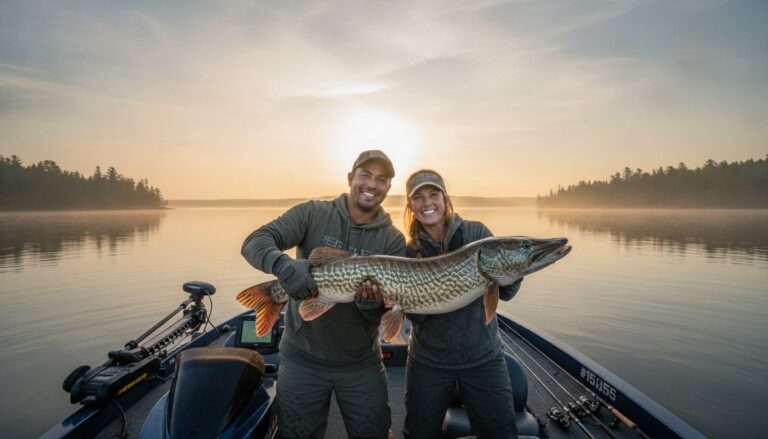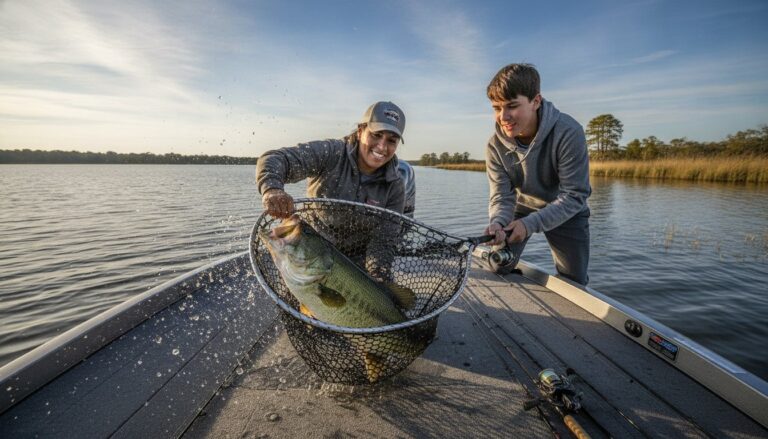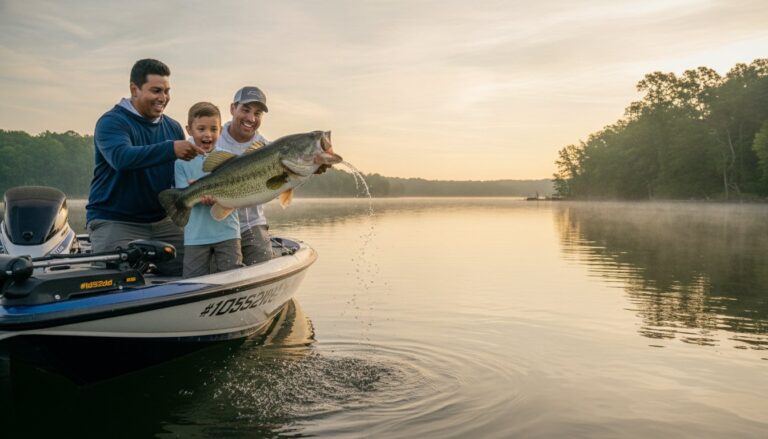

While bass fishing season in Florida peaks from January to April, trophy bass are caught all twelve months. This article will help you understand the best times to fish, how seasonal changes affect bass behavior, and the top fishing spots in Florida.
Key Takeaways
- Spring is the prime season for bass fishing in Florida, especially from January to April when bass are spawning and more aggressive.
- Different seasons call for different fishing strategies: deeper water in summer, aggressive feeding in fall, and specific bait techniques in winter.
- Florida is home to top bass fishing spots like Lake Okeechobee and Rodman Reservoir, each offering unique fishing opportunities for anglers.
Understanding Bass Fishing Season in Florida
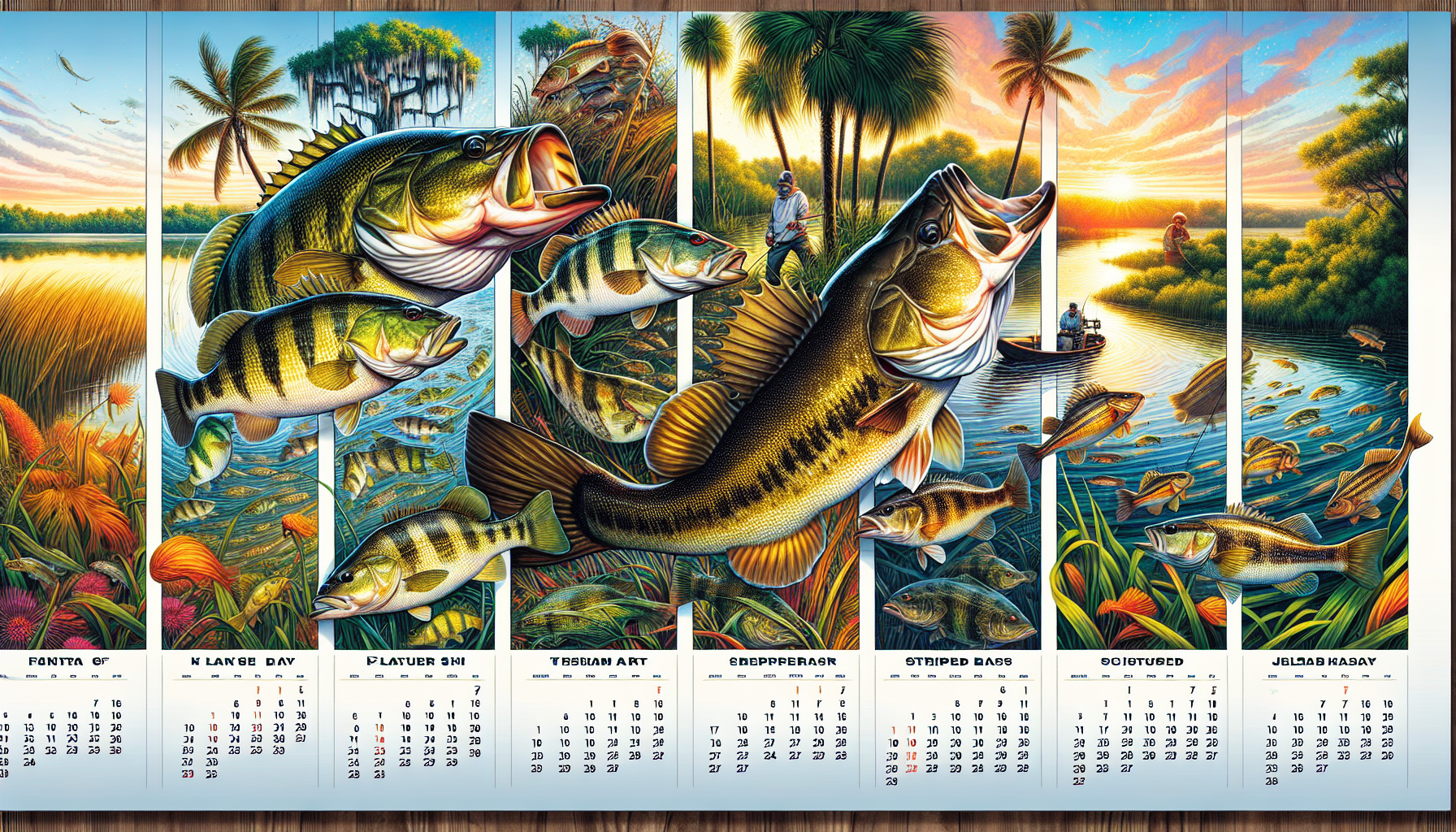
Bass fishing in Florida offers a unique experience that varies with the seasons and regions across the state. From the panhandle to the southern tip, the Sunshine State provides endless opportunities to catch largemouth bass, peacock bass, striped bass, sunshine bass, snakehead, and Clown Knifefish. The key to successful fishing lies in understanding how seasonal changes affect bass behavior and the best times to fish.
In addition to freshwater fishing, Florida is also renowned for its saltwater fishing, contributing significantly to the state’s economy and attracting millions of anglers each year.
Florida’s bass fishing is heavily influenced by water temperature changes and spawning cycles. The prime months for bass fishing are typically from late winter through early spring when temperatures start to rise, making it an ideal time for freshwater fishing. December often marks the beginning of the productive bass fishing season, with largemouth bass becoming particularly active during their spawning season in January through April.
Spring generally offers the best conditions for catching trophy bass, especially during the post-spawning period from March to May. However, the optimal months can vary depending on the region. In South Florida, the bass spawning season can begin as early as December or January, while in northern regions, it can extend into April. Understanding these regional and seasonal variations is crucial for any angler looking to make the most of their time on the water.
Best Months for Bass Fishing in Florida

Florida’s year-round bass fishing opportunities are shaped by distinct seasonal patterns that influence bass behavior and activity. Each season brings its own set of challenges and rewards, making it essential to know when and where to fish for the best results.
Spring, summer, fall, and winter all offer unique conditions for bass fishing. In the following subsections, we’ll break down each season, highlighting the best months to fish and providing tips to maximize your chances of catching bass.
Spring (March-May)
Spring is a prime time for bass fishing in Florida, particularly from February to April when largemouth bass are actively feeding and spawning. This period is often referred to as the “pre-spawn” phase, where bass are more aggressive and easier to catch. Lake Okeechobee, in particular, holds multiple records for the largest number of big bass caught in Florida, making it a prime location during this season.
We suggest to anglers, to have the best luck, try fishing around a full moon and new moon. As the increased bass activity can lead to more successful catches. With the season starting earlier in South Florida, targeting areas with heavy vegetation and using live bait, what they refer to in Florida as Wild Shiners can yield impressive results.
Summer (June-August)
As summer approaches, rising water temperatures cause bass to seek refuge in deeper waters. This shift means anglers need to adjust their strategies, targeting deeper structures, which could only mean two feet, also shaded areas, and running water to find the bass. Despite the higher temperatures, summer can still be a prime time for bass fishing in Florida.
Using techniques like deep diving crankbaits if appropriate, flipping and pitching, and fishing during the cooler parts of the day, such as early mornings and late evenings. Mainly slowing down can improve your chances of success. Additionally, focusing on areas with plenty of cover, such as submerged vegetation and overhanging trees, can help you locate bass seeking shade.
Fall (September-November)
Fall fishing in Florida is marked by cooling water temperatures, which signal a shift in bass behavior. As temperatures drop, largemouth bass become more active and feed aggressively in preparation for winter. This season is particularly advantageous for anglers targeting bass in central and northern Florida.
Cold fronts can enhance bass activity, making fall a great time to fish. Focus on areas where bass are likely to be feeding, such as points, drop-offs, and the edges of weed beds. Using spinnerbaits and vibration baits can be particularly effective during this time of year.
Winter (December-February)
Winter in North Florida offers unique bass fishing conditions due to the state’s moderate water temperatures. Unlike other regions, Florida’s winter months provide opportunities for bass fishing without the extreme cold, making it a popular destination for anglers during this time.
During winter, bass tends to move under vegetation where the temperature is more stable. To target these monster bass effectively, anglers should focus on structure and use slower retrieves. Jigs, big plastic baits, crankbaits, fished slowly along the bottom can be particularly effective in these conditions.
Top 6 Florida Lakes for Bass Fishing
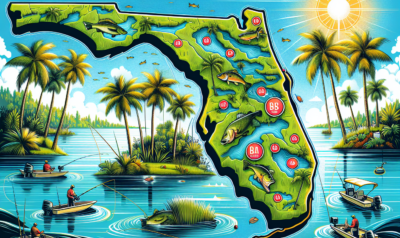
With over 8,000 lakes, Florida is a bass fishing paradise. Among these, certain lakes stand out for their exceptional bass fishing opportunities, attracting anglers from all over the world. Whether you’re in North, Central Florida, or South Florida, there’s a lake that promises an unforgettable fishing experience.
In addition to these lakes, Florida’s rivers and shallow marsh offer exciting fishing opportunities, not to forget inshore fishing for species like Redfish, Snook, and Tarpon.
In this section, we’ll explore the top six lakes for bass fishing in Florida, highlighting what makes each one special. From the trophy bass of Rodman Reservoir to the diverse habitats of the Everglades, most Florida lakes offer some of the best bass fishing in the state.
Rodman Reservoir
Rodman Reservoir is renowned for producing trophy largemouth bass, with some weighing as much as 17.2 pounds and measuring up to 29.75 inches in length. Consistently ranked among the top ten bass fishing lakes in the United States, Rodman is a must-visit for serious anglers. The reservoir’s diverse aquatic plants, such as dollar weeds and water hyacinths, provide perfect ambush points for bass.
Fishing trips at Rodman often involve using live bait, particularly wild river shiners, but artificial lures can also be effective. The adjacent Ocklawaha River also offers beautiful waterways and large fish, making it a popular destination for bass fishing enthusiasts.
Harris Chain of Lakes
The Harris Chain of Lakes is another prime location for bass fishing in Florida. This system of lakes and canals is particularly productive during the spring pre-spawn and spawn periods, offering abundant fishing opportunities. Anglers targeting the Harris Chain can expect to find excellent fishing conditions during these key seasons.
The combination of different lakes and connecting canals provides a variety of habitats, making it a versatile and rewarding fishing destination. Whether you’re a fishing pro or a beginner, the Harris Chain of Lakes promises a memorable bass fishing experience.
Lake Tohopekaliga
Lake Tohopekaliga, commonly known as Lake Toho, is celebrated for its ability to produce large bass, making it a favored spot among fishing enthusiasts. Known for its trophy-sized catches, Lake Toho is a must-visit for any angler seeking to reel in a big one.
Lake Toho is the northernmost lake in the Kissimmee chain of lakes, with Lake Kissimmee being the southernmost in the change of lakes, flowing into the Kissimmee River. It is also very popular because of its geolocation to Disney World.
Headwaters Lake
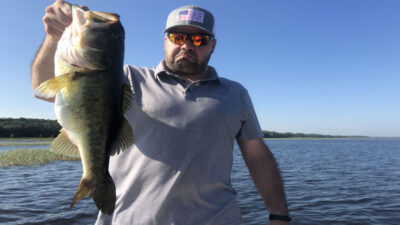
Headwaters Lake is a significant fishery due to its unique construction, transforming agricultural land into a rich aquatic habitat. Spanning 10,000 acres, it is home to over a million largemouth bass, making it a prime destination for anglers. The lake’s diverse vegetation, including hydrilla and lily pads, creates an ideal environment for bass and other sport fish and is well known for some of the biggest bass.
Catch and release regulations at Headwaters Lake promote the growth of larger bass and help preserve the fish population. Popular baits include plastic worms, jigs, and live shiners, which can entice strikes from the lake’s abundant bass. The lake’s varying depths, ranging from 2 to 30 feet, offer different fishing conditions and habitats, making it a versatile and productive fishing spot.
Lake Okeechobee
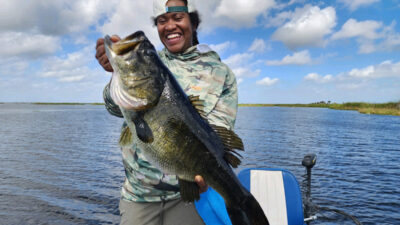
Lake Okeechobee, known as the “Fishing Capital,” is renowned for its large mouth bass and diverse fishing spots. Spanning 16,500 acres, this lake offers a wide variety of fishing sites, each with its own unique challenges and rewards. Anglers can expect to catch big bass here, including many that weigh over 10 pounds.
Lake Okeechobee’s reputation as a premier bass fishing destination is well-deserved. Whether you’re fishing from a boat or the shoreline, this lake provides endless opportunities to reel in a trophy-sized bass.
Everglades
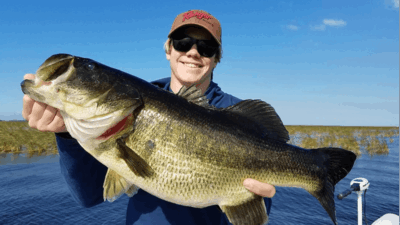
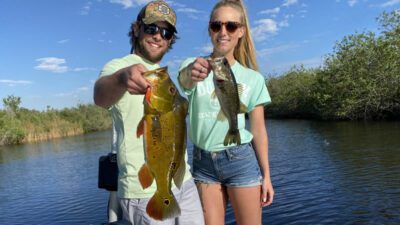
The Everglades are home to a variety of fish species, including Largemouth Bass, Peacock Bass, Oscars, and more, making it a prime fishing destination. Largemouth bass caught in the Everglades typically averages around five pounds, providing an exciting challenge for anglers. Although the fishing in the Everglades may not have as big of fish as some locations, but the numbers are generally unmatched, with many reports of over 100 fish caught in a day by chartered boat services, allowing for various fishing experiences.
Specific locations within the Everglades, such as Holiday Park and Alligator Alley, are noted for their high-quality bass fishing. The diverse habitats, including wetlands and mangroves, support numerous fishing opportunities suitable for different skill levels.
 Essential Gear for Florida Bass Fishing
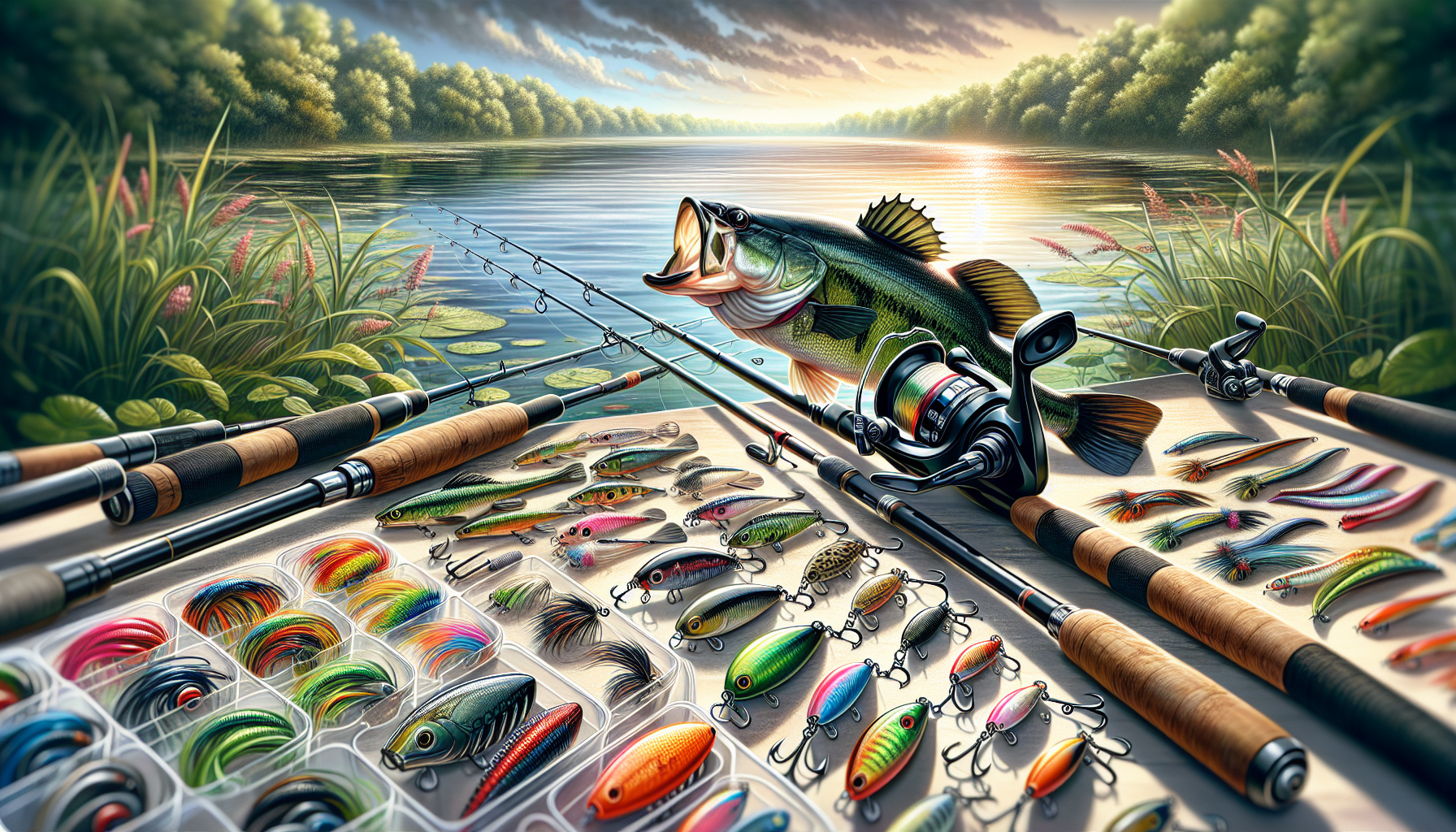
To make the most of your bass fishing adventures in Florida, having the right gear is crucial. Understanding seasonal behavior is key, as different times of year present unique challenges and opportunities. During winter, for example, bass commonly move to deeper waters or heavy cover, requiring anglers to adjust their techniques to target these structures effectively.
A medium-heavy rod is recommended for versatility in handling various lures used in Florida bass fishing. Baitcasting reels are favored for their precision and control, especially when casting heavier lures for bass.
The Fluorocarbon line is popular among bass anglers due to its low visibility underwater. However, in Florida, a braided line is more critical for its sensitivity in detecting bites. Essential lures include jigs, plastic worms, and chatterbait, which are versatile and effective in different conditions.
Bait and Lures for Florida Largemouth Bass
Choosing the right bait and lures is essential for successful bass fishing in Florida. Topwater lures are particularly effective during the early morning or late evening when bass are more active near the surface. Jerkbaits and flukes are highly effective in areas with submerged vegetation, such as hydrilla or eel grass, making them a favorite among many anglers.
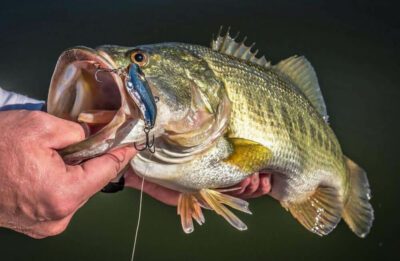
Rattletraps, speed worms, and swimbaits are versatile choices that can be fished in various ways to trigger strikes from bass. Frogs are also popular for fishing in matted vegetation but require careful technique to hook fish successfully. By understanding the behavior and preferences of bass in different environments, you can choose the best lures to increase your chances of a successful catch.
Tips from Local Guides for Trophy Bass
Local Florida fishing guides are an invaluable resource when it comes to bass fishing in Florida. One common tip from local guides is to let live shiners do the work without reeling them in constantly, as this can attract trophy bass. During cold fronts in spring, the bass often retreats to thicker cover, making flipping techniques with heavy weights more effective.
Casting to isolated cover during spawning seasons can help you catch bass, as they tend to feed on bluegills in these areas. Using heavier tackle with swim baits can also increase your success in Florida’s dense vegetation.
Hiring a local fishing guide not only provides access to better fishing spots, but also offers valuable knowledge about effective fishing techniques.
Conservation and FWC Rules
Conservation is crucial for ensuring the sustainability of Florida’s bass fishing and Florida fish. The Florida Wildlife Conservation Commission (FWC) oversees regulations to manage fish and wildlife resources effectively. Anglers are required to follow size and bag limits established by the FWC to ensure sustainable fishing practices.
FWC rules are subject to change throughout the year based on ongoing management needs and public input. Seasonal closures may be implemented to allow fish populations to recover during critical breeding periods.
By adhering to these regulations, anglers can help preserve Florida’s rich fishing heritage for future generations. The current regulation allows you with a valid fishing license to keep 5 basses, one being over 16″; the other four needing to be under.
Summary
Florida’s diverse and bountiful waters offer some of the best bass fishing opportunities in the world. By understanding the seasonal patterns, selecting the right gear and lures, and following expert advice from local guides, you can maximize your chances of landing a trophy bass. Remember, conservation is key to maintaining these incredible fishing experiences for future generations.
Whether you’re casting your line in the legendary Lake Okeechobee or exploring the unique habitats of the Everglades, Florida promises an unforgettable bass fishing adventure. So pack your gear, respect the rules, and get ready for the best bass fishing season of your life.
Frequently Asked Questions
What is the best month to fish for bass in Florida?
For the best bass fishing in Florida, aim for January through April in Central Florida or springtime in South Florida. As it gets warmer, the fishing can last longer in North Florida.
Is it legal to keep bass in Florida?
Yep, it’s legal to keep bass in Florida, but you can only keep five, including one over 16 inches. Just make sure to check specific waterbody rules, as some have catch-and-release regulations.
Can you bass fish year round in Florida?
You can definitely fish for bass year-round in Florida, but spring and summer are your best bets for catching trophy-sized fish during their spawning season. So, grab your gear and get out there!
What are the top lakes for bass fishing in Florida?
If you’re looking to catch some bass in Florida, you should definitely hit up Rodman Reservoir, Harris Chain of Lakes, Headwaters Lake, and Lake Okeechobee. These spots are known for great bass fishing!
What gear is essential for bass fishing in Florida?
For bass fishing in Florida, you absolutely need a medium-heavy spinning rod, baitcasting reels, fluorocarbon line, jigs, plastic worms, and spinnerbaits. These essentials will really boost your chances of getting a good catch!