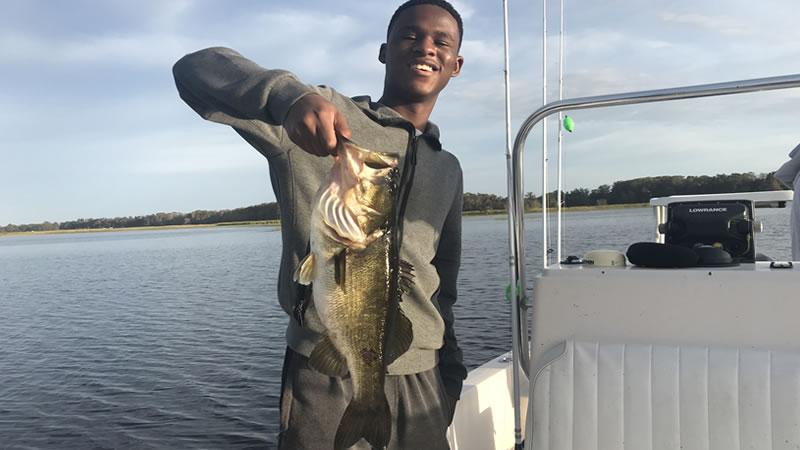
Kissimmee grass bass fishing is one of the most dependable ways to find largemouth bass on many Central Florida lakes. This shoreline and near-shore vegetation gives bass cover, shade, ambush points and access to baitfish. The best anglers do not simply fish every patch of grass. They look for the edges, points, pockets, depth changes and nearby structure that concentrate fish.
This guide explains how to fish Kissimmee grass based on recurring field patterns from BassOnline guides across Lake Toho, Lake Kissimmee, Lake Weohyakapka, Lake Pierce and other Florida bass waters.
Why Bass Use Kissimmee Grass
Kissimmee grass creates a natural edge between shallow cover and more open water. Largemouth bass can hold inside the grass, on the outside edge, around points or in small openings where bait moves through. The grass can also become especially important during the pre-spawn and spawning periods because fish often move shallow while still staying close to protective cover.
The most productive section is often not the biggest grass bed. Look for something different: a point that extends farther out, an isolated clump, an opening, a dock beside the grass, a deeper outside edge or a nearby canal. Small changes in depth and current can make one short stretch much better than the rest.
Best Places to Fish Kissimmee Grass
Outside Grass Edges
Outside edges are a reliable starting point because they let bass move between cover and open water without traveling far. Historic guide notes from Lake Weohyakapka found productive outer vegetation in roughly 4 to 6 feet of water during pre-spawn and spawning periods. Worms, trick worms and lizard-style soft plastics worked along the outside edge, while a lipless crankbait was useful for covering water faster.
Points, Pockets and Openings
Points and pockets give bass natural ambush positions. On Lake Toho, guide observations have repeatedly shown that wind can push bait toward specific grass edges and pockets. When wind is blowing steadily into one section, fish that area more carefully before moving on.
Openings inside an otherwise solid stretch of vegetation can also create feeding lanes. Cast past the opening and work the bait through the transition rather than dropping directly on top of the fish.
Docks Beside Kissimmee Grass
On lakes with docks, the combination of hard shade and grass can be excellent. Lake Weohyakapka field notes identified docks in roughly 3 to 4 feet of water as good flipping and pitching targets. Jigs, worms and craw-style baits are practical choices when working these tighter areas.
Canals and Spawning Areas
Lake Pierce provides another useful pattern. Its main lake contains Kissimmee grass along with other vegetation, and the connected canals can become important during the spring spawning period. Bass may use shallow grass edges and protected canal water when conditions line up around warming weather and spawning cycles.
Best Baits for Kissimmee Grass Bass Fishing
Wild Golden Shiners
Wild-caught golden shiners remain one of the most dependable choices when targeting larger Florida bass around grass. Historic Lake Toho trips produced steady action by presenting shiners along productive Kissimmee grass edges. The key is placement: a live bait in an unproductive stretch is still an unproductive bait.
Flukes and Soft Plastics
Soft-plastic flukes are effective when bass are holding near the grass but still willing to chase. Historic Lake Toho guide notes used pearl-white flukes around Kissimmee grass edges, while speed worms, Senko-style baits, trick worms and lizards have all produced in similar Florida vegetation.
When fish become less aggressive, slow the presentation and keep the bait in contact with the edge longer. When fish are actively feeding, use the same soft plastics to cover more water.
Carolina Rigs
A Carolina rig is useful when the outside grass edge drops into slightly deeper water. One Lake Toho field pattern paired soft plastics with a Carolina rig along the Kissimmee grass edge. This lets the angler keep the bait near the bottom while still covering a long stretch of vegetation.
Lipless Crankbaits
Lipless crankbaits are excellent search tools when grass is scattered enough to retrieve through or over it. They let you cover water quickly and can trigger reaction bites when ripped free from vegetation. If the fish are schooling in nearby open water, the same lure can continue working away from the grass.
Jigs, Worms and Craws
When fish bury deeper in cover or hold beside docks, a jig, worm or craw-style bait can be better than a fast-moving presentation. Short, accurate pitches into the highest-percentage targets are usually more efficient than blindly working every foot of grass.
How Season Changes the Kissimmee Grass Pattern
Pre-Spawn
During pre-spawn periods, bass often stage on the outer grass edge before moving shallower. This is a good time to work both the outside edge and nearby depth changes. If the water is warming steadily, keep checking progressively shallower cover.
Spawn
Spawning fish may use protected grass edges, pockets and connected canals. Not every bass moves shallow at the same time, so continue checking both shallow cover and the nearest staging water.
Summer
Summer can make early and late periods especially valuable. Grass provides shade and oxygen-producing habitat, but changing water levels, rain and heat can reposition the fish. Watch for schooling activity near the vegetation and pay attention to wind direction.
Fall and Winter
Cooler weather can make bass more responsive to moving baits, but cold fronts can also slow the shallow bite. If a productive grass pattern disappears after a front, work the outside edge and nearby deeper water before leaving the area.
Kissimmee Grass on Lake Toho
Lake Toho is one of the best-known Central Florida examples of a grass-oriented bass fishery. Historic guide trips have produced with shiners, flukes, speed worms, Carolina rigs, spinnerbaits, swim jigs and topwater presentations around vegetation. The exact lure matters less than matching the fish’s position and activity level.
For current conditions, visit the Lake Toho fishing reports. For monthly seasonal planning, compare our January Lake Toho guide and February Lake Toho guide.
Kissimmee Grass on Other Florida Lakes
The same basic grass-reading skills transfer to many Florida fisheries. Lake Weohyakapka combines Kissimmee grass with docks, open-water schooling fish and outside vegetation edges. Lake Pierce includes grass edges, offshore vegetation and canals that can become important during spawning periods. Lake Kissimmee is another major Central Florida bass destination where vegetation is an important part of locating largemouth bass.
The lesson is transferable: identify the best grass, then find the feature within that grass that gives the bass a reason to stop.
Kissimmee Grass Bass Fishing FAQs
What is the best bait around Kissimmee grass?
Wild shiners, flukes, speed worms, Senko-style baits, Carolina rigs, lipless crankbaits, jigs and craw-style baits can all work. Choose the presentation based on whether the bass are inside the cover, on the edge or actively schooling nearby.
Should I fish inside the grass or outside the edge?
Both can produce. Start with obvious outside edges, points and openings, then move tighter into the cover if the fish are holding deeper in the vegetation.
Is Kissimmee grass good during the spawn?
Yes. Shallow grass, protected pockets and nearby canals can all become important during pre-spawn and spawning periods, while deeper outside edges remain useful staging areas.
Does wind help when fishing Kissimmee grass?
Often it can. Wind may push bait toward one side of a grass bed or create current along an edge. Focus on the wind-blown points and pockets first, especially when baitfish activity is visible.
Where can I book a guide who fishes Kissimmee grass?
Use our Florida fishing guides directory or the Kissimmee fishing page to compare local trip options.