

Monkey Box on Lake Okeechobee is one of the Big O’s best-known west-side bass fishing areas. It is not a single magic waypoint. Anglers use the name for a broader section of the western lake where hard bottom, vegetation, water clarity, wind, and lake level can combine to create productive largemouth bass habitat.
The area has a long tournament and guide-fishing history, but the Monkey Box changes with Lake Okeechobee itself. Grass expands and disappears, water levels rise and fall, storms reshape habitat, and yesterday’s productive trail may not be today’s safe route. Use this guide for location context and fishing strategy, then check current conditions before running the lake.
Monkey Box Lake Okeechobee: Quick Takeaways
- Location: the Monkey Box is on the western side of Lake Okeechobee and is part of the lake’s broad west-side fishing zone.
- Why bass use it: the area has historically combined hard bottom, clearer-water pockets, reeds, submerged grass, and other shallow cover.
- Best opportunity: pre-spawn and spawning periods can be especially important, although productive fishing depends on current water level, weather, vegetation, and clarity.
- Productive approaches: live wild shiners, swim jigs, spinnerbaits, topwater, soft plastics, and flipping presentations can all have a place when conditions fit.
- Navigation: never treat an old fishing map or waypoint as a safe running route. Lake Okeechobee is shallow and current hazard information matters.
Where Is the Monkey Box on Lake Okeechobee?
The Monkey Box sits on the west side of Lake Okeechobee. It is better understood as a fishing area than as one tiny spot. Historical tournament coverage has described a broad range around the Monkey Box, with particular attention to its western-lake vegetation, cleaner water, and hard-bottom areas.
For historical orientation and background on the area, Bassmaster’s Monkey Box field article describes the upper-western location, the origin of the Monkey Box name, and the area’s protected vegetation. Use current navigation resources rather than old fishing descriptions when running the lake.
If you are comparing the Monkey Box with other sections of the lake, see our Lake Okeechobee fishing spots guide and the nearby Harney Pond fishing guide.
Why Is the Monkey Box Good for Bass Fishing?
The Monkey Box has earned its reputation because several bass-friendly ingredients can come together in the same general area. Bassmaster’s Lake Okeechobee hot-spots overview highlights the Monkey Box for historically productive hard bottom, clearer water, vegetation, and spawning habitat.
Those features matter for different reasons:
- Hard bottom can provide attractive spawning habitat when fish move shallow.
- Cleaner water can improve feeding and sight-fishing opportunities when other parts of the lake are stained by wind.
- Vegetation gives bass shade, ambush cover, spawning protection, and access to forage.
- Protected pockets and grass lines can give anglers fishable water when wind changes conditions elsewhere.
None of those features is permanent. Lake Okeechobee is dynamic, and vegetation can change significantly after storms, high-water periods, droughts, and management work. That is why current conditions matter more than a famous spot name.
Best Time to Fish the Monkey Box
The Monkey Box is most famous for the period when largemouth bass move toward spawning habitat. Current Florida Fish and Wildlife Conservation Commission guidance for Lake Okeechobee notes that fall brings pre-spawning movement and that peak spawning activity generally develops in late winter and early spring.
Fall and Early Pre-Spawn
As temperatures begin to moderate, bass can become more active around grass edges and shallow habitat. This is a useful time to watch for improving water clarity, bait activity, and vegetation that gives fish a travel route toward winter spawning areas.
Winter and Spawning Season
Winter into early spring can be a major Monkey Box window when water level and habitat allow bass to use shallow spawning areas. Hard bottom and clean-water pockets become especially important. Cold fronts can still slow the bite or move fish, so “spawning season” should never be treated as a guarantee.
Summer and Changing Water Levels
The Monkey Box can still hold bass outside the traditional spawn window, but anglers often need to adjust to heat, changing vegetation, oxygen, water clarity, and lake level. Early and late periods, moving water, outside grass lines, or the cleanest available water may become more important.
For a lake-wide seasonal comparison, use our best time to fish Lake Okeechobee guide.
How to Fish the Monkey Box for Largemouth Bass
Live Wild Shiners
Wild shiners remain one of the most dependable choices for anglers whose main goal is a quality Florida largemouth. Historical BassOnline trips in the Monkey Box used live bait around productive grass and clean-water areas. Positioning the bait near isolated cover, grass edges, openings, and other places where bass can ambush forage can be effective when fish are present.
Swim Jigs, Spinnerbaits, and Moving Baits
Moving baits help cover water when bass are scattered through grass. Swim jigs and spinnerbaits can be worked along outside vegetation, lanes, points, and openings. Lipless crankbaits can also be useful where the grass and water depth allow a clean retrieve.
Topwater at Low Light
Topwater can be productive around grass edges and openings when bass are willing to feed near the surface. Early morning, overcast periods, and protected water can be good times to test a frog, prop bait, buzzbait, or walking-style presentation before committing to slower techniques.
Soft Plastics and Flipping
When fish hold tighter to cover, slow down. Texas-rigged worms, stick baits, creature baits, and flipping presentations can target reeds, mats, isolated clumps, holes in vegetation, and hard-bottom transitions. The exact weight and presentation should match the cover rather than a fixed formula.
For more lake-wide lure and vegetation strategy, see our Lake Okeechobee bass fishing tactics guide.
Monkey Box Map, Access, and Navigation
Searchers often want a Monkey Box fishing map or exact coordinates, but a historical map should never replace current navigation information. The lake is shallow, water levels change, and rock or marsh hazards can become more important as water falls.
The FWC Lake Okeechobee forecast includes current fishing information and links to shallow-water and navigation-hazard resources. Check it before a trip, especially if you have not been on the lake recently.
Many west-side anglers access the broader area from suitable west-side launch points, including the Harney Pond/Lakeport side when conditions allow. The safest route depends on the day’s water level, wind, boat, and current hazards. If you are unfamiliar with the lake, local guidance is more valuable than trying to follow an old tournament trail from a map.
Historical BassOnline Field Notes from the Monkey Box
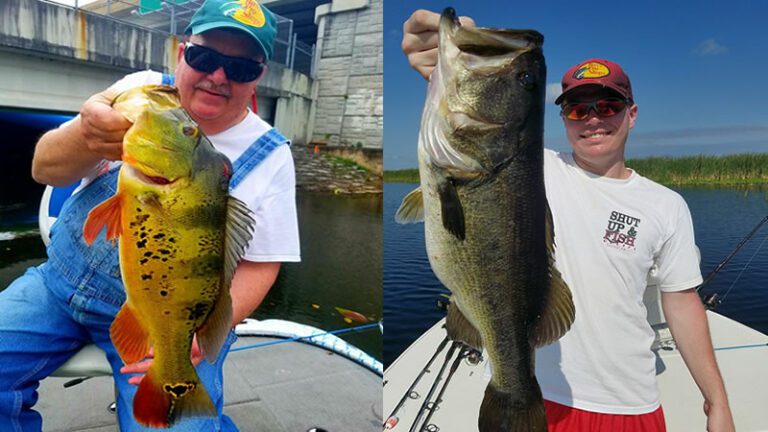
This page originally documented a December 2018 BassOnline trip with Mitchell and his sons Alex and Zach, who were visiting from Louisiana. Their eight-hour outing began from the Harney Pond side, and the group focused on live bait around the Monkey Box.
The guide’s field notes described clean water and steady numbers of healthy male largemouth ahead of the stronger spawning movement. The trip did not produce a giant bass, but it preserved a useful pattern: when the Monkey Box has clean water, fishable vegetation, and bass staging toward the spawn, the area can hold numbers as well as quality fish.
That report remains valuable as historical field evidence, not as a promise about today’s bite. The correct takeaway is to identify the habitat that made the area productive and then verify whether those same conditions exist now.
Plan a Monkey Box Lake Okeechobee Fishing Trip
Start with the current lake level, wind forecast, water clarity, and vegetation. Then decide whether the Monkey Box fits the day’s conditions instead of forcing a famous location to produce.
For current trip options and local captain availability, visit our Lake Okeechobee fishing charters. For broader lake information, access, species, and planning resources, use the Lake Okeechobee guide.
Bottom line: the Monkey Box deserves its reputation, but the winning pattern is not the name on the map. It is the combination of hard bottom, clean water, vegetation, seasonal bass movement, and safe access that makes the area worth fishing.