


You found a new rod on your trip and want to fly it back home. Or perhaps, you have a fishing adventure on your mind and are already planning the trip. Yet, you’re unsure whether flying with fishing rods is allowed and whether you can bring your fishing gear along.
This guide explains the current U.S. screening and airline issues that matter most when flying with fishing rods, including carry-on vs. checked baggage, rod cases, hooks, reels, and packing. Airline policies can change, so always verify your carrier’s live baggage rules before departure.
Flying with a Fishing Rod: Is It Allowed?
Wondering whether you can bring a fishing pole on a plane? Yes. The Transportation Security Administration (TSA) generally permits fishing rods through screening, but the airline still controls carry-on dimensions, checked-baggage limits, and sporting-equipment fees.
Screening approval and airline acceptance are two separate questions. TSA officers make the final checkpoint decision on an item, while each airline sets its own size, weight, packaging, and fee rules. Check both TSA guidance and the operating airline’s current baggage page before you travel.
Many airlines have clear-cut size and length limitations for fishing rod carry-on and checked-in equipment. So you may want to read this article on travel rods for better options. Some airlines may even limit the number of rods to just two rods or imply some additional charges.
Fishing Rod Carry On: How to Bring Your Rod on the Plane?

The TSA allows flying with fishing rods in both carry-on and checked bags. Generally, most airlines follow the same rule so you can safely bring on board your fishing rod carry-on.
If the overhead compartments can accommodate your fishing pole and gear, you can bring them on the plane. Simply follow the size recommendations. Don’t attach the line or hooks to the fishing rod; detach the fishing reels.
Choosing how to manage your gear while flying with fishing rods requires careful consideration. Should you check the rods in or bring the fishing pole on an airplane with you? Naturally, it is better to pack up your fishing gear with a carry on.
The only issue is that rod tubes occasionally don’t fit the specifications for carry-on luggage. If this is the case, you may emphasize how important this piece of gear is for your journey to the carrier. Otherwise, you will need to check your fishing rods.
It’s widely known that checked luggage often gets damaged. Having said that, it can be challenging to fit one-piece rods in a carry-on, and you may have no option. No worries. There is a way to fly your rods as checked-in luggage safely.
If you are an international angler or like to travel and fish recreationally, investing in a sturdy cylindrical carrier equipped with a TSA-approved lock is wise. We advise you not to compromise on a decent flying rod tube or case to protect your fishing gear and keep it safe when traveling.
Current Airline Examples
Southwest Airlines: Southwest lists a fishing tackle box and fishing rod under its sports-equipment policies. A rod intended for checked baggage should be protected in a suitable cylindrical rod container. Check Southwest’s current sports-equipment policy for live baggage and fee details.
American Airlines: American currently treats one rod case containing up to two rods plus one equipment bag or tackle box as one checked item. Standard checked-bag fees apply up to 50 pounds, and American states that oversize fees do not apply to qualifying fishing equipment. Verify the current American Airlines fishing-equipment policy before departure.
Delta Air Lines: Delta currently allows fishing poles up to 115 linear inches as checked baggage when safely contained. Fishing poles that meet Delta’s standard 22 × 14 × 9-inch carry-on dimensions may travel as carry-on baggage. Standard baggage and overweight rules still apply. See Delta’s current sporting-equipment policy.
United Airlines: United publishes fishing gear under its sports-equipment baggage guidance. Because acceptance, fees, aircraft limits, and packaging rules can change, verify United’s current sports-equipment policy for your itinerary rather than relying on an old fixed allowance.
Alaska Airlines: Alaska publishes current sporting-equipment guidance on its baggage site. Check the live Alaska Airlines sports-equipment policy for fishing-gear packing, fees, and limits before you fly.
Best practice: airline rules change more often than fishing techniques. Confirm the exact carrier, aircraft, route, bag dimensions, weight, and current fees shortly before departure—especially when traveling with a one-piece rod or oversized tube.
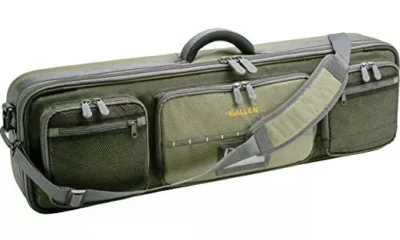
How to Pack a Fishing Rod for Air Travel?
Packaging the fishing rods together in a short rod tube is the best option. This way, you will skip potential issues or damage on domestic or international flights.
Tape the rods together to secure them. Pack them in a fishing tube secured with bubble wrap or other suitable material. You can also pack the rods in their original packing to prevent excessive friction throughout the ride.
Regarding heavier gear like trolling rods or beach casting rods. It can be more challenging to convince airport security to allow you to bring a heavy fishing pole on any airplane. However, you may check your fishing gear as sports equipment, and many airline companies won’t charge you extra. Check the airline’s policy on sports equipment to be sure. Specifically, look up any information about fishing gear before booking your flight.
A fishing rod case or tube keeps your fishing gear safe and also makes traveling much more manageable. Look for a case made of strong but lightweight materials. Cases made of hard plastic are ideal for rod tubes because they are light, easily adaptable, and can take on any preferred shape. It is also flexible enough to withstand pressure from all directions while remaining stiff sufficient to safeguard the rods inside. After all, keeping the rods safe and damage-free is your primary goal here.
Another option is a TSA-recognized baggage lock. TSA may inspect checked baggage, and recognized locks can be opened by screeners with appropriate tools. A lock does not guarantee against damage or inspection, so label the rod tube clearly and pack the rods so they remain protected even if the case is opened.

Flying the Rest of the Equipment
After the rod itself, review the rest of the tackle separately. Large or sharp hooks should be sheathed or securely wrapped and are best placed in checked baggage. Small tackle may be accepted in carry-on baggage, but screening officers make the final checkpoint decision. When in doubt, check TSA’s current “What Can I Bring?” guidance before packing.
Use carry-on bags to pack pricey and valuable reels or delicate tackles that don’t compromise security (small lures). Packing reels in your carry-on is not a problem, but you should ensure they are secured. A good reel case will do the job.
Small flies and lures may be accepted in carry-on baggage, but sharp or unusually large tackle can receive additional scrutiny. Pack questionable hooks or lures in checked baggage and protect all points so they cannot injure baggage handlers or inspectors.
A general rule of fly fishing trick would be to put enough flies or lures in a compact fly box or a zip-lock bag that would be sufficient to cover one or two fishing days. Between 10 and 16 flies should be enough. Ensure you make an excellent lure combination with a primary and versatile selection. This will prepare you should the airline delay the checked luggage. Safely pack the remaining flies in your checked baggage.
The advice remains the same regarding the other equipment, like reels, hooks, lures, etc. If unsure about their safety, you should check state laws or consult the airline before traveling regarding your specific items.
Flying with Fishing Rods: Concluding Remarks
Flying with fishing rods should not worry you because it’s standard practice. However, pay close attention to what is written in the regulations and laws. All airlines have information on their websites regarding fishing rod carry-on and other sporting equipment practices.
Before booking a flight, collect all the necessary information. This way, you won’t be caught off guard once you arrive at the airport.
The question “Can you bring a fishing pole on a plane?” should not stop an angler from traveling, but the answer depends on both TSA screening and the operating airline’s current baggage rules. Choose a lovely location and plan that pleasant fishing journey you always dreamed of taking!
Summary
So start planning. You’re all set for your next fishing trip. Where to? California? Florida? Maybe Pennsylvania or Alabama? No matter the style, a fly fishing or bass fishing trip, you now know how to get your equipment there safely. All that’s left to do is choose the next destination, buy a plane ticket, and start casting on the next fishing trip of your dreams!


Hi, enjoyed visiting your website. I am attempting to find things to improve in my travel gear. Thanks for your ideas!
I’m glad it was helpful!
I’ve been absent for a while, but now I remember why I used to love this website. Thank you, I will try and check back more often.
Hope to see you more often!
I got what you intend, thankyou for putting up. I am glad to find this website through google.
Hope to see you more often!
A required item for all anglers looking to travel with equipment!
I could not agree more; thank you for stopping by!