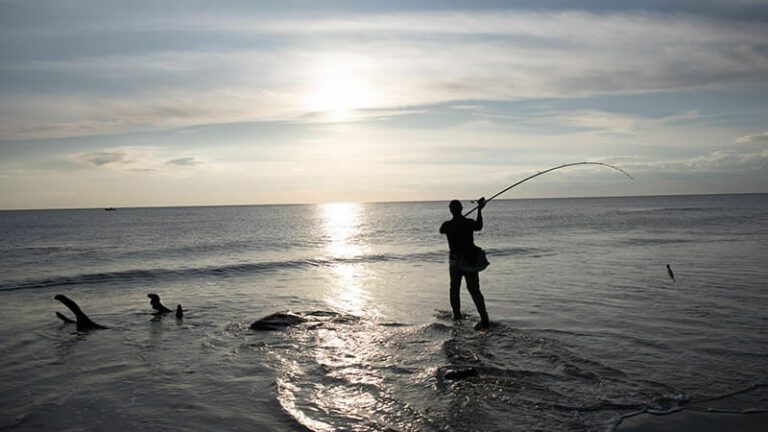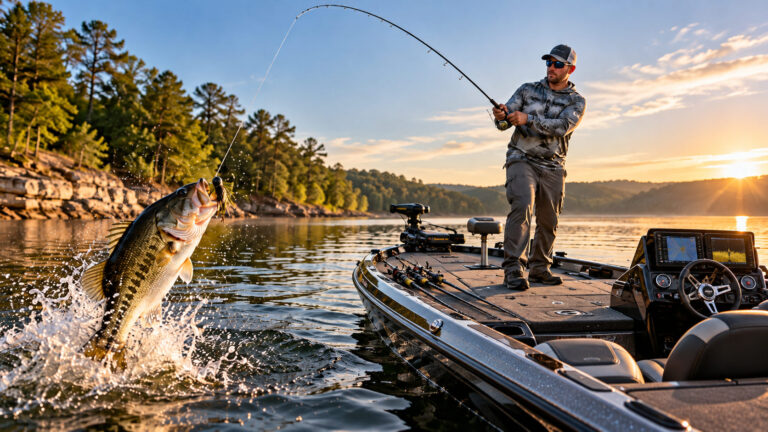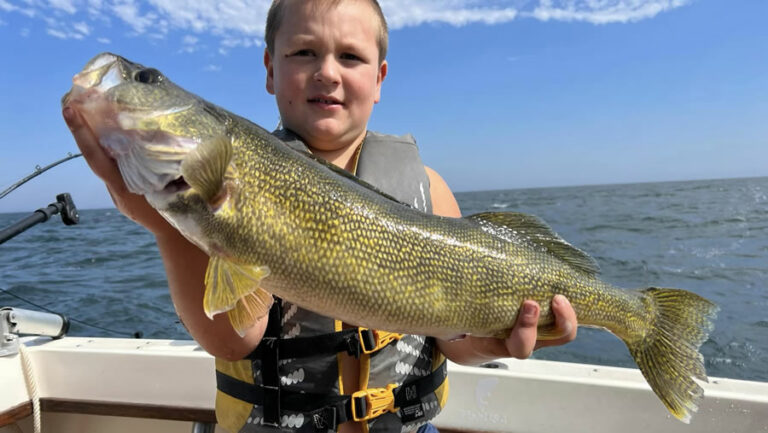


A cold front can slow Lake Erie smallmouth bass fishing, but it does not make the fish disappear. The biggest changes usually involve activity level, depth, positioning and how aggressively bass will chase a lure. The adjustment is simple in principle: slow down, tighten the target area and fish the highest-percentage structure more precisely.
For lake-specific seasonal habitat and structure guidance, consult the New York DEC Lake Erie smallmouth resource.
What Does a Cold Front Do to Smallmouth Bass?
Cold fronts often arrive with changing wind, cloud cover, air pressure and temperature. The exact fish response depends on season and water temperature, but smallmouth commonly become less willing to roam and chase immediately after a sharp weather change. Fish may hold tighter to rock, move slightly deeper, or remain in the same area while becoming more selective.
Do Not Leave Productive Water Too Quickly
One of the most common cold-front mistakes is running from spot to spot because the first few casts do not produce. If a reef, point, transition or rock pile held fish before the front, slow down and fish the best part of that structure before abandoning it.
Best Cold-Front Presentations
- Drop shot: keeps a subtle bait in front of fish that do not want to chase.
- Ned rig: compact and easy to fish slowly along bottom.
- Tube: excellent for crawling across rock and imitating bottom forage.
- Jerkbait: useful when fish are suspended; lengthen pauses when activity drops.
- Small swimbait: cover water slowly when fish are still willing to track moving forage.
For detailed finesse setup, see our Lake Erie drop-shot guide.
How Wind Changes the Cold-Front Plan
Lake Erie wind can matter as much as the air temperature. A front may make the lake unsafe before it makes the fishing poor. If the main lake becomes too rough, protected Pennsylvania water such as Presque Isle Bay can provide a different option when conditions and regulations allow.
Never use a fishing pattern as a reason to ignore marine forecasts or safe boating decisions.
Fish Smaller Targets More Precisely
Post-front bass often reward precision. Instead of treating an entire reef as one spot, identify the best boulder, edge, depth break or hard-bottom seam. Make repeated controlled presentations from different angles before moving.
Cold Front in Spring vs. Summer
Spring cold fronts
Rapid cooling can slow shallow movement and push fish toward nearby staging areas or slightly deeper structure. Pennsylvania’s protected spring bass period also requires anglers to check current regulations, especially around spawning areas.
Summer cold fronts
Summer fronts often change wind and light more than they change the entire water column. Deep fish may remain near the same structure but become less aggressive. A slower drop shot, tube or Ned rig can be more effective than abandoning the offshore pattern.
When the Bite Starts Recovering
As weather stabilizes, fish often become more willing to chase again. Gradually add faster presentations—swimbaits, jerkbaits, spinnerbaits or topwater—based on fish position and water conditions.
Use the Lake Erie seasonal forecast for the larger seasonal picture and the main smallmouth guide for structure and lure strategy.
Cold-Front Smallmouth FAQ
Do smallmouth stop biting after a cold front?
No. Activity can drop, but fish are still catchable. Slower presentations and more precise boat positioning often become more important.
Should I always fish deeper after a cold front?
No. Some fish move deeper, while others simply hold tighter to the same structure. Let sonar, bites and repeated casts tell you whether depth changed.
What is the safest cold-front adjustment on Lake Erie?
Safety comes before technique. If wind or waves make the main lake unsafe, change areas or postpone the trip rather than forcing an offshore pattern.