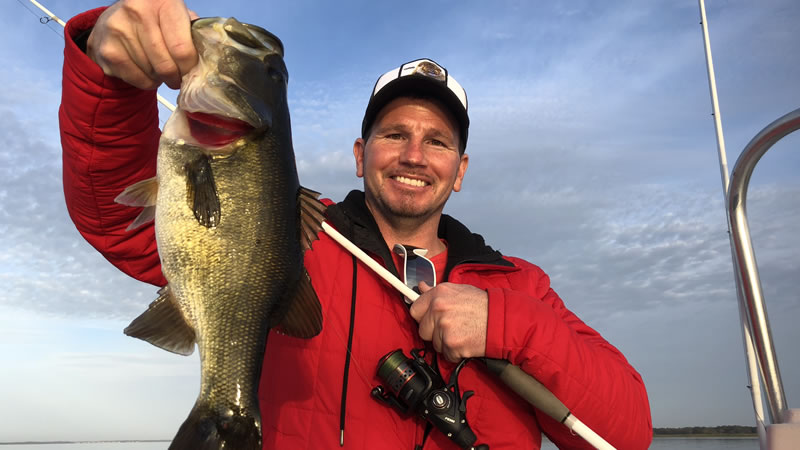

How to Fish a Zoom Super Fluke for Bass
The Zoom Super Fluke is a soft-plastic bait that can be especially effective when largemouth bass are feeding around shallow grass, edges, and open pockets. This page began as a Lake Toho fishing report, but the most useful lesson from that trip was not the catch count. It was how a Super Fluke fit into a changing post-spawn pattern when the anglers moved from live bait to artificial lures.
On the original Lake Toho trip, the anglers started the morning with wild-caught live shiners and caught more than 20 bass early. As conditions changed, they switched to Zoom Super Flukes and black-and-blue Senko-style worms Texas-rigged with a 3/16-ounce weight. Both artificial presentations continued to produce fish.
That historical field note provides a practical lesson: when bass are active but scattered through shallow vegetation and nearby structure, a Super Fluke can be a useful search bait that also lets you slow down around the best-looking cover.
What Makes a Super Fluke Effective for Largemouth Bass?
A Super Fluke has a baitfish-shaped profile and can be worked with an irregular, darting action. That makes it useful when bass are feeding on shad or other small forage, but it is also versatile enough to fish around grass where a lure with exposed hooks may become frustrating.
The bait works best when you make the retrieve match the mood of the fish. Some days bass respond to a fast, erratic retrieve. Other days the better move is to let the bait pause and fall beside grass, reeds, cattails, or other structure.
1. Fish the Fluke Around Grass Lines
The original Lake Toho trip took place during a period when many bass had already completed the spawn, although some fish were still shallow. The durable lesson was to stop treating every bass as if it were still on a spawning bed. The anglers focused more on deeper structure and grass lines as the day developed.
On vegetation-heavy Florida lakes such as Lake Toho, grass edges and openings give a soft jerkbait room to move while keeping it close to ambush cover. Cast parallel to an edge when possible so the lure stays in the productive zone longer.
2. Use an Erratic Retrieve, Then Pause
A productive starting retrieve is a series of short rod-tip twitches followed by a pause. The twitches make the bait dart, while the pause allows it to settle and gives following bass a chance to strike.
If fish follow without committing, increase the pause. If bass are aggressively chasing bait, shorten the pause and cover more water. The goal is not to use one fixed cadence all day. Let the fish show you whether they want speed, hesitation, or a combination of both.
3. Pay Attention to the Fall
Many strikes happen when the lure stops moving forward and begins to fall. Watch the line closely after each pause. A jump, twitch, or sideways movement can signal a bite before you feel much through the rod.
This is particularly important around submerged vegetation. The lure may disappear beside a grass edge, and the only visible clue can be the line moving away from where the bait entered the cover.
Super Fluke vs. Senko: When to Change Presentations
The historical Lake Toho trip also produced bass on black-and-blue Senko-style worms Texas-rigged with a 3/16-ounce weight. That combination gives us a useful comparison between two different jobs.
- Super Fluke: useful for covering water, imitating moving forage, and triggering fish along grass edges or open pockets.
- Texas-rigged Senko-style worm: useful when you want a slower presentation that can fall into or beside heavier cover.
If bass stop chasing the Fluke, slowing down with a Texas-rigged worm can keep you fishing the same productive area without forcing the fish to pursue the bait.
How Seasonal Bass Positioning Changes the Fluke Bite
Florida largemouth bass do not all move through the spawning cycle at the same time. During the original trip, some fish could still be found shallow while many had already moved into a post-spawn pattern. That mixture is one reason a mobile bait such as a Super Fluke can be valuable: it lets you investigate shallow cover, grass transitions, and slightly deeper structure without committing to only one depth.
Early in the day, low light can create a stronger feeding window. Later, changes in sun, wind, water clarity, and temperature can push fish tighter to cover or farther down a grass edge. Instead of assuming the morning pattern will last all day, keep adjusting your retrieve and target zone.
Lake Toho Super Fluke Fishing Strategy
Lake Tohopekaliga is a large Central Florida fishery with extensive vegetation and a long history of producing largemouth bass. A practical Super Fluke approach on this type of water is to begin by identifying productive grass and then work from the most obvious edges toward nearby openings and transitions.
- Start with visible grass edges and pockets.
- Use a twitch-pause retrieve to cover water.
- Slow the bait when you reach especially good cover.
- Watch the line closely during every pause.
- If fish stop chasing, switch to a slower soft-plastic presentation rather than immediately leaving the area.
For current destination information, access considerations, guides, and trip planning, use our main Lake Toho fishing page. For recent fishing-report content, visit the Lake Toho fishing reports.
Historic Lake Toho Field Note
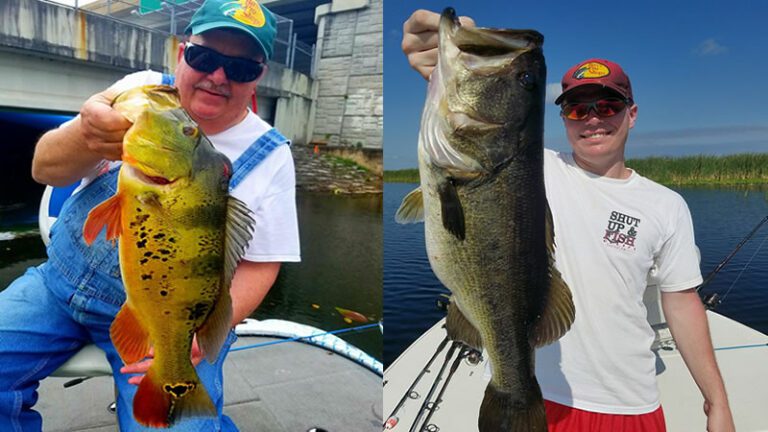
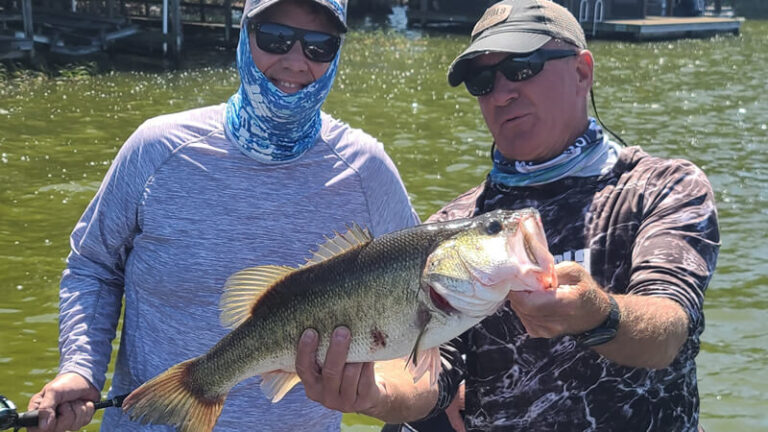
This technique guide is grounded in an older guided trip with Teddy Williams, his cousin Tommy, and Tommy Jr. The group caught more than 20 bass early on wild shiners before adding artificial lures. Zoom Super Flukes and black-and-blue Senko-style worms on a 3/16-ounce Texas rig both produced additional fish. The report described bass in mixed spawning stages and recommended focusing increasingly on deeper structure and grass lines as more fish moved into post-spawn positions.
That is historical field evidence, not a promise of current conditions or catch rates. Its value is the pattern: start with the active feeding window, use the Fluke to search vegetation efficiently, and slow down with a Texas-rigged soft plastic when the fish stop chasing.
Frequently Asked Questions
What is the best way to fish a Zoom Super Fluke for bass?
Start with short twitches followed by a pause. Adjust the speed and pause length based on how aggressively the bass are feeding. Around vegetation, keep the bait close to grass edges and openings where bass can ambush forage.
Where should I throw a Super Fluke?
Grass lines, submerged vegetation, reeds, cattails, open pockets, and transitions between shallow cover and slightly deeper structure are all good targets. On Lake Toho, vegetation is a major part of the bass-fishing puzzle.
When should I switch from a Fluke to a worm?
If bass follow the Fluke without striking or the bite becomes less aggressive, a slower Texas-rigged worm can be a good follow-up presentation around the same cover.
Can a Super Fluke work after the bass spawn?
Yes. The original Lake Toho field report documented productive Fluke fishing while many bass were already in post-spawn positions. Grass lines and nearby structure became increasingly important as fish moved away from spawning areas.
Plan a Lake Toho Bass Fishing Trip
Anglers who want local help identifying productive vegetation, seasonal bass positions, and the right presentation can compare our Lake Toho fishing guides or explore the broader Kissimmee fishing destination.