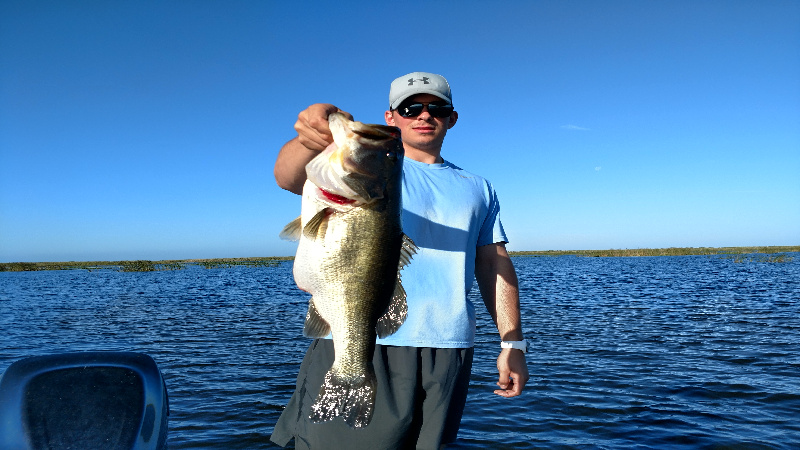
An 8-pound bass is a serious trophy fish. In Florida, a largemouth or Florida bass weighing 8 pounds or more qualifies for the Florida Fish and Wildlife Conservation Commission’s TrophyCatch program. An 8- to 9.9-pound fish falls into the program’s Lunker Club, putting it well beyond the size most bass anglers catch in an average day.
If you are wondering what an 8-pound largemouth bass looks like, how unusual that size is, or what it takes to catch one, the most important thing to understand is that weight tells only part of the story. Two bass of similar length can weigh very differently depending on body condition, forage, season and whether a female is carrying eggs.
How Big Is an 8-Pound Bass?
There is no single length that guarantees an 8-pound bass. A thick, well-fed Florida bass can weigh considerably more than a lean fish of similar length. That is why experienced anglers use an accurate scale instead of estimating weight from length alone.
What makes the 8-pound mark important is that Florida’s TrophyCatch program begins at 8 pounds. FWC uses documented catches of trophy bass to help collect fishery data and promote catch-and-release conservation. For perspective, TrophyCatch classifies bass from 8 to 9.9 pounds as Lunker Club fish, 10 to 12.9 pounds as Trophy Club fish, and fish 13 pounds or heavier as Hall of Fame catches.
What Does an 8-Pound Largemouth Bass Look Like?
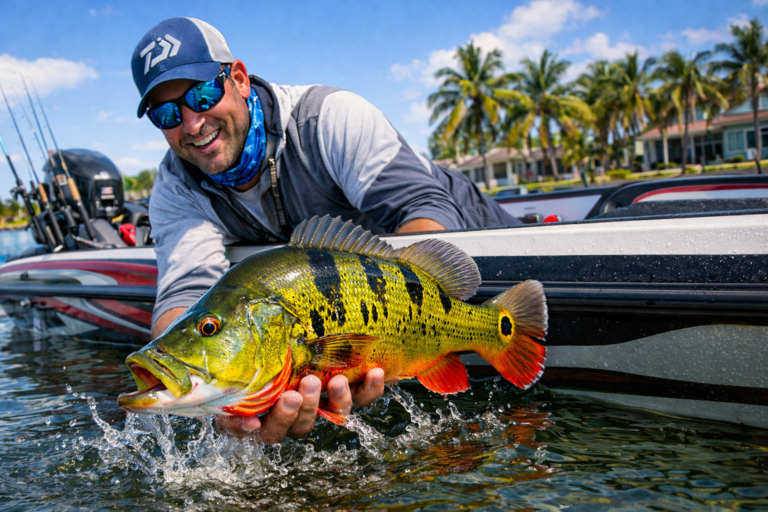
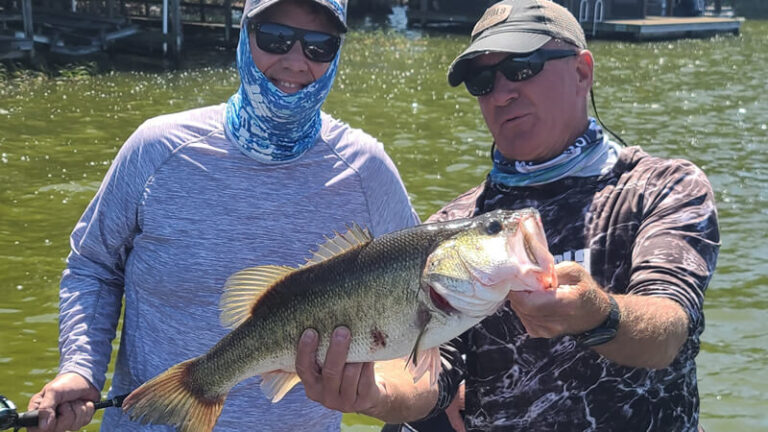
An 8-pound largemouth generally has the deep body, broad shoulders and heavy belly anglers associate with mature trophy bass. During prespawn, a large female can be especially heavy as she carries developing eggs. After spawning, that same fish may weigh less even though its length has changed very little.
Instead of judging a trophy only by appearance, photograph the fish and weigh it on a reliable digital scale. Support a large bass horizontally with one hand under the belly rather than allowing its full weight to hang from the lower jaw.
Where Do 8-Pound Bass Live in Florida?
Florida’s warm climate, long growing season and abundant forage give bass the opportunity to reach trophy size. Productive trophy waters include Lake Okeechobee, Lake Tohopekaliga, the Kissimmee Chain, the Harris Chain and other fertile lakes and rivers with strong forage and healthy habitat.
Large bass often use vegetation, submerged grass, hydrilla edges, shell beds, drop-offs and other structure that offers both cover and access to food. Their location changes with weather, water level, forage movement and the spawning cycle.
How to Catch an 8-Pound Bass
There is no lure that guarantees an 8-pound fish, but trophy anglers increase their odds by fishing areas that consistently hold mature bass and by matching their presentation to current conditions.
- Live golden shiners: A proven Florida trophy-bass method, especially around vegetation and likely ambush areas.
- Soft plastics: Texas rigs, worms, creature baits and other plastics can be worked slowly through heavy cover.
- Topwater: Frogs, walking baits and other surface lures can produce explosive strikes when big bass are feeding shallow.
- Swimbaits and moving baits: Useful for covering water and imitating larger forage.
- Seasonal timing: Prespawn and spawning periods can put some of the heaviest female bass into accessible shallow-water areas.
For more technique options, see our guide to the best bass fishing lures and our largemouth bass species guide.
The 8-Pound Lake Okeechobee Catch Behind This Page
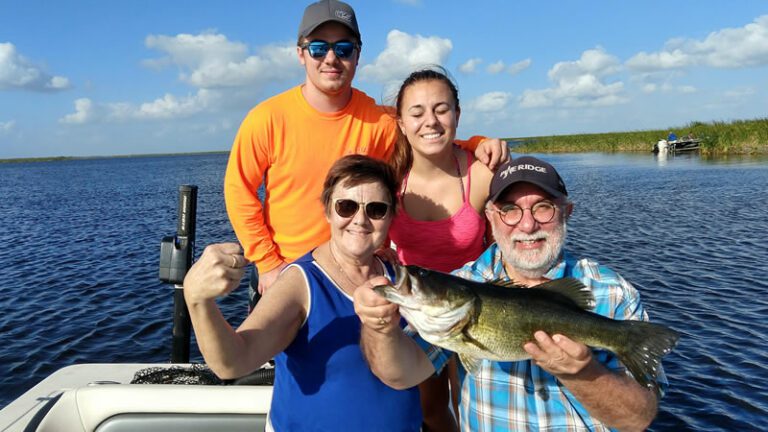
This page originally began as a fishing report from a Lake Okeechobee trip with Captain Robert Miley. Guests John and Carolyn enjoyed a productive day with roughly 25 bass, including an 8-pound largemouth and numerous quality fish. That catch is a good example of why Lake Okeechobee has remained one of Florida’s best-known trophy-bass destinations.
If you want local help learning where trophy fish set up and how to approach changing conditions, visit Captain Robert Miley’s guide profile or explore our Lake Okeechobee fishing options.
How to Handle an 8-Pound Bass
A trophy fish deserves careful handling. Keep the bass in the water until you are ready for the photo and weight, wet your hands before touching it, support its body horizontally, minimize time out of the water and release it as quickly as practical. Florida anglers participating in TrophyCatch must document qualifying fish and release them alive back into the waterbody where they were caught.
8-Pound Bass FAQ
Is an 8-pound bass considered a trophy?
Yes. In Florida, an 8-pound bass meets the minimum weight for FWC’s TrophyCatch program and qualifies for the Lunker Club.
How long is an 8-pound largemouth bass?
There is no exact length because weight changes with body condition, season and forage. A scale is the most reliable way to confirm an 8-pound fish.
What is the best time to catch an 8-pound bass in Florida?
Trophy bass can be caught year-round, but late winter through spring is especially popular because large females move through prespawn and spawning patterns. Conditions vary by region and weather.
Should you release an 8-pound bass?
Catch-and-release is strongly encouraged for trophy fish. FWC’s TrophyCatch program is specifically built around documenting and releasing bass weighing 8 pounds or more.