






















Published: December 9, 2020 | Updated: September 12, 2026
Blue tilapia (Oreochromis aureus) are deep-bodied cichlids native to North Africa and the Middle East. They are now established across much of peninsular Florida, where anglers encounter them in canals, lakes, ponds, rivers, springs, and brackish water. This guide explains how to identify blue tilapia, where they live, what they eat, how they reproduce, and practical ways to catch them.
Blue tilapia are nonnative in Florida. Identification can be difficult because several tilapia species look similar and hybrids may occur. Use visible field marks as a starting point, then consult an authoritative fish-identification resource when an exact identification matters.
Blue Tilapia Quick Facts
- Scientific name: Oreochromis aureus
- Family: Cichlidae
- Florida status: Nonnative and classified by FWC as a conditional species
- Typical habitat: Vegetated lakes, canals, rivers, ponds, springs, ditches, and some brackish areas
- Primary food: Algae, plankton, detritus, plant material, and small bottom-dwelling organisms
- Reproduction: Nest-building cichlid with maternal mouth-brooding
- FWC Blue Tilapia profile record: 9.57 pounds; FWC’s broader state-record table separately lists a 10.09-pound “Blue/Nile Tilapia or Hybrid” record from Rodman Reservoir in 2024
- Big Catch benchmark: More than 18 inches or 5 pounds
How to Identify a Blue Tilapia
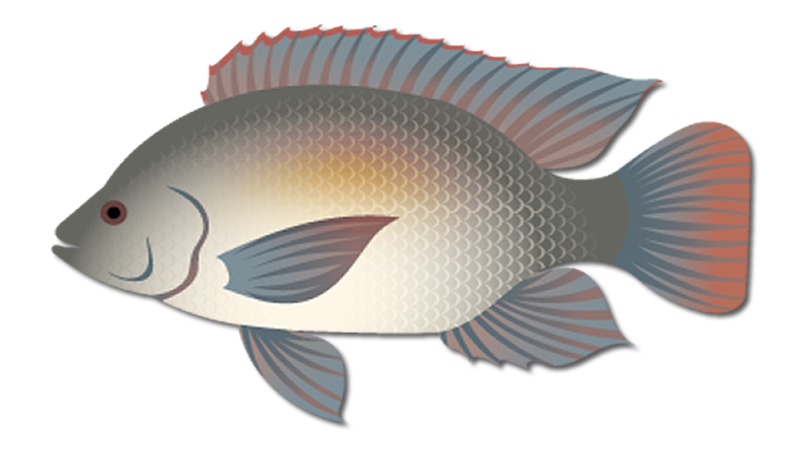
Adult blue tilapia are generally olive to bluish gray across the back and sides, fading to a pale or white belly. The body is deep and laterally compressed. The spiny and soft portions of the dorsal fin are joined, the lateral line is interrupted, and the tail commonly shows irregular bands with a pinkish or reddish rear margin.
Juveniles are grayer and often display a dark “tilapia spot” near the rear portion of the dorsal fin. Breeding adults may show stronger color around the fins. The Florida Museum blue tilapia profile provides useful museum-backed identification details and current Florida distribution information.
Blue Tilapia vs. Mozambique Tilapia
Female Mozambique tilapia can resemble blue tilapia closely, and hybridization can make visual identification harder. Breeding male Mozambique tilapia are easier to distinguish because they can become much darker and have a larger mouth. FWC notes that in central Florida most freshwater tilapia observed by anglers are likely blue tilapia, especially larger fish, but location and size alone should not be treated as absolute proof.
Range and Habitat
Blue tilapia are native to parts of northern Africa and the Middle East. Introductions related to aquaculture, vegetation control, forage, and other human activity helped establish populations in the United States. The USGS Nonindigenous Aquatic Species profile documents their introduced range and collection history.
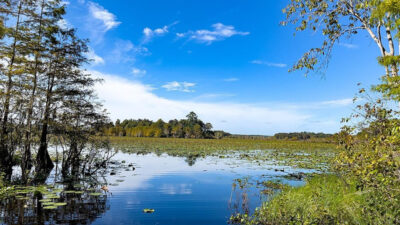
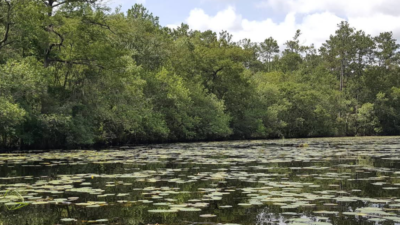
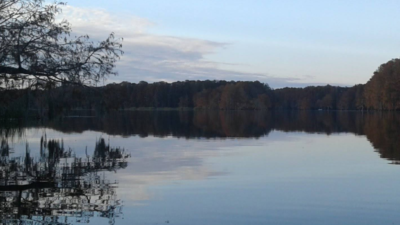
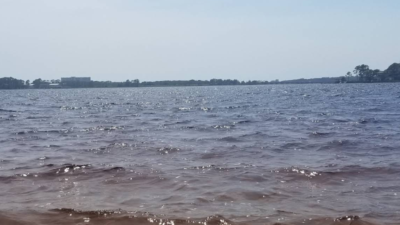
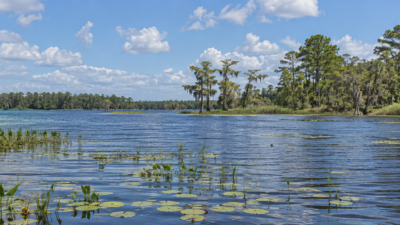
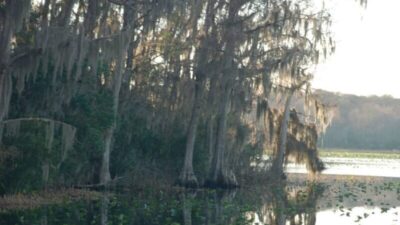
In Florida, blue tilapia are widespread in peninsula drainages. They use roadside ditches, canals, springs, wet prairies, creeks, rivers, lakes, and vegetated ponds. Their tolerance for some salinity also allows them to occur in nearshore or brackish habitats. Productive areas often combine warm water, shallow nesting substrate, algae, plant growth, and protected shoreline cover.
Cold weather can concentrate fish around warmer springs, canals, or other thermal refuges. In warmer months, look for shallow flats, sandy pockets, canal edges, and visible colonies of circular nests.
What Blue Tilapia Eat
Blue tilapia feed mainly on plankton, algae, detritus, plant material, and small organisms found near the bottom. Younger fish may consume a broader mix of zooplankton and small invertebrates. Adults are adaptable feeders, but they are not normally aggressive lure-chasing predators like largemouth bass or bullseye snakehead.
This feeding behavior explains why small natural offerings often outperform large artificial lures. FWC specifically notes that urban anglers catch blue tilapia on small pieces of hot dog, bread balls, dog food, or live worms, and that the species is rarely caught on artificial lures. Sight-fishing around active nests can also be more consistent than casting open water.
Spawning and Mouth-Brooding Behavior
Spawning activity increases when water warms. Males sweep shallow circular nests over sand or firm bottom and court females into the nest. After fertilization, the female gathers the eggs into her mouth. The eggs hatch there, and the young may return to her mouth when threatened during the early period after hatching.
Groups of nests can create obvious depressions across a shallow flat. Approach quietly because fish in clear, shallow water can be easy to spook. Avoid wading through active colonies or disturbing more habitat than necessary.
Blue Tilapia in Florida Ecosystems
Florida classifies blue tilapia as nonnative. Dense populations can compete for food and nesting space, disturb bottom habitat, and interact with native sunfish and other species. Their exact effects vary by water body, population density, habitat, and the native fish community.
Do not move fish between waters or release a captured fish somewhere new. The best current source for status, identification, sporting quality, and management information is the FWC Blue Tilapia profile.
How to Catch Blue Tilapia
Blue tilapia are commonly targeted with light tackle, small natural baits, or bowfishing equipment where legal. They can be caught throughout the day, although calm conditions and good visibility make it easier to locate fish and present a bait accurately.
Find the Fish First
Search warm, shallow water with a firm bottom, visible vegetation, or circular nesting depressions. Canal bends, pond edges, spring runs, and protected lake shorelines can all hold fish. Polarized glasses help reduce glare and reveal fish before they see the angler.
Use Small Baits
Try small pieces of hot dog, bread balls, dog food, or live worms—the baits specifically noted by FWC for rod-and-reel anglers. Keep the offering compact and close to the hook point so a cautious fish can take it cleanly. Artificial lures occasionally work, but FWC describes blue tilapia as rarely caught on artificials.
Choose Light Tackle
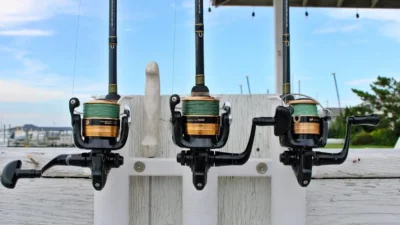
A light or medium-light spinning rod, small reel, modest line, and a small hook make subtle presentations easier. A float can suspend bait above vegetation or show a gentle take. When sight-fishing, cast beyond the fish and bring the bait into the target area rather than dropping it directly on top of the school.
Approach Quietly
Stay low, limit shoreline vibration, and avoid repeated casts into the center of a group. If the fish scatter, give the area time to settle. A natural presentation left in place often performs better than constant movement.
Florida Rules, Licenses, and Live Possession
FWC reports no recreational bag or size limit for blue tilapia, but anglers must still follow the rules for the water body and the method used. A freshwater fishing license may be required when taking fish by rod and reel. Review our Florida fishing license guide and confirm current requirements directly with FWC before fishing.
Blue tilapia are a Conditional nonnative species in Florida. FWC states that live Conditional species generally require the appropriate permit or qualifying aquaculture authorization for import, possession, culture, transfer, or sale, with specific exceptions defined in rule. Anglers should not assume a harvested blue tilapia can be transported alive. Check the current FWC Conditional-species rules before possessing, moving, culturing, or transferring live fish.
Are Blue Tilapia Good to Eat?
Blue tilapia have mild, white, flaky flesh and are widely used as food fish. Keep only fish from water that is legally open to harvest and safe for consumption. Check local fish-consumption advisories, place harvested fish on ice promptly, and cook the flesh thoroughly.
Simple preparation works well: remove the skin and bones as desired, season lightly, and bake, grill, pan-sear, or fry until the flesh is opaque and separates easily. This keeps the species guide useful without tying it to a copyrighted commercial recipe.
Frequently Asked Questions
Are blue tilapia native to Florida?
No. Blue tilapia are native to North Africa and the Middle East and are established nonnative fish in Florida.
What is the easiest way to identify one?
Look for a deep, compressed body; blue-gray adult coloration; a pale belly; irregular tail bands; reddish or pinkish fin margins; an interrupted lateral line; and a juvenile dorsal spot. Similar tilapia and hybrids can complicate identification.
What bait catches blue tilapia?
FWC specifically notes small pieces of hot dog, bread balls, dog food, and live worms. A small hook, light line, and quiet presentation are usually more important than a large or flashy bait.
Can blue tilapia live in saltwater?
They are freshwater fish with enough salinity tolerance to occupy some brackish and nearshore habitats, including parts of Tampa Bay. They are not a true marine species.
Can I transport a blue tilapia alive in Florida?
Do not rely on a general yes-or-no answer. Florida regulates blue tilapia as a Conditional species. Live possession, transport, culture, transfer, and sale are controlled by FWC rules and may require a permit or qualifying aquaculture authorization. Verify the current rule for your exact activity before moving a live fish.
Explore Related Florida Fish
Continue through the freshwater fish species directory, compare other nonnative fish, or explore blue tilapia habitat around Lake Okeechobee. The species directory remains the owner for identification and biology, while destination pages explain where guided fishing trips are available.