





Published: February 27, 2012 | Updated: September 11, 2026
Air-breathing catfishes are members of the family Clariidae, a diverse group of scaleless catfish native primarily to Africa and Asia. They are best known for accessory respiratory organs that let them use oxygen from the atmosphere when dissolved oxygen in the water is low.
This page covers the Clariidae family as a group. For the specific nonnative fish established in Florida, see our walking catfish guide.
What Are Air-Breathing Catfishes?
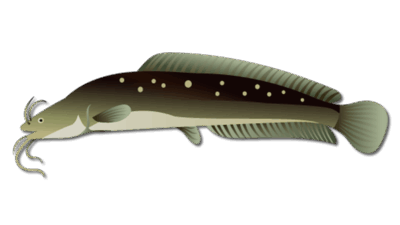
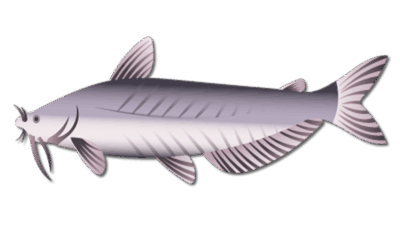
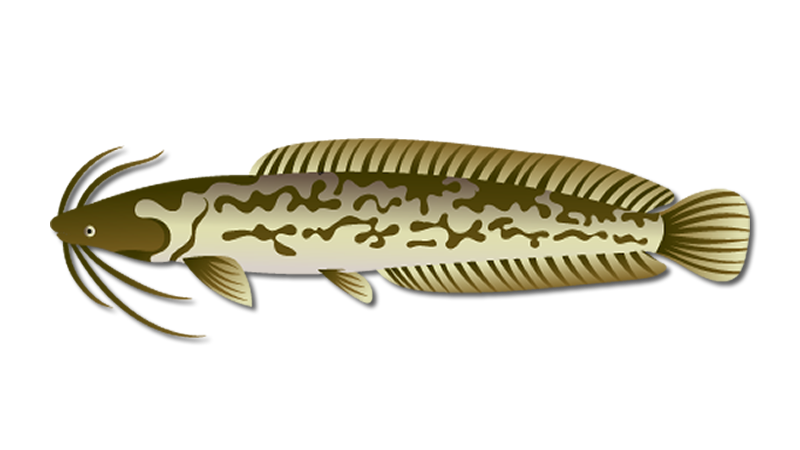
Clariids generally have elongated bodies, long dorsal and anal fins, broad heads, and four pairs of barbels around the mouth. Their skin lacks scales and is protected by mucus. Color varies by species and environment, often ranging from gray or olive to dark brown or black. Albino forms also occur, particularly in aquaculture and the aquarium trade.
The family includes multiple genera and many species, so one description does not fit every member. The FishBase Clariidae family record and Eschmeyer’s Catalog of Fishes are appropriate references for current family-level taxonomy.
How Air-Breathing Catfish Breathe
Clariids possess specialized structures above the gills that contain highly vascular tissue. These accessory organs absorb oxygen directly from swallowed air. The adaptation helps the fish survive in warm, stagnant, muddy, or seasonally shrinking waters where ordinary gill respiration may not provide enough oxygen.
Air breathing does not make these fish land animals. Their skin and respiratory surfaces must remain moist, and exposure time depends on species, temperature, humidity, physical condition, and handling. Claims that every clariid can remain out of water for a fixed number of hours or days are misleading.
The Food and Agriculture Organization’s biology review of Clarias explains the structure and function of the accessory respiratory organ in this important genus.
Habitat and Native Range
Members of Clariidae occur naturally across parts of Africa, Asia Minor, the Indian subcontinent, and Southeast Asia. Depending on the species, they inhabit rivers, lakes, swamps, floodplains, rice fields, canals, temporary pools, and other freshwater environments.
Air breathing is especially useful in floodplain pools and seasonal wetlands. Some species can persist when water levels fall or oxygen drops sharply. A few can make short overland movements during wet conditions, but the familiar “walking” behavior should not be treated as an identical ability across the entire family.
Feeding and Behavior
Many air-breathing catfishes are opportunistic omnivores or predators. Their barbels and other sensory systems help them locate food in dark or turbid water. Diet varies by species and may include aquatic insects, crustaceans, mollusks, fish, eggs, larvae, detritus, fruit, and plant material.
Activity is often strongest in low light or at night. Wide mouths and sensory barbels allow some species to search slowly along the bottom, while others exploit prey throughout the water column. Size, habitat, and local food supply all influence feeding behavior.
Reproduction and Seasonal Water Changes
Reproductive behavior differs among clariid species. In many environments, spawning is connected to rainy seasons, rising water, temperature, and newly flooded habitat. Some species build or use nests and provide parental protection, while others disperse eggs through shallow flooded areas. Family-wide claims about one exact spawning method should therefore be avoided.
Air-Breathing Catfish in Florida
Clariidae is not native to Florida. The best-known established member is the walking catfish, commonly identified as Clarias batrachus. It is found mainly in central and southern Florida and uses ponds, canals, swamps, ditches, and other shallow or low-oxygen habitats.
Florida regulates nonnative clariids because of their invasive potential and their ability to enter aquaculture ponds. Rules differ between prohibited and conditional species. Do not transport or possess a live air-breathing catfish unless current law expressly allows it and all required permits are in place.
Use the FWC walking catfish profile for current Florida status and handling guidance.
Air-Breathing Catfish vs. Walking Catfish
Air-breathing catfish is a broad family-level term. Walking catfish refers to a particular clariid species known for short overland movements. Every walking catfish is an air-breathing catfish, but not every member of Clariidae should be described as the Florida walking catfish.
This distinction is the reason Bass Online maintains two separate pages. This page owns Clariidae family, anatomy, and air-breathing intent. The walking catfish page owns Florida distribution, invasive status, identification, land movement, and legal handling.
Responsible Identification and Handling
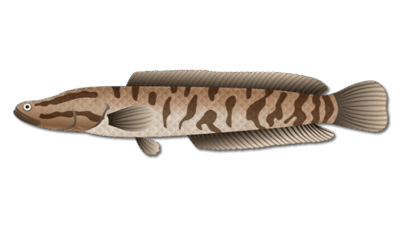
Do not rely on color alone when identifying an unfamiliar catfish. Look at body shape, fin structure, barbels, pectoral spines, and location, then consult a regional fish guide or wildlife agency. Avoid handling sharp pectoral spines with bare hands.
If a suspected nonnative fish is found outside its known range, photograph it, record the location, and follow the reporting instructions of the appropriate wildlife agency. Never release aquarium fish or move live fish between waters.