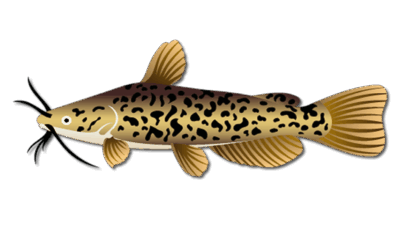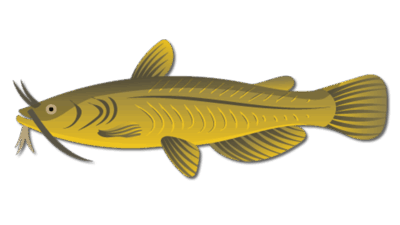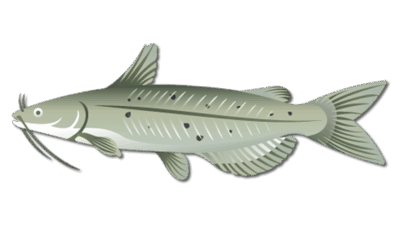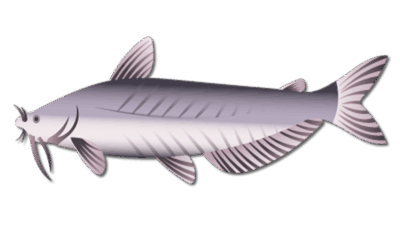






































Bullhead catfish are small to medium-sized North American catfish best known for rounded tails, broad heads, smooth scaleless skin, and the ability to live in warm, murky, low-oxygen water. The name usually refers to several closely related species in the genus Ameiurus, especially black, brown, and yellow bullheads.
Published: October 21, 2021 | Updated: September 11, 2026
What Is a Bullhead Catfish?
Bullheads belong to the North American catfish family Ictaluridae. They are true catfish, but they are not simply young channel, blue, or flathead catfish. Most bullheads stay much smaller, have a square or rounded tail instead of a deeply forked tail, and tolerate quiet water and soft bottoms exceptionally well.
The term “bullhead catfish” describes a group rather than one species. This page owns that group-level intent. Use the separate Brown Bullhead and Yellow Bullhead Catfish pages for species-specific identification, range, and biology.
How to Identify Bullheads
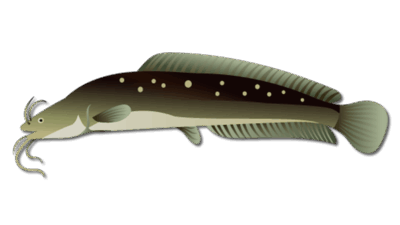
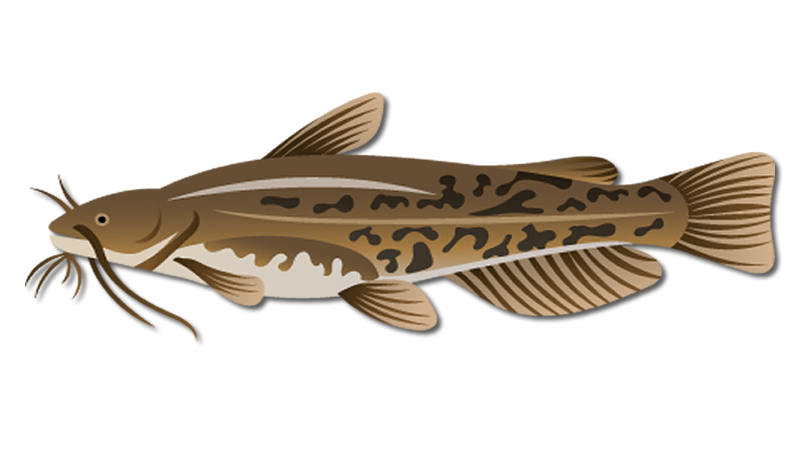
All bullheads have barbels around the mouth, an adipose fin between the dorsal and tail fins, and sharp leading spines in the dorsal and pectoral fins. Their skin is smooth and lacks scales. The tail is generally square or rounded, which helps distinguish a bullhead from a small channel catfish with a clearly forked tail.
Color is useful but not conclusive. Water clarity, bottom type, age, and stress can change how dark or yellow a fish appears. Accurate identification may also require looking at chin-barbel color, the tail margin, the pectoral spine, and the anal fin.
Main Bullhead Species
Black Bullhead
Black bullheads (Ameiurus melas) are usually dark olive, brown, or black above with a lighter underside. Their chin barbels are dark. A pale bar can appear near the base of the tail, and the rear edge of the pectoral spine has weak or limited serrations compared with some related species.
Brown Bullhead
Brown bullheads (Ameiurus nebulosus) are often mottled brown, olive, or yellow-brown. Their chin barbels are dark, and the pectoral spine has noticeable tooth-like serrations. “Hornpout,” “horned pout,” and “mud pout” are common regional names that often refer to this species.
Yellow Bullhead
Yellow bullheads (Ameiurus natalis) are commonly yellow-brown to olive. The light or white chin barbels are a valuable identification clue. Their tail is rounded, and the rear edge of the pectoral spine is typically more strongly serrated.
The Minnesota DNR bullhead profile provides a useful comparison of black, brown, and yellow bullheads. Identification guides from the state where a fish is caught should take priority because the local species mix varies.
Bullheads vs. Other Catfish
Bullheads are commonly confused with small channel catfish. The easiest first check is the tail: bullheads have a square or rounded tail, while channel and blue catfish have distinctly forked tails. Blue catfish also develop a long, nearly straight-edged anal fin and can grow far larger.
Flathead catfish have a broad, flattened head and a lower jaw that projects beyond the upper jaw. Young flatheads may have a squarish tail, but their head shape, mottled coloration, and mouth structure separate them from bullheads.
Habitat and Range
Bullheads occur in ponds, lakes, reservoirs, rivers, streams, marshes, and backwaters across much of North America. They are especially successful in slow or still water with mud, sand, gravel, vegetation, woody cover, or other soft-bottom habitat. Their tolerance of turbidity and low dissolved oxygen allows them to survive where many sport fish struggle.
That tolerance does not mean every muddy pond contains bullheads or that all bullhead species share the same range. Stocking history, drainage, water quality, predators, and local climate determine which species are present. Confirm the fish community and regulations before planning a species-specific trip.
Diet and Feeding
Bullheads are opportunistic bottom-oriented feeders. They eat aquatic insects, worms, snails, crayfish, mussels, fish eggs, small fish, and plant material. Barbels and taste receptors help them find food in darkness or stained water.
They often feed most actively during low light, but weather, water temperature, and competition can produce daytime bites. Shallow flats, weed edges, dock shade, creek mouths, and soft-bottom transitions are productive places to look after sunset.
Spawning and Life Cycle
Bullheads generally spawn in late spring or early summer after shallow water warms. A nest is cleared beneath cover, beside vegetation, under a bank, or in another protected area. Both parents may guard and fan the eggs, and adults protect the newly hatched young.
Young bullheads often travel in compact schools that look like a dark moving ball in shallow water. This behavior reduces predation and makes the fry easy to recognize near shore.
How to Catch Bullhead Catfish
Bullhead fishing does not require specialized heavy tackle. A light or medium spinning outfit, simple bottom rig, small sinker, and appropriately sized hook cover most situations. Use enough weight to maintain bottom contact without burying the bait in soft mud.
Best Baits
- Nightcrawlers and garden worms
- Small pieces of legal cut bait
- Chicken liver or other durable prepared bait
- Crayfish, shrimp, or locally legal natural bait
- Commercial catfish bait where permitted
Fresh, compact baits are easier for bullheads to take than oversized offerings. If fish steal bait without being hooked, reduce bait size and check that the hook point remains exposed.
Simple Rigging
A slip-sinker rig lets a bullhead move with the bait before feeling resistance. A fixed sinker rig is faster to tie and works well for casual pond fishing. Circle hooks can reduce deep hooking when the rod remains in a holder, while conventional bait hooks work when bites are detected and answered quickly.
Handling Bullheads Safely
Bullheads have sharp dorsal and pectoral spines that can cause painful punctures. The spines do not shoot out, but a struggling fish can lock them outward. Hold a small fish firmly behind the pectoral spines, keep fingers clear of the spine tips, and use pliers when needed.
If a puncture occurs, clean the wound promptly and seek medical advice for a deep puncture, retained spine material, worsening pain, swelling, or signs of infection. Fish-handling gloves can improve grip but do not replace careful hand placement.
Are Bullheads Good to Eat?
Bullheads can provide good table fare when taken from clean water and handled promptly. Many anglers prefer smaller fish and remove the skin before cooking. Flavor and texture depend on water quality, fish condition, storage, and preparation.
Follow local harvest limits and fish-consumption advisories. Do not assume a fish is safe to eat simply because the species is edible.
Regulations and Responsible Fishing
Rules for bullheads vary by state, water body, and fishing method. Some states classify them as game fish, others as nongame fish, and local limits may differ. The Missouri Department of Conservation bullhead resource illustrates how seasons and limits can depend on the method used.
Use current agency regulations for the exact water you plan to fish. Never move live bullheads between waters, and dispose of unused bait legally to avoid spreading fish or aquatic organisms.
Explore Bullhead and Catfish Fishing
The related lake and destination cards on this page help identify places where bullheads are part of the recorded fish community. For broader destination planning, see our guide to Florida catfish fishing holes. For exact species research, continue to the Brown Bullhead or Yellow Bullhead pages rather than treating every bullhead as interchangeable.