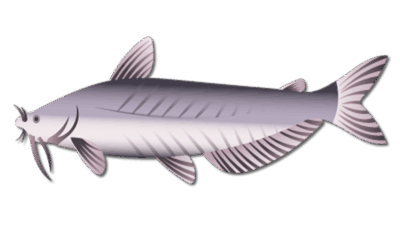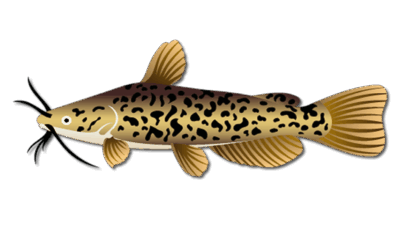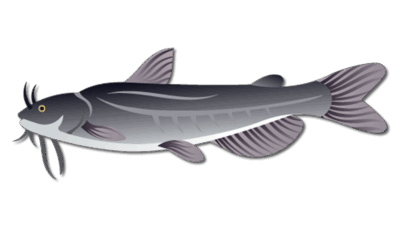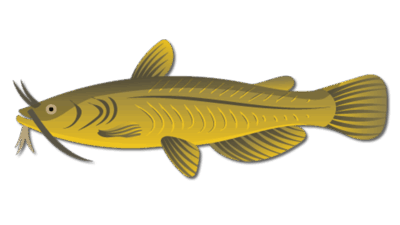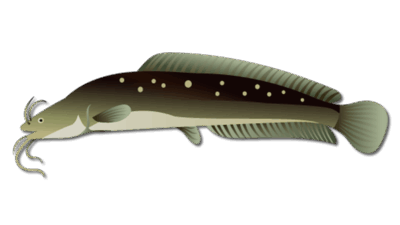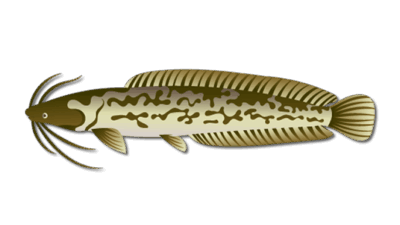


















Other Names: blue cat, willow cat, chucklehead cat, and the spotted cat or Ictalurus punctatus
Channel Catfish Ictalurus punctatus
The Channel catfish (Ictalurus punctatus) is also called the blue cat, willow cat, chucklehead cat, and the spotted cat. It is referred to as a catfish because its barbels look precisely like the whiskers of a cat. Ictalurus is Greek, meaning “fish cat,” while punctatus is Latin for “spotted,” which refers to the dark spots found on its body.
There are 39 species of catfish in the Northern part of America. The three main catfish species targeted by anglers in the United States are Channel Catfish, Flatheads, and Blue Catfish. The larger a catfish is, the older it is, because they never stop growing.
The official fish of Iowa, Missouri, Nebraska, Tennessee, and Kansas is the channel catfish. The natural predator list for an adult channel catfish is small. It mainly consists of large flathead catfish and muskies.
Channel Catfish prefer clean and warmer water temperatures. Anglers can catch channel catfish in almost every waterbody east of the Rocky Mountains into Mexico and Canada. Catfish are among the most underrated fish in the country, as they grow large, put up a good fight, and taste great.
Blue Catfish Vs. Blue Cat
Despite being nicknamed “blue cat,” channel catfish are not the same species as blue catfish. The blue cat is a common name for channel catfish in certain areas, particularly in the spring when male channel catfish turn dark blue during spawning.
Channel catfish and blue catfish can be challenging to distinguish from each other. Generally, channel catfish are brown with darker spots, while blue catfish are blue. However, catfish vary in color based on the water in which they live, and channel catfish usually lose their spots as they mature.
The best way to distinguish these species of catfish is by counting the number of rays on their anal fin. Blue catfish will have over 30 anal rays, while the channel cat will have fewer than 30. The blue catfish also has an anal fin squared off on the front edge, while the channel catfish has a rounded anal fin. The blue catfish has three chambers in the swim bladder, while the channel catfish has two.
Blue catfish are the largest species; the all-tackle record blue catfish weighed 143 pounds.
Features of Channel Cats
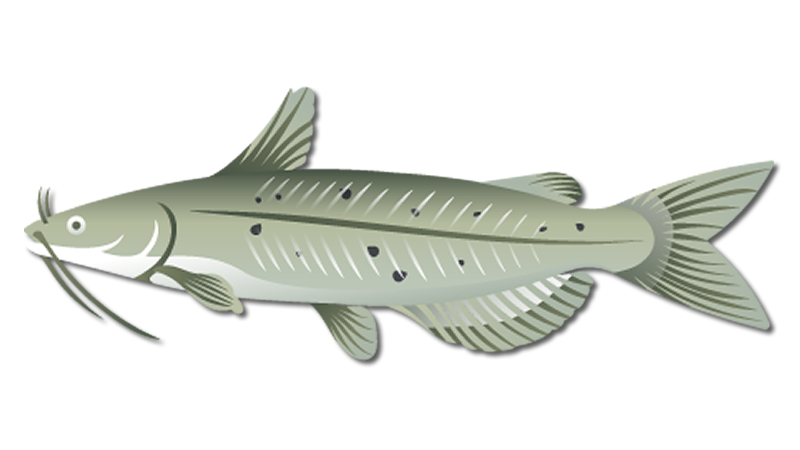
Like all types of catfishes in North America, the body of a channel catfish lacks scales and is cylindrical in cross-section. All its fins are soft-rayed except for the pectoral and dorsal fins, which have hardened and very sharp spines that could wound anglers if not handled cautiously. They have about 24-29 soft rays on their anal fin.
Its adipose fin is at its back, just between the caudal tail fin and dorsal fins. Its cat-like barbels, located at the mouth region, are found on both the lower and upper jaws. The barbels are in a specific pattern, with one on each tip of the upper jaw and four under the lower jaw. The upper jaw of channel catfish extends beyond the lower jaw.
Channel catfish have an olive-brown to slate-blue color on their sides and backs, while their bellies have a silvery-white color and a deeply forked tail. However, their color varies based on the color of the water they inhabit. They are likely to appear light yellow in muddy water, while in fresh, clear water, they are mostly all black.
In a young channel fish, you find irregular spots on their sides, while these spots disappear in adults.
Channel Catfish are much smaller than flathead and blue catfish. Most channel catfish don’t exceed 20 pounds. Generally, anglers targeting channel catfish are going for quantity.
Distribution
Channel catfish are native to the Nearctic region, initially inhabiting the Mississippi Valley, north of the prairie provinces of Mexico and Canada, and in the Gulf States. Since then, it has become widely introduced worldwide. Today, you can find them in many parts of the U.S., including the far west, such as California, as well as in states like Texas and Indiana. The current range of channel catfish extends from southern Canada to northern Mexico, inhabiting many major drainages in the U.S.
Habitat
Channel catfish prefer well-oxygenated, clean natural waters, such as swiftly flowing streams, but they also inhabit ponds, lakes, sluggish creeks, and large reservoirs. Typically, channel catfish inhabit waters with gravel, sand, or rubble bottoms, but are rarely found in waters with mud bottoms.
Moreover, you will hardly find them in dense aquatic weeds. They are naturally freshwater fishes but can survive in brackish and muddy waters.
During the daytime, channel fishes are found in deep holes, especially in places that protect rocks and logs. Their feeding activity and movement usually occur at late hours of the day and just before sunrise.
Young channel catfish feed in shallow areas, while adults prefer feeding in deeper waters immediately downstream from sand bars. You also hardly find adult channel fishes moving from one place to another. They are primarily sedentary—their young move from one place to another, especially at night when feeding.
Age And Growth
Channel catfish tend to grow more effectively in warm waters. Optimum growth occurs in waters at temperatures of about 85 degrees Fahrenheit. When there is an 18-degree change in temperature, there is always a halving or doubling of their metabolic rate.
In fresh or natural waters, the average size of the channel catfish caught by fishermen is usually less than 2- 3 pounds. The size and age they reach in natural waters depend on many factors.
Research and studies on the age and growth of the channel catfish have shown that they do not reach 1 pound in size in many natural waters until after 2 to 4 years. A study in the Lake of Ozarks showed that channel fish do not get a total length of 13 inches until they are eight years old. The maximum age ever recorded for this fish is forty years.
Subsequently, the channel fish’s growth rate in production ponds depends on factors such as food taste, quality, and quantity of food fed, water quality, frequency of feeding, and many others. Most farm-raised channel catfish are harvested at 18 months and weigh 1-1/4 pounds, unlike the Bullhead Catfish counterpart, which would be much larger in the same amount of time.
Spawning
Channel catfish spawn in late spring into early summer when the water temperature is between 75° and 85° F (23° to 30° C), with about 80° F (27° C) being optimum. Wild populations of catfish may spawn as early as late February or as late as August, depending on the location.
Males select nest locations, usually in dark, secluded areas, such as holes in drift piles, undercut banks, logs, and rocks.
Female cats release a golden-yellow gelatinous egg mass at the bottom of the nest. Males then guard the nest, occasionally eating any disturbed eggs. The surviving eggs generally hatch in about a week. The newly hatched fry remain in the nest for about another week while being guarded by the male channel catfish.
The survival rate of young channel cats is much lower in clear water, as they are more susceptible to predation.
Young Channel catfish under 4 inches long feed mostly on small insects.
Channel catfish in captivity reach sexual maturity in about two to three years, while natural populations usually reach maturity in about three to six years. They typically are mature by the time they reach a length of 12 inches.
Feeding
Feeding occurs primarily during the day, but more so at night. Channel catfish feed on a wide variety of animal and plant material near the bottom of natural waters, but some also feed at the surface.
Based on the analysis conducted on their stomachs, young channel catfish primarily feed on aquatic insects. Adult catfish feed on green algae, seeds, small fish, insects, snails, crawfish, and aquatic plants. However, they prefer terrestrial insects, and there have also been records of birds found in their stomachs.
The channel catfish detects food with their sense of taste. Their taste buds are in their mouth, gill arches, pharynx, and even their entire external surface. They have barbels and gill arches that are more developed than any other type of fish, and they see efficiently in clear water, which is an essential means through which they find food.
In turbid water, they also require their sense of taste to find food quickly. The catfish’s organs of smell are located in their nostrils, situated just in front of their eyes.
Fishing For Channel Catfish
Channel catfish are very popular among anglers, especially those who eat their catch.
Catfish are popular with trot liners as well as rod-and-reel anglers. Anglers can catch channel catfish on a wide variety of baits, including chicken livers, worms, grasshoppers, shrimp, cheese, and stinkbait.
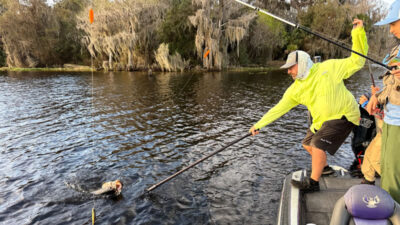
About 200,000-300,000 catfish are stocked annually by the FWC in public waters. Although catfishing is commonly done at night, large catfish can also be caught throughout the day. Catfishing during the day is usually easier from a boat, allowing anglers to reach the deep areas where catfish would be hiding.
The best places to target channel catfish are large streams with low or moderate current, where they are often most abundant.
Fishing Tips
Baits with strong odors, such as chicken livers and stink baits, are best for targeting channel catfish. They will also eat anything natural to the fishery, including minnows, bream, shad, or sunfish.
Channel catfish tend to prefer areas containing some structure, whether it’s a bridge, downed tree, dock, or rocks.
While fishing for channel catfish, look for structure and points in the fishery’s deeper parts while working your way into the shallower areas. Generally, catfish are found in deeper water during the day and in shallower water at night, but this varies depending on the fishery. Knowledge of the local waterways is essential for a successful day of catfishing, which is why hiring a local fishing guide is a great option when targeting catfish.
Fish on the bottom with a sturdy #2 to #4 hook and a heavy split shot sinker.
Tackle depends on the size of fish you are targeting. Often, a medium action combo with a 15 to 20-pound fishing line is sufficient. Some advanced catfishermen targeting trophy channel catfish may use a heavier rod and fishing line.
Be careful of sharp spines when handling these fish.
Best Time
Anglers catch channel catfish throughout the year; however, summer is usually the best time. Generally, they live in deep, slow-moving water in the winter and in faster, shallower water in the summer. They are known to be more active at night, but can be caught throughout the day in some spots.
Best Florida Catfish Fishing
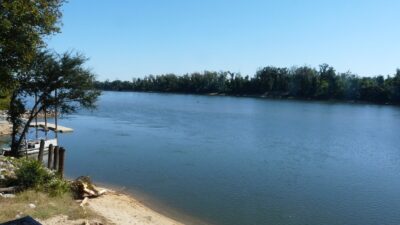
- The Apalachicola River offers excellent fishing for channel, flathead, and blue catfish. Angling for big channel cats is best from April into early July; flathead fishing picks up in April and runs into the summer months. Small catfish can be caught year-round, but the spring and summer months are best. For all species, anglers should try the area from the Jim Woodruff Dam south to Owl Creek—target deep holes with structure, old creek channels, and the mouths of tributaries. Live bream fished on the bottom well for big flatheads, while stink baits or nightcrawlers (also fished on the bottom) should do the trick for channels. Try fresh-cut bait, such as mullet, if pursuing blue catfish.
- The Choctawhatchee River provides outstanding fishing for channel and flathead catfish. Channel catfishing is best from late May through early July and October into November, if the water remains warm. Anglers catch small catfish year-round. Concentrate on the Alabama line south to West Bay and around Holmes Creek’s mouth and other tributaries. Most of the larger catfish live in the river’s northern portion within deep bends and holes or where large woody debris is present. Try live bream on the bottom for flatheads up to 30 pounds. Stink baits or nightcrawlers fished on the bottom will do the trick for channels.
- The Escambia River generates quality opportunities for blue, channel, and flathead catfish. Fishing for channel catfish and big flatheads peaks from April through October. The best stretch lies from the Alabama line to the I-10 Bridge. Savvy anglers will fish live bream on the bottom for big flatheads and stink baits or nightcrawlers for channel catfish.
- The St. Johns River and Dunn’s Creek yield superior bullhead, channel catfish, and white catfish. Prime locations include Dunn’s Creek to Lake Crescent, Murphy’s Creek from the St. Johns River to Dunn’s Creek, and the river from Palatka to Little Lake George. Try the hole on the north side of Buffalo Bluff Bridge, but bring plenty of hooks and weights because there are many snags.
- The Ochlocknee River offers excellent fishing for bullhead, channel, flathead, and white catfish. The best angling begins in April for flathead catfish and mid-May into early summer for channel cats. Both channels and flatheads will continue to bite until the water turns cold in October or November. Anglers catch small catfish throughout the year, but fishing slows down in colder months. Catfishing is good throughout the entire river but especially in the Talquin tailrace area for whites and flatheads. Try deep rivers bends with structure further downstream for flatheads as well.
- The Clermont Chain of Lakes offers anglers superb opportunities for the channel and white catfish. Anglers should concentrate on offshore open-water areas, particularly near drop-offs or around bottom structures. Canals and channels may also be attractive to catfish during times of flow. Cut baits or stink baits should work well for both species.
- Haines Creek, near Leesburg, provides good angling for bullheads, channel catfish, and white catfish. Anglers land most of the larger channel catfish from mid-April through June and October, and November as water temperatures begin to drop. However, small catfish of all species are readily available year-round in flowing water. The creek between Eustis and Griffin lakes offers the best catfishing on the system, particularly below the lock and dam.
- The Upper Kissimmee Chain of Lakes affords great bullhead, channel catfish, and white catfish angling opportunities. The peak spawning periods for big channel catfish are between April and June, and they are hungry afterward. Bullheads primarily spawn from October into November but may spawn year-round. Water flow will concentrate catfish and make it easier to locate and catch. The best sites include C-31 (East Lake Canal), C-35 (Southport Canal), C-36 (canal between Lake Cypress and Lake Hatchineha), C-37 (canal between lakes Hatchineha and Kissimmee), below the Kissimmee River structure (S-65), around the mouth of and in Shingle Creek, and the lake proper around fish attractors. Catfish are often found near drop-offs or around the bottom structure in the canals.
- Southwest Florida Lakes offer many excellent opportunities for channel catfish and bullhead, including lakes 2-5, B and Picnic at Tenoroc Fish Management Area (Polk County); lakes LP2 West, Haul Road Pit, and Pine East at Mosaic Fish Management Area (Polk County); lakes 1 and 3 at Hardee Lakes Park (Hardee County); Lake Manatee (Manatee County); and ponds managed under the Tampa Bay Urban Fishery Program, particularly Dover District Park and Stephen J. Wortham Park.
- Joe Budd Pond (Gadsden County), a 20-acre impoundment, provides excellent channel catfishing. Fish can live throughout the lake, particularly around the fishing fingers and along the dam. This site is only open to the public on weekends, beginning the first Saturday in July through the Labor Day weekend (including the Labor Day holiday). Fishing worms or nightcrawlers on the bottom will often be effective. Anglers can catch fish from shore or a boat. Gasoline motors are not permitted. Fish are typically nine to 14 inches. A harvest limit of six-channel catfish per person, per day, is strictly enforced. For more detailed information on these catfish hotspots, visit www.myfwc.com
Water Quality
The water quality limitations and preferences for both the wide channel fish and farm-raised species are no different. Additionally, the lethal oxygen concentration for both is approximately 1 ppm, and reduced growth can occur when the oxygen concentration is less than 4 ppm.
In natural waters, channel catfish are hardly exposed to lethal concentrations of either nitrate or ammonia. Still, they are no more tolerant of high levels of ammonia and nitrite than are those that are farm-raised.
Edibility
Channel catfish are very popular and delicious. You can cook them in various ways, such as grilling, roasting, boiling, or frying. One of the main reasons fishermen highly seek after channel catfish is their delicious flavor when cooked.
Record
The IGFA all-tackle world record channel catfish weighed 58 pounds. The angler caught it in South Carolina, the Santee Cooper Reservoir in 1964