













Published: June 12, 2014 · Updated: September 11, 2026
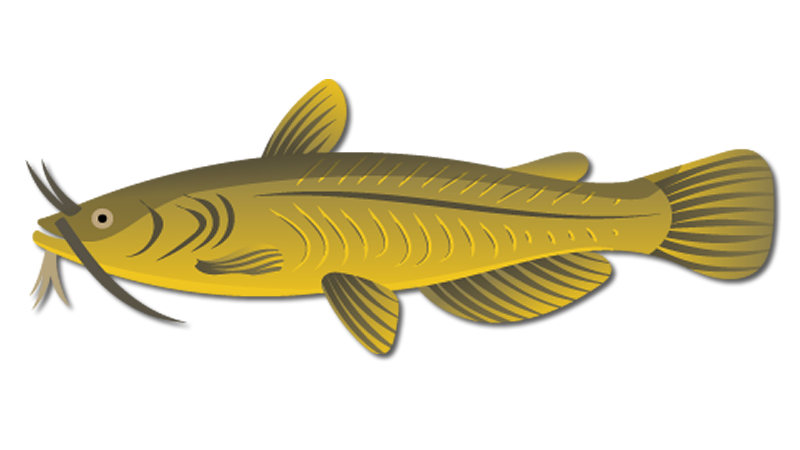
The Yellow Bullhead Catfish (Ameiurus natalis) is a native North American bullhead recognized by its rounded or nearly straight tail, long anal fin, and usually pale chin barbels. It is a compact, bottom-oriented catfish that thrives in ponds, lakes, backwaters, and slow streams. Anglers often call it a yellow bullhead, yellow catfish, yellow-belly catfish, or white-whiskered bullhead.
This page is the species-specific guide to Yellow Bullhead identification, size, records, habitat, diet, spawning, and fishing. For an overview of black, brown, and yellow bullheads together, see the Bullhead Catfish guide.
Yellow Bullhead Quick Facts
- Scientific name: Ameiurus natalis
- Family: Ictaluridae, the North American catfish family
- Native range: Much of eastern and central North America, extending south to the Gulf of Mexico
- Typical habitat: Vegetated ponds, lakes, backwaters, reservoirs, and slow streams with soft bottom
- Key identification marks: Rounded or nearly straight tail, long anal fin, and normally white or yellow chin barbels
- Maximum reported length: About 18.25 inches
- Florida state record: 5.05 pounds
- Florida Big Catch minimum: 14 inches or 1.5 pounds
How to Identify a Yellow Bullhead
Yellow Bullheads range from yellow-olive to slate-black across the back. Their sides are lighter, and the underside may be white, cream, or bright yellow. Body color changes with water clarity, bottom composition, age, and location, so identification should never depend on the yellow belly alone.
The most useful features are the chin barbels and fins. Across most of the range, the four barbels beneath the jaw are white or yellow. The Florida Museum notes an important regional exception: Yellow Bullheads in peninsular Florida may have dusky brown chin barbels. The tail is rounded or truncate rather than deeply forked. The anal fin is relatively long and fairly straight, with 24 to 27 rays.
Is a Yellow Bullhead a Catfish?
Yes. Yellow Bullheads are scaleless freshwater catfish with eight sensory barbels around the mouth and strong dorsal and pectoral fin spines. “Bullhead” describes a compact group within the North American catfish family, not a different kind of fish.
Yellow Bullhead vs Brown and Black Bullhead
Closely related bullheads can occupy the same water, and color alone causes many mistakes. Use several physical features together:
- Yellow Bullhead: Usually pale chin barbels, rounded or nearly straight tail edge, long anal fin with 24 to 27 rays, and little side mottling.
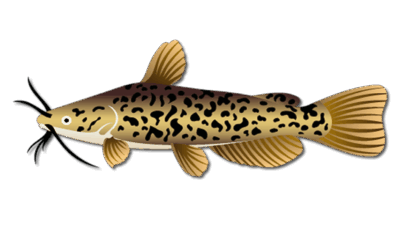
- Brown Bullhead: Dark chin barbels, obvious mottling on many fish, and a shorter rounded anal fin with fewer rays. Review the Brown Bullhead Catfish page for a complete comparison.
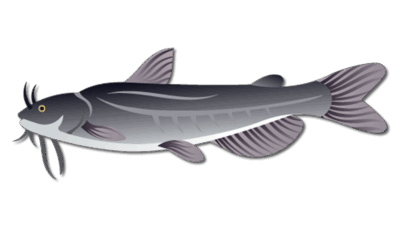
- Black Bullhead: Dark chin barbels, a shorter rounded anal fin, and body coloration that often looks uniformly dark above a pale belly.
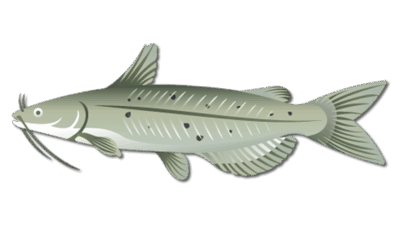
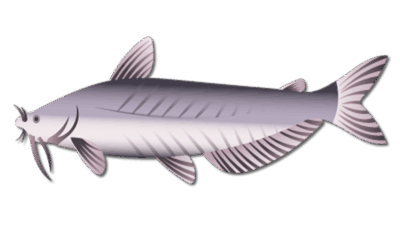
A Channel Catfish has a distinctly forked tail and a more streamlined body. A White Catfish has a moderately forked tail, while all three common bullheads have a rounded or nearly straight tail.
How Big Do Yellow Bullhead Catfish Get?
Most Yellow Bullheads are modest fish, commonly well under two pounds, but unusually productive water can grow much larger individuals. The Florida Museum reports a maximum total length of approximately 18.25 inches. Florida’s official state record is 5.05 pounds, and the FWC Big Catch qualifying minimum is 14 inches or 1.5 pounds.
Search results sometimes mix Yellow Bullhead records with Brown or Black Bullhead records. Confirm the species before comparing a catch with a record. The IGFA Yellow Bullhead record database is the appropriate source for current all-tackle and line-class categories. The widely cited all-tackle mark is 6 pounds, 6 ounces, but anglers should verify the live IGFA listing because record status can change.
Native Range and Distribution
The native range includes Atlantic and Gulf Slope drainages from New York to northern Mexico, plus the St. Lawrence, Great Lakes, and Mississippi River basins. The species has also been introduced in other parts of the United States. The USGS Yellow Bullhead profile tracks reported occurrences beyond the native range.
Yellow Bullheads are native in Florida. They use ponds, reservoirs, small lakes, oxbows, backwaters, and slow sections of rivers and streams. A statewide distribution does not mean every lake has a strong population. Local habitat, water quality, forage, and fish-community balance determine whether anglers find scattered fish or a dependable bullhead fishery.
Habitat and Daily Behavior
Look for clear to stained shallow water with vegetation, soft mud or leaf-covered bottom, submerged wood, undercut banks, and quiet pockets away from strong current. Yellow Bullheads tolerate low oxygen and degraded conditions better than many freshwater fish, but they also occur in healthy, clear, vegetated systems.
They rely heavily on smell, taste, and touch to find food. Activity often increases from dusk through the night, although fish may feed during the day in stained water, beneath cover, or during overcast conditions. In cold water, movement and feeding usually slow. During warm periods, shallow cover and the edges of vegetation can hold active fish after sunset.
What Do Yellow Bullhead Catfish Eat?
Yellow Bullheads are opportunistic omnivores and scavengers, but they actively seek live prey. Their diet includes minnows, crayfish, shrimp, snails, mussels, aquatic insects, fish eggs, and other small organisms found near the bottom. The Florida Fish and Wildlife Conservation Commission specifically identifies minnows, snails, shrimp, and crayfish as preferred foods.
Their broad diet explains why simple natural baits work so well. Match local forage when possible and keep the bait where the fish naturally feed: on or just above the bottom.
Spawning and Life Cycle
Yellow Bullheads generally spawn in late spring or early summer as water warms. Both adults may help prepare a nest beneath logs, rocks, overhanging banks, or dense vegetation. The parents guard the eggs and young, and newly hatched bullheads may appear as a compact dark school moving through shallow cover.
Exact timing varies by latitude and water temperature. The South Carolina Department of Natural Resources reports spawning from May through June when water reaches approximately 75 to 80 degrees Fahrenheit in that region. Florida fish may begin seasonal activity earlier, so local conditions matter more than a fixed calendar date.
How to Catch Yellow Bullhead Catfish
Yellow Bullheads are approachable on light tackle and are excellent targets from shore, docks, small boats, and kayaks. The goal is to place a compact, scented bait close to cover without using more weight than necessary.
Best Baits
- Live nightcrawlers or pieces of worm
- Fresh cut bait
- Crickets
- Small minnows where legal
- Shrimp or crayfish where regulations allow
- Prepared catfish bait or dough bait
Simple Bullhead Rig
Use a small circle hook or bait-holder hook below a light sliding sinker. Add only enough weight to reach bottom and hold position. A short leader helps keep bait near the strike zone around vegetation or wood. When the bottom is extremely soft, suspend the bait a few inches above it with a small float.
Where and When to Fish
Target weed edges, dock shade, culverts, backwater entrances, submerged logs, pond drop-offs, and shallow flats beside deeper water. Evening and the first few hours after dark are dependable, especially in warm weather. Move after 15 to 20 minutes without a bite because bullheads often gather in groups.
Are Yellow Bullhead Catfish Good to Eat?
Yellow Bullheads are edible and are commonly prepared like other small catfish. Fish from clean water, place retained fish on ice promptly, and follow local harvest rules and water-specific consumption advisories. Flavor and quality depend heavily on the water body and handling. Release any fish you do not plan to use.
Safe Handling and Fishing Regulations
The barbels do not sting, but the rigid dorsal and pectoral fin spines can cause painful punctures. Grip a small bullhead firmly behind the pectoral spines, use long-nose pliers for hook removal, and support larger fish horizontally for photographs.
Fishing regulations and consumption guidance can change. Review current FWC freshwater fishing regulations before fishing in Florida, and check rules for the specific water body. Never move live Yellow Bullheads between waters.