

































Published: March 4, 2012 · Updated: September 11, 2026
Brown bullhead catfish (Ameiurus nebulosus) are small, sturdy North American catfish known for dark chin barbels, mottled sides, a nearly square tail, and an ability to live in warm, slow water. Anglers may also know them as hornpout, horned pout, mud pout, or mud cat.
This guide focuses on the brown bullhead as a single species. For a comparison of black, brown, and yellow bullheads, visit our bullhead catfish guide.
Brown Bullhead Quick Facts
- Scientific name: Ameiurus nebulosus
- Family: Ictaluridae, the North American catfish family
- Other names: hornpout, horned pout, mud pout, mud cat
- Identification: dark chin barbels, irregular brown or black mottling, a slightly notched or nearly square tail, and sawlike teeth on the rear edge of the pectoral spine
- Habitat: ponds, lakes, reservoirs, backwaters, and slow sections of rivers and streams
- Typical activity: most active near the bottom and often after sunset
- Florida state record: 7.02 pounds, according to the Florida Fish and Wildlife Conservation Commission
How to Identify a Brown Bullhead
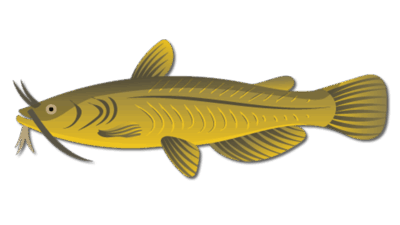
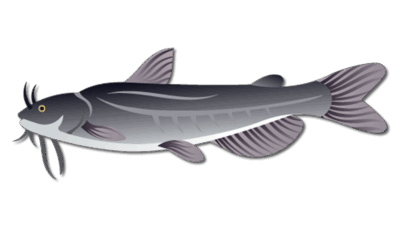
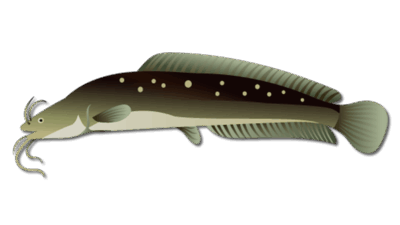
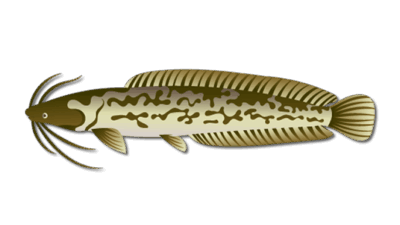
Brown bullheads usually have an olive-brown to yellow-brown back, irregular dark mottling along the sides, and a creamy white or yellowish belly. Their chin barbels are dark rather than white or yellow. The skin is scaleless, and the head is broad and flattened.
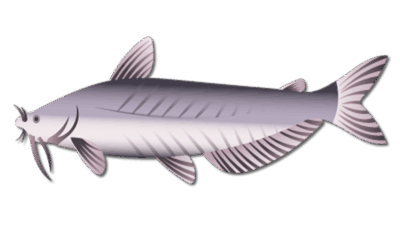
The tail is only slightly notched and can look nearly square. That feature helps separate a bullhead from a young channel catfish, which has a clearly forked tail. Brown bullheads also have a sharp spine at the front of the dorsal fin and each pectoral fin.
Brown Bullhead vs Yellow Bullhead
The quickest field clue is under the jaw. Brown bullheads have dark or dusky chin barbels. Yellow bullheads have pale yellow or white chin barbels and usually lack the brown bullhead’s distinct mottling. Fin-ray counts and pectoral-spine teeth can confirm an identification when color is unclear.
Brown Bullhead vs Channel Catfish
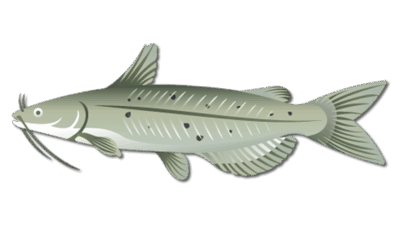
A channel catfish has a deeply forked tail and a more streamlined body. A brown bullhead has a rounded or nearly square tail, a stockier shape, and dark chin barbels. Juvenile channel catfish may show dark spots, so tail shape is a more dependable first check than body color alone.
Size and Growth
Most brown bullheads caught by anglers are modest fish, often around 8 to 14 inches long. Larger individuals can exceed that range, and the Florida Museum reports a maximum total length of about 21 inches. Growth varies with water temperature, food supply, crowding, and habitat quality.
The species can mature at a relatively small size. In productive waters with balanced populations, fish grow faster than they do in crowded ponds where many bullheads compete for the same food.
Range and Habitat
Brown bullheads are native across a broad part of eastern and central North America and have been introduced beyond their original range. They live in ponds, lakes, reservoirs, creeks, river backwaters, and sluggish runs over soft bottoms.
They tolerate warm, turbid water and lower dissolved oxygen better than many sport fish. That toughness does not mean they require polluted water. The best fishing often occurs where soft bottom, nearby cover, and a reliable food supply meet.
Useful targets include shallow flats beside deeper water, the outside edge of vegetation, creek mouths, dock shade, flooded brush, and quiet pockets protected from strong current. In Florida, the FWC brown bullhead profile describes the species as native and common in still or slowly flowing warm waters.
Diet and Feeding Behavior
Brown bullheads are opportunistic bottom feeders. They use taste and smell receptors on their barbels and skin to locate insects, worms, leeches, snails, crayfish, plant material, carrion, fish eggs, and small fish.
They often feed most actively from dusk through the night, especially in shallow water. They can also bite during daylight when water is stained, the sky is overcast, or cover provides shade. A slow bait kept close to the bottom usually matches their feeding style better than a fast-moving lure.
Spawning and Life Cycle
Spawning generally occurs in late spring or early summer as shallow water warms. Adults prepare a nest in protected water under vegetation, woody cover, or an undercut bank. Both parents may guard the eggs, and adults continue protecting the newly hatched young.
Young bullheads commonly travel in a compact school. Seeing a dark ball of small fish near the shoreline can indicate a guarded brood, so anglers should avoid disturbing it unnecessarily.
How to Catch Brown Bullhead Catfish
Brown bullheads are approachable fish for beginners, but deliberate location and bait placement make catches more consistent. Use light or medium-light tackle, enough weight to keep the bait near bottom, and a hook sized to the bait rather than oversized catfish gear.
Best Baits
- Nightcrawlers and garden worms
- Small pieces of fresh cut bait
- Minnows
- Shrimp
- Chicken innards or commercial stink bait where legal
Worms are the simplest all-around choice. Keep the bait compact so the hook point remains exposed. Fresh bait and natural scent are usually more important than elaborate attractants.
Simple Rig
A basic slip-sinker or fixed-sinker bottom rig works well. Use just enough weight to maintain contact with the bottom, followed by a short leader and a small circle hook or bait hook. In weedy ponds, suspend the bait slightly above the bottom with a float to reduce fouling.
Where and When to Fish
Begin near soft-bottom flats, vegetation edges, culverts, dock shade, or slow current breaks. Evening and the first few hours after dark are dependable periods. After locating one fish, make another cast to the same depth because bullheads often feed in groups.
Handling Brown Bullheads Safely
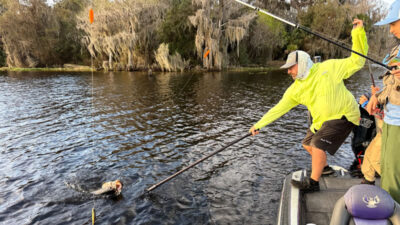
Brown bullheads do not have a stinger, but the rigid dorsal and pectoral spines can puncture skin. Grip the fish firmly behind the pectoral spines or use a landing tool, especially with a fish that is twisting.
If a spine punctures the skin, clean the wound promptly and follow normal first-aid guidance. Do not rub fish slime into the wound. Seek medical care for a deep puncture, a retained spine, worsening pain, redness, swelling, or signs of infection.
Are Brown Bullheads Good to Eat?
Brown bullheads are edible and are valued in many regional fisheries. Fish from clean water usually provide the best table quality. Keep only fish that meet local regulations and consumption guidance, chill the catch quickly, and clean it carefully.
Fishing regulations and advisories vary by water body. Check the responsible state wildlife agency before fishing or harvesting. Florida anglers can confirm identification, the state record, and Big Catch benchmarks through the official FWC species profile.
Brown Bullhead Records and Recognition
Florida’s listed state record is 7.02 pounds. FWC’s Big Catch benchmark for brown bullhead is 16 inches or 2 pounds. Records and recognition-program thresholds can change, so verify the current figures before submitting a catch.