
Best Seller



The St. Johns River, at 310 miles long, is the longest in Florida. Its headwaters are located at Blue Cypress Lake in Indian River County, and it empties into the Atlantic Ocean through its mouth, east of Jacksonville. This river is unique as it flows north. The St. Johns River is an estuary where saltwater and freshwater mix, creating a brackish environment.
However, the river is predominantly freshwater due to its groundwater and network of marshes at the beginning. The history and culture of the nearby towns on St. Johns River are rich in experiences. It’s a place that holds tons of environmental and aesthetic value. St John’s serves as a place to call home for people in town and nature’s wildlife alike.
St. John’s large size spans twelve counties in Florida, covering 310 miles. The river is almost 3 miles wide at its most significant point. The St John’s water basin covers 16% of Florida, covering nearly 9,000 square miles.
This beautiful, clear river flows north at a rate of 0.3 miles/hour and contains approximately 3,500 lakes, blackwater streams, and rivers. It earned its nickname “the liquid chameleon” due to these characteristics. Because of the excessive number of lakes found in the watershed, the Timucuan Indians named the St Johns River, Wekiva, meaning rivers of lakes.
The river flows north because its headwaters are 27 feet higher in elevation than its endpoint. The St John’s River has a prolonged elevation drop while flowing from south to north. The river drops only 1 inch per mile throughout its 310-mile northward course, making its total drop less than 30 feet over its entire upstream course to the north from Sanford to Jacksonville.
The St. Johns River begins near Vero Beach as a marsh in Indian River County, then winds through 12 Central Florida counties as a broad waterway before emptying into the Atlantic Ocean. Toward the Atlantic, where the river meets the sea, the waters gradually transition from freshwater to brackish. The large and diverse St. Johns River is categorized into three “basins” that all offer unique angling opportunities. Each basin is a watershed, also known as a drainage basin.
The Upper Basin portion is the farthest south, and it is where the river originates, consisting entirely of freshwater. It starts just west of Vero Beach in Indian River County and ends as it winds towards Titusville. This section features swampy, marshy waters, making it unpredictable for anglers. The upper basin is the river’s headwaters and is loaded with alligators and wading birds.
The Middle Basin flows through Central Florida, starting in Brevard County near Lake Washington and ending in Putnam County. The middle basin is only 37 miles long, making it the shortest of the basins. Here in Orange Park, the river widens and becomes more fishable and easier to navigate. It consists of clear spring runs and dark water tributaries. The middle basin opens up to form lakes such as Lake Monroe, Lake George, Harney, and Jesup.
The Lower Basin starts in Putnam County in northeast Florida, flows through Jacksonville in St Johns and Clay counties, continuing to the river’s mouth in Duval County until it flows into the Atlantic Ocean. The river’s mouth in the Atlantic Ocean flushes 42,000,000 gallons of saltwater into the St Johns River every day. The lower basin has plenty of diverse angling opportunities. Both freshwater and saltwater species inhabit this area.
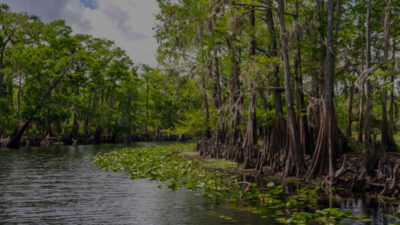
In and around the St. Johns River is an abundance of wildlife. The rivers have been home to many plants and animals for centuries. Species known to the river include manatees, crabs, shrimp, river otters, waterfowl, blue herons, bald eagles, rhesus monkeys, alligators, and a variety of other reptiles.
Major tributaries that flow into the St. Johns River include the Wekiva River, the Econlockhatchee River, Rodman Reservoir, and the Ocklawaha River. The St. Johns River has some of the best fishing in the country from the headwaters and north to the mouth. St. Johns is a desirable fishing spot for anglers because of its diversity.
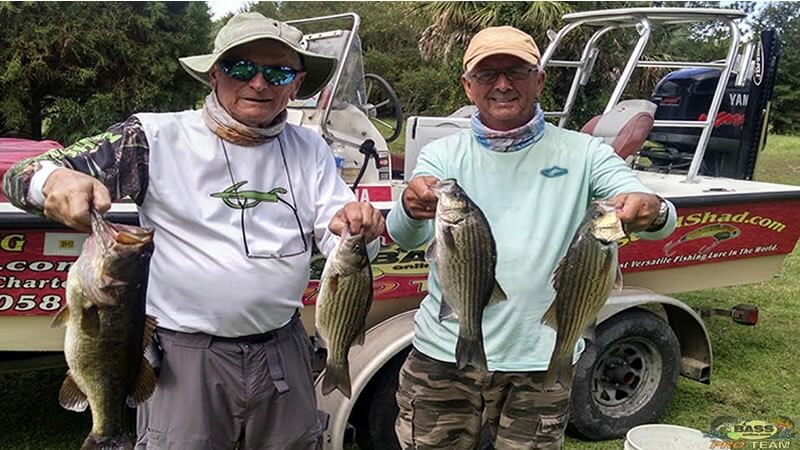
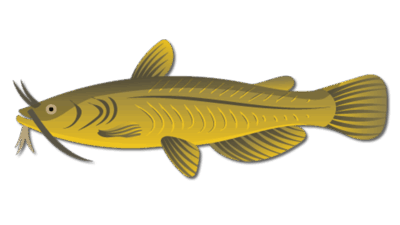
With both freshwater and saltwater species thriving here, the St Johns River is an adventure that anglers of all levels and fishing preferences must experience. It’s loaded with many fish species but is most known for its trophy largemouth bass, striped bass, and crappie. As you will see below, there are lots of species, but there are no smallmouth bass.
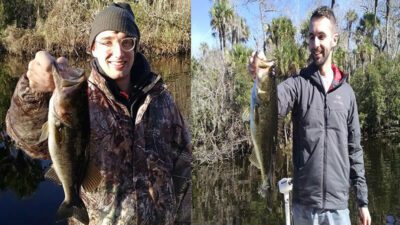
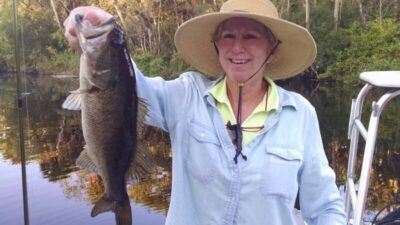
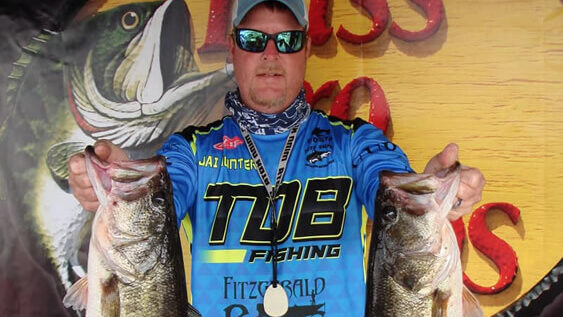
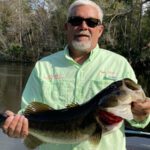
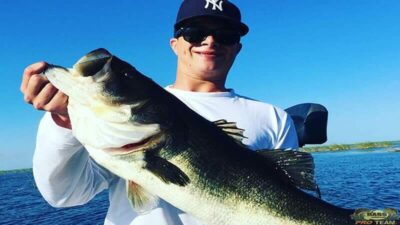
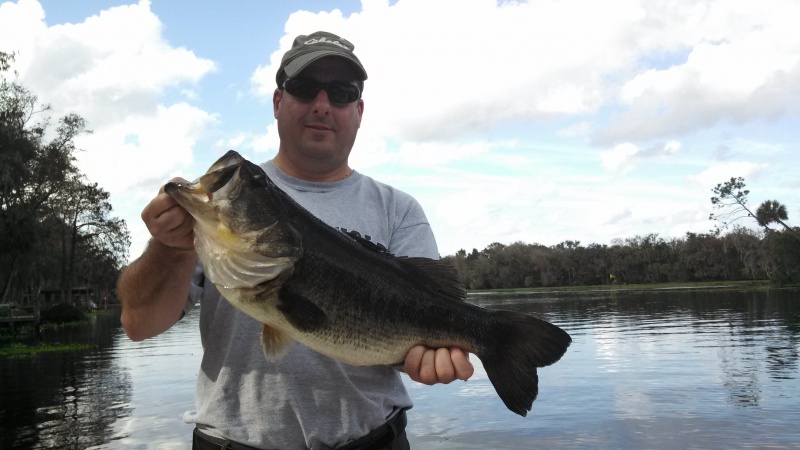
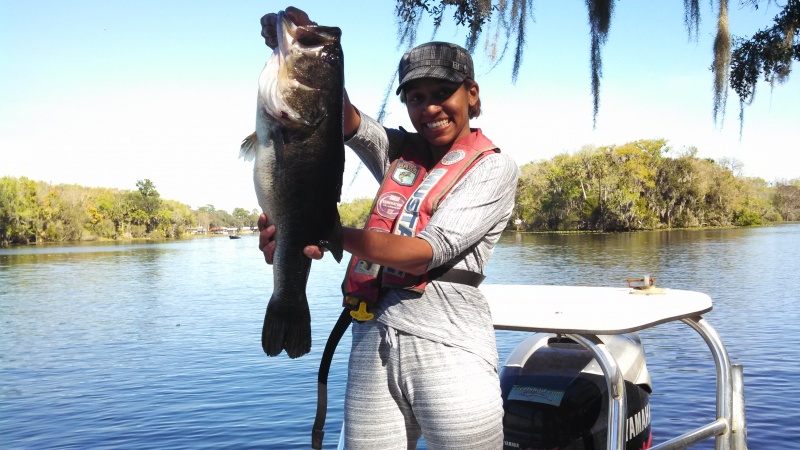
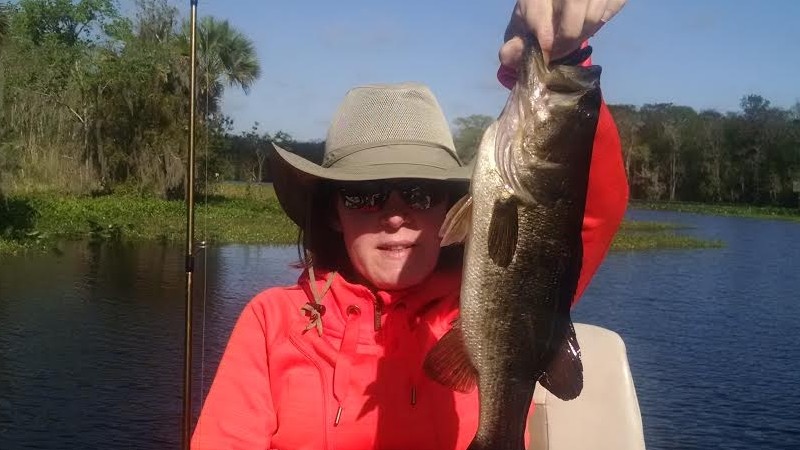
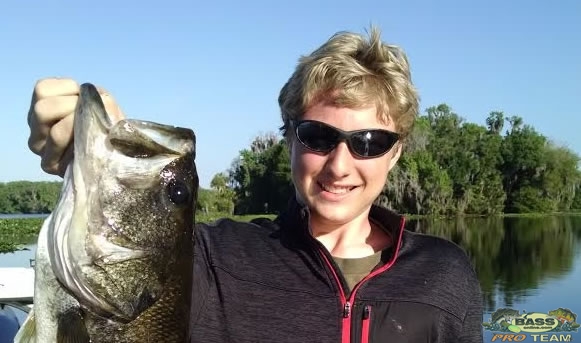
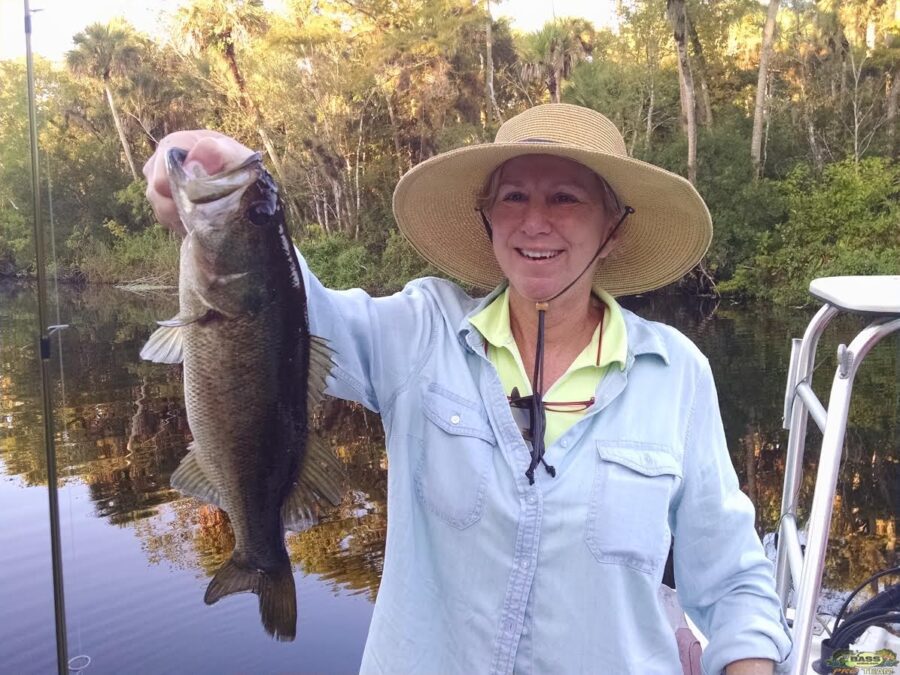
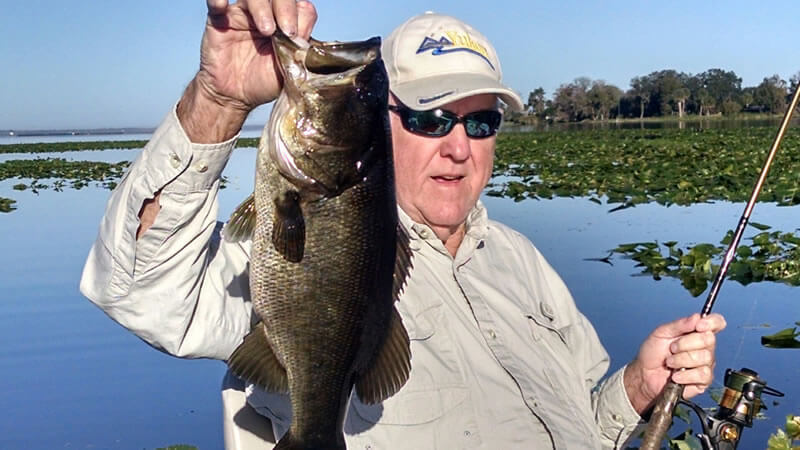
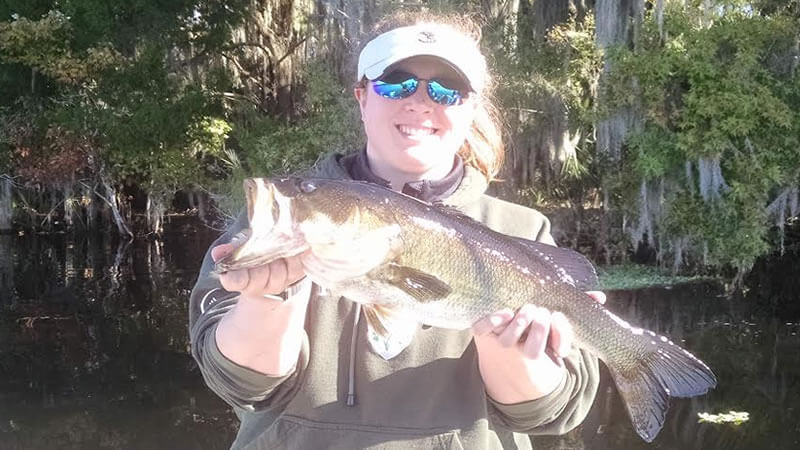
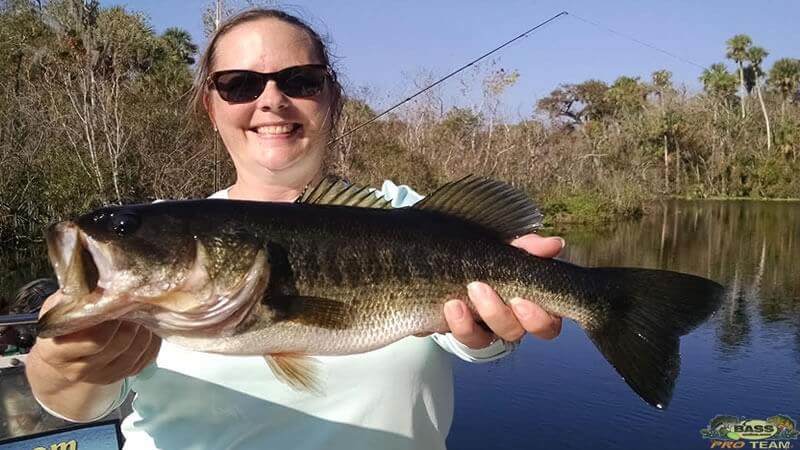
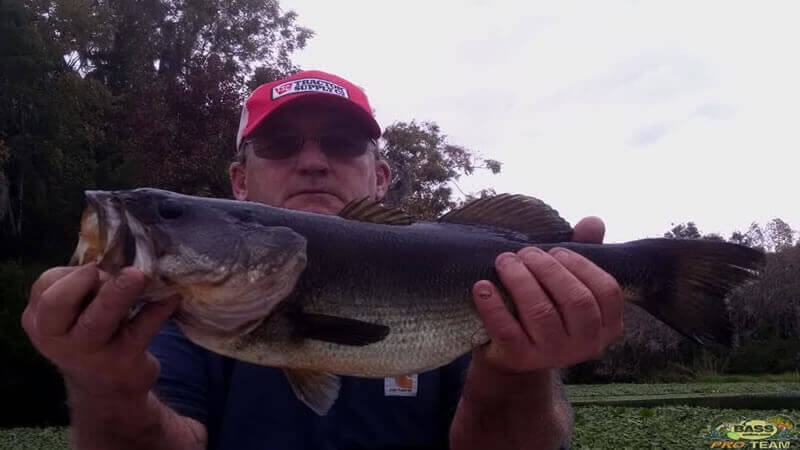
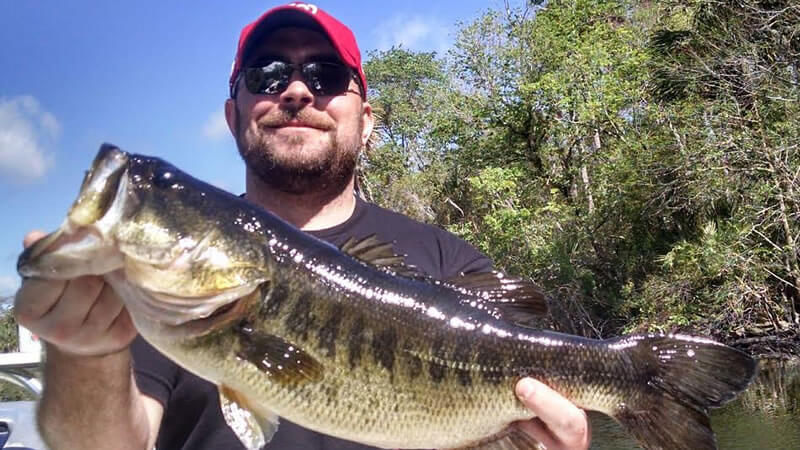
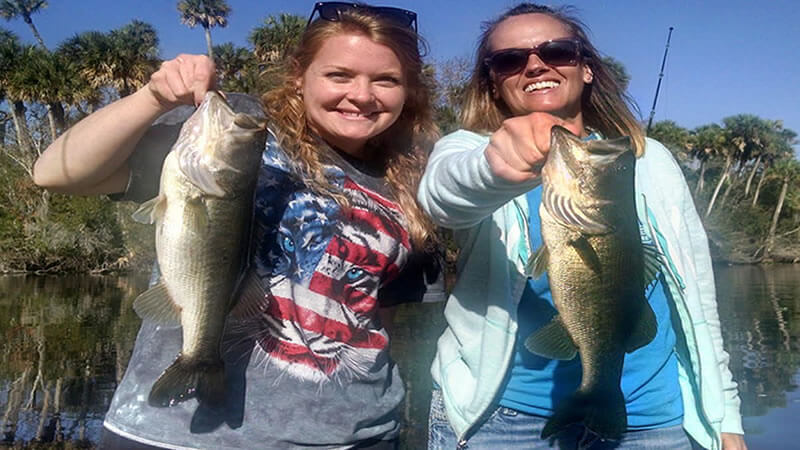
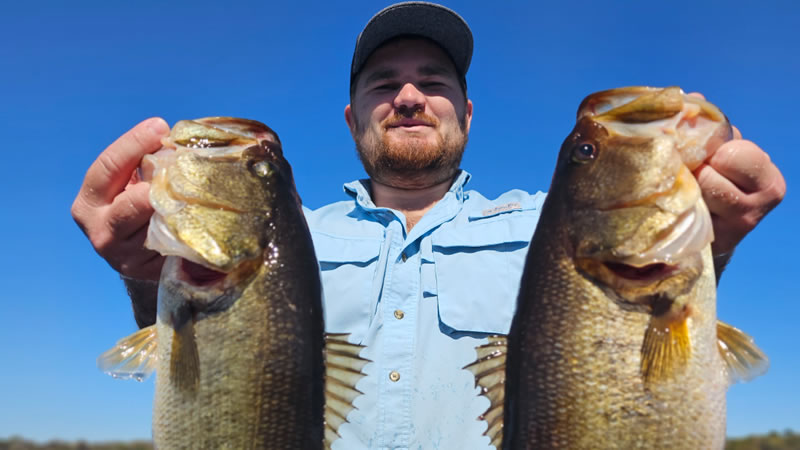
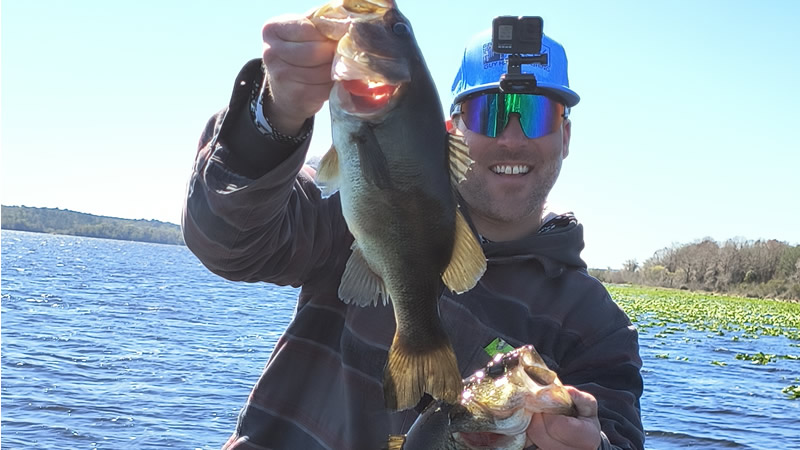
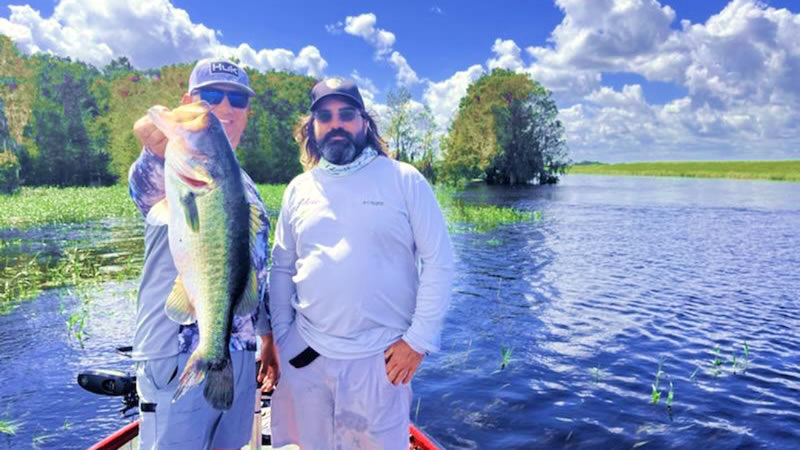
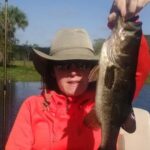
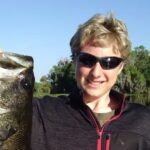
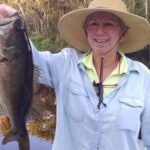
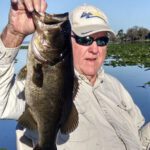
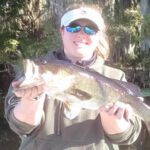
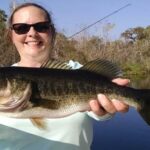
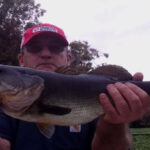
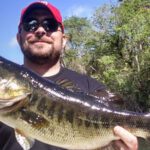
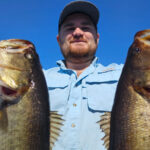
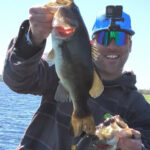
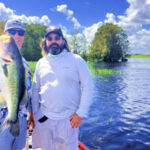
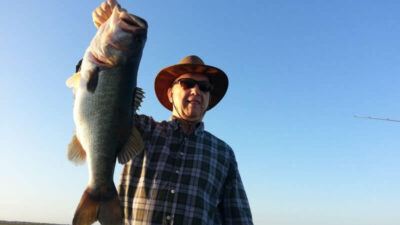
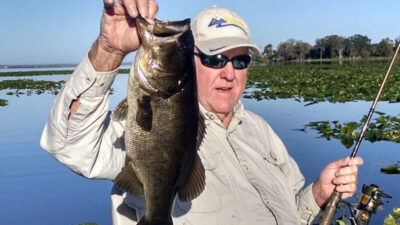
Largemouth Bass: The most notable aspect of this river is its trophy bass. Largemouth bass can be caught all year round; however, weather and rainfall can determine where the fish are located in various parts of the river. Its size and variations are why using a fishing charter for this vast river is a good idea.
Striped Bass: For anglers more inclined towards saltwater species, you will find striped bass in the St. Johns River brackish waters. Striped bass put up quite the fight and will create the thrill of a lifetime for any angler who hooks one. The lower basin is fed by cool springs, creating an ideal environment for stripers to thrive. Anglers have reported striped bass reaching sizes of over 20 inches.
Stripers are most abundant in Lake George, where the Lower and Middle Basins meet. Other saltwater species in the river include Flounder, Redfish, and Spotted Trout. These saltwater fish can be found throughout the river, Lake Monroe, and Lake Harney.
Sunshine Bass: Sunshine bass, or hybrid bass, are the third top bass species in the St. Johns River. Sunshine bass artificially spawned hybrids produced by crossing a female white bass with a male striped bass. Sunshine bass possess the speed of striped bass and white bass, making them a fun catch among anglers.
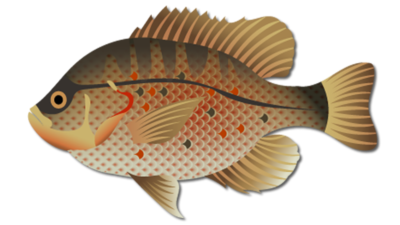
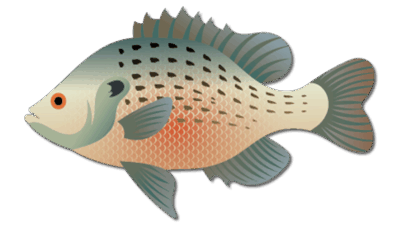
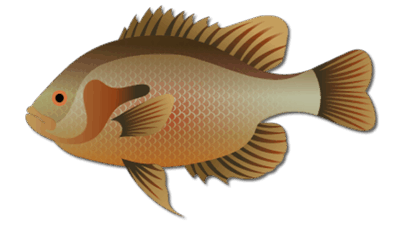
Panfish: Other species in the St. Johns River include Panfish such as Perch, Bluegill, or Crappie (also known as “specks” in North Florida). These Panfish can be found throughout the freshwater areas of the St. Johns River. Crappie thrives in St Johns year-round.
Shad: Shad is among the other more popular freshwater species in the St Johns River. They are most abundant in winter as they travel upriver to spawn. It’s recommended to use ultra-light tackle, which is especially favored by fly fishermen for its tarpon-like feel once hooked.
To see a complete list of great St Johns River Fishing Guides, please click here!
The St. Johns River’s bottom and size vary significantly, making it challenging to navigate. This restricts vessels of certain measures to going into specific areas. St John’s has strict licensing regulations for who can navigate boats in its waters. Due to the strict restrictions associated with this beautiful river, it is highly recommended to fish with a guide.
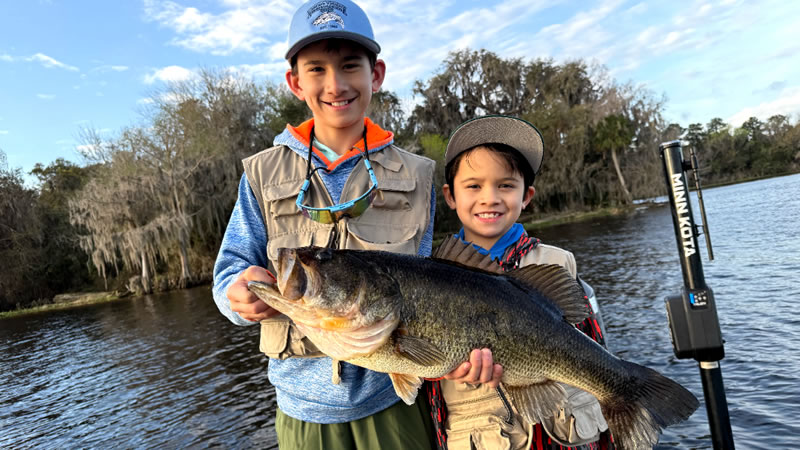
Aside from the restrictions, the size alone is enough to overwhelm any angler. It’s hard to keep up with all the variations and know where the fish are. The best way to fish the St. Johns River is by boat, due to its large size and calm waters. The river’s calmness makes it a perfect spot for anyone prone to seasickness. It’s also a location favored by families because of its tranquil waters. It’s an ideal place to get your little ones hooked on bass fishing.
The St. Johns River in Florida is known for its trophy largemouth bass that an angler dreams of catching. It takes experience from a local expert to know where to find these big fish. No matter what time of year it is, it’s possible to catch your personal best. You have to know where to look. Your professional guide is here to point you in the right direction.
For new anglers or experienced, the safest and most productive way to fish the St. Johns River is with a professional fishing guide on a charter.
Lake Poinsett – best for largemouth bass anglers looking for a trophy in the winter.
Lake Winder – best for the quantity of largemouth bass
Taylor Creek is easily accessible and is home to largemouth bass and crappie throughout the year.
Lake Hell N Blazes – the stretch of river between Lake Hell N Blazes to Lake Sawgrass is highly productive for largemouth bass, crappie, and bluegill. It’s accessible from Melbourne and best when the hydrilla coverage is low.
Lake Harney – largemouth bass, shad, and crappie thrive here. Access can be limited and usually reached through the Mullet Lake Road boat ramp.
Lake Jesup – located close to Orlando and best known for its abundance of crappie.
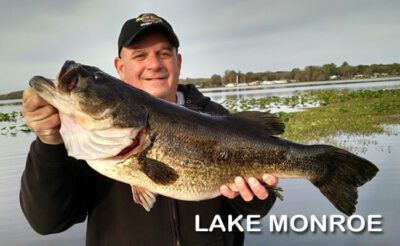
Lake Monroe – abundant in trophy largemouth bass. This is the part of the river navigable for larger boats.
Lake George – access through the town of Welaka is best for largemouth and striped bass.
Jacksonville – you’ve got the St. Johns River on one side and the Atlantic on the other side of Jacksonville. This area is an excellent spot for fishing charters. The area includes sites around the Mayport Jetties, Mill Cove, and the George Crady Bridge Fishing Pier.
The largemouth bass is found throughout the entire river, including areas near the brackish waters. The Upper and Middle Basins are typically the most productive, with most of these areas comprising pure freshwater.
Seasons: The “dry season” of late summer to early spring is the best time for Florida bass fishing in the St Johns River.
During the “wet season” of late spring and summer, the middle and upper basins tend to flood, causing the bass to migrate away from these parts of the river into the marshy wetlands.
Tips from the locals:
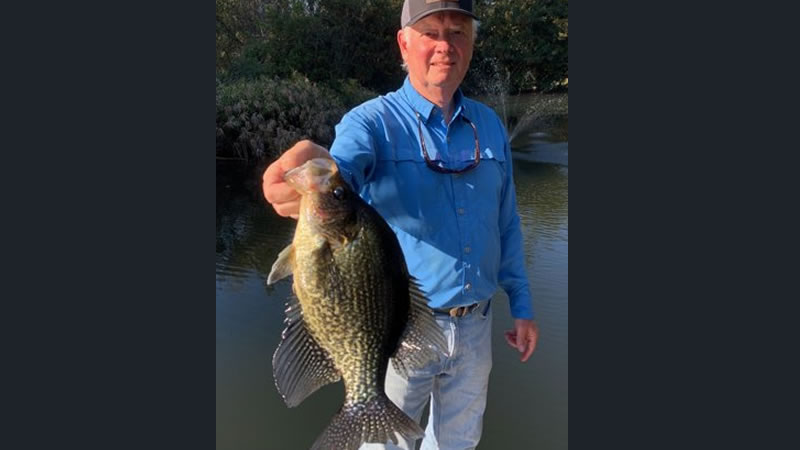
Florida is number one on the list of top 10 states for crappie fishing, and the St Johns River is one of the best spots within the state to catch them.
Crappie can be caught here year-round in Florida, but the best months are January, February, April, and November. The least productive months are March, May through October, and December. Look for woody covers that crappie are attracted to at any time of the year. The best way to catch crappie in a river is by jigging or using live bait such as minnows, worms, and insects.
The river can be a difficult water body to navigate if you are unfamiliar with it. The upper basin, located the furthest south of the river, is a very narrow, shallow waterway with predominantly marshy areas. It becomes navigable from Lake Hell N Blazes, only for small vessels. It becomes navigable for larger boats in Lake Monroe near Sanford, Florida. North of Palatka and on Jacksonville’s east, the St. Johns River becomes a broad estuary with the deepest channel about 40 feet deep.
The St. Johns River’s three significant basins and two associated watersheds for Lake George and the Ocklawaha River are all managed by the St. Johns River Water Management District. The water quality is high, as the St. Johns River Water Management District governs both groundwater and surface water resources. The District is responsible for restoring the river. The District is focused on the supply of drinking water to protect and restore the health of Florida waters.
The District is responsible for 18 counties across northeast and central Florida.
The District covers approximately 12,283 square miles, equivalent to about 7.8 million acres. The main body of water for the water management district is the long north-flowing St John’s River.
The surrounding area of the river is beautiful, with an abundance of fish camps and many campgrounds. Close by are towns full of Waterview restaurants and activities. There are numerous tourist excursions and various ways to enjoy nature. Some popular adventures include Blue Spring State Park, Hontoon Island State Park, Kayaking and Manatee Tours, and Eco Tours on the river.
We also have great deals available on the following lakes that match your search criteria.
| Species | Jan | Feb | Mar | Apr | May | Jun | Jul | Aug | Sep | Oct | Nov | Dec |
|---|---|---|---|---|---|---|---|---|---|---|---|---|
| Largemouth Bass | 🔥 Hot | 🔥 Hot | 🔥 Hot | 🔥 Hot | ✅ Good | ✅ Good | ✅ Good | ✅ Good | 🔥 Hot | 🔥 Hot | ||
| Crappie | 🔥 Hot | 🔥 Hot | 🔥 Hot | 🔥 Hot | 🔥 Hot | 🔥 Hot | ✅ Good | ✅ Good | 🔥 Hot | 🔥 Hot |
No targeted species marked for Jul.
No targeted species marked for Aug.