








Published: March 4, 2012 | Updated: September 12, 2026
Bowfin are native North American freshwater fish built for warm, weedy, low-oxygen water. Their long dorsal fin, rounded tail, powerful jaws, and habit of gulping air make them easy to remember once an angler sees one. They also fight far harder than the old “trash fish” label suggests.
This guide covers bowfin identification, habitat, diet, spawning behavior, fishing methods, safe handling, and the important differences between native bowfin and invasive snakeheads.
Bowfin Quick Facts
- Common scientific name: Amia calva
- Family: Amiidae
- Florida status: Native freshwater fish
- Other names: Mudfish, dogfish, grinnel, grindle, choupique, cypress trout, swamp trout, and blackfish
- Preferred habitat: Swamps, backwaters, sloughs, vegetated lakes, and slow river margins
- Notable adaptation: A vascular gas bladder allows bowfin to gulp atmospheric air
- Florida state record: 19 pounds, according to FWC
- Florida Big Catch benchmark: 28 inches or 8 pounds
How to Identify a Bowfin
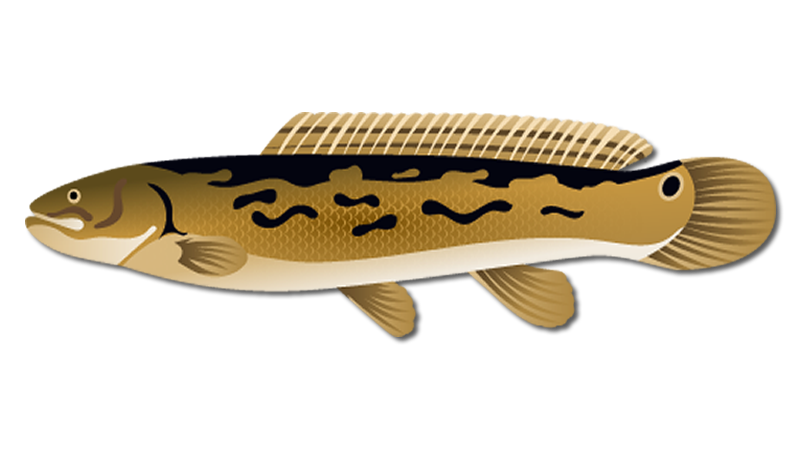
A bowfin has a long, stout, cylindrical body with a continuous dorsal fin extending across much of its back. The tail is rounded, the head is broad, and the mouth contains many small, sharp teeth. Color usually ranges from olive and dark green to mottled brown, fading toward a lighter belly.
Adult males typically have a dark eyespot near the upper base of the tail surrounded by a bright orange or yellow halo. The spot is absent or less obvious on many females. The bowfin’s underside also has a bony gular plate between the lower jawbones, a useful field mark when distinguishing it from a snakehead.
The FWC Bowfin profile provides Florida-specific identification, habitat, record, and fishing information.
Ancient Fish, Modern Survivor
Bowfin belong to an ancient branch of ray-finned fishes. They are often called “living fossils,” but that nickname can be misleading because modern bowfin have continued to evolve like every other living organism. A better description is that they are the surviving members of a lineage with a very long fossil record.
Most fishing references identify the species as Amia calva. Recent genetic and anatomical research has renewed discussion about hidden species diversity within living bowfin. For anglers, the practical point remains straightforward: use current state-agency identification and regulations for the water being fished.
Where Bowfin Live
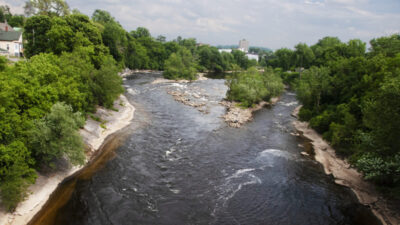
Bowfin are native across much of eastern North America. Their range includes Gulf and Atlantic coastal drainages, the Mississippi River basin, parts of the Great Lakes region, and southern Canada. The USGS Bowfin species profile documents their North American distribution.
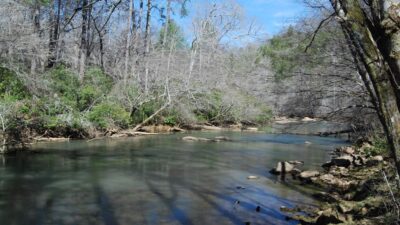
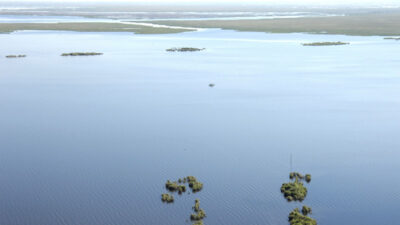
They favor warm, slow, heavily vegetated water. Productive habitat includes cypress swamps, oxbows, marsh edges, flooded timber, backwater sloughs, canals, and quiet pockets connected to rivers. They may also live in clearer lakes when suitable grass, woody cover, and low-current refuge are available.
Bowfin are not limited to dirty or unhealthy water, and their presence alone does not prove that a water body is either pristine or degraded. Their advantage is tolerance. They can remain active in conditions that challenge many other fish.
How Bowfin Breathe Air
Bowfin use normal gills underwater, but their gas bladder also functions as an accessory breathing organ. A duct connects the digestive tract to this vascular bladder, allowing the fish to gulp air at the surface and absorb oxygen.
This adaptation helps bowfin survive warm, stagnant, oxygen-poor environments. Anglers sometimes hear or see a surface gulp before noticing the fish. Air breathing does not mean a bowfin can live indefinitely out of water, so handle a caught fish efficiently and return released fish promptly.
What Bowfin Eat
Bowfin are opportunistic predators. Fish form much of the adult diet, but bowfin also consume crayfish, insects, shrimp, amphibians, and other available prey. Young bowfin begin with small crustaceans and insect larvae before shifting toward larger prey as they grow.
The idea that bowfin simply destroy valuable game-fish populations is not supported by their natural ecological role. Like largemouth bass, they respond to the forage available in a particular system. They are native predators, not invasive fish that should automatically be removed.
Bowfin Spawning Behavior
Spawning occurs in shallow vegetated areas during spring, with timing varying by latitude and water temperature. A male clears or maintains a nest among plants. Eggs are generally deposited at night, and the male guards the nest.
After hatching, larvae use an adhesive organ to attach to vegetation. The male continues guarding the young as they form a compact school and begin moving through shallow cover. This visible parental behavior is one reason anglers may encounter multiple young bowfin close to a larger adult.
How to Catch Bowfin
Bowfin can be targeted intentionally, but many are hooked by bass anglers working vegetation. Their strength, acceleration, rolling fight, and willingness to bury into cover demand balanced tackle and careful boat-side handling.
Find Low-Current Vegetation
Start around weed edges, lily pads, reeds, flooded brush, cypress roots, slough mouths, and quiet pockets beside current. In river systems, follow the current seam toward protected backwaters. In lakes and swamps, watch for surface gulps and movement through shallow grass.
Best Natural Baits
Live or cut bait can be effective where legal. Minnows, shiners, nightcrawlers, and pieces of fish are common choices. Keep the bait close to cover, but use enough weight or float control to prevent it from disappearing deep into vegetation.
Artificial Lures
Bowfin strike spinnerbaits, vibrating jigs, swimbaits, crankbaits, frogs, and other lures used around bass habitat. Weedless presentations are useful in thick cover. A pause, direction change, or lure deflection can trigger a fish that follows without committing.
Tackle and Leader Choice
A medium-heavy rod, reliable reel, strong line, and sharp hook provide a practical starting point. Abrasion-resistant fluorocarbon, heavy monofilament, or a short wire leader can help around teeth and cover, but wire is not mandatory in every situation. Match the leader to water clarity, lure action, and the likelihood of encountering large fish.
Do not intentionally delay a hookset for a fixed number of seconds. Respond to the presentation, hook style, and how the fish takes the bait. Long delays can increase deep hooking.
Landing and Handling Bowfin Safely
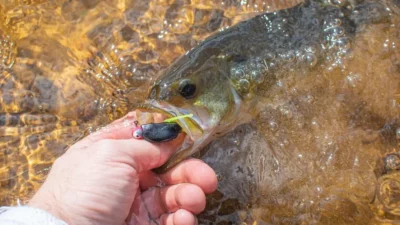
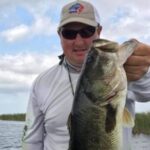
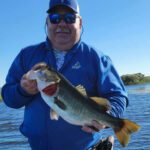
Bowfin have strong jaws, sharp teeth, and a muscular body that can twist suddenly. Use long-nose pliers or a hook-removal tool. A rubberized landing net can control the fish while reducing damage to fins and protective slime.
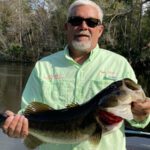
Never place fingers inside the mouth. Support the body horizontally for a quick photo, keep the fish close to the water, and minimize air exposure if it will be released. Cutting a hook may be safer than forcing a difficult removal.
Bowfin vs. Snakehead
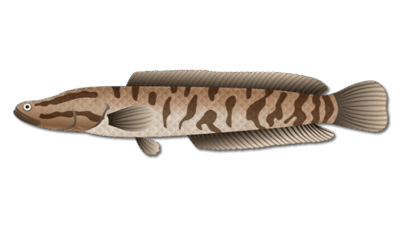
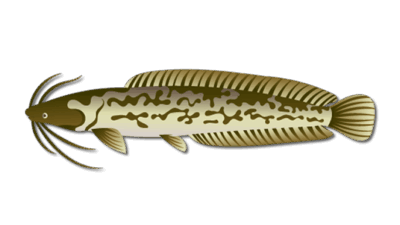
Bowfin and snakeheads are unrelated despite their similar body shape and air-breathing ability. Bowfin are native to North America. Snakeheads are native to Asia and Africa, and several species are invasive in the United States.
- Bowfin: Short anal fin, rounded tail, long dorsal fin beginning near mid-body, bony gular plate between the lower jaws, and a male tail spot with a colored halo.
- Snakehead: Long anal fin, long dorsal fin, large scales across the head, and no bowfin-style gular plate.
Our detailed bowfin comparison guide explains how their anatomy and fishing behavior differ from bass. For another fish frequently confused with bowfin, compare the native Florida gar. If a suspected snakehead is caught, use state identification guidance before releasing or transporting it.
Are Bowfin Good to Eat?
Bowfin are edible, but their flesh is softer than many popular game fish and deteriorates quickly after harvest. Anglers who keep one should verify local regulations, place it on ice immediately, and prepare it while fresh. Patties, fried preparations, smoking, and stews are common approaches.
Check local fish-consumption advisories before keeping any freshwater fish. Harvest decisions should be based on regulations and intended use, not the outdated belief that every bowfin is harmful.
Regulations and Conservation
Bowfin rules vary by state and sometimes by water body. Florida anglers should confirm current license, harvest, and method requirements before fishing. Our Florida fishing license guide provides a starting point, but the wildlife agency remains the final authority.
Bowfin deserve the same careful handling given to other native sport fish. Selective harvest and responsible release protect large adults, preserve natural predator-prey relationships, and maintain a fish that offers one of freshwater fishing’s most surprising battles.
Explore Bowfin Waters and Related Species
Browse the freshwater species directory for additional identification guides. Florida anglers commonly encounter bowfin around vegetated North Florida waters such as Rodman Reservoir. Compare them carefully with bullseye snakehead and other long-bodied predators before making a harvest or release decision.