








ALSO CALLED: red devil cichlid
Midas Cichlid Amphilophus Citrinellus
The Midas Cichlid (Amphilophus citrinellus) is a fish endemic to the San Juan River and the adjacent watersheds of Nicaragua and Costa Rica, including Lake Apoyo, Masaya, and Managua. The native range consists of Tropical America, the Atlantic slope drainages in Central America from the Great Lakes and lakes of Nicaragua to the Rio Coto in Costa Rica. Today, they are abundant in the state of Florida, primarily in southern Florida.
Midas species have found their way into Florida waters through aquarium releases or aquaculture escapes. They were discovered in Florida in 1980 and are currently prevalent in Miami-Dade County canal systems. Aquarists originally sold the A. The Citrinellus fish is commonly known by its aquarium trade name, the Midas fish.
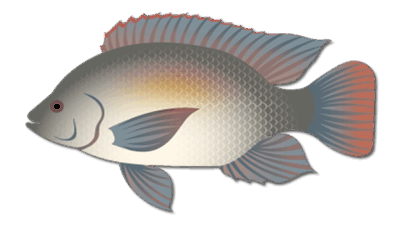
Their scientific name is Amphilophus citrinellus; the family Cichlidae is closely related but distinct from the red devil cichlid (A. labiatus). The Midas Cichlid fish is a member of the tilapia and cichlid family.
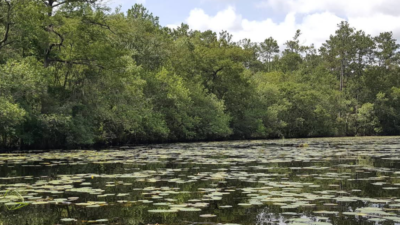
Generally, Midas Cichlid fish species prefer a lake or canal habitat with clear water and abundant shoreline crevices to hide from predators. The Midas primarily lives in calm and slow waters at depths of 3-114 feet (1-35m). They typically inhabit areas around tree roots and rocky outcroppings. They feed on snails, insect larvae, plant material, mollusks, and smaller fish.
The Midas cichlid species is a robust fish, capable of standing up to other large-sized fish that fight over territory. They have sharp teeth, powerful jaws, and an extensive physical size compared to other aquarium species.
Appearance
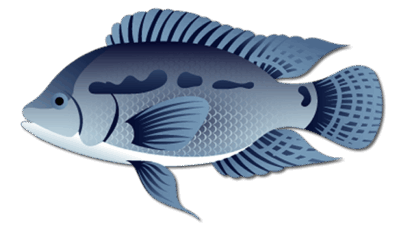
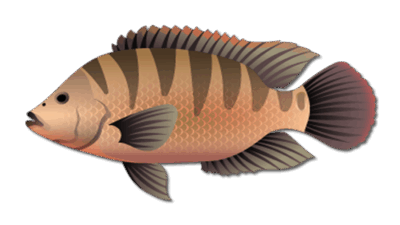
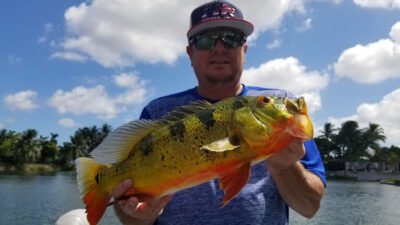
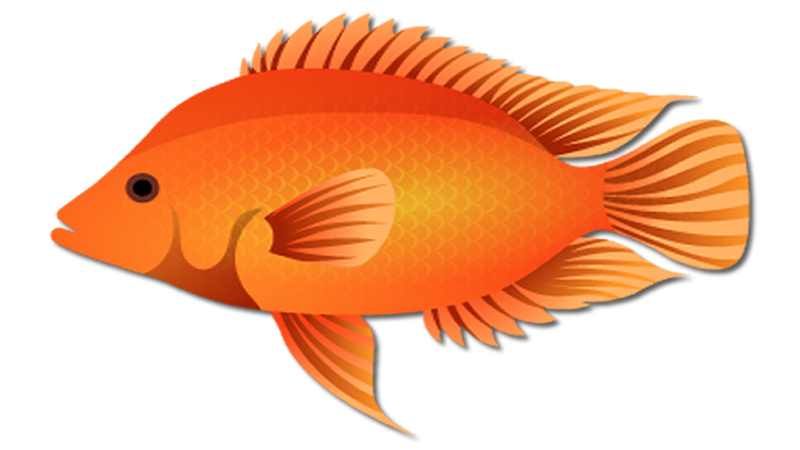
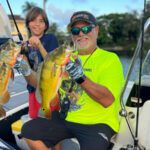
The Florida Midas Cichlid (amphilophus citrinellus) is very colorful, with multiple color phases ranging from black and dull grey to orange, white, and red. All their young start off as grey, looking similar to small bluegill, but when they grow to become three inches long, they begin to change and have bright colors. Usually, a mottled coloration depicts a fish in the transition to show that they are beginning to grow and transform.
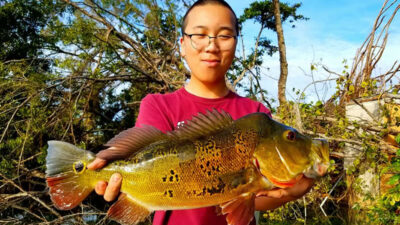
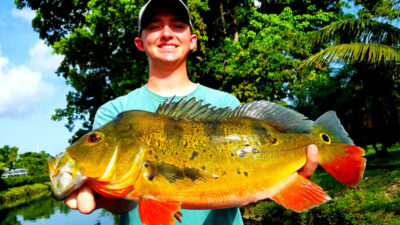
The large Midas cichlid in Florida gradually develops to reddish-orange coloration, characterized by numerous gray-black scales and large black blotches on its sides or back. The upper portion of the head is concave, and they have a rounded caudal fin. Similar to many other cichlids, the Midas cichlid has broken lateral lines.
Over 95% of Florida Midas Cichlids that are over 10 inches in length are bright in color, but this is almost reversed in their native range. There, males and females are equally likely to be brightly colored, with a pronounced nuchal hump and a forehead.
The Midas cichlid and red devil cichlid look very similar in appearance and are often mistaken for each other. The Midas cichlid is smaller than the red devil cichlid. The Midas reaches about 10 to 14 inches in length and has a less elongated body, shorter mouth, and flat lips. The Devil Cichlid can grow up to 15 inches long, has a long, streamlined body, a long mouth, and pronounced fleshy lips. The red devil cichlid’s origin is only in the Nicaraguan Lakes, while the Midas cichlid ranges from Costa Rica to Nicaragua.
Diet Growth Rate and Spawning
Florida Midas Cichlids are omnivores with large appetites. They primarily feed on snails and other benthic material, including aquatic insects, small fishes, and some plant and animal matter attached to or associated with submerged logs, leaves, and rocks.
Typically, Midas Cichlids grow fast until they hit half their adult size. Afterward, they slow down and continue to grow slowly for a couple of years.
They can reach just over a foot in length and can also weigh over 2.5 pounds. Males tend to be larger than females. Colorado and the Parismina River areas of Costa Rica, as well as Lake Nicaragua, are home to the largest Midas Cichlids.
Like other spawning cichlids that provide biparental care, the adult Midas cichlids produce a mucous body covering that the young feed on. The females mature at 7 inches, and the males at 8 inches. March through May is typically the peak spawning season in Florida. They are extremely aggressive and territorial fish when breeding.
Midas Cichlids Aggressiveness
They are generally a reasonably peaceable cichlid compared to other large Central American cichlids. Midas Cichlids are naturally monogamous and parental. As a result of intense predation on their young and limited spawning sites, the vigorous defense of their territory becomes quite essential. Although both males and females engage in defense, they differ in their aggressiveness.
Usually, both sexes’ aggressive responses are measured by counting the number of bumps and bites each fish directed toward its mirror image.
In direct comparison with females, males had higher mirror scores with even more significant variance. Besides, the scores of individual males were somewhat consistent over time compared to females. Females close to spawning had the highest mirror scores, while males had the highest at the beginning of the reproductive cycle. The selection has favored aggressiveness in both sexes. Thus, we can argue that the differences in aggression are due to selection acting on dissimilarity in both sexes.
Fishing For Midas Cichlid
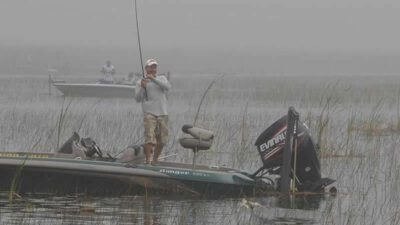
Anglers can find the Midas Cichlid species in lagoons and rivers throughout Central America, as well as in most canals in South Florida, where it is currently thriving. The Florida Midas Cichlid doesn’t grow huge, but they are bulky and puts up a good fight for their size. There are many waterways in South Florida capable of supporting the Midas Cichlid, but the best places to catch them in Florida to catch them are the Everglades and the canals in Miami-Dade County.
The top fisheries to catch a Florida Midas Cichlid in Miami Dade County are Airport Lakes and The Falls Canal System. The best Broward fishery for this fish is Markham Park. The best Palm Beach County fisheries for a Florida Midas Cichlid are Lake Ida and Lake Osborne.
Techniques
These fish like to hide in submerged logs and vegetation. Catching them can be quite tricky. When trying to catch the Midas Cichlid, always use small hooks, as even the larger cichlids have little mouths. Florida anglers often use a Daiwa Certate spinning reel in the 1500 size, paired with an ultra-light spinning rod. Live bait is often the most effective method for catching Midas Cichlids, but they will occasionally take lures.
The key is to have clear water because when the water gets cloudy, it is pretty tough to get them to bite. Due to their curiosity, they will most likely put things in their mouths to check them out.
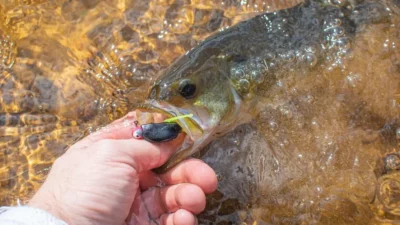
Crankbaits like a floating Rapala are often effective lures. Cast it out next to some good cover and let it sit for a while. Afterward, twitch it a little to dive down a few inches deep and float up again. They will hit the small crankbaits. Also, you can try small rubber jigs. A practical method is to suspend them in front of the Mayan cichlid and twitch them to allow them to sink. They would most likely get a curiosity bite.
Edibility
Midas Cichlid Edibility
Not much is known about the Midas Cichlid’s nutrition, but some people eat them and say it’s a tasty and nutritious fish that can be either grilled or pan-fried with various dishes. If you enjoyed this article, you may also enjoy this one on Alligator Gar as well.