
Did you know that anglers across the country catch between 2 and 6 billion freshwater fish every single year? That is a massive amount of action on the water, but it often leads to one big question for folks just starting out: What are the most popular freshwater fish species in the United States? It’s easy to get overwhelmed when you’re looking at a massive tackle shop wall or trying to identify a quick flash of silver in the reeds. Whether you are chasing a new personal best or just looking for a fun afternoon with the family, knowing your target is the first step toward a successful day on the lake.
I’ve spent thousands of hours guiding on the water, and I know that nothing kills the excitement of a trip faster than using the wrong lure for the wrong fish. You want to feel that rod tip bend with confidence, not second-guess every cast. In this expert guide, I’m going to show you the top gamefish across America and share the field-tested strategies you need to land them on your next outing. We will cover everything from aggressive largemouth bass to deep-dwelling catfish, giving you a clear look at their habits, the best gear to use, and the specific structures where they love to hide.
Key Takeaways
- Learn what are the most popular freshwater fish species in the United States and why factors like accessibility and fighting spirit make them the top targets for every angler.
- Discover why largemouth and smallmouth bass hold the crown as the ultimate sportfish, including expert insights into their aggressive behavior and preferred cover.
- Get the lowdown on crappie and bluegill, the perfect gateway species for families looking to fill a cooler and enjoy fast-paced action on the water.
- Master the basics of targeting heavyweights like catfish and cold-water icons like trout to expand your fishing skills across different environments.
- Understand why tapping into local expertise and choosing the right water body are more effective for your success than following generic online advice.
Table of Contents
Understanding Americas Most Popular Freshwater Fish
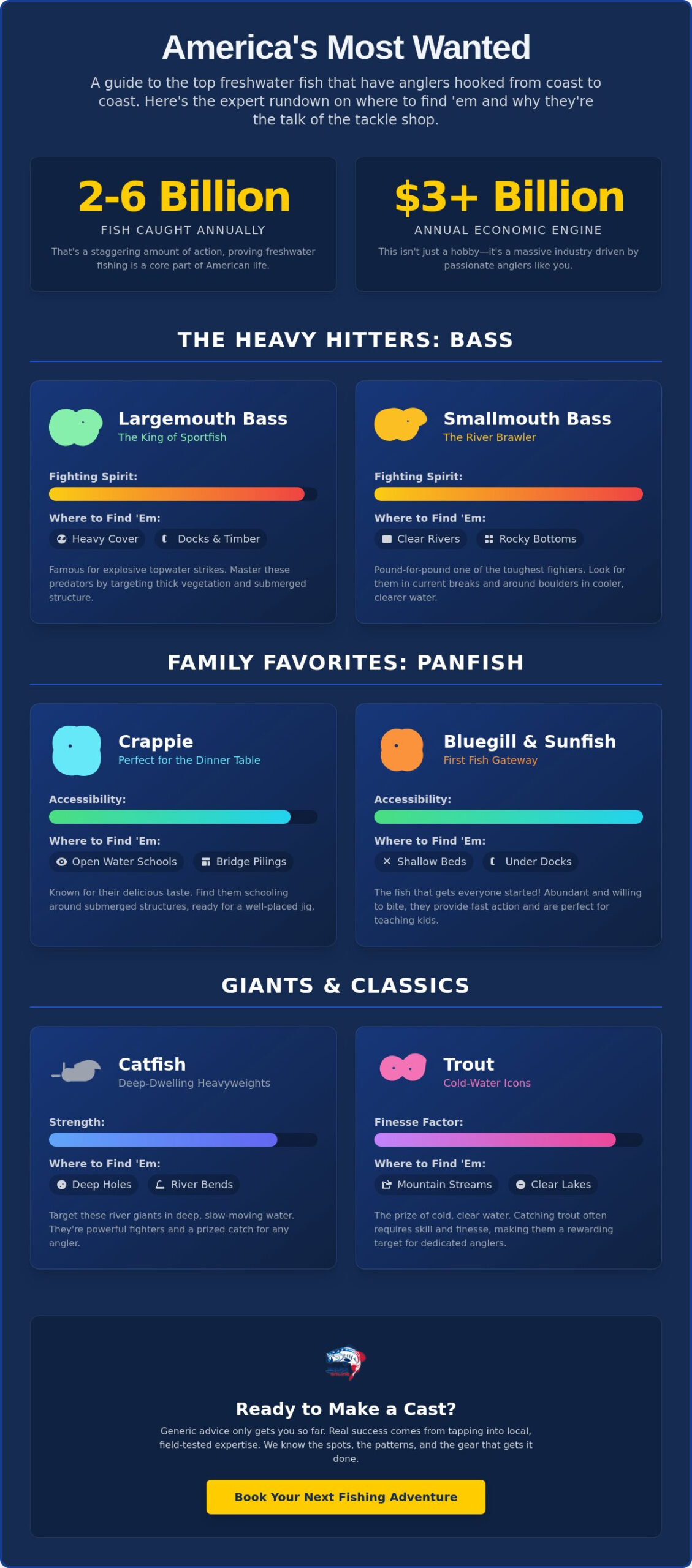
Every time you back the trailer into the water, you’re joining a community that catches between 2 and 6 billion fish every year. That is a staggering number. It reflects the incredible diversity of our rivers, ponds, and reservoirs. We have everything from high-altitude trout streams to massive lowland impoundments. From the cypress-lined swamps of the South to the crystal-clear glacial lakes of the North, our country is a playground for anglers. This massive participation drives an economic engine worth approximately $3 billion annually. It proves that fishing isn’t just a hobby; it’s a way of life for millions of Americans who value the great outdoors.
When people ask me, "What are the most popular freshwater fish species in the United States?", the answer usually depends on three things: how easy they are to find, how hard they fight, and how good they taste. You can find a comprehensive list of US freshwater fish that numbers in the hundreds, but only a handful of species dominate the conversation at the local bait shop. These favorites have earned their status through decades of legendary battles and family memories.
To better understand this concept and see how these species vary by region, watch this helpful video:
What Makes a Fish a "Gamefish"?
Not every fish in the pond earns the title of gamefish. To me, a gamefish is a species that provides a significant challenge to the angler. We are looking for high levels of aggression, endurance during a long fight, and a consistent response to artificial lures. While some folks target catfish or walleye primarily for a fresh fish fry, others live for the heart-pounding strike of a topwater predator. In 2026, we’re seeing a massive surge in catch-and-release culture across the United States. Modern anglers are more focused than ever on the "sport" side of the equation. They use high-tech electronics and specialized gear to target fish, but they’re also dedicated to ensuring these populations stay healthy for the next generation of sticks.
The Role of Accessibility in Popularity
Accessibility is the secret sauce of popularity. A fish can’t be a fan favorite if nobody can catch it. This is why species like sunfish and bluegill are so iconic. They are the "everywhere" fish that give most kids their first taste of success. Urban fishing programs and state-stocked ponds bring the action right to the city limits. If you’re looking for a new spot to test your skills, I recommend exploring different lakes in your region to see which species are currently thriving. Understanding what are the most popular freshwater fish species in the United States often starts right in your own backyard with the fish that are most available to you.
The Heavy Hitters: Largemouth and Smallmouth Bass
When you’re talking about what are the most popular freshwater fish species in the United States, you’re really talking about bass. They are the heavyweight champions of the angling world. From the deep reservoirs of the West to the grassy lakes of Florida, bass drive the entire industry. They are aggressive, smart, and they live in places that make catching them a real puzzle. If you’re having trouble telling a spotted bass from a largemouth, I always recommend checking out a Freshwater Fish Identification Guide to get your bearings before you hit the water.
Largemouth Bass: The King of the South
The largemouth is the undisputed king of sportfish. There’s nothing like the heart-stopping moment a 5-pounder blows up on a topwater frog in the lily pads. These fish love heavy cover. You’ll find them buried in downed timber, lurking under docks, or stalking the edges of thick grass lines. To really master these predators and move beyond the basics, you should check out our Bass Fishing 101 guide. It breaks down the foundational techniques you need to turn a slow day into a highlight reel of trophy catches.
Smallmouth Bass: Northern Powerhouses
If the largemouth is the king, the smallmouth is the warrior. We call them "bronzebacks" for a reason. They have a well-earned reputation for insane aerial acrobatics and a "never quit" attitude. Smallmouth love rocks and current. You’ll find them in the Great Lakes and clear, rocky river systems where they hunt crawfish and baitfish. My pro tip for these "football" shaped powerhouses is to use finesse jigs or tube baits when they’re pressured. They can be pickier than largemouth, but the fight they put up is always worth the extra effort.
Florida Peacock Bass: The Exotic Contender
If you want something truly exotic without leaving the country, you have to target the Florida peacock bass. These aren’t actually bass; they’re cichlids from South America, but they fight harder than almost anything else in fresh water. They are famous for their vibrant colors and lightning-fast speed. Unlike their cousins, Peacock Bass require high-speed retrieves and bright, flashy lures to trigger their predatory instinct. They don’t hide in the shade; they hunt in the sun and hit like a freight train.
Seasonal patterns are the key to finding all three of these species. In the spring, they’re shallow and aggressive. In the heat of summer, they move to deeper structure or heavy shade to stay cool. Understanding these movements is the difference between a "fishing" trip and a "catching" trip. If you’re ready to see these heavy hitters in action, you can always reach out to our expert guides to plan your next adventure on the water.
Family Favorites: Crappie, Bluegill, and Panfish
Most anglers didn’t start their journey by chasing a double-digit largemouth. We started with a simple bobber and a tub of worms. When you look at what are the most popular freshwater fish species in the United States, panfish like bluegill and crappie are always at the top of the list because they are incredibly accessible. You can find them in local city ponds, farm tanks, and every major reservoir. On a hot afternoon, it isn’t rare to land 50 or more fish in a single session. This high-volume action keeps the energy up and makes these species the ultimate gateway for kids and new anglers to fall in love with the sport.
Beyond the fun of catching them, these fish are legendary for their quality on the dinner table. While bass are often strictly catch-and-release, panfish are the stars of the classic American fish fry. They are prolific breeders, which means harvesting a few for a meal is often encouraged by state wildlife agencies to keep populations from becoming stunted. It’s a social way to fish that brings families together around the water and the kitchen.
Crappie: The Slab-Sided Prize
Crappie are perhaps the most sought-after panfish for serious enthusiasts. You generally target two types: Black Crappie and White Crappie. You can tell them apart by their markings; Black Crappie have irregular dark blotches while White Crappie feature distinct vertical bars. The spring spawn is the most anticipated time of the year because these fish move into shallow water to bed. During the rest of the year, I recommend vertical jigging around submerged brush piles or bridge pilings. When you find a school of "slabs" suspended in the water column, you can fill a limit in no time using small jigs or minnows.
Bluegill: The Backyard Warrior
Bluegill are the most accessible fish in the country. They are aggressive, curious, and will eat almost anything that fits in their small mouths. I love using light tackle or even a fly rod to target these guys because it amplifies the experience. Pound-for-pound, Bluegill are among the strongest fighters in freshwater. They turn their broad, flat bodies sideways in the water to create massive resistance, making a half-pound fish feel like a monster on an ultra-light setup. Whether you are fishing from a dock or a boat, these backyard warriors provide a consistent thrill that never gets old.
Targeting these species is all about finding the right structure. Look for downed trees, weed edges, or docks that provide shade and safety. If you aren’t getting bites within ten minutes, move to the next spot. Panfish are usually grouped up, so once you find one, you’ve likely found the whole family. Keep your presentation small and your movements subtle to trigger those quick, reactive strikes.
River Giants and Cold-Water Classics: Catfish, Trout, and Walleye
While bass and panfish dominate the ponds, our river systems and cold-water lakes offer a completely different kind of adrenaline. When you look at what are the most popular freshwater fish species in the United States, you have to appreciate the diversity that fuels over 272 million recreational fishing trips annually. Fishing these environments requires a shift in mindset. You aren’t just looking for cover; you’re reading current seams, oxygen levels, and temperature gradients. Whether you are chasing a 50-pound river monster or a delicate mountain trout, these species demand respect and specialized tactics.
The Three Big Cats
Catfish bring a brute-force strength to the table that few other species can match. Channel catfish are the most widespread, making them a top choice for shore anglers using everything from nightcrawlers to prepared "stink" baits. If you want a real battle, target the blue catfish in major river basins. These giants regularly exceed 50 pounds and require heavy-duty tackle. Flathead catfish are the apex predators of the bunch. Unlike their cousins, flatheads prefer live bait like bluegill or shad. My pro tip: Use fresh cut bait to trigger their highly developed sense of smell, especially after a summer rain when the water is murky.
Trout: From Fly Rods to Spinners
Trout offer an aesthetic experience that’s hard to beat. There’s something special about standing in a cold mountain stream chasing rainbow, brown, or brook trout. You’ll encounter two main types: stocked fish, which are great for beginners, and wild trout, which are some of the spookiest fish you’ll ever target. Success depends on a delicate presentation. I recommend using small spinners, spoons, or fly patterns that match the local insect hatch. Because trout have excellent vision, using a light fluorocarbon leader is often the difference between a strike and a refusal.
Walleye: The Culinary Champion
In the Midwest and the Great Lakes, the walleye is the ultimate prize. Known as the "Golden Ghost," these fish are famously difficult to find but incredible to eat. They are light-sensitive, meaning they bite best during low-light hours like dawn and dusk. Look for them on rocky points or offshore reefs. When the wind picks up and creates a "walleye chop" on the surface, the fishing often gets even better as the broken light gives them a hunting advantage. If you’re looking for mixed-species hotspots where you can target these alongside bass, check out our guide on Bass Fishing Near Me for a breakdown of the best local waters.
Every species in this group offers a unique challenge that will make you a better all-around angler. If you’re ready to test your skills against these river and cold-water legends, you can reach out to our professional guides to get on the water and experience the thrill for yourself.
From Knowledge to the Water: How to Target US Gamefish
Knowing what are the most popular freshwater fish species in the United States is only half the battle. You can read every field report from Maine to California, but the fish don’t live in a textbook. They live in the weeds, the rocks, and the current. To turn that knowledge into a tight line, you have to bridge the gap between theory and the actual water. Generic online tips might tell you what a fish likes to eat, but they won’t tell you how the wind direction on a specific Tuesday is going to push baitfish against a certain shoreline. Local knowledge is the currency of a successful angler.
Preparation is your foundation. Before you even hook the boat to the truck, check your local regulations for the 2026 season. For instance, if you’re hitting the water in Florida, a resident annual freshwater license currently costs $17.00. In Pennsylvania, a non-resident annual license is $60.97. These details vary by state, so stay informed. Beyond the paperwork, run a triple-check on the weather and your safety gear. A sudden afternoon storm can turn a great day into a dangerous one if you aren’t prepared with life vests and a solid communication plan.
Why a Professional Guide is a Game-Changer
If you want to skip the trial-and-error phase, hiring a pro is the smartest move you can make. It’s not just about getting a ride on a tournament-ready boat; it’s about the masterclass that comes with it. You’ll learn the "why" behind every move we make. Why are we positioning the boat at this specific angle? Why are we switching from a slow retrieve to an erratic one? Our professional fishing guides spend over 300 days a year on these waters. That kind of experience allows us to provide high-end equipment and real-time adjustments that you just can’t get from a screen. We help you read the water like a book.
Planning Your 2026 Fishing Expedition
Success starts at the computer. Use the Bass Online Lakes database to map out your target destination. Whether you’re eyeing a trophy largemouth at Lake Okeechobee or chasing smallmouth on Lake Erie, having a plan is essential. Set realistic goals for your first few trips. Maybe your goal isn’t a ten-pounder yet; maybe it’s just mastering a new finesse technique or finding a school of crappie for a fish fry. The most important thing is to get moving. The best fish in the world is the one currently pulling on the end of your line. Don’t wait for the perfect conditions. Get out there and make it happen.
Get Out on the Water and Land Your Next Trophy
From the explosive strikes of a largemouth in the weeds to the deep-pulling power of a river catfish, you now have the roadmap for a successful outing. We’ve covered the aggressive behavior of the heavy hitters and the high-action fun of panfish, which makes them accessible to every skill level. Understanding which freshwater fish species are most popular in the United States is just the beginning; the real magic happens when you apply these field-tested strategies to the specific structures and patterns of your local lake.
If you’re ready to stop guessing and start catching, it’s time to leverage our professional expertise. With over 25 years of professional guiding experience and thousands of 5-star reviews from fellow anglers, we know exactly what it takes to put you on the fish of a lifetime. Our expert local guides in Florida, Alabama, and beyond are ready to show you an insider journey you’ll never forget. Book Your Professional Guided Fishing Trip with Bass Online Today!
The water is calling. Grab your gear, trust your new knowledge, and we’ll see you at the ramp for your next great adventure!
Frequently Asked Questions
What is the most popular freshwater fish to catch in the US?
The Largemouth Bass is the undisputed heavyweight champion of American freshwater fishing. Its aggressive nature and willingness to hit almost any lure make it the top target for millions of anglers every year. Whether you are in a small farm pond or a massive reservoir like Lake Guntersville, you’ll find people chasing these green monsters because they provide an incredible fight and are found in nearly every state.
Is Bass fishing the most popular sport in America?
While team sports like football have higher viewership, bass fishing is the most popular participation sport in the outdoor world. When folks ask what are the most popular freshwater fish species in the United States, bass always lead the pack because of the massive tournament industry and ease of access. It’s a high-energy pursuit that drives billions of dollars in economic value and connects millions of people to the water.
What is the easiest freshwater fish to catch for beginners?
Bluegill and other sunfish are the absolute easiest species for beginners to target. They are incredibly curious and aggressive for their size, meaning they’ll usually bite a piece of worm or a small jig almost immediately. You can find them in nearly every body of fresh water, making them the perfect confidence builder for kids or anyone just picking up a rod for the first time.
Which freshwater fish tastes the best?
Walleye and crappie are widely considered the gold standard for a fresh fish fry. Walleye have a very mild, sweet flavor and a flaky texture that many anglers in the Midwest rank above all others. If you prefer something smaller, crappie slabs are famous for their delicate white meat, especially when they’re pulled from the cooler waters of the early spring spawn.
Do I need a different license to fish for different species?
Generally, a standard-state freshwater license covers most species, but you must check local regulations for any specific stamps or permits. For example, many states require an additional trout stamp if you plan to target or keep those fish. In 2026, license fees can vary significantly, with a Florida resident annual license costing $17.00 while a non-resident annual license in California is $174.14.
What is the best time of year to fish for Largemouth Bass?
Spring is the prime time to land a trophy Largemouth Bass, specifically during the pre-spawn and spawn phases. This is when the big females move into shallow water to feed heavily and protect their beds, making them much easier to locate. In southern states, this action can start as early as January, while northern anglers usually see the peak of the bite in May or June.
Can I catch Peacock Bass anywhere in the United States?
No, you can’t catch Peacock Bass just anywhere; they are a tropical species restricted to the warm waters of South Florida. Because these fish cannot survive in water temperatures below 60 degrees, they are localized to the canal systems of Miami and parts of the Everglades. They are a specialized target that requires a trip to the Sunshine State to experience their legendary speed and power.
What equipment do I need for a general freshwater fishing trip?
You don’t need a massive boat to get started, but you do need a reliable medium-action spinning rod-and-reel setup. Spool your reel with 8 to 12-pound test monofilament or fluorocarbon line for versatility. A basic tackle kit should include a mix of hooks, split-shot weights, bobbers, and a few high-impact lures, such as silver spoons, soft plastic worms, and small jigs to cover different water depths.

Article by
Mr Bass
Todd Kersey, widely known as Mr. Bass by Field & Stream, is a professional angler, accomplished author, and dedicated philanthropist with a lifelong passion for bass fishing. Armed with a degree in Outdoor travel, Mr. Bass has expertly combined his knowledge with his practical fishing experience to become one of the most respected names in the bass fishing, his deep understanding of bass habitats, and fish behavior has earned him numerous accolades as a asset of the sport. Serving 8 years as FWC Stakeholder Chairperson. Leading and passing cutting-edge legislation, such as the Black Bass Management plan, and successfully building, passing, and financing the Trophy Catch program. As CEO, he is committed to giving back to the community through his philanthropic efforts. He supports a variety of causes, especially those centered around physical disabilities. Through his advocacy, his mentorship programs inspire anglers to engage in fishing stewardship, helping to raise more than $ 18 million in donations. Mr. Bass continues to inspire anglers and outdoor enthusiasts alike with his commitment to the sport and the world around him.