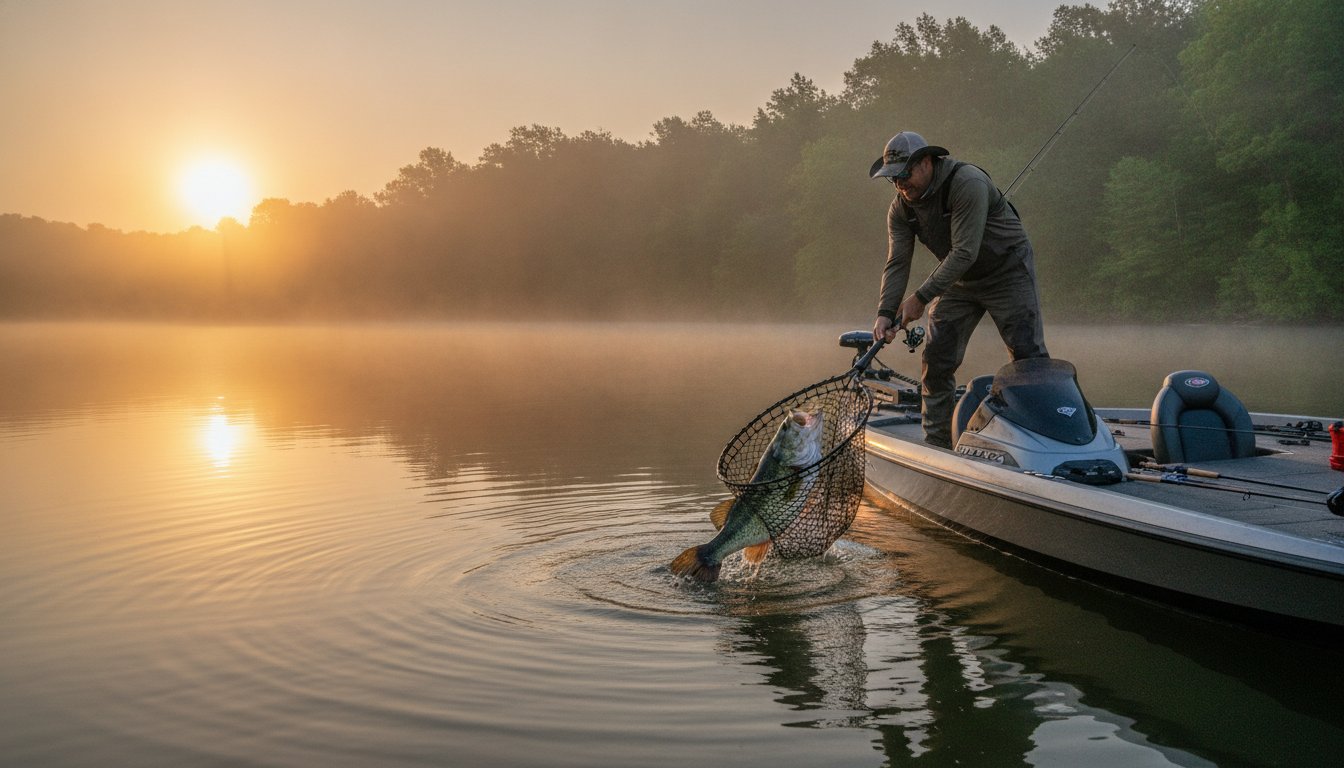

What if the reason you’re coming home empty-handed isn’t a lack of fish, but your refusal to stop power fishing when the conditions turn sour? We’ve all been there. The fish are suspended, the sun is high, or a brutal cold front has turned the bite into a ghost town. It’s during these tough moments that knowing when to use a dropshot for bass becomes your greatest advantage. This finesse rig is the ultimate strike-inducer when high pressure or summer heat makes local lunkers lure shy.
I’ve spent over 25 years guiding on legendary waters like Lake Okeechobee and Lake Erie. I can tell you that the dropshot isn’t just a deep water tool. In this guide, you’ll discover the exact conditions, seasons, and scenarios where this rig outperforms every other lure in your tackle box. We’ll break down the relationship between water clarity and finesse tactics so you can land fish when everyone else on the lake is struggling. From understanding bass behavior to choosing the right presentation, you’re about to gain the confidence to turn a slow day into a trophy-sized success.
Key Takeaways
- Unlock the “weight-first” advantage to keep your bait dancing in the strike zone longer than any other rig while the sinker stays pinned to the bottom.
- Master exactly when to use a dropshot for bass to trigger strikes from lethargic winter fish or exhausted post-spawn females holding on secondary points.
- Learn how to crush high-pressure days on clear water when “lure shy” bass won’t touch aggressive or fast-moving power baits.
- Discover professional techniques for dragging the shallows as a search tool or using your electronics for high-stakes vertical “video-game fishing.”
- Gain the field-tested confidence to read your sonar and identify the exact moments when a finesse presentation will save your day on the water.
What is a Dropshot and Why is it a Bass Powerhouse?
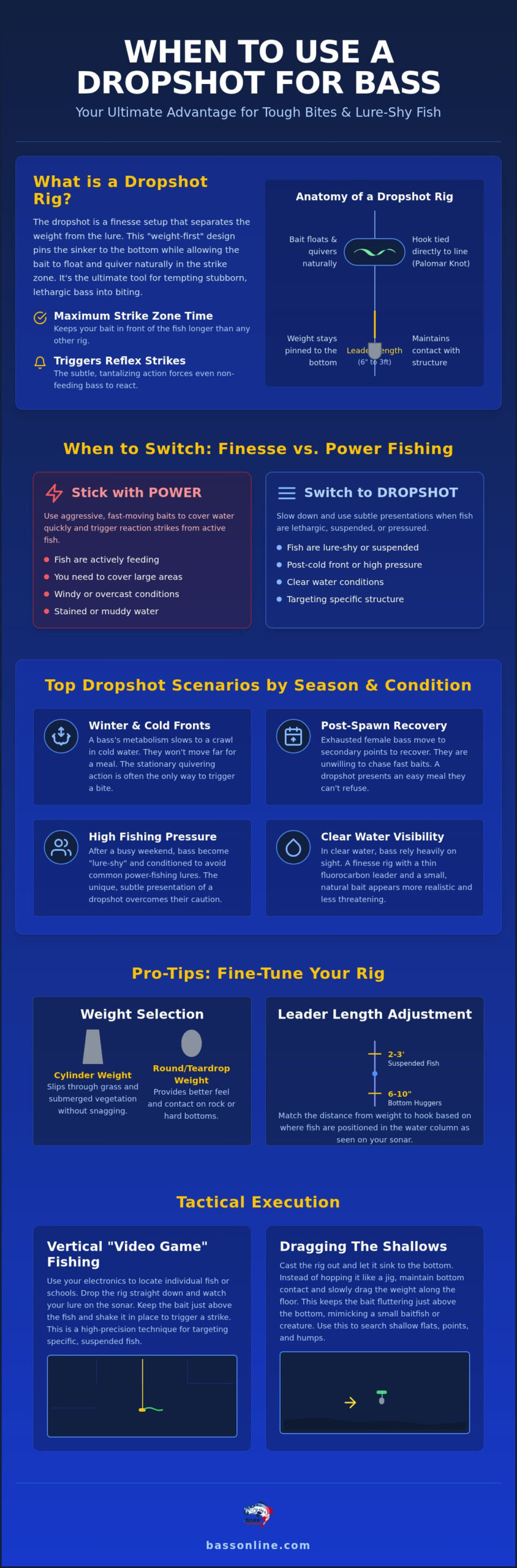
If you’ve ever watched a bass on a camera or sonar, you know they can be incredibly stubborn. Sometimes they just stare at a bait without moving a fin. That’s where the dropshot shines. What is a dropshot rig? Simply put, it’s a finesse setup where you tie your hook directly to the line, usually with a Palomar knot, and leave a long tag end to attach a weight at the very bottom. This puts the lure above the sinker, allowing it to dance in the water column while the weight stays pinned to the floor.
This “weight-first” design is a total game changer. Traditional rigs like a Texas rig or a jig require you to move the bait to create action, which often pulls it out of the strike zone. With a dropshot, you can shake your rod tip and make that worm quiver for minutes in the same square inch. This creates a tantalizing, stationary action that eventually breaks a bass’s willpower. It triggers a reflex strike, forcing even the most lethargic fish to snap. What started as a niche Japanese technique in the late 90s has now become a mandatory tool for every US pro on the tournament trail.
The Anatomy of a Dropshot Rig
Building the perfect rig is all about the details. I always tell my clients that your hook is the most critical part. You want a specialized dropshot hook, which is typically a small, light-wire hook designed to keep the bait horizontal. If you’re fishing around heavy timber, a small finesse wide-gap hook can help you go weedless. It’s about being subtle, not bulky.
- Weight styles: Use cylinder weights when you’re punching through grass or submerged vegetation; they slip through the stalks without snagging. Switch to teardrop or round weights when you’re working over rock or hard clay bottoms to get a better “feel” for the structure.
- Leader length: Adjust the distance between your weight and hook based on fish position. If fish are hugging the bottom, keep your hook 6 to 10 inches above the weight. If they’re suspended, don’t be afraid to stretch that leader to 2 or 3 feet.
Finesse vs. Power Fishing: When to Switch
Knowing when to use a dropshot for bass often requires a psychological shift. You have to stop trying to cover every acre of the lake and start picking apart specific pieces of structure. When the “shutdown” bite happens, you’ll notice the signs. Maybe you’re seeing fish on your sonar but they aren’t chasing your crankbait. Or perhaps the local lake has been hammered by weekend pressure and the bite has gone cold.
When the aggressive chase stops, it’s time to slow down. The dropshot allows you to be surgical. If you’re new to these tactics, check out our outdoor blog to master the fundamentals before hitting the water. This rig is your insurance policy for those days when the bass are being “lure shy” and refuse to move for anything else. Understanding when to use a dropshot for bass is the difference between a frustrating day and a limit in the livewell.
Seasonal Timing: When to Reach for the Dropshot
Bass are cold-blooded creatures. Their activity levels rise and fall with the thermometer. If you want to stay consistent, you must understand how the calendar affects their willingness to chase. Knowing when to use a dropshot for bass is often the difference between a record-breaking day and a long ride home with an empty livewell. While power fishing might dominate the spring, the dropshot takes over when fish become lethargic or move to offshore sanctuary.
After the spawn, big females are often exhausted. They pull away from the beds and settle on the first major break or secondary points to recover. They aren’t looking to burn energy chasing a fast-moving crankbait. A well-placed finesse worm dancing in their face is an offer they can’t refuse. As we move into fall, bass follow baitfish into deeper creek arms. When these schools of shad or herring suspend over deep water, the dropshot is the only way to keep your bait at the exact depth where the fish are feeding.
Winter and Cold-Front Strategies
In 40-degree water, a bass’s metabolism slows to a crawl. They won’t move far for a meal. The stationary action of a dropshot is often the only thing that works because you can leave it in the strike zone indefinitely. I’ve found that using ultra-thin fluorocarbon leaders is essential during these months. Sight-oriented winter bass have plenty of time to inspect your offering in clear, cold water. Using professional bass fishing techniques like down-sizing your bait and using natural, “match-the-hatch” tones will help you fool these wary fish. Stick to tans, greens, and subtle greys to mimic dormant forage.
The Dog Days of Summer
When the summer heat pushes fish deep, they often retreat to ledges or suspend under thermoclines where the oxygen is better. This is prime time for “video-game fishing.” You can use your electronics to find “arches” on the screen and drop your rig directly on their heads. On our Lake Erie Fishing Trips, we use this vertical approach to hammer giant smallmouth that are holding on deep rock piles. It’s an adrenaline rush to watch a fish rise on the sonar and smack your bait in real-time.
In some scenarios, you might need a “Power Dropshot.” This involves beefing up to a 1/2-ounce weight and a stouter rod to pull largemouth out of deep summer grass or heavy timber. It’s a rugged version of a finesse classic that proves there’s never a bad time to have this rig tied on. If you want to see these seasonal patterns in action on your local lake, you can always reach out to our professional guides to flatten your learning curve.
Environmental Triggers: Water Clarity and Fishing Pressure
Water clarity and boat traffic are the two biggest factors that dictate bass behavior in real-time. If you’re staring into ten feet of crystal-clear water, the bass are staring right back at you. This is exactly when to use a dropshot for bass because it offers the most natural, non-threatening presentation in your arsenal. When fish are in a “negative” mood, meaning they follow your bait but won’t commit, the subtle quiver of a finesse worm often seals the deal. Professional anglers often rely on five must-know drop shot tactics to trigger these finicky fish when visibility is high.
Pressure is the other silent killer of a good bite. On public lakes, the “weekend warrior” effect is real. After dozens of boats have buzzed over a ledge throwing heavy jigs and loud crankbaits, the bass become “lure shy.” They retreat into a defensive shell. The dropshot provides a completely different vibration and profile than the standard Texas rig. It allows you to target suspended fish that aren’t quite on the bottom but aren’t active enough to hit a topwater. By keeping the bait stationary, you give these pressured lunkers time to convince themselves it’s a safe meal.
Clear Water vs. Stained Water Tactics
In clear water with ten feet of visibility or more, fluorocarbon is non-negotiable. It’s nearly invisible underwater and sinks, which helps keep your line tight. I prefer smaller, 4-inch “roboworms” or straight-tail baits to match the high-visibility environment. If you find yourself in slightly stained water, don’t put the rig away. Just bulk up the profile with a fatter worm or a bait with a small paddle tail to create more displacement. One of my favorite tricks is the “Dead Stick” technique. You simply let the rig sit perfectly still on the bottom. The natural movement of the water current provides all the action you need to fool a wary bass.
Beating the Crowd on Pressured Lakes
Success on pressured water often comes down to finding what others miss. While the crowd is beating the banks or the most obvious points, I look for “micro-structure.” This could be an isolated rock, a single stump, or a small patch of gravel on an otherwise muddy bottom. During a Lake Guntersville Fishing trip, I’ve seen this approach turn a tough day around. While everyone else is throwing big plastics into the grass, dropping a finesse rig on a lone piece of hard bottom can produce a limit of “lunker” bass that haven’t seen a lure all day. It’s about being surgical when the rest of the lake is being loud. Knowing when to use a dropshot for bass in these high-pressure windows is a skill that separates the guides from the novices.
Tactical Execution: How to Fish a Dropshot Like a Pro
Execution is where the game is won or lost. You already know the “why” and the “when,” but moving your bait correctly is what actually puts fish in the boat. The most common mistake I see on my boat is overworking the lure. A dropshot is designed to be subtle. When you’re deciding when to use a dropshot for bass, remember that this rig excels when you can keep it in one spot. The “Shake and Sit” is the gold standard. You want to shake your rod tip just enough to make the bait quiver without lifting the weight off the bottom. If you feel the weight move, you’re working it too hard. Let it sit for five to ten seconds between shakes. Often, the strike happens when the bait is perfectly still.
The hookset is the next hurdle. Forget the violent “snap” set you use for a Texas rig or a jig. Because you’re typically using small, light-wire hooks, a traditional power set will either bend the hook or tear it right out of the fish’s mouth. Instead, use a “sweep” set. When you feel that tell-tale “tick” or your line starts to feel heavy, simply reel up the slack and firmly sweep your rod to the side. This steady pressure drives the fine point home and keeps the fish pinned. It’s a controlled, professional move that results in a much higher landing percentage.
Vertical vs. Horizontal Presentations
Horizontal fishing is your best bet when you’re working flats, long points, or bluff walls. You cast the rig out, let it hit the bottom, and slowly drag it back toward the boat. This allows you to use the dropshot as a search tool in shallow to mid-depths. Vertical fishing, or “video-game fishing,” is a different beast. This is for deep timber, bridge pilings, or offshore ledges. You drop the rig directly under the transducer and watch your sonar. When you see a fish, stop the bait a foot or two above its head. Mastering the “slack-line shake” is key here. By keeping a tiny bit of slack in your line while you vibrate the rod tip, you give the bait a lifelike, erratic action that bass can’t resist.
Essential Gear for Dropshotting
Your gear needs to match the finesse nature of the technique. A medium-light spinning rod with a fast action is the gold standard. It provides the soft tip needed to shake the bait and the backbone required to handle a big bass. I always recommend a braid-to-fluorocarbon leader connection. The braid gives you incredible sensitivity to feel every pebble on the bottom, while the fluorocarbon leader stays invisible to the fish. For your bait profile, keep it simple. Have these three ready to go:
- Straight-tail worms: The classic choice for maximum quiver.
- Minnow imitations: Perfect for vertical fishing when bass are keyed in on shad.
- Small craws: Use these when you’re dragging the rig over rocky bottoms.
If you want to see these tactics in action and master the nuances of the sweep set, book a guided bass fishing trip with our team today. There’s no faster way to improve than a day on the water with a pro who knows exactly when to use a dropshot for bass to produce big results.
Master the Dropshot with a Professional Bass Online Guide
You can read every guide on the internet, but nothing replaces the moment a seasoned pro puts the rod in your hand and says, “Shake it now.” At Bass Online, we’ve spent decades refining these tactics on the country’s most legendary waters. Our guides don’t just find fish; they teach you the “why” behind every move. This is the fastest way to understand when to use a dropshot for bass because you’ll see the environmental triggers and sonar signatures in real-time. Whether you’re targeting giants in the grass of Lake Okeechobee or vertical fishing on Lake Erie, we help you skip the frustrating learning curve and start landing trophy bass immediately.
One of the most valuable parts of a guided trip is learning to trust your electronics. We’ll show you exactly how to identify dropshot-ready fish on the screen. It’s about seeing those specific arches that indicate a bass is suspended and ready to eat. Instead of guessing, you’ll have the confidence to drop your rig right into the strike zone. This level of local authority is what we’ve built our reputation on since 1997. We’ve led thousands of successful expeditions, and we’re ready to share those field-tested secrets with you.
What to Expect on a Guided Finesse Trip
When you step onto one of our boats, you’re getting a masterclass in finesse fishing. We provide hands-on rigging tutorials where you’ll master the Palomar knot and learn how to manage your leader length for different depths. You’ll get real-time feedback on your retrieve and hook-set technique, ensuring you don’t miss that trophy lunker because of a “snap” set mistake. Plus, you’ll have access to top-tier finesse gear and our secret local hotspots that have been producing results for over 25 years. It’s an immersive experience designed to build your confidence for any water condition.
Book Your Next Adventure
Choosing the right location is key to your success. If you want to master deep-water smallmouth tactics, a trip to Lake Erie or Lake Ontario is a must. If you’re looking to pull largemouth out of heavy cover, the Everglades or Lake Toho will test your skills. Our guides know exactly when to use a dropshot for bass across these diverse environments, from the tidal flows of the California Delta to the ledges of Lake Guntersville. Don’t spend another day struggling on the water when the bite gets tough. Book Your Guided Bass Fishing Trip today and let us lead you on an insider journey to your next personal best.
Take Command of Your Finesse Game
Mastering the dropshot is about more than just rigging a worm. It’s about recognizing the subtle environmental shifts that shut down a power bite. You’ve learned that the stationary action of the weight-first setup is a powerhouse for pressured fish and that seasonal timing is everything. Whether you’re targeting suspended smallies over deep ledges or lethargic largemouth in winter holes, knowing when to use a dropshot for bass will keep your rod bent when other anglers are heading for the ramp. It is the ultimate insurance policy for any day on the water.
At Bass Online, we’ve spent over 25 years since 1997 perfecting these techniques in the field. Our expert guides have been featured on national fishing networks and have earned thousands of 5-star reviews by helping anglers like you land trophy lunkers in the toughest conditions. Don’t let high pressure or a brutal cold front ruin your next outing. Ready to catch more bass? Book a pro guide trip with Bass Online today! The fish are waiting; let’s go get them.
Frequently Asked Questions
Can you use a dropshot in shallow water for bass?
Yes, you can absolutely fish a dropshot in shallow water. It’s a lethal tool for picking apart boat docks, bridge pilings, or even bedding fish in the spring. Understanding when to use a dropshot for bass in the shallows allows you to keep your bait dancing in a tiny strike zone without moving it away from the cover. It provides a subtle, non-threatening look that shallow bass can’t ignore.
What is the best bait for a dropshot rig?
Straight-tail finesse worms are the gold standard because they provide the most natural quiver. A 4 to 6 inch worm is usually perfect for most conditions. If the bass are keyed in on shad, switch to a small fluke or minnow profile. For rocky bottoms, a small craw imitation can be the secret to triggering a bite when the crawfish are active and the bite is tough.
Do I need a specific rod for dropshot fishing?
A medium-light spinning rod with a fast action is the best tool for the job. You need a sensitive, soft tip to shake the bait on a slack line without moving the weight. This setup ensures you feel the lightest “tick” from a finicky bass. A fast action provides the backbone needed to pin the fish once you sweep the rod and start the fight.
What size weight should I use for a dropshot?
Start with the lightest weight you can use while still maintaining contact with the bottom. A 1/8 oz or 3/16 oz weight is usually perfect for finesse work in calm conditions. If you’re fishing in heavy wind or depths over 30 feet, bump it up to a 1/4 oz or 3/8 oz. This helps you keep your line tight and maintains the sensitivity you need to feel the structure.
How long should my dropshot leader be?
Your leader should typically be between 10 and 18 inches long. If your sonar shows fish hugging the bottom, use a shorter leader to keep the bait in their face. If the bass are suspended several feet up, stretch that leader out to 3 feet. This puts the lure directly in their line of sight without spooking them with the weight sitting on the floor.
Can I fish a dropshot in heavy cover or grass?
You can fish this rig in heavy cover by switching to a “Power” dropshot setup. Use a cylinder-style weight that slips through grass easily and a weedless offset hook to prevent snags. This allows you to target big largemouth in thick vegetation where a standard open-hook rig would get stuck. It’s a rugged and highly effective way to fish a finesse classic in the weeds.
Why am I losing fish on the dropshot hook-set?
Losing fish usually happens because of a traditional “snap” hook-set. Since dropshot hooks are small and light-wire, a violent jerk can tear the hook out or bend it. Instead, reel up your slack and use a firm, steady “sweep” set to the side. This constant pressure ensures the fine point penetrates deeply and stays pinned throughout the fight without damaging the fish’s mouth.
Is a dropshot better than a Texas rig?
Neither is strictly better, but the dropshot wins when you need a stationary presentation. A Texas rig is built to move through cover, while a dropshot excels at staying in one place. Knowing when to use a dropshot for bass is about identifying those high-pressure days when fish won’t chase. The dropshot provides a stationary, tantalizing action that a Texas rig simply can’t match.

Article by
Mr Bass
Todd Kersey, widely known as Mr. Bass by Field & Stream, is a professional angler, accomplished author, and dedicated philanthropist with a lifelong passion for bass fishing. Armed with a degree in Outdoor travel, Mr. Bass has expertly combined his knowledge with his practical fishing experience to become one of the most respected names in the bass fishing, his deep understanding of bass habitats, and fish behavior has earned him numerous accolades as a asset of the sport. Serving 8 years as FWC Stakeholder Chairperson. Leading and passing cutting-edge legislation, such as the Black Bass Management plan, and successfully building, passing, and financing the Trophy Catch program. As CEO, he is committed to giving back to the community through his philanthropic efforts. He supports a variety of causes, especially those centered around physical disabilities. Through his advocacy, his mentorship programs inspire anglers to engage in fishing stewardship, helping to raise more than $ 18 million in donations. Mr. Bass continues to inspire anglers and outdoor enthusiasts alike with his commitment to the sport and the world around him.