



















Published: February 20, 2012 | Updated: September 12, 2026
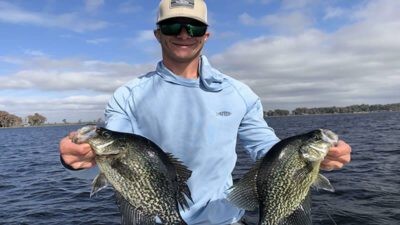
Crappie are freshwater game fish in the sunfish family, Centrarchidae. Anglers prize them for light-tackle action and mild, white flesh. Two species are recognized: the black crappie (Pomoxis nigromaculatus) and white crappie (Pomoxis annularis). Florida anglers mainly encounter black crappie, which are commonly called speckled perch, specks, or papermouths.
This species guide focuses on crappie identification, biology, habitat, size, names, and life cycle. For tackle and presentation advice, see our separate how to fish for crappie guide.
Crappie Quick Facts
- Family: Centrarchidae, the sunfish family
- Genus: Pomoxis
- Recognized species: Black crappie and white crappie
- Florida species: Primarily black crappie
- Common Florida names: Speckled perch, speck, and papermouth
- Typical habitat: Lakes, reservoirs, ponds, sloughs, and slow-moving rivers
- Primary foods: Small fish, crustaceans, aquatic insects, and plankton
- Florida state record for black crappie: 3.83 pounds
- Florida Big Catch minimum: 14 inches or 2 pounds
What Is a Crappie Fish?
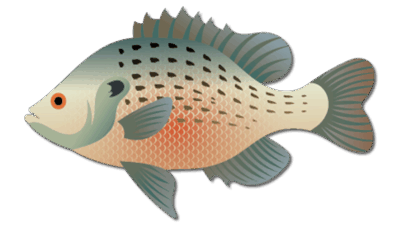
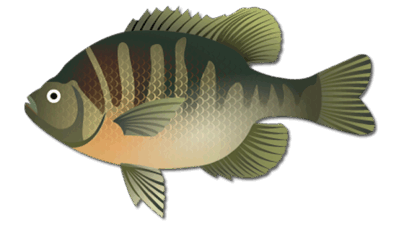
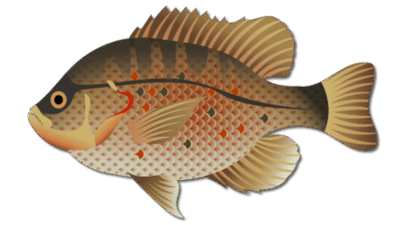
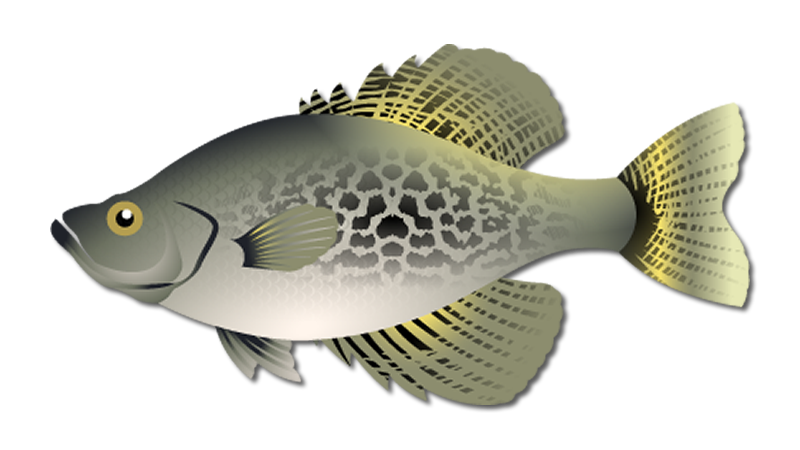
Crappie are deep-bodied, laterally compressed members of the same family as largemouth bass and bluegill. Their large mouths help them capture minnows and other small fish. The dorsal and anal fins are broad and nearly symmetrical, giving the fish a balanced profile.
Both crappie species are native to North America. Stocking has expanded their range well beyond the waters where they originally occurred, and they now live throughout much of the continental United States. They often form schools, especially outside the spawning season.
Other Names for Crappie
Regional names can make crappie identification confusing. Common names include speckled perch, speck, papermouth, calico bass, strawberry bass, sac-a-lait, and speckled bass. Despite those names, crappie are not true perch. They belong to the sunfish family.
In Florida, “speckled perch” or “speck” almost always refers to black crappie. The name “papermouth” describes the thin membrane around the mouth, which can tear when an angler uses a forceful hookset.
Black Crappie vs. White Crappie
Color alone is not the most reliable way to tell the two species apart. Water clarity, age, season, and habitat can change how light or dark a fish appears.
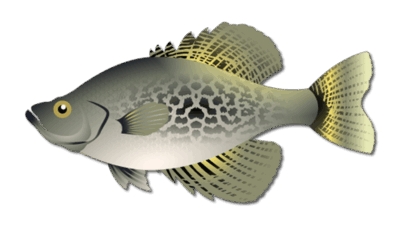
Black Crappie Identification
- Irregular dark blotches scattered across the sides
- Seven or eight dorsal spines
- A deeper body in relation to length
- Often associated with clearer water and aquatic vegetation
White Crappie Identification
- Dark markings that tend to form vertical bars
- Five or six dorsal spines
- A slightly more elongated body
- Often more tolerant of turbid water and open structure
Hybrids can occur where the two species overlap, so some individual fish do not match every field mark perfectly. Counting dorsal spines and examining the pattern together gives a better identification than using body color by itself.
Crappie Habitat
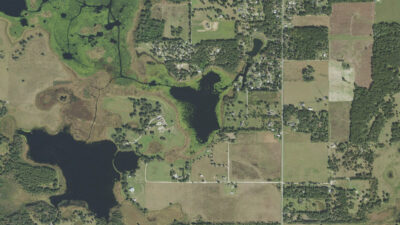
Crappie live in lakes, reservoirs, ponds, backwaters, sloughs, and slow-moving rivers. Black crappie generally favor clearer water with vegetation, submerged timber, brush, and other cover. White crappie tolerate muddier water and are often associated with open-water structure.
Unlike many small panfish, adult crappie spend considerable time offshore feeding on schools of baitfish. They may suspend near channel edges, standing timber, brush piles, drop-offs, or other structure rather than remain on the bottom. Their preferred depth changes with season, light, oxygen, temperature, and forage location.
What Do Crappie Eat?
Young crappie consume zooplankton, insect larvae, and small crustaceans. As they grow, fish become increasingly important in the diet. Adult crappie commonly eat shad, minnows, young sunfish, aquatic insects, freshwater shrimp, and other prey that fits inside their mouth.
Feeding often intensifies during low-light periods, but local conditions matter more than a single universal schedule. Schooling behavior allows crappie to follow moving forage through open water and around structure.
When and Where Do Crappie Spawn?
Spawning occurs in spring as water warms, with timing varying by latitude and weather. The Florida Fish and Wildlife Conservation Commission notes that black crappie commonly nest from February through April in Florida.
Males fan shallow nests over gravel, sand, or mud, often near vegetation or protective cover. Several nests may occur close together in a colony. Larger fish may use somewhat deeper water. After eggs are deposited and fertilized, the male guards the nest and newly hatched young for a short period.
Crappie can reproduce successfully enough to become overcrowded when predators and harvest do not balance the population. Overcrowding may slow growth because too many fish compete for the same forage.
How Big Do Crappie Get?
Most crappie caught by anglers are under 14 inches, but growth varies sharply among water bodies. Food supply, population density, growing season, habitat, and fishing pressure all affect size. A fish that anglers call a “slab” is simply an unusually large crappie; it is not a separate species.
The FWC lists Florida’s black crappie state record at 3.83 pounds and its Big Catch threshold at 14 inches or 2 pounds. Record criteria can change, so anglers should verify current standards before submitting a catch.
How Long Do Crappie Live?
Black crappie can live for more than a decade under favorable conditions, though many populations contain much younger fish. Growth is often faster during the first few years. Southern fish may grow quickly because of a long growing season, but crowded populations can remain small even where water stays warm.
Crappie vs. Bluegill and Perch
Crappie and bluegill are both sunfish, but crappie have larger mouths, more elongated profiles, and a diet that shifts heavily toward fish. Bluegill have smaller mouths and usually feed more on insects, small crustaceans, and other invertebrates.
Crappie are often called speckled perch or white perch in regional speech, but they are not members of the true perch family. The nickname reflects local fishing tradition rather than scientific classification.
Are Crappie Good to Eat?
Crappie are widely regarded as excellent table fish. The flesh is white, mild, and flaky. Anglers who keep fish should chill the catch promptly, follow local harvest rules, and review any consumption advisories for the water body.
In Florida, statewide crappie limits may be modified by special water-body rules. Confirm the current FWC freshwater limits and any location-specific regulations before keeping fish. Our Florida fishing license guide explains the basic licensing path.
Where to Find Crappie in Florida
Black crappie occur widely across Florida. Productive fisheries include natural lakes, reservoirs, river systems, and managed waters with good forage and suitable spawning habitat. Our Florida crappie lakes guide compares established destinations, while local report pages cover time-sensitive conditions without changing this species page’s evergreen role.
Authoritative Crappie References
For current Florida records, identification, and biology, consult the FWC black crappie profile. The Florida Museum black crappie profile provides additional taxonomy, range, anatomy, and life-history information.