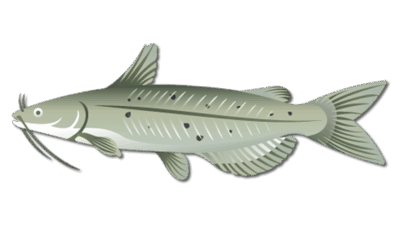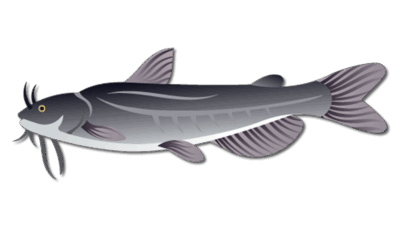
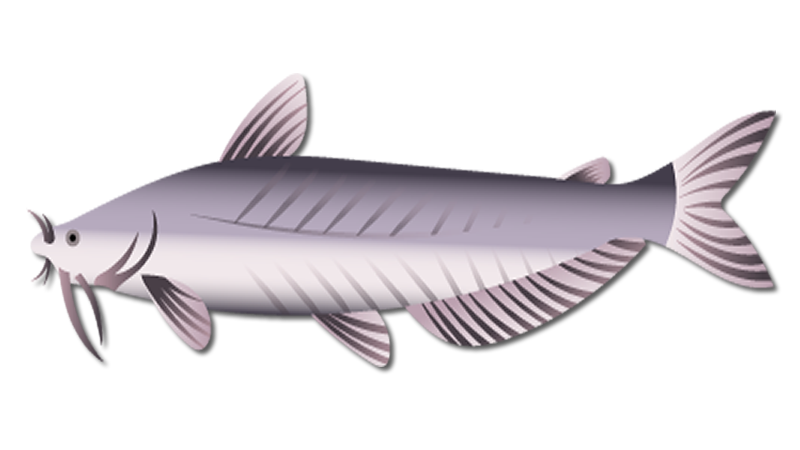



























Blue catfish (Ictalurus furcatus) are the largest catfish native to North America. Anglers recognize them by their slate-blue back, silvery sides, white belly, deeply forked tail, and long, straight-edged anal fin. They are powerful river and reservoir fish that often follow schools of shad and other forage.
Published: March 4, 2012 | Updated: September 11, 2026
Blue Catfish Quick Facts
- Scientific name: Ictalurus furcatus
- Family: Ictaluridae
- Native range: Mississippi, Missouri, Ohio, and Rio Grande river basins
- Preferred habitat: large rivers, reservoirs, deep channels, and firm sand, gravel, or rock bottoms
- Common forage: shad, herring, crayfish, mussels, insects, and other fish
- Best-known feature: the ability to exceed 100 pounds
How to Identify a Blue Catfish
A blue catfish has smooth, scaleless skin and four pairs of dark barbels around its mouth. Adults are usually blue-gray to slate gray above and lighter below. The tail is deeply forked, and the anal fin is long with a nearly straight outer edge. Large fish often develop a pronounced hump in front of the dorsal fin.
Color alone is not enough for identification. Water clarity, age, and stress can make blue catfish look lighter or darker. Tail shape, body form, spots, and the anal fin provide a more reliable combination of clues.
Blue Catfish vs. Channel Catfish
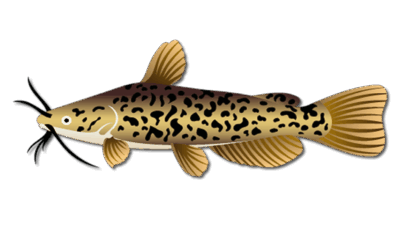
Blue and channel catfish can look similar, especially when both are medium-sized. Channel catfish commonly show dark spots when young and have a more rounded anal-fin edge. Blue catfish are usually unspotted and have a longer, straighter anal fin. Both species have forked tails, so the tail should not be the only feature used.
When identification affects a creel limit or record application, consult the wildlife agency for the state where the fish was caught. A clear photograph of the side, tail, and fully extended anal fin is useful.
Range and Habitat
Blue catfish are native to major central U.S. river systems, including the Mississippi, Missouri, Ohio, and Rio Grande basins. They have also been stocked outside their native range. NOAA reports that introduced populations in the Chesapeake Bay watershed have spread through tributaries and brackish water, where managers consider them invasive.
In Florida, the Florida Fish and Wildlife Conservation Commission blue catfish profile lists the species in the Escambia and Yellow rivers and also in the Apalachicola and Suwannee systems. Florida fish typically use large rivers and the lower portions of major tributaries, favoring current and sand, gravel, or rock bottoms.
Across their range, blue catfish move with flow, temperature, oxygen, and forage. Deep channel bends, outside river turns, ledges, submerged creek channels, dam tailwaters, and current seams can all concentrate fish. They are often described as bottom fish, but feeding blues regularly rise in the water column to follow baitfish.
Diet and Feeding Behavior
Young blue catfish eat aquatic insects, small crustaceans, and small fish. Larger fish become opportunistic predators and scavengers that consume shad, herring, sunfish, crayfish, mussels, and other available prey. Their diet changes by water body and season, which is why locally abundant fresh bait is usually the best starting point.
Blue catfish use taste and smell, but they also track live prey. Anglers should not assume every fish is lying motionless on the bottom. Suspended bait schools, thermoclines, and current breaks can position feeding fish well above the substrate.
Seasonal Movement and Spawning
Winter
Cold-water blue catfish often gather in deep holes, channel bends, and areas holding dense schools of forage. Stable weather can produce excellent fishing, but boat position and precise bait placement become especially important.
Spring
Warming water increases movement and feeding. Fish may use current seams, tributary mouths, flats near channels, and reservoir creek arms before spawning. The exact timing varies by latitude and water temperature.
Summer
Blue catfish spawn in cavities and protected areas when water is warm enough. Male fish prepare and guard nests. Outside the spawning period, anglers often find fish near deeper channel structure, moving water, or oxygen-rich zones.
Fall
Cooling water and migrating forage can create an active bite. Follow shad and other baitfish toward creek channels, river ledges, and current breaks rather than relying on a single depth.
How to Catch Blue Catfish
Start by locating current, depth changes, and forage. Sonar can help identify channel edges and suspended bait, but current direction and boat control determine whether a bait reaches the strike zone. Anchor upstream of a target or use a controlled drift that keeps baits moving naturally along productive structure.
Anchoring
Anchoring works well around channel bends, holes, bridge structure, and current seams. Spread several baits at different distances and depths without creating tangled lines. Give a location enough time to reveal active fish, then move if the area lacks forage or bites.
Drifting
Controlled drifting covers reservoir flats, ledges, and long channel edges. Use enough weight to maintain contact while allowing the rig to travel naturally. Drift speed matters: too fast lifts a rig away from fish, while too slow limits the water covered.
Bank Fishing
Bank anglers should look for public access near river bends, tributary mouths, bridges, and deep water close to shore. Heavy current, steep banks, and changing water levels require extra caution. Never enter restricted dam or spillway areas.
Best Baits and Rigs
Fresh cut bait from a legal local forage species is the standard choice for large blue catfish. Shad, herring, skipjack, and other oily baitfish release scent and present natural flesh. Cut bait size should match the tackle, current, and expected fish. Live bait can also work where regulations permit it.
A slip-sinker or Carolina-style catfish rig is simple and effective. Use a strong circle hook, abrasion-resistant leader, swivel, and enough sinker weight to control the bait. A three-way rig can hold bait off the bottom in current. Select line, leader, and terminal tackle for the cover and fish size rather than chasing oversized tackle for every situation.
Check bait regulations before collecting, transporting, or using live fish. State rules can differ sharply, particularly where blue catfish are nonnative.
Handling Large Blue Catfish
Support a large fish horizontally with two hands and avoid hanging it by the jaw. Keep fingers away from the dorsal and pectoral spines, which can cause painful puncture wounds. Use long-handled pliers for deeply placed hooks and minimize time out of the water when releasing a fish.
Harvest and release guidance depends on location. In some native fisheries, selective harvest and catch-and-release are common. In the Chesapeake watershed, agencies encourage removal in many areas because blue catfish are invasive. Review the rules and management advice for the exact water before fishing.
Size and Records
Most blue catfish are far smaller than the giants seen in record photographs, but the species can grow beyond 100 pounds. NOAA Fisheries notes a 143-pound fish caught from the Virginia-North Carolina border and reports adults can reach about five feet. FWC lists Florida’s state record and Big Catch qualifying measurements on its current species profile.
Record rules vary by organization and state. Certified scales, witness requirements, photographs, and species verification may all be required, so anglers pursuing a record should review the applicable process before a trip.
Where to Fish for Blue Catfish
Productive blue catfish water is found throughout much of the central, southern, and eastern United States. Use the lake and destination cards on this page to explore individual fisheries, and confirm that a listed water supports a current population before planning a species-specific trip.
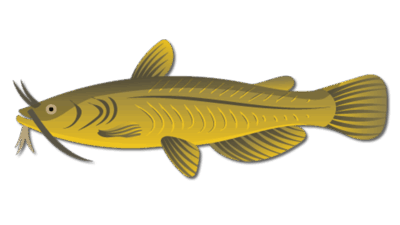
For a Florida-focused starting point, see our guide to the top Florida fishing holes for catfish. Anglers comparing species can also review flathead catfish and bullhead catfish. These pages have distinct ownership: this page covers blue catfish biology and fishing, while the Florida article covers destinations and tactics.