Published: June 12, 2014 | Updated: September 11, 2026
The walking catfish, commonly identified as Clarias batrachus, is a nonnative air-breathing catfish established in central and southern Florida. It is famous for making short overland movements during wet conditions, but its ability to tolerate warm, low-oxygen water is more important to its survival than the nickname suggests.
This page covers the specific walking catfish. For anatomy and taxonomy shared across the broader family, see our air-breathing catfish family guide.
How to Identify a Walking Catfish
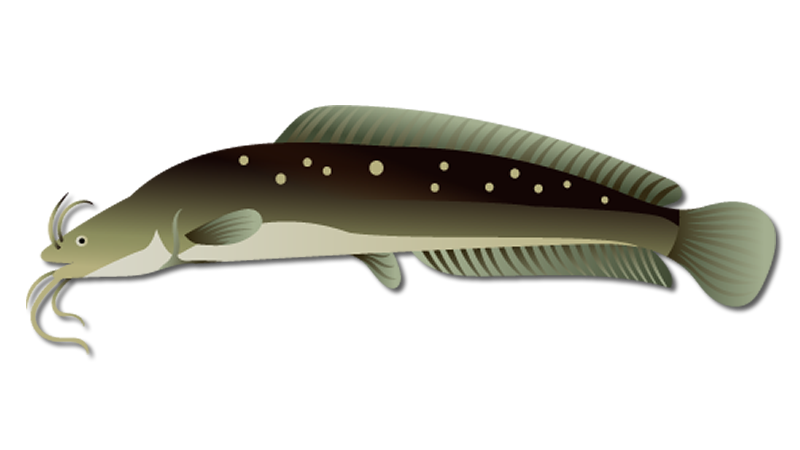
Walking catfish have an elongated, scaleless body, a broad flattened head, a large mouth, and four pairs of sensory barbels. Long dorsal and anal fins extend along much of the body. Wild fish are commonly gray-brown with lighter flecks, although albino forms exist. Sharp pectoral spines and slippery mucus make the fish difficult to handle safely.
Florida fish commonly reach about 20 inches and roughly 2.5 to 3 pounds, according to state and museum profiles. Size alone is not a reliable identification feature because other catfish may overlap that range.
How Walking Catfish Breathe and Move on Land
A specialized respiratory organ above the gills allows the fish to absorb oxygen from the atmosphere. This helps it survive in stagnant ponds, shallow canals, ditches, swamps, and seasonally shrinking pools where dissolved oxygen may be very low.
During wet weather, a walking catfish can keep itself upright with its pectoral fins and move by wriggling its body. These are short movements between nearby wet habitats, not long-distance walking on dry ground. The fish must remain moist, and there is no universal out-of-water survival time.
Where Walking Catfish Live in Florida
Walking catfish are native to Southeast Asia and were introduced to Florida through the aquarium and aquaculture trade during the 1960s. FWC reports them most commonly in the Everglades and associated canals, with established populations across much of central and southern Florida.
Preferred habitat includes shallow, vegetated, slow-moving, muddy, or low-oxygen water. They may be found in canals, ponds, wetlands, drainage systems, and temporary pools. They are generally less abundant in large open lakes than in shallow vegetated areas.
The USGS Nonindigenous Aquatic Species profile documents the species’ introduction and distribution in the United States.
Diet and Feeding Behavior
Walking catfish are opportunistic omnivores. They use their barbels to find food in turbid water and low light, often feeding at night. Their diet can include aquatic insects, crustaceans, fish eggs, larvae, small fish, carrion, detritus, and plant material.
The ability to use many food sources helps them occupy temporary or disturbed habitats. It also creates concern when they enter commercial aquaculture ponds, where they may consume cultured fish or compete for food.
Reproduction
Spawning is associated with warm temperatures, rainfall, and flooded vegetation in the species’ native range. Males help prepare nesting areas and guard eggs and young. Newly flooded habitat can provide food and shelter for juveniles.
Specific timing in Florida varies with rainfall and local conditions. Claims that one statewide month always represents the walking-catfish spawning season are too broad.
Are Walking Catfish Harmful?
Walking catfish are invasive in Florida because they were introduced by people and established self-sustaining populations outside their native range. Early predictions that they would eliminate native fish were overstated. FWC notes that major ecosystem damage has not matched those early fears, although the species remains undesirable and can be locally abundant.
The clearest documented economic concern is aquaculture. Walking catfish can enter fish-production ponds and prey on stocked fish. Their air-breathing ability and overland movement make ordinary water barriers less effective during wet conditions.
The Florida Museum of Natural History provides an accessible research-based overview of their Florida history and ecology.
Florida Law and Safe Handling
FWC classifies walking catfish as a conditional species. Possession and transportation of live walking catfish are illegal without the required permits. An angler who keeps one must not transport it alive. Regulations can change, so consult the current FWC walking catfish profile before acting.
Use care around the sharp pectoral spines. Do not move the fish to another water body, use it as live bait, or release an aquarium specimen. If found outside its known range, photograph the fish, record the location, and follow state nonnative-species reporting guidance.
Can You Eat Walking Catfish?
Walking catfish are used as food in parts of their native range. FWC notes that retained fish in Florida must be possessed dead, and immediate icing is the practical handling guidance. Whether a fish is safe to eat also depends on local consumption advisories, water quality, storage, and preparation. Never treat the absence of a bag limit as permission to transport a live prohibited or conditional fish.
Walking Catfish Common Names
Searches for this species often use regional or translated names, including magur, mangur, Thai catfish, ikan lele, and several Chinese and Southeast Asian names. Those terms may also refer to related Clarias species rather than the exact Florida population. Scientific identification and geographic context are necessary before treating common names as synonyms.
Walking Catfish vs. Other Florida Catfish
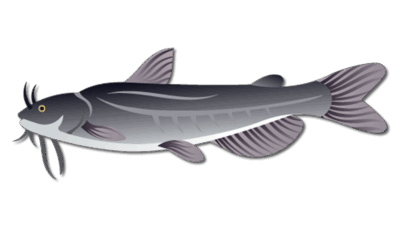
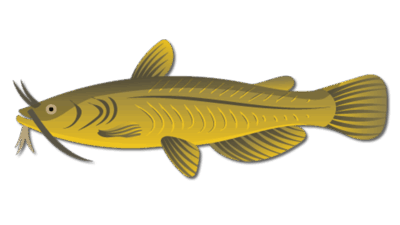
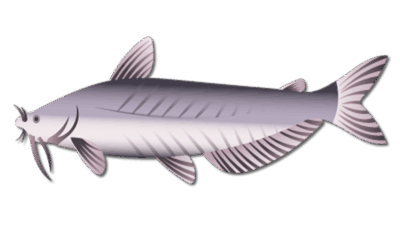
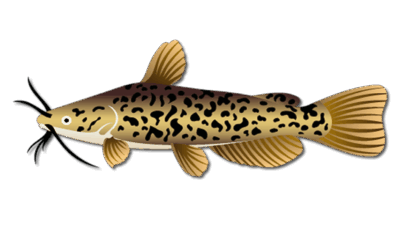
The long continuous fins, four pairs of barbels, air-breathing behavior, and occasional overland movement help separate walking catfish from native channel, blue, white, and bullhead catfish. If identification remains uncertain, use official illustrations and report the observation rather than moving the fish.
Explore the broader freshwater species directory for other catfish and Florida fish profiles.