
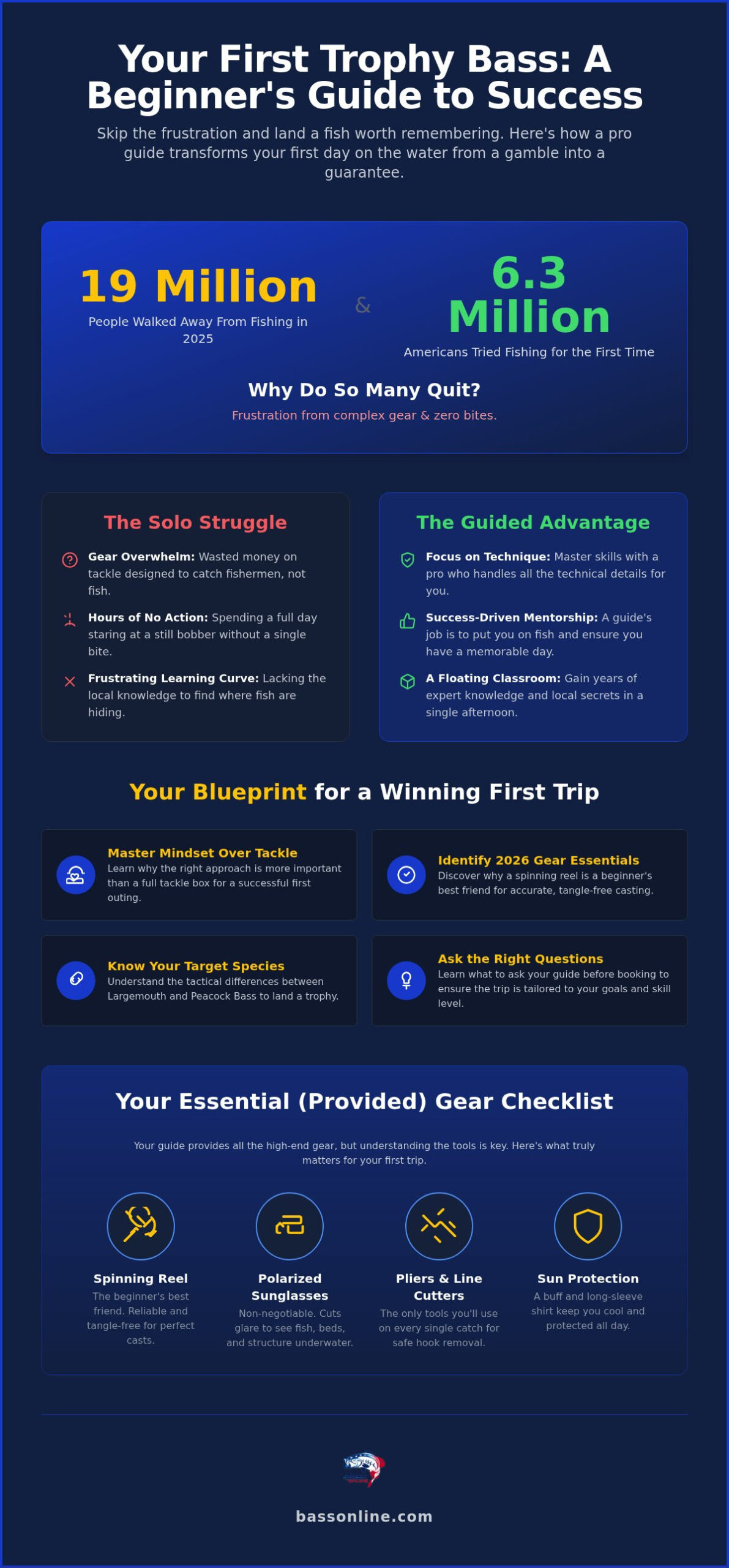
Did you know that 6.3 million Americans tried fishing for the first time in 2025, yet a record 19 million people walked away from the sport in that same year? Most folks quit because they get overwhelmed by complex gear or spend hours staring at a still bobber without a single bite. It’s frustrating to feel like an amateur when all you want is to enjoy the water and land a solid fish. When you’re looking to find a guide for your first freshwater fishing trip, you are choosing to skip the struggle and head straight for the results. Your first trip shouldn’t be a gear-buying mission; it should be a success-driven mentorship with a pro who knows these waters like the back of their hand, like the experts at Bass Online.
I’ll show you how to bypass the steep learning curve and land your first trophy bass with professional expert guidance that builds your confidence from the first cast. We’ll cover how to pick a mentor who treats you like a partner, what technical jargon you can safely ignore, and the specific steps to ensure you walk away with a lasting outdoor memory. By the end of this guide, you’ll know exactly how to vet a captain so your first day on the lake is an absolute win.
Key Takeaways
- Shift your focus from buying tackle to mastering technique. You’ll learn why the right mindset is more important than a full tackle box for your first successful outing.
- Identify the 2026 gear essentials that actually matter. Discover why the spinning reel is the beginner’s best friend for making accurate casts without the frustration of tangled lines.
- Understand the tactical differences between Largemouth and Peacock Bass. Each species demands a specific approach, and knowing these habits is key to landing a trophy on your first try.
- When you set out to find a guide for my first freshwater fishing experience, treat the boat as a floating classroom where you’ll gain years of expert knowledge in a single afternoon.
- Learn the vital questions to ask your guide before booking. Clear communication about your goals ensures the trip is tailored to your skill level and maximizes your time on the water.
Why Your First Freshwater Fishing Experience Starts with the Right Mindset
Nothing beats the electric “thump” that travels up the rod when a bass strikes. It’s a sudden, raw connection between you and a predator hiding beneath the surface. This excitement is exactly why so many people choose bass as their first target. When you look to find a guide for my first freshwater fishing experience, you are prioritizing that thrill over the frustration of trial and error. You aren’t just out there to look at the scenery; you’re there for the strike.
Many new anglers think they need a garage full of tackle to be successful. I’ve seen it a thousand times. They think the gear makes the fisherman. In reality, the gear is just a tool, and the real goal is the memory of the catch. In 2026, the professional standard is built on “Catch and Release” to ensure our lakes stay healthy and productive. Beginners who go solo often struggle because they lack local knowledge. According to 2025 data, 19 million people dropped out of the sport, often because they didn’t catch anything on their first few tries. Having a mentor changes the game entirely and keeps you from becoming part of that statistic.
The Difference Between Saltwater and Freshwater Environments
Freshwater environments offer a level of accessibility you won’t find on the open ocean. The waters are typically calmer, making it easier to focus on your technique without battling heavy swells or seasickness. You also get incredible diversity in a small area. From the iconic Largemouth Bass to the aggressive Peacock Bass, these fish follow predictable seasonal patterns. Unlike the vast, unpredictable ocean, a lake provides specific structures like weed lines and submerged timber where fish are almost guaranteed to hold if you know how to read the water.
Overcoming the ‘Beginner’s Anxiety’
Most of the pressure you feel as a novice comes from the fear of looking like you don’t know what you’re doing. I see it all the time; new anglers worry about tying the perfect knot or knowing every technical term. Forget all that. Success isn’t about the knots you know; it’s about the amount of productive water you cover. When you find a guide for my first freshwater fishing experience, we handle the technical details so you can focus on the fun. Freshwater fishing is a blend of patience and explosive action. We simplify the gear and the strategy, turning what could be a confusing day into a masterclass in landing fish. We’ve seen every mistake in the book, and we’re there to help you fix them before they cost you a trophy.
Essential Checklist for Your First Freshwater Trip
Don’t let the shiny walls of a big-box tackle store fool you. Most of what you see on those shelves is designed to catch fishermen, not fish. When you find a guide for my first freshwater fishing experience, we provide all the high-end gear, but it’s still vital to understand the basics. For 2026, the standard for a beginner is a medium-action spinning reel. Unlike baitcasters, which can tangle if your thumb isn’t perfect, a spinning reel lets you focus on your cast and your retrieve. It’s the most reliable tool in the boat for a first-timer.
Terminal tackle is where things get specific. You’ll use offset worm hooks for soft plastics or circle hooks if we’re using live bait. Weights help your lure reach the strike zone, whether that’s the bottom of a deep ledge or just under a lily pad. And don’t knock the bobber. In the pro world, we call them indicators or corks, and they are lethal for keeping bait at the exact depth where a bass is suspended. If you want to see how these tools work in the hands of a pro, you can always reach out to our team.
The ‘Must-Haves’ for Every New Angler
Comfort dictates how long you can stay in the hunt. Polarized sunglasses are non-negotiable because they cut the glare on the water, allowing you to see submerged logs, beds, and the fish themselves. For sun protection, skip the greasy lotion and go with a breathable buff and long-sleeved performance shirt. You’ll stay cooler and more protected during an 8-hour trip. Always keep a pair of needle-nose pliers and line cutters within reach; they’re the only tools you’ll use on every single catch.
Understanding Licenses and Regulations
Every cast you make supports the environment. Your license fees fund the very conservation efforts that keep our fisheries thriving. For 2026, resident annual licenses average about $25.12 across the U.S., but every state has different rules. For example, Texas now requires a valid ID for purchase, while Vermont has a new combined daily limit of 50 panfish. Securing your paperwork is the final step when you find a guide for my first freshwater fishing experience. If you are heading to the Sunshine State, make sure you check the latest requirements for Florida fishing to stay legal before you hit the dock.
Targeting Your First Trophy: Largemouth vs. Peacock Bass
Picking your target is the most exciting part of the planning process. When you set out to find a guide for my first freshwater fishing experience, you’ll likely choose between the tactical Largemouth or the brawling Peacock Bass. Both offer a world-class experience, but they play by very different rules. For 2026, understanding their seasonal shifts is the difference between a photo-op and a long, quiet boat ride. Largemouth are the masters of the ambush, while Peacock Bass are the street fighters of the canal systems.
The “why” behind the bite always comes down to two things: water temperature and structure. In the spring of 2026, expect fish to move into shallow “beds” to spawn. By summer, they’ll retreat to deeper ledges or bury themselves under thick vegetation to stay cool. Professional guides track these movements daily, knowing exactly which submerged log or rock pile is holding a trophy. You aren’t just looking for fish; you’re looking for the specific conditions that make them hungry.
Largemouth Bass Tactics for Beginners
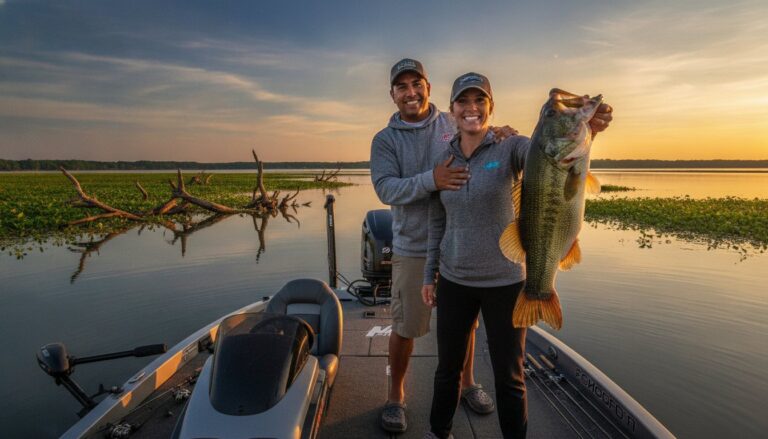
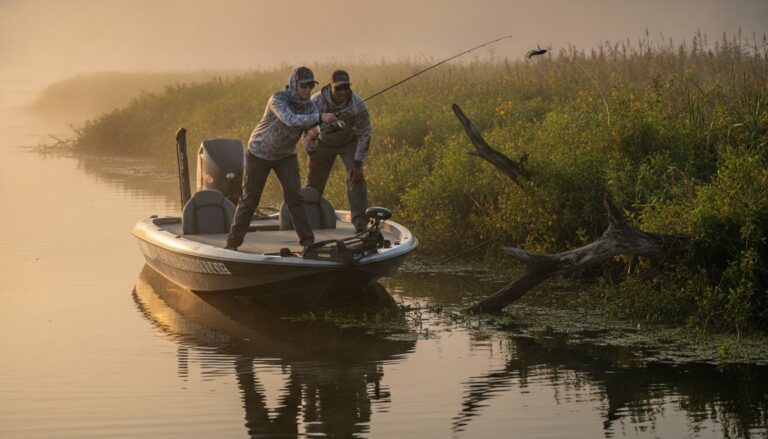
Largemouth Bass are the iconic American predator. They love “cover,” which is just a fancy word for anything they can hide under, like lily pads, docks, or fallen trees. For a beginner, the best approach is often the slow-and-steady method. Using a soft plastic worm and letting it sink slowly into the grass requires patience, but it’s the most effective way to land a lunker. If you want to dive deeper into the technical side of these fish, check out our Bass Fishing 101: The Ultimate Pro Guide. Success here is about precision and waiting for that tell-tale “thump” on the line.
Peacock Bass: The Aggressive Alternative
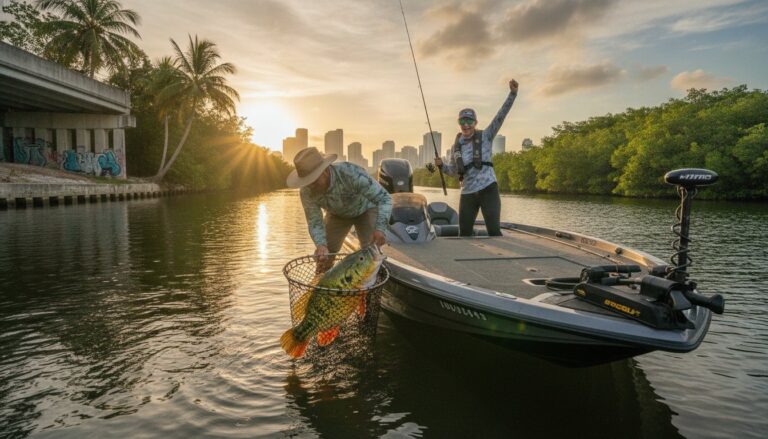
If you prefer fast-paced action, the Peacock Bass is your fish. These tropical fighters don’t just bite; they attack. Unlike the Largemouth, Peacocks respond to high-speed retrieves and explosive surface strikes. They have a high metabolism and love the heat, making them active even in the middle of a scorching afternoon. Because they pull so hard, we often use heavier tackle and reinforced hooks to keep them from snapping the line. When you find a guide for my first freshwater fishing experience in South Florida, be prepared for a fight that feels twice as big as the fish looks. You can find more on these colorful brawlers in our guide to Peacock Bass Florida.
Why a Professional Guide is Your Secret Weapon
You can spend hours watching YouTube videos or debating costs on digital forums, but nothing replaces the “feel” of a live strike or the intuition of a local expert. When you look to find a guide for my first freshwater fishing experience, you are hiring a shortcut to success. My goal isn’t just to drive the boat; it’s to bypass the “skunk” days where you go home empty-handed. We live on these lakes. We know the exact brush piles and rock ledges that hold fish when the pressure is high. This local knowledge is the difference between casting blindly and placing your lure exactly where a trophy is waiting.
Think of the boat as a “Floating Classroom.” In a single afternoon, you’ll pick up techniques that usually take years of solo trial and error to master. We use pro-grade gear that is maintained daily, ensuring that when you finally hook into that five-pounder, your line won’t snap and your drag won’t fail. Safety is always the priority, but having top-tier equipment also gives you the confidence to fish harder and more effectively. If you are ready to skip the frustration and get straight to the action, you should book your guided trip today.
What to Expect on a Bass Online Charter
Our professional captains are more than just boat drivers; they are mentors who specialize in teaching beginners the ropes. We provide everything you need, from the rods and reels to the latest lures. You just need to show up with your license and a positive attitude. We focus on “Trophy” potential, meaning we aren’t just looking for any bite. We are positioning you in spots like Lake Toho or the Everglades where you have a real shot at the fish of a lifetime. If you decide to find a guide for my first freshwater fishing experience, you’re investing in an insider journey led by the best in the business.
Maximizing Your Time on the Water
A 4-hour guided trip often beats 40 hours of solo struggle because every minute is spent in high-percentage water. You’ll learn how to read modern electronics and sonar like a pro, identifying baitfish and structure that are invisible to the naked eye. This isn’t just about us handing you a rod when a fish is already on. A guide’s job is to make you a better angler, not just catch fish for you. By the time we head back to the dock, you’ll understand why the fish were where they were and how to trigger a strike when the bite gets tough. This is how you build a foundation for a lifetime of successful trips.
Planning Your Trip: From Booking to the First Cast
The moment you decide to find a guide for my first freshwater fishing experience, the real excitement begins. But before you step onto the boat, you need a solid plan. Choosing where to fish is your first big decision. Are you looking for the grassy expanses of Lake Toho, the winding rivers of the North, or the unique ecosystem of the Everglades? Each spot offers a different vibe and a specific challenge. Once you pick the water, talk to your guide. Tell them exactly what you want to achieve. If you’re looking for your first trophy, say so. Clear communication ensures we tailor the day to your specific goals and skill level.
Don’t overlook the physical prep. Eat a good breakfast and bring plenty of water. Dehydration is the quickest way to ruin a great day on the lake. We’ll have cooler space for your drinks and snacks, so pack things that are easy to eat with one hand while you’re holding a rod. Logistics matter just as much as the lures we use. Know exactly where the boat ramp is and plan to arrive 15 minutes early. This gives us time to go over the safety briefing and get the gear ready so we can be at the first honey-hole by sunrise.
Selecting the Perfect Freshwater Destination
Your choice should depend on the species you want to target and the time of year. If you’re chasing the aggressive Peacock Bass, you’ll want to stay in South Florida. For massive Largemouth, iconic spots like Lake Guntersville or the St. Johns River are hard to beat. Consider your travel time and check for seasonal peak bites. Some lakes produce giants in the winter, while others heat up in the late spring. For a full breakdown of where to go, check out Bass Fishing Near Me: A Pro Guide’s Roundup.
Final Readiness Checklist
Before you head out, run through this quick list to make sure you’re 100% ready for the water:
- Confirm Meeting Details: Double-check the location and time with your captain the night before.
- Digital License: Have your 2026 fishing license saved on your phone or printed out. Remember, all 50 states require one for recreational fishing.
- Weather Check: We fish in the rain, but we stay off the water during lightning. Dress in layers to handle the early morning chill.
- Gear Check: We provide the tackle, but bring your polarized glasses and sun protection as we discussed earlier.
When you find a guide for my first freshwater fishing experience, the final step is simply booking with confidence. Trust the process, trust your mentor, and get ready for the adrenaline rush of that first big bite. Your 2026 adventure is just a few clicks away, and I can’t wait to see you on the water.
Get Ready for Your First Big Strike
Your first day on the water should be defined by the thrill of the strike, not the frustration of a tangled line. We’ve covered why the right mindset beats a mountain of gear and how targeting the right species can turn a simple trip into a legendary memory. When you choose to find a guide for my first freshwater fishing experience, you are tapping into over 25 years of professional guiding experience. Our top-rated captains are stationed across all major US bass lakes, ready to turn the boat into your private classroom.
We handle the heavy lifting by including all professional tackle and high-end boats in every trip, so you can focus on mastering the cast. You don’t need to be an expert to catch a trophy; you just need to be in the right spot with the right teacher. The water is calling, and the fish are waiting for your lure. Ready to land your first trophy? Contact our expert guides today! and let’s make your first fishing trip one you’ll never forget. See you at the dock!
Frequently Asked Questions
Do I need to buy my own fishing rod before my first guided trip?
No, you don’t need to buy a thing before your trip. We provide all the professional rods, reels, and lures as part of our service. This allows you to try out high-end equipment before you decide to invest in your own gear. Just show up at the dock and we’ll have everything rigged and ready for the water so we can start casting immediately.
What happens if it rains during my scheduled freshwater fishing experience?
We fish in the rain, and often the bite gets even better when the clouds roll in. We only cancel or reschedule if there is lightning or heavy wind that makes being on the lake unsafe. When you find a guide for my first freshwater fishing experience, we’ll keep a close eye on the radar to ensure you stay safe while maximizing your time in the hunt.
How much should I tip a professional fishing guide in 2026?
A tip of 15% to 20% of the trip cost is the industry standard for 2026. This is a great way to show your appreciation for the guide’s hard work, local expertise, and the hours of preparation they put in before you even hit the dock. It’s usually handled in cash at the end of the day after we’ve safely returned to the boat ramp and finished the photos.
Is freshwater fishing suitable for young children or seniors?
Absolutely. Freshwater fishing is incredibly accessible for all ages. Our professional boats are stable and comfortable, making them perfect for seniors or young kids who are just learning the ropes. We specialize in teaching beginners, so we’ll adjust the pace and the techniques to make sure everyone on board has a blast and a real shot at landing their first trophy fish.
Do I need a different license for Peacock Bass vs. Largemouth Bass?
No, a standard freshwater fishing license covers both Largemouth and Peacock Bass. You don’t need a species-specific permit for these fish like you might for trout in some states. Just make sure your license is valid for the specific state where we are fishing. For 2026, most states allow you to carry a digital version on your phone for easy verification during the trip.
What is the best time of day to go for my first fishing trip?
Early morning is generally the best time to start your first trip. Bass are most active during the low-light hours of sunrise when they move into the shallows to hunt. Starting early gives us the best chance to land a trophy before the sun gets high and the fish move to deeper cover. If you find a guide for my first freshwater fishing experience, we’ll suggest the best launch time.
Can I keep the fish I catch on a guided bass fishing charter?
We practice a strict catch and release policy for all our bass fishing charters. This professional standard helps protect our trophy fisheries for future generations of anglers. We’ll take plenty of high-quality photos of your catch so you can show off your trophy to friends and family. If you land a true monster, we can help you arrange for a high-quality replica mount to remember the day.
What should I wear for a full day of freshwater fishing?
Dress in breathable layers. Start with a moisture-wicking shirt and a light jacket for the morning chill, then peel back layers as the day heats up. A wide-brimmed hat and polarized sunglasses are essential for protecting your eyes and spotting fish in the water. Don’t forget non-slip, closed-toe shoes to keep your footing stable on the deck while you’re fighting a hard-pulling bass.

Article by
Mr Bass
Todd Kersey, widely known as Mr. Bass by Field & Stream, is a professional angler, accomplished author, and dedicated philanthropist with a lifelong passion for bass fishing. Armed with a degree in Outdoor travel, Mr. Bass has expertly combined his knowledge with his practical fishing experience to become one of the most respected names in the bass fishing, his deep understanding of bass habitats, and fish behavior has earned him numerous accolades as a asset of the sport. Serving 8 years as FWC Stakeholder Chairperson. Leading and passing cutting-edge legislation, such as the Black Bass Management plan, and successfully building, passing, and financing the Trophy Catch program. As CEO, he is committed to giving back to the community through his philanthropic efforts. He supports a variety of causes, especially those centered around physical disabilities. Through his advocacy, his mentorship programs inspire anglers to engage in fishing stewardship, helping to raise more than $ 18 million in donations. Mr. Bass continues to inspire anglers and outdoor enthusiasts alike with his commitment to the sport and the world around him.