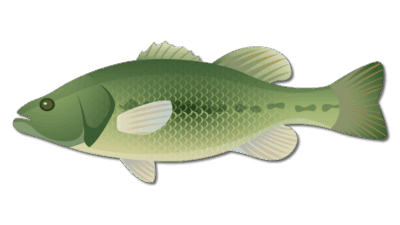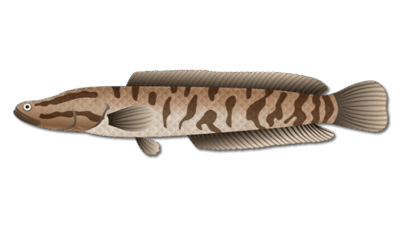




















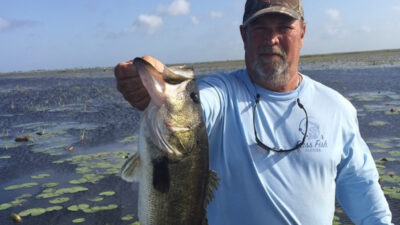

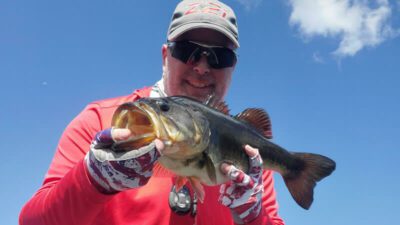
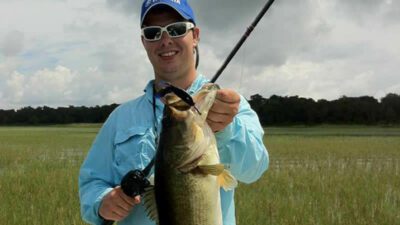
Peacock bass (or Brazilian tucunaré) (Cichla) is a genus of large cichlids, predatory freshwater fish native to the Amazon, Orinoco basins, and Guianas rivers in tropical South America. They are sometimes referred to in English by their Brazilian name, tucunaré, or Spanish name, pavon. Despite their common name and superficial similarity, they are not closely related to the black bass family members, such as the North American largemouth bass and smallmouth bass.
Identifying Peacock Bass
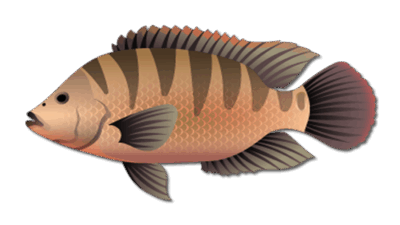
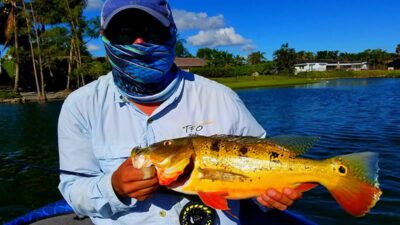
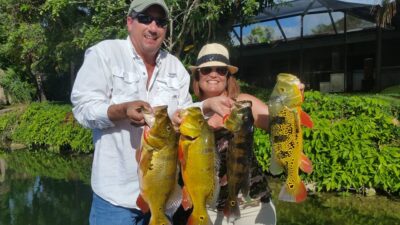
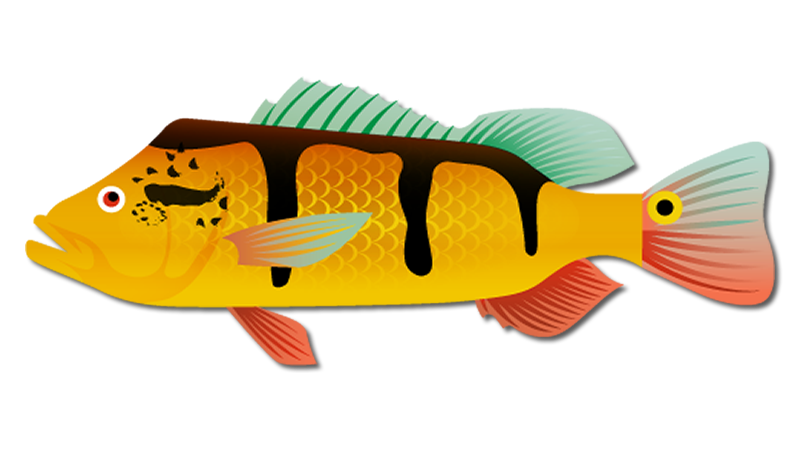
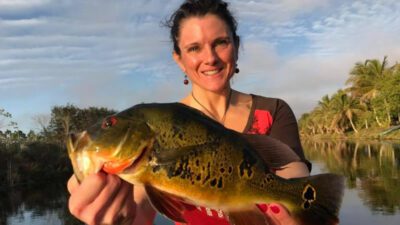
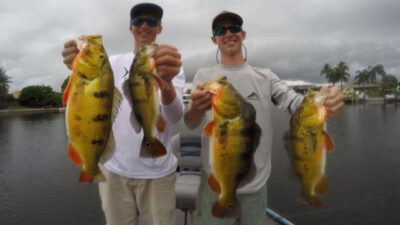
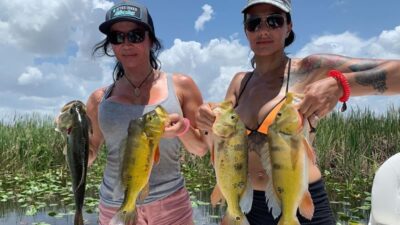
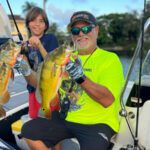
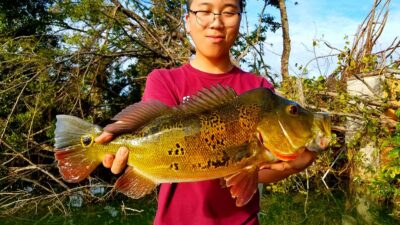
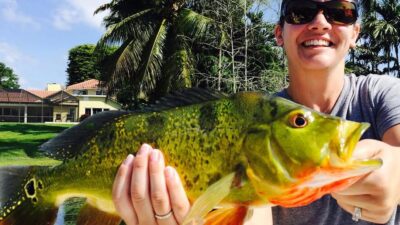
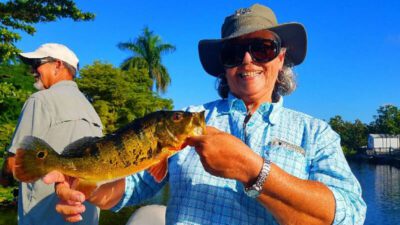
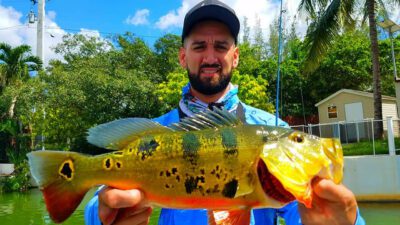
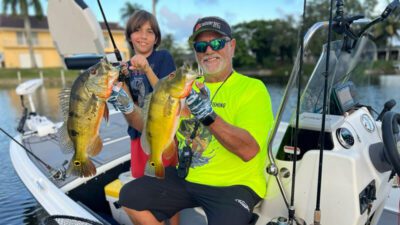
A prominent characteristic of this species is that they are generally light to dark yellow in body color, with bright orange fins. Vertical black bars form lines on both sides of the fish. The underbelly is generally light or almost white. Peacock bass, like the largemouth bass, has an upper jaw that also reaches far beyond the rear margin and is hinged.
Florida, Panama, and Brazil rank as the TOP Destinations to explore and catch trophy peacock bass in the world!
ABOUT THE FLORIDA PEACOCK BASS
Please read about the hard-fighting Peacock bass below, then leave a review or email us any questions you may have.
All about the Florida Peacock Bass. The butterfly peacock (also called peacock bass) is a prevalent freshwater game fish introduced to South Florida in 1984. It is readily caught by shoreline and boat anglers using various tackle and bait, ranging from live shiners to artificial lures and flies. Peacock bass in South Florida prefer live fish and baits that imitate them, often used by largemouth bass anglers, but they rarely hit plastic worms, which are commonly used to catch largemouth bass.
The Introduction To South Florida
After carefully documenting facts and reviews by experts nationwide, the FWC introduced the exotic species. FWC imported Butterfly peacocks from Brazil and Peru. Then, it was spawned at the FWC’s Non-Native Fish Research Lab, using three stocks to increase genetic variability. After being tested by the U.S. Fish and Wildlife Service and Auburn University to ensure they were disease and parasite-free, they stocked.
Today, the butterfly peacock fishery extends through 330 miles of canals in Dade, Broward, and Palm Beach counties and is self-sustaining. Since additional stockings are not needed, the program has no ongoing cost. Yet, it generates about 286,000 hours of angling enjoyment annually and provides nearly $5 million in annual economic benefits.
Species of peacocks
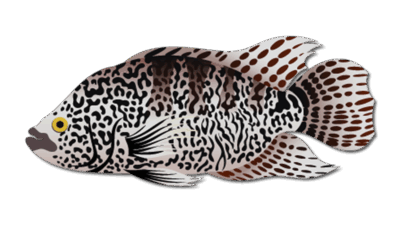
There are 15 species of Peacock Bass, which all vary in size. The most common in the United States is the Butterfly Peacock bass, a medium-sized species ranging from 6 to 15 pounds. The largest species is the Speckled Peacock Bass, which can grow over 36 inches. Speckled Peacock Bass were introduced to South Florida around the same time as the butterfly, but none survived.
Speckled peacocks haven’t been seen in South Florida in over 16 years and are protected, making it illegal to catch them. The smallest is the Royal Peacock Bass, which grows to a maximum length of 10 inches.
Where and When To Target Peacock Bass
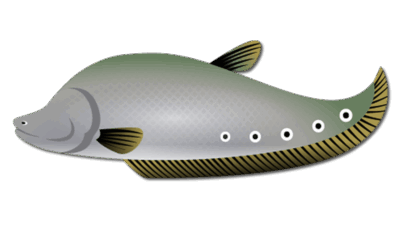
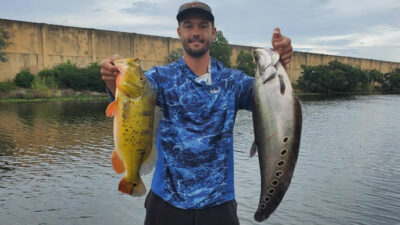
These beautiful fish are caught anywhere south of Palm Beach County. Generally, the best peacock bass fishing is done in Miami, especially for larger ones. Though fishing trips in Palm Beach are trendy because of the chance of catching another exotic, the clown knife fish.
When peacock bass fishing in Miami or Fort Lauderdale, you have a high probability of catching common saltwater species that made their way into freshwater systems, such as tarpon and snook. Peacock Bass fishing trips are available throughout the year, but there are typically two peak seasons: between March and June, and September and December. The most significant fish heavier than four pounds are captured at these times.
Tips From The Local Experts
Shaded areas provided by bridges, culverts, and other structures generally are productive fishing spots for this exotic species, along with fallen trees, bridge pilings, canal ends, drop-offs, lily pads, bends, and intersections. During daylight hours, nearly all butterfly peacocks are caught. The easiest way to catch butterfly peacocks is by using live bait.
A favorite choice is a small golden shiner about three inches in length. Referred to locally as a “peacock shiner.” Anglers can fish these with a float or free-lined while casting or slow-trolling with an electric motor along canal edges. A small split shot weight may be required to fish the shiner at the proper depth.
Peacock bass can be readily accessed from canal banks or boats, with prime fishing opportunities during daylight hours, as they rarely bite in the early morning or at night. Focus your effort in rocky areas near a structure, and use topwater plugs, minnow-like crankbaits, or small golden shiners. Light tackle works best. The best fishing holes can be identified by contacting local bait and tackle shops, reading fishing reports, and following reputable fishing guides.
Strict Rules and Laws
The bag limit is two fish per day, with only one fish allowed to be longer than 17 inches. Butterfly peacocks over 18 inches or 5 pounds are eligible for the Big Catch program. The FWC now has a Peacock Fishing brochure available in PDF format. Additionally, we get asked about having a valid fishing license. If you have a Pennsylvania fishing license do I need to purchase a Florida license? The answer is yes, each state offers an out-of-state temporary license for these times!
BEST LOCATIONS TO FISH
The best and most up-to-date fishing reports for butterfly peacocks are available from Peacock fishing blogs. A few tackle shops cater specifically to butterfly peacock anglers. There are also several professional guides who specialize in fishing for this species. Experienced guides help to visit anglers and those who want to learn the basics quickly.
They provide information on the best canals and lures to fish. For first-time, non-guided butterfly peacock anglers, it is recommended to check with local freshwater tackle shops for the best locations and baits to use. The highest-ranked fishing guides in the areas are listed here.
Top Cities in Florida to find Peacock bass:
Miami, Naples, Fort Lauderdale, Boca Raton, Boynton Beach, Hollywood, Homestead, Miramar, Plantation, Pompano Beach
These maps are also available in Acrobat PDF format on our fisheries publications site.
Things to Avoid
Coldwater temperatures are the most critical factor for butterfly peacock bass in Florida. Laboratory temperature studies have documented that peacock dies in water colder than 62 degrees. The first attempt to study peacock bass in the 1960s failed due to low pond temperatures. In the early 1980s, the discovery of coastal southeast Florida canals being warmer than other waters during the winter, and some rarely dropped below 65 degrees.
The main reason for this is the Biscayne Aquifer, which lies just a few feet below the ground. During winter, the warmer water flowing from this aquifer into canals creates warm temperatures critical to the survival and success of many exotic fish. The butterfly peacock is no exception. In fact, of all exotic fish currently established in Florida, the peacock bass is the least tolerant of low water temperatures.
Peacocks have been through winter and reproduced every year since their introduction in 1984. With no additional stocking of fish needed since 1987. Although peacocks occasionally experience partial winterkills, coastal southeast Florida canals provide conditions that should permanently support a high-quality sport fishery for this important species.
Unlike their relatives, the butterfly peacock doesn’t venture into saltwater. They are restricted by salinities similar to those tolerated by largemouth bass and snakehead. This intolerance to saltwater and cold water temperatures prevents butterfly peacock bass from becoming widespread outside the metropolitan South Florida area.
USING PEACOCK BASS FISHING GUIDE
When choosing a Peacock Bass Fishing Guide, think locally first. Secondly, there is no substitute for their experience. Whether you’re fishing in Miami, Naples, West Palm Beach, there are particular lakes like Lake Ida and Airport Lakes that will provide the best experience. Look for fishing guides that specialize in the location or body of water you want to fish.
While most guides can catch fish, premium equipment, top-notch boats, high-quality gear, years of experience, and friendly service are what professional Bassonline guide trips are all about and expected. Otherwise, fish from the bank! The peacock has flourished in these urban canals and lakes over the last 20 years, and all of this great fishing is just a stone’s throw of most anywhere in South Florida.
Bass Online has the largest “full-time” Team of Florida freshwater fishing guides in the state and has several specialties in just peacock. Our Guides are the most experienced and only the best that fish for Peacock Bass in South Florida. Our TEAM at Bass Online will gladly assist you in planning your next Florida fishing trip that’s guaranteed to create a lifetime of memories!
FISHING FOR PEACOCK BASS
LURES AND TECHNIQUES
Topwater lures (with and without propellers). Minnow imitating crankbaits and various jigs fished on casting or spinning tackle is suitable for artificial baits. These include floating and sinking Rapalas and Yozuri minnows, Rat-L-Traps, Shad-Raps, Tiny Torpedo, and Pop-Rs. A plastic, twin-tailed minnow and jig combination. Buzzing across the surface or tossing at fish sighted in deeper water can also be productive.
Small tube lures, jigs, and chatter baits are frequently used to sight-fish butterfly peacocks, especially when aggressively guarding spawning beds near the shoreline. Although bigger baits (up to five inches) may entice more trophy-sized fish, baits less than three inches in length will produce more consistently than larger ones. However, even a giant butterfly peacock will take baits smaller than those that largemouth bass anglers typically use.
Fly fishing for these aggressive Florida fish is also prevalent. Dahlberg divers, deceivers, Clousers, epoxy minnows, zonkers, and poppers are all famous fly fishers’ selections. Many anglers prefer gold, firetiger, or natural-colored lures; fly fishermen like chartreuse or yellow flies with flashy strips of Mylar-type materials. Most butterfly peacock anglers use light spinning tackle with a six to eight-pound test line.
Light lines and tippets generate more strikes than heavier ones, and more massive lines aren’t necessary because canal-caught butterfly peacock tend to fight as fighters. Successful anglers using a thumb grip will have many scrapes caused by teeth by the end of the day. Despite this, peacock bass handling uses the same techniques as those used with thumb and finger with largemouth bass. Although this does not immobilize peacocks, it does create a great picture.
Things to Know
You can avoid this by using tape, a leather thumb guard, or a fish landing device like the Bogagrip. The current bag limit for butterfly peacock bass is two fish per day, only one of which may be greater than 17 inches long. This 17-inch length regulation gives added protection to large fish, which is essential for maintaining a high-quality sport fishery.
Suppose the popularity of butterfly peacock fishing continues to grow as expected. It may be necessary to consider even more restrictive regulations to protect this fishery (e.g., the bag limits). All sport fish regulations are subject to change, so always check for current rules.
We at bassonline.com encourages anglers to practice catch-and-release when fishing for butterfly peacock. Overall, we think the species is a hearty fish, and nearly 100 percent will survive being caught and released when adequately handled. However, peacock bass don’t stay in live wells or as long out of the water as largemouth bass. Peacock must be released quickly to maximize their chances of survival.
ARTIFICIAL BAIT FISHING
Most anglers choose live bait for peacock bass fishing, but artificial lures can be used. The most common lure of choice is topwater lures or hard-jerk bait. Also, many anglers have a blast catching peacock bass on hair jigs and small spinnerbaits. Conventional swimbaits and swim jigs used for largemouths do not work, especially in Florida.
Artificial fishing for peacocks can get you addicted to peacock bass fishing, but it can sometimes be a grind. It’s not quick and easy like largemouth fishing, but there is a wide range of waterways to explore, and they bite all year round!
LIVE BAIT FISHING
When it comes to live bait fishing for peacock bass, you have several options for fishing with it. Live bait can be very productive in catching bass in general. One of the most common techniques to catch peacock bass in Florida with live bait is with domestic shiners. It is one of the best ways to put large numbers and trophy-size peacock bass in the boat.
Shiners can be used for free lining, meaning no use of a bobber. Anglers may use a Carolina rig style with lead and leader, or a conventional style with a bobber. Local baitfish are the common forage for peacock bass.
WHERE CAN YOU FISH FOR PEACOCK BASS
Florida is home to some of the best bass fishing, and the peacock bass is among the top game fish for recreational freshwater anglers. Bass in Florida reach proportions and are caught year-round. A trophy peacock bass is one in the 5+ pound range. You can find peacocks in canals and lakes near underwater structures and rocks.
While Panama is known around the world for its giant black and blue marlin, another species fished and commonly asked about here is the peacock bass. As in Brazil and Florida, this colorful and aggressive fish has caught the attention of many people. A day fishing for peacocks in Panama is made more impressive by the location.
Since the mid-1980s, an ever-increasing number of anglers have ventured to the Amazon Basin of Brazil and Venezuela to target the peacock bass, a freshwater species that some suggest is the most exciting game fish on earth. It was the late 1950s or early ’60s that the first accounts of peacock bass were told by the late Field and Stream editor A.J.
Lake Wilson in Hawaii is stocked with 17 different species of freshwater fish. The most popular, like all the other locations, is the Peacock Bass. It was introduced in Hawaii in 1977 from South America, and is distinctive because of its color and spots. While in minimal areas in Hawaii, South Florida is the only location in the United States.
FREQUENTLY ASKED QUESTIONS
The Florida Fish & Wildlife Commission introduced the Peacock Bass to Florida’s lakes in early 1984. These non-native species of the cichlid fish are known for their yellow and golden hue, distinguished by its sidebars. According to the FWC, Peacock Bass are native to the Amazon but have adjusted well to the South Florida environment.
They ONLY do freshwater waters and do not do well in saltwater with salinity (salt) where saltwater mixes with freshwater. Peacock Bass are also very particular about brackish or, in general, the quality of the water, the water temperature, and currents. They are making the warm canals of South Florida home for the perfect mixture of habitat.
As listed on this page, there are many fantastic peacock bass fishing locations, but none like Brazil. Fishing the jungle, the fish’s isolation and size make it very inviting—the cost, fear of safety, and sketchy travel at best lead anglers to other alternatives.
There are many unique Peacock Bass fishing locations in Florida, especially in Miami & Fort Lauderdale. The distance from Key Largo to Palm Beach, then Fort Lauderdale to Naples, holds many great spots with hard-fighting fish.
Peacock bass has rows of tiny, scratchy teeth and a powerful jaw to clamp down. Like many fish and their counterpart, the largemouth, they only have a down bite, so once clamped down, the teeth hold it in place. They’re more challenging to catch, as they’ll quite often grab the line, and the sharp, tiny teeth will cut your line, and they end up swimming away with your lure.
A common individualized feature distinctive to many cichlid species of fish is a bulging hump on top of their heads. Testing has proven that it’s the visual difference between male and female peacock bass. Many speculate the reason; the theories suggest its use as a sign of mating to attract females during spawning and warn off other males.
Travelers come to Lake Okeechobee in hopes to catching peacock bass. Unfortunately, these exotic species make it only to the coastal areas of South Florida, and there is no peacock bass in Lake Okeechobee, Florida.
Why no peacock bass in Lake Okeechobee?
Many anglers ask, “Is there Peacock Bass in Lake Okeechobee, Florida?” There is NO peacock bass in Lake Okeechobee. Peacock bass reside in South Florida, the lake is shallow, and the water temperatures get to cold during the winter months. Lake Okeechobee provides the best environment for trophy largemouth bass. In just a short drive of 40 minutes or less, you can access the TOP lakes for Florida peacock bass.
Peacock bass is very sensitive when it comes to cooler water temperatures. Since they originate from South America, when water temperatures get too cold, they die. As a result, this explosive, aggressive, and colorful species can not reside in Lake Okeechobee.
Peacock bass, besides the largemouth, happens to be one of the most interesting and exciting species to catch. … Travelers come to Central Florida in hopes to catching peacock bass. Unfortunately, these exotic characteristics make it only reside in South Florida, and there is no peacock bass in Orlando, Florida.
Peacock bass are not found in Lake Erie due to the cold water temperatures. Besides the drum, smallmouth bass, and largemouth, happen to be the most interesting and exciting species to catch in Lake Erie…. to learn the best fishing holes in Lake Erie, try this article.
MORE INFORMATION ABOUT PEACOCK BASS
Fun Facts:
- Bass can eat prey up to 35% of their body length
- The average life span is 8-10 years
- Florida record peacock caught 9.08 pounds, but fish up to 12 pounds have been caught and not recorded.
- Peacock uses scent mainly to attack and ambush prey
- Females can lay a number of eggs between 4,000 and 10,000 eggs, almost double that of the largemouth bass.
Records:
- World: 12.6 pounds, caught in Venezuela in 1998
- Florida: 9.08 pounds, on a private lake, 2006
- Brazil: 28-pounds, caught in 2010
- Columbia: 8-pounds, 8 ounces in 2019 on a fly
Fishing Techniques:
- Light Tackle
- Heavy Tackle
- Livebait
- Fly Fishing
- Artificial Lures
Fishing Equipment:
- Spinning Rods
- Baitcasting Rods
- Left & Right Handed
- Fly Rods (request only)
- Braid & Mono Line