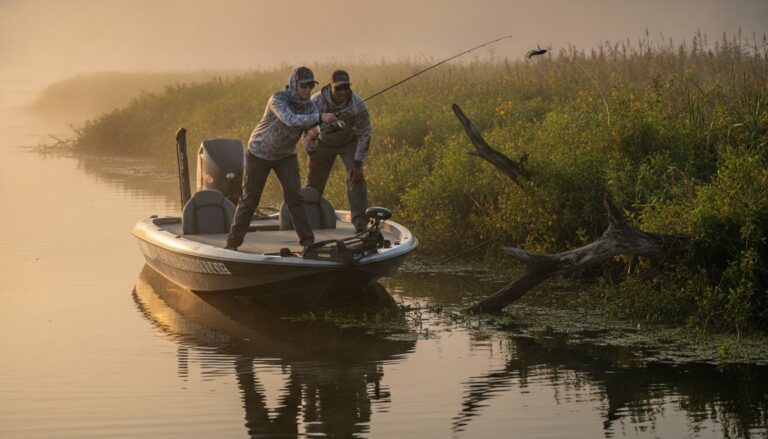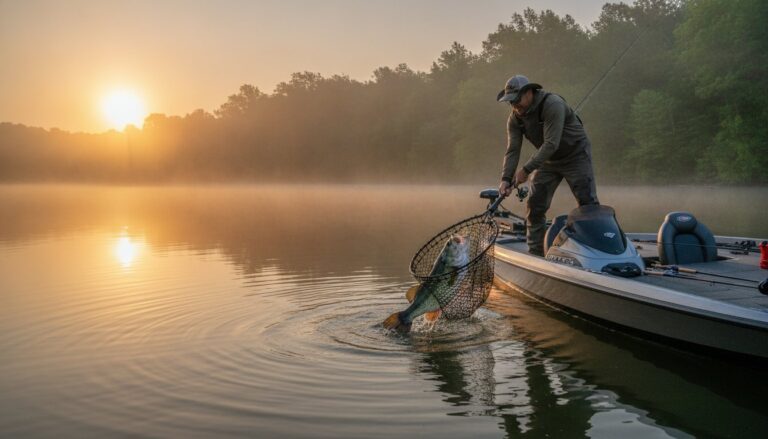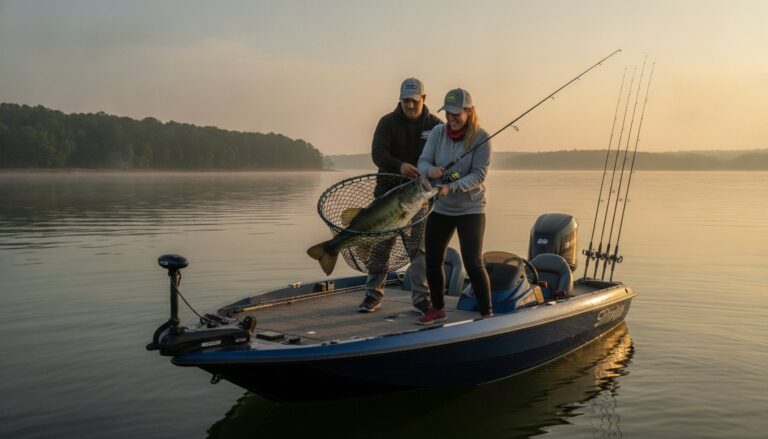
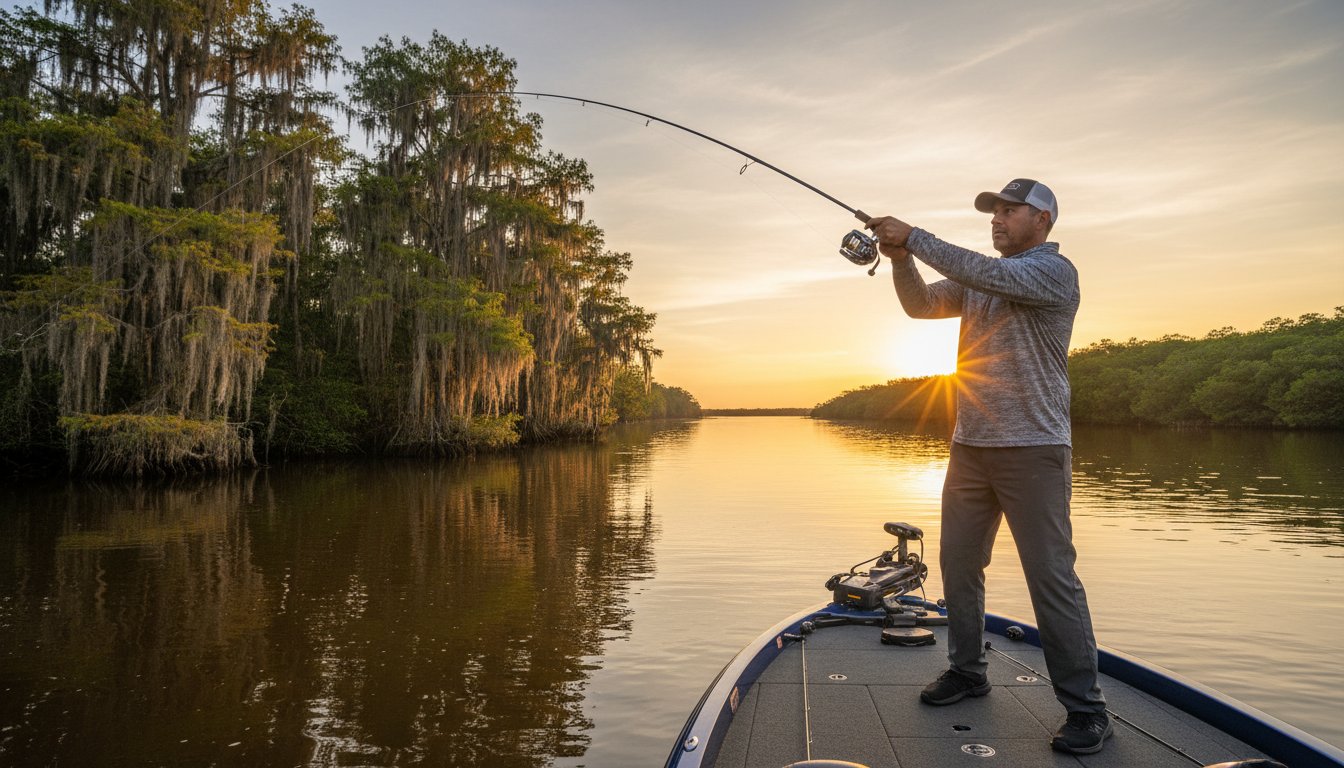

What if you could hook a 10-pound trophy largemouth and a 30-inch snook from the exact same dock using the same topwater lure? This isn’t a fisherman’s tall tale; it’s the daily reality of Caloosahatchee river fishing. Most anglers I talk to feel overwhelmed by this 67-mile stretch of water because they can’t tell where the freshwater ends and the salt begins. They struggle with heavy river currents and pick the wrong colors for that deep, tannin-stained water, missing out on the legendary crossover bite that makes this river world-class.
I know the frustration of casting into a beautiful oxbow and coming up empty because the tide shifted or the salinity changed. That’s why I’m sharing the exact strategies we use at BassOnline to pull hawgs out of heavy cover. You’ll learn how to navigate the transition zones and choose the right gear to land a personal best, whether you’re hunting a peacock bass or a silver king. We’ll break down the best structure types, seasonal movements for the 2026 season, and the specific lures that trigger massive strikes in dark water.
Key Takeaways
- Learn how to navigate the unique 67-mile transition from Lake Okeechobee to the Gulf to target both freshwater lunkers and saltwater monsters in a single trip.
- Master the specific patterns for Caloosahatchee river fishing to land trophy largemouth over 8 pounds and aggressive peacock bass hiding in the upper reaches.
- Discover why versatile gear and “matching the hatch” are critical when you are just as likely to hook a 10-pound bass as you are a 30-pound snook.
- Understand how to read the water flow and oxygen levels dictated by Lake Okeechobee releases to pinpoint exactly where predators are stacked and feeding.
- Find out how to leverage local expertise to turn a standard boat ride into a legendary expedition for Florida’s most diverse trophy species.
Table of Contents
Understanding the Caloosahatchee: Florida’s Most Diverse River System
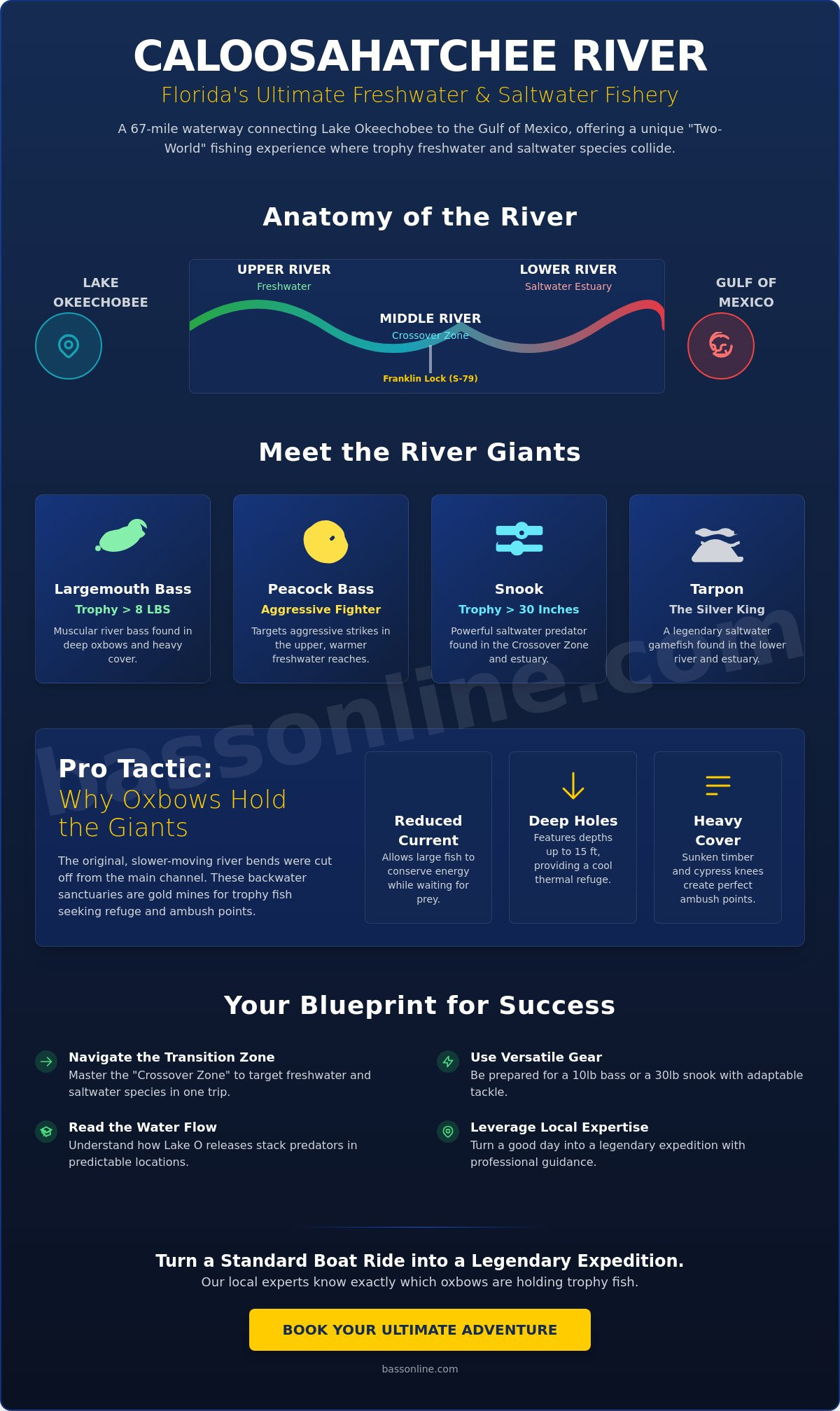
The Caloosahatchee River is a legendary 67-mile stretch of water that serves as the lifeblood of Southwest Florida. It functions as a critical artery for the state’s water management, connecting the massive Lake Okeechobee to the Gulf of Mexico. For serious anglers, this isn’t just a scenic waterway; it’s a premier habitat that offers a unique "Two-World" experience. You can target trophy largemouth bass in the morning and find yourself hooked into a powerful snook by the afternoon. This incredible biodiversity is what makes Caloosahatchee river fishing a bucket-list adventure for anyone chasing a personal best.
To see this incredible system in action, watch this helpful video of a recent scouting trip:
The Geography of the River
We break the river down into three distinct sections to maximize our success. The Upper River is a freshwater paradise, dominated by lily pads and submerged vegetation. As you move toward the Middle River, you encounter the W.P. Franklin Lock and Dam (S-79). This structure is the literal gatekeeper of the system, separating the freshwater lunkers from the saltwater predators. The Lower River opens up into a massive estuary filled with mangroves and seagrass. The entire 101-mile river basin funnels nutrients into these zones, supporting a massive food chain that keeps the fish aggressive and well-fed throughout the year.
The Freshwater-Saltwater Transition Zone
The "Crossover Zone" is where the real excitement happens. This is the area surrounding the Franklin Lock where salinity levels fluctuate based on seasonal rainfall and scheduled releases from Lake Okeechobee. During the wet season, freshwater pushes deep into the estuary, allowing bass to roam further west. In the dry winter months, saltwater creeps up to the dam, bringing snook and tarpon right into the heart of the river. Our fishing guides often see bass and snook feeding on the same school of shad in this zone. It’s a high-energy environment that rewards anglers who understand how to read the tide and the current.
Why the Oxbows Hold the Giants
If you want to find the biggest fish in the system, you have to look away from the main navigation channel. When the river was straightened for commercial traffic, dozens of original river bends, or oxbows, were cut off from the main flow. These old channels are gold mines for pro anglers. They offer:
-
Reduced Current: Large fish can conserve energy while waiting for prey to drift by.
-
Deep Holes: Some oxbows feature 15-foot depths that provide a cool refuge during the hot Florida summers.
-
Heavy Cover: Sunken timber and ancient cypress knees create the perfect ambush points for trophy bass.
Mastering Caloosahatchee river fishing requires a deep understanding of these backwater sanctuaries. While the main river is great for covering water, the oxbows are where we slow down to pick apart the structure for that one legendary bite.
Targeting Freshwater Giants: Largemouth and Peacock Bass
Caloosahatchee river fishing is the best-kept secret for anglers who want to escape the crowds and find a true Florida lunker. While most people head straight for the big lakes, the river offers a sleeper hit for trophy Largemouth Bass that frequently top the 8-pound mark. These fish are a different breed. Because they live in a constant current, they develop a thick, muscular build. A river bass fights with a raw power that still-water fish just can’t match. You’re not just fighting the fish; you’re fighting the flow of the river itself.
To find the real "Hawgs," you have to look for the deep oxbows where the water slows down just enough for a predator to wait in ambush. These ancient river bends are filled with shaded cypress knees and massive underwater root systems. This is where the big girls live. If you’re looking for a world-class experience on these waters, our local experts know exactly which oxbows are holding the heaviest fish this season.
Mastering the Largemouth Bite
Timing your trip is critical. During the peak of the Florida summer, the early bird gets the bite. You want your lures in the water at first light before the sun drives the bass deep into the structure. In the winter months, the pattern flips. A cold front can shut things down, so wait for the afternoon sun to warm the shallow canal banks. This warmth activates the baitfish and brings the bass out to feed.
The behavior here is distinct. Unlike the vast grass fields of nearby Lake Okeechobee, Florida bass in the Caloosahatchee are structure-oriented. They love fallen timber, lily pad edges, and the steep limestone walls of the canal systems. Always check the latest Florida freshwater fishing regulations before you start your expedition to ensure you’re following the current bag limits and seasonal rules.
The Peacock Bass Expansion
The most exciting change in recent years is the massive expansion of Peacock Bass into the river’s upper reaches. These colorful brawlers have moved north from the Miami canals and found a perfect home in the Caloosahatchee’s residential canal systems. They aren’t like Largemouths. They don’t hide in the weeds. They hunt in the open, looking for anything that moves fast. The best temperature window for these fish is a consistent 75 to 88 degrees. If the water gets too cold, they’ll retreat into the deepest holes.
The secret to a successful Peacock day is speed. You can’t reel fast enough for these fish. Use a high-speed retrieve with topwater plugs or flashy spoons to trigger their predatory instinct. It’s a visual game that requires precision and energy. If you’re ready to test your gear against these aggressive giants, reach out to us today to plan your next river adventure.
Pro Takeaway: Caloosahatchee River fishing demands a more aggressive approach than lake fishing. Focus on structure that breaks the current and use fast retrieves to trigger reaction strikes from both Largemouth and Peacock Bass.
Pro Tactics and Gear for Caloosahatchee Success
Caloosahatchee River fishing demands a "ready-for-anything" mindset. You might be targeting a 10lb bucketmouth near a cypress knee one minute and hook into a 30lb silver king or a line-stripping snook the next. I always recommend a 7-foot, medium-heavy fast-action rod paired with a high-capacity reel. This setup gives you the backbone to pull a hawg out of the grass while maintaining the drag performance needed for saltwater brawlers. Success here hinges on understanding the "Match the Hatch" philosophy. Local forage cycles, like the fall mullet run or the spring shad spawn, dictate exactly what’s on the menu at any given time.
Positioning is everything in this moving water. I look for natural current breaks like fallen timber, bridge pilings, or limestone outcroppings. You want to park your boat upstream and cast past the structure, letting your lure drift naturally into the strike zone where predators wait in the slack water. Navigating these waters isn’t always easy. The river features treacherous limestone shoals that can ruin a lower unit in seconds. Booking experienced fishing guides is the smartest way to learn these hidden hazards while staying on the fish.
Topwater and Subsurface Strategies
Nothing beats the visual explosion of a topwater strike in the early morning mist. I use a "Walk-the-Dog" retrieve with a cigar-shaped plug to create a rhythmic, clicking sound that draws predators from the depths. When the sun gets high, I switch to 4-inch paddle-tail swimbaits on a 1/4-ounce jig head to cover miles of shoreline efficiently. The "river flip" involves making a short, underhand toss to place your lure silently into the tightest pockets of heavy vegetation or overhanging branches.
Live Bait vs. Artificial Lures
If you’re hunting for a double-digit Largemouth, nothing beats a wild golden shiner. These native baits provide a scent trail and frantic action that even the wariest trophy fish can’t resist. For artificials, color selection is critical in the river’s dark, tannin-stained water. Stick with high-contrast colors to ensure your lure stands out in the tea-colored depths:
-
Gold: Best for sunny days to catch the light.
-
Junebug: A Florida staple that creates a strong silhouette.
-
Black/Blue: Ideal for low-light conditions or heavy cloud cover.
I also keep a suspending jerkbait tied on to mimic the river’s natural forage. These lures perfectly imitate the schools of threadfin shad and small tilapia that congregate near the spillways during the cooler months. The erratic, darting action of a jerkbait often triggers a reaction strike from fish that aren’t even hungry.
Pro Tip: Always check your leader material after a snook bite; their abrasive gill plates can fray 20lb fluorocarbon in a single surge.
Managing the Flow: The Lake Okeechobee Connection
The Caloosahatchee isn’t a static body of water. It’s a dynamic, managed system that breathes according to the rhythms of Lake Okeechobee . When the Army Corps of Engineers adjusts the gates at the Moore Haven and Ortona locks, the entire river reacts. For a pro angler, Caloosahatchee river fishing success depends on your ability to read these water releases. Water management dictates the location of every trophy fish in the system, from the brackish lower reaches to the freshwater bends up north.
Discharge events bring more than just volume; they bring life. High-flow periods oxygenate the water and flush nutrients downstream, triggering a massive response from the local food chain. You need to watch the cubic feet per second (cfs) data closely. A steady flow often creates the most predictable bite, while sudden spikes can temporarily muddy the water. Identifying the sweet spot between a trickle and a flood is how you find the hawgs.
Fishing the Releases
Current is king on this river. If the water isn’t moving, the fish aren’t feeding. Moving water creates distinct current seams and eddies behind bridge pilings, fallen timber, and limestone outcroppings. It creates a dinner line where predators wait for the buffet to come to them. To stay ahead of the game, I always keep an eye on Lake Okeechobee bass fishing reports. If the Big O is seeing heavy discharge, you can bet the river will be pumping, and the fish will be stacked on the down-current side of any major structure.
-
Target the eddies: Focus your casts on the "quiet" water immediately adjacent to fast-moving channels.
-
Match the speed: Use heavier jigs or weighted swimbaits to keep your lure in the strike zone during high-flow events.
-
Watch the gates: The bite often intensifies the moment the gates open, as baitfish are sucked through the structures.
Salinity and Species Movement
Salinity management is the secret sauce for multi-species success. The "salt-wedge" is a wall of saltwater that moves up and down the river based on flow. During the dry season, typically from November to May, saltwater species like snook and tarpon can push ten or fifteen miles upstream of the Franklin Lock. I’ve caught 30-inch snook in areas that look like pure cypress swamp. When the summer rains hit and the releases increase, that freshwater push drives the salt back toward the Gulf, concentrating the snook and tarpon in the lower river.
The Franklin Lock (S-79) acts as the ultimate gatekeeper. It’s a physical barrier where migration patterns stop and feeding frenzies begin. During high-flow events, look for "bait balls" of shad and menhaden getting trapped at the mouth of residential canals near the lock. These canals offer a sanctuary from the heavy main-river current, and predators know it. If you see birds diving near a canal entrance, drop your trolling motor and get ready for action.
Ready to hunt trophy fish on the river? Book your Caloosahatchee expedition today.
Booking Your Ultimate Caloosahatchee Adventure
You have read the tactics and studied the maps. Now it is time to turn that knowledge into a bent rod and a screaming reel. Caloosahatchee river fishing is a game of moving parts where tides, water releases, and seasonal migrations collide. Attempting to decode this 67-mile waterway on your own often results in a scenic boat ride rather than a productive day of catching. Hiring a professional guide service changes the math entirely. It is the difference between guessing where the fish might be and casting exactly where the lunkers are feeding.
A world-class guide brings local intelligence gathered over decades. We monitor the water flow from Lake Okeechobee daily and track how the brackish mix affects the bite. When you book an expedition, you are not just paying for a seat on a boat. You are investing in a successful outcome led by a captain who lives for the hunt. Before you head to the ramp, make sure you have these essentials ready for a full day on the water:
-
A valid Florida freshwater or saltwater fishing license, depending on the targeted zone.
-
High-quality polarized sunglasses to cut the surface glare and spot submerged structure.
-
Breathable, sun-protective clothing and a wide-brimmed hat.
-
Personal snacks and preferred beverages; we handle the ice and cooler space.
-
A camera or smartphone to document your trophy catch before a safe release.
The Advantage of Professional Equipment
We don’t believe in cutting corners when it comes to gear. Our fleet consists of late-model bass boats from top manufacturers like Nitro and Ranger, ensuring a stable and fast platform to reach the best honey holes. These rigs come equipped with specialized shallow-water anchors, such as Power-Poles, which allow us to pin the boat silently in current-heavy areas without spooking wary snook or bass. We provide all the rods, reels, and tackle you need, featuring pro-grade setups that can handle a 10-pound bucketmouth or a 30-inch redfish. Safety remains our top priority. Our captains are experts at navigating the river’s heavy boat traffic and fluctuating depths, keeping you focused on the fishing while we handle the logistics.
Plan Your Trip Today
Deciding on the right trip depends on your specific goals. A four-hour half-day excursion is a great way to get a quick fishing fix or introduce a beginner to the sport. For those chasing a personal best or looking to explore the diverse ecosystem from the locks down to the Gulf, an eight-hour full-day trip is the gold standard. Booking your trip is simple through the Bass Online platform. With over 20 years of experience leading anglers to success, we offer a "no fish, no pay" policy on many trips to ensure you feel confident in our expertise. Stop dreaming about the big one and start catching. Get out on the water and experience the raw thrill of the Caloosahatchee with the best in the business.
Master the Flow and Land Your Next Trophy
The Caloosahatchee isn’t just a river; it’s a dynamic 67 mile stretch of water where world class bass fishing meets the raw power of the Gulf. You’ve learned how to navigate the brackish transitions and why timing the Lake Okeechobee discharges is the secret to finding active schools. Whether you’re hunting heavy largemouth in the grass or sight casting for aggressive peacock bass near the urban structures, success comes down to local intel and the right gear. Caloosahatchee river fishing offers a unique challenge that changes with every tide and gate opening.
Don’t leave your next personal best to chance. As the largest freshwater guide service in the USA, we bring over 25 years of professional guiding experience to every trip. Our top rated captains have spent thousands of hours on these specific currents, ensuring you’re always on the bite. We’ve helped thousands of anglers land lunkers since our start in the 1990s, and we’re ready to put that expertise to work for you.
Book Your Legendary Caloosahatchee River Fishing Trip Now!
Grab your gear and get ready for the fight of a lifetime on the water.
Frequently Asked Questions
What kind of fish can you catch in the Caloosahatchee River?
You’ll find a massive variety of species during a day of Caloosahatchee river fishing, ranging from trophy largemouth bass to salt-loving snook and tarpon. Because this river links the Everglades ecosystem to the Gulf, it’s one of the few places where you can land a 5 pound hawg and a 30 inch redfish in the same hour. We also see plenty of bluegill, crappie, and even the occasional bull shark in the lower reaches.
Do I need a freshwater or saltwater fishing license for the Caloosahatchee?
You’ll need both a freshwater and saltwater license if you plan to fish the full length of the river. The W.P. Franklin Lock serves as the official boundary; anything east toward Lake Okeechobee requires a freshwater permit, while the western side toward Fort Myers is saltwater territory. It’s smartest to carry both to ensure you’re covered as you chase the bite across the different salinity zones we navigate during a trip.
Can you catch Largemouth Bass in the brackish parts of the river?
Yes, you can catch largemouth bass in the brackish water, specifically in the 15 mile stretch of river sitting just below the Franklin Lock. These river bass are incredibly hardy and often feed alongside snook near mangrove shorelines or residential docks. While they don’t always reach the massive sizes found in the lake, these fish are aggressive fighters that thrive in water with 10 percent salinity levels.
What is the best time of year for Caloosahatchee River fishing?
The best time for Caloosahatchee river fishing is between January and May when water levels are stable and the dry season is in full swing. During these 5 months, water clarity improves and the snook move inland to find warmer pockets in the river bends. If you’re hunting for a silver king, the tarpon bite peaks between May and June as they migrate through the lower river reaches.
Are there alligators in the Caloosahatchee River?
Alligators are present throughout the Caloosahatchee River, particularly in the freshwater sections and marshy edges east of Fort Myers. These reptiles are a natural part of the Florida landscape and typically keep their distance from boats and active anglers. We recommend keeping at least 20 feet of space between you and any gator you see; never feed them, as it’s illegal and creates dangerous situations for other fishermen.
Where are the best boat ramps for accessing the upper Caloosahatchee?
The best access points for the upper river are the W.P. Franklin North Shore Park and the Alva Boat Ramp. Franklin Lock provides top-tier facilities and puts you right at the transition zone between fresh and salt water. The Alva ramp is located 10 miles further east and is perfect for launching into the more secluded, cypress-lined stretches of the river where the current slows down and the lunkers hide.
What lures work best for the tannin-stained water of the river?
Use dark colors like black and blue or high-contrast gold to get noticed in the river’s heavy, tannin-stained water. A gold spoon is a legendary local choice for snook, while a 3/8 ounce black and blue jig works wonders for lunker bass hiding in the shadows. Since visibility is often less than 2 feet, lures with internal rattles or heavy vibrations help the fish track your bait through the dark water.
Can you catch Peacock Bass in the Caloosahatchee River?
You can definitely catch peacock bass in the Caloosahatchee system, though they’re most concentrated in the connected canal networks of Cape Coral and Lehigh Acres. Over the last 5 years, these colorful fighters have expanded their range northward due to a series of mild winters. Look for them near seawalls and bridge pilings where they’ll smash a fast-moving jerkbait or a live shiner in the heat of the day.

Article by
Mr Bass
Todd Kersey, widely known as Mr. Bass by Field & Stream, is a professional angler, accomplished author, and dedicated philanthropist with a lifelong passion for bass fishing. Armed with a degree in Outdoor travel, Mr. Bass has expertly combined his knowledge with his practical fishing experience to become one of the most respected names in the bass fishing, his deep understanding of bass habitats, and fish behavior has earned him numerous accolades as a asset of the sport. Serving 8 years as FWC Stakeholder Chairperson. Leading and passing cutting-edge legislation, such as the Black Bass Management plan, and successfully building, passing, and financing the Trophy Catch program. As CEO, he is committed to giving back to the community through his philanthropic efforts. He supports a variety of causes, especially those centered around physical disabilities. Through his advocacy, his mentorship programs inspire anglers to engage in fishing stewardship, helping to raise more than $ 18 million in donations. Mr. Bass continues to inspire anglers and outdoor enthusiasts alike with his commitment to the sport and the world around him.