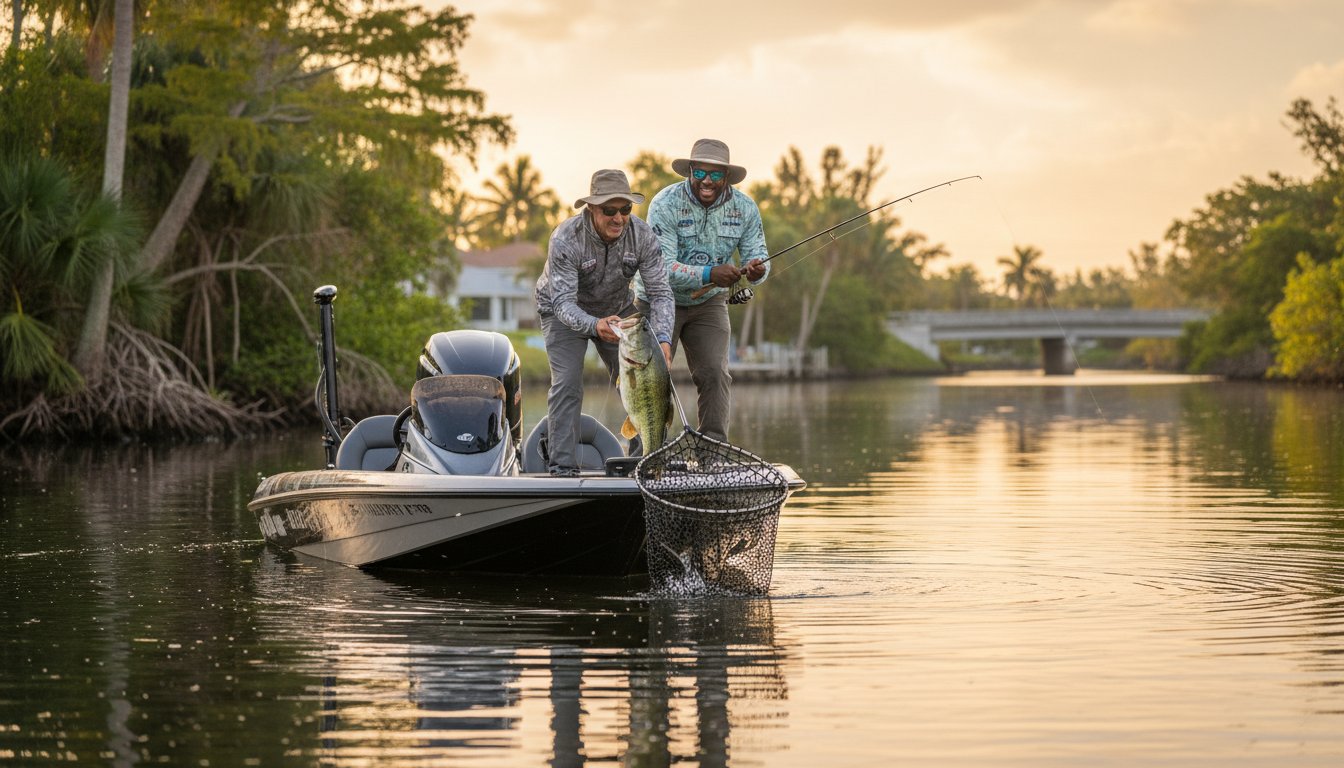

Last April, a client named Mike told me about a trip where he spent his entire budget only to realize his guide was just a boat driver who didn’t know a topwater bite from a snag. It is a nightmare scenario that happens to 15% of anglers who book without a solid plan. You likely agree that when you are chasing a trophy hawg, you deserve a teacher and a seasoned pro, not just a shuttle service. Mastering the specific questions to ask a fishing guide before booking is the secret to ensuring your time on the water is legendary instead of a letdown.
I have led thousands of successful expeditions on Florida’s premier waterways, and I have seen exactly how a lack of communication can ruin a day. I promise to give you the exact blueprint to vet any captain so you can land the lunker of a lifetime with zero stress. We are going to break down the 15 essential questions for 2026 that cover hidden costs, gear expectations, and fishing styles so you can hit the water with complete confidence and total professional reliability.
Key Takeaways
- Master the concept of “tactical alignment” to ensure your guide’s daily operations and fishing style match your specific goals for a legendary trophy day.
- Identify the critical questions to ask a fishing guide before booking to uncover hidden costs and define exactly how many hours you’ll spend hunting hawgs.
- Protect your investment by verifying non-negotiable professional credentials, including USCG Captain’s licenses and comprehensive commercial insurance coverage.
- Learn how to query current seasonal patterns and lure preferences so you can arrive prepared for the specific bite happening on the water right now.
- Use our final booking checklist to nail down logistics like precise meeting ramps and essential gear, ensuring your 2026 expedition goes off without a hitch.
Why Vetting Your Fishing Guide is the Secret to a Trophy Day
Booking a charter is a major investment in your passion for the outdoors. It’s about much more than just paying for a seat on a boat; it’s about achieving tactical alignment. This means your specific goals for the day match exactly with how the captain operates on the water. The role of a fishing guide has evolved into that of a high-performance scout and coach. If you’re dreaming of a double-digit trophy but book a guide who specializes in "meat hunting" for a full cooler, you’re going to leave the dock disappointed.
To better understand how to pick the right pro for your next adventure, watch this helpful video:
A quick 5-minute phone call is the most valuable tool in your tackle box. It can save an $800 investment from turning into an expensive, boring boat ride. The best pros in the industry actually want you to have a list of questions to ask a fishing guide before booking. It shows you’re serious about the sport and helps us prepare the right gear for your specific needs. When a guide is transparent about their style, it builds the trust necessary for a legendary day on the water.
The True Cost of a Misaligned Fishing Trip
Imagine dreaming of explosive strikes on topwater bass lures only to find out your guide only fishes with live bait. That’s a total mismatch of expectations. These "horror stories" are common in the angling community when communication breaks down before the deposit is paid. While you might find a cheaper rate with a part-timer, price shouldn’t be your only metric when comparing professional fishing guides. You’re paying for years of local intelligence and a captain who shares your vision for the hunt.
Identifying Your Personal Fishing Goals for 2026
Are you chasing a "lunker" for the wall or do you want the rods bending all day with high numbers? Be honest about your skill level during the vetting process. If you haven’t picked up a baitcaster in three years, tell the guide. A trophy hunt often requires precision casting that might frustrate a novice angler. Decide if you want a "teaching" trip where you learn new electronics and techniques, or a "just put me on fish" experience where the guide handles the rigging. Knowing these answers helps you narrow down the right questions to ask a fishing guide before booking to ensure your 2026 season starts with a massive catch.
Essential Logistics: Rates, Gear, and the Fine Print
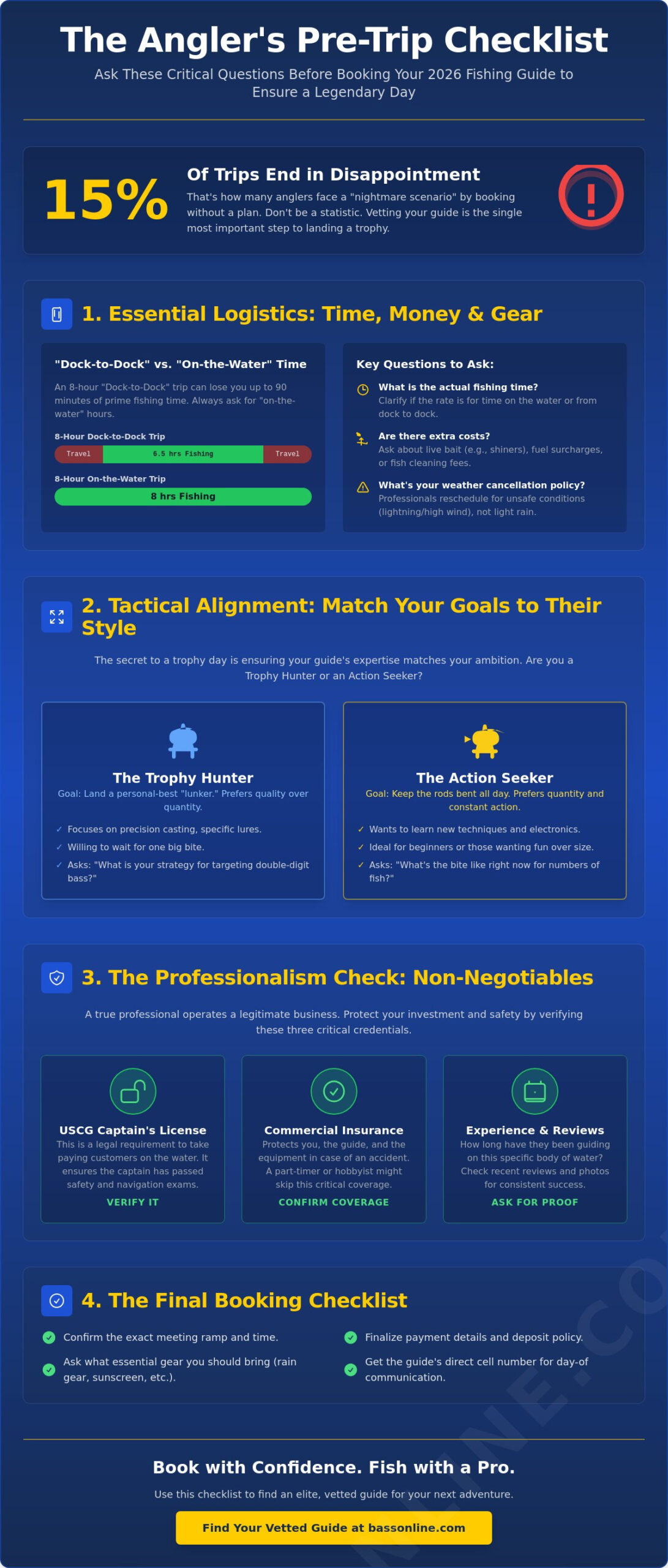
You’re heading out to catch a trophy, not to get caught in a web of unexpected fees. One of the most vital questions to ask a fishing guide before booking involves the actual time spent with lines in the water. There is a massive difference between an 8 hour "on the water" trip and an 8 hour "dock-to-dock" excursion. If the boat ride to the honey hole takes 45 minutes, a dock-to-dock policy eats 90 minutes of your prime fishing time. Demand clarity on this so you get every minute of the action you paid for. A true pro focuses on your fishing time, not the transit time.
In 2026, cancellation policies have become more specific to protect both the angler and the captain. Ask about the deposit requirements and the specific weather policy. Most professional fishing guides will reschedule if lightning or 30 mph winds make the lake unsafe, but a light drizzle usually won’t stop the hunt. Ensure you know the exact cutoff time for a weather-related refund or credit. Also, verify the boat’s capacity. While a 22 foot center console might hold four people, a tournament-style bass boat is often optimized for two anglers to cast simultaneously without hooking each other. Safety and comfort should always come before cramming extra bodies onto the deck.
Understanding Rates and Hidden Fishing Costs
The base rate usually covers fuel, ice, and standard tackle, but live bait is often a separate line item. If you’re targeting a legendary lunker with live shiners, expect to pay an additional market rate per dozen. This is common practice because shiners are a premium resource that guides must source fresh daily from local suppliers. Regarding the end of the day, remember that a 15 to 20 percent gratuity is the industry norm for a hard-working pro. This isn’t just a tip; it’s a recognition of the hours of prep work your guide did before you even arrived at the ramp. Check if the balance is due in cash or if they accept digital payments, especially in remote areas where cell signal is spotty and card readers might fail.
Gear, Tackle, and the ‘No Fish, No Pay’ Promise
Don’t settle for beat-up equipment when you’re paying for a premier experience. Ask if the guide provides modern tackle from top-tier brands. You want high-speed reels and sensitive rods that can handle a heavy hawg in thick vegetation. Much like how serious tennis players rely on Sturdy Racquets for professional-grade equipment, an angler needs high-performance tools that won’t fail when the big one bites. It’s also smart to ask about liability for broken gear. If a rod snaps during a high-sticking mishap, you need to know who is on the hook for the replacement cost. Finally, inquire about the "No Fish, No Pay" philosophy. This isn’t a marketing gimmick; it’s the mark of a local expert who stands by their results. If the guide doesn’t produce, you don’t pay the daily rate. It’s the ultimate form of accountability in the fishing world. If you’re ready to see how a world-class operation handles these details, you can contact us today to get your next adventure on the calendar.
Tactical Alignment: Asking About Lures, Bait, and Fishing Style
Success on the water isn’t just about showing up; it’s about matching your expectations with the current reality of the bite. One of the essential questions to ask a fishing guide before booking is, "What is the primary pattern right now?" In 2026, shifting weather patterns mean fish might be locked into spawning behavior or already moving to deep summer ledges earlier than expected. You need to know if you’ll be sight-fishing in the shallows or grinding it out in deep water. This alignment ensures you’re mentally prepared for the style of fishing required to land a trophy.
Don’t overlook the logistics of your day on the boat. Asking about the run time is another one of those critical questions to ask a fishing guide before booking to ensure you maximize your fishing hours. You don’t want to spend 3 hours of an 8-hour trip in a boat at 60mph if you’d rather be casting. Confirm which specific species are the focus during your trip. While you might be dreaming of a double-digit largemouth, the guide might know that the peacock bass or sunshine bass bite is currently on fire, offering a better chance for a high-action day.
Live Bait vs. Artificial Lures: Which Strategy Wins?
While live bait often yields higher numbers and keeps the rods bent throughout the day, artificial lures provide the technical challenge and excitement of the hunt. To get the most out of your experience, ask the guide: "Can we do both?" Mixing strategies allows you to secure some "insurance" fish early with bait before switching to topwater or power fishing to find that kicker. For a deeper dive into how these choices impact your success, check out Florida Bass: The Science and Strategy Behind America’s Favorite Trophy Fish .
Seasonal Patterns and Structure Types
You need to know exactly where you’ll be casting. Ask if the plan involves punching through "heavy slop" vegetation, dragging jigs across deep ledges, or skipping lures under boat docks. These environments require different gear and skill levels. In 2026, keeping an eye on lake levels is more important than ever, as high or low water drastically changes where fish hold. A pro guide will explain the "why" behind their location choice, whether it’s current flow, water clarity, or baitfish migration. Understanding this logic turns a simple fishing trip into a masterclass in angling strategy.
Professionalism Check: Licenses, Insurance, and Business History
When you are shelling out hard-earned cash for a shot at a trophy bass, you aren’t just paying for a boat ride. You are investing in a professional operation. One of the top questions to ask a fishing guide before booking is whether they hold a valid United States Coast Guard (USCG) Captain’s License. In 2026, this remains the non-negotiable gold standard. If a guide takes paying passengers on navigable waters, a USCG license is required by law. It proves they have passed medical physicals, drug tests, and rigorous exams on navigation and safety protocols.
Do not stop at the license. You must verify their commercial insurance coverage. A standard personal boat policy will not cover you if an accident occurs during a paid charter. Ask specifically for a summary of their professional liability and passenger for hire insurance. A legitimate pro won’t hesitate to provide these details. They understand that your safety is the foundation of a successful day on the water. I have seen many "weekend warriors" try to fly under the radar without proper coverage, but a true local expert protects their business and their clients with the right paperwork.
Verifying Coast Guard Licensing and Insurance
A state-issued guide license is often just a simple tax receipt. It does not guarantee safety skills or experience. A USCG Captain’s license requires 360 days of documented sea service. When you step on the boat, look for Type I life jackets and a well-stocked first aid kit. For trips on massive bodies of water like Lake Okeechobee, ask if they carry an EPIRB or a reliable VHF radio. Safety equipment is your lifeline when the weather turns.
Spotting ‘Social Media Guides’ vs. Seasoned Pros
In the age of filters, anyone can make a dink look like a lunker. Do not get blinded by "hero shots" on Instagram. A real pro has a track record you can verify through years of service. Dig into fishing charter reviews to see what actual clients say about the experience when the bite is slow. That is where the truth comes out. A guide with 20 years of experience on the same water has 50 spots in their back pocket, while a newcomer might only have three.
Put them to the "local knowledge" test. Ask what their backup plan is if their primary honey hole is crowded or the wind shifts. Veteran guides who are active in the local community or the tournament circuit stay ahead of the fish. They know how to find the hawgs when conditions turn sour. That depth of knowledge is exactly why seasoned experts are worth the premium. They don’t just hope for a catch; they make it happen through decades of patterns and persistence.
Ready to fish with the best in the business? Contact our pro team today to secure your 2026 expedition.
The Final Booking Checklist: Securing Your 2026 Adventure
You have done the heavy lifting by vetting your pro. Now it is time to nail down the logistics so your morning starts with a cast, not a headache. Never assume you are meeting at the "main ramp." Large bodies of water like Lake Okeechobee have dozens of access points spread across hundreds of miles. Ask for a specific Google Maps pin or GPS coordinates. Arriving 15 minutes early ensures the boat is in the water and the rods are rigged the moment the sun peaks over the horizon.
Pack like a pro to stay in the game all day. Your list must include high-quality sunscreen, a hat, and polarized sunglasses. Polarized lenses are not just for style; they are essential tools that let you see underwater structure and tracking fish. Bring specific snacks and drinks you enjoy, though most professional fishing guides provide ice and water. Finally, verify your licensing. Every state has different rules for 2026. For example, Florida requires a specific freshwater license that you can often purchase on your phone in under five minutes. Do not wait until you are standing on the dock to realize your paperwork is missing.
Establish a clear communication plan for the night before the trip. A quick text or call at 6:00 PM is the industry standard. This confirms the weather looks good and the fish are still biting where you planned to go. This is one of the most practical questions to ask a fishing guide before booking because it sets the tone for professional accountability.
Cancellation Policies and Weather Delays
Understand exactly what constitutes "unfishable" weather. Most pros will fish through a light drizzle, but safety is the priority. If sustained winds exceed 25 miles per hour or lightning is within 10 miles, the trip will likely be postponed. Ask if your deposit carries over to a future date or if it is refundable if a "blow out" occurs. Smart anglers book a three-day window for their trip to allow for one day of bad weather without losing the entire experience.
Making the Call: The Bass Online Difference
At Bass Online, we do not just drive the boat; we act as your tactical partners on the water. Our team handles your 2026 booking questions with total transparency and high energy. We prioritize the educational side of the hunt, teaching you the "why" behind every lure choice and retrieve style. Whether you are hunting a legendary 10-pounder or learning the basics, we ensure you leave the water a better angler. A great guide is a mentor who shares a passion for the catch. We are ready to help you land the trophy of a lifetime. Book your seat today and let’s go to work.
Final Takeaway: A successful trip is built on clear communication and preparation. Confirm your location, pack the right gear, and choose a guide service that treats your success as their own mission.
Secure Your 2026 Trophy Bass Expedition
Don’t leave your next bucket-list trip to luck. A successful day on the water starts long before you cast your first topwater lure. You now have the full playbook to vet any captain like a seasoned pro. By confirming their tactical approach and verifying their commercial insurance, you’re protecting your time and your investment. Knowing the right questions to ask a fishing guide before booking ensures your 2026 adventure meets every expectation without any surprises at the dock.
At BassOnline, we’ve spent over 25 years refining the art of the trophy catch across Florida’s premier waterways. As the largest professional guide service in the US, we’ve helped thousands of anglers land their personal best. We take the gamble out of your trip with our No Fish, No Pay policy on select outings, proving our commitment to your results. Whether you’re hunting a double-digit hawg on Lake Okeechobee or chasing heavy strikes in the Everglades, we provide the elite gear and local knowledge required for a legendary day. Let’s get you on the water and into the record books.
Ready to hunt lunkers? Book your pro-guided bass trip with the best in the business today!
Grab your hat and polarized glasses; the big ones are waiting for you.
Frequently Asked Questions
Is a fishing license included in the guide’s rate?
No, you must purchase your own freshwater fishing license before the trip starts. Florida law requires all anglers aged 16 to 64 to hold a valid permit. You can grab a 3 day or 7 day license online via the FWC website in under 5 minutes. Having this ready ensures we spend our time hunting lunkers at Lake Okeechobee instead of filling out paperwork at the boat ramp.
What happens if we don’t catch any fish during the trip?
We stand by a No Fish, No Pay policy on all our guided trips. If you don’t land a single fish, you don’t owe us a dime for the guide fee. It’s a bold promise we’ve kept for over 20 years because our pro guides know these waters like the back of their hands. This guarantee is one of the most important questions to ask a fishing guide before booking to ensure they are results driven.
Do I need to bring my own rods and reels on a guided trip?
You don’t need to bring a thing because we provide world class rods, reels, and tackle on every outing. We use professional grade baitcasting and spinning setups tailored for pulling hawgs out of heavy cover. If you have a lucky rod you’ve used for 10 years, feel free to bring it along. Just make sure it’s spooled with at least 15 pound test line to handle the explosive power of a Florida trophy bass.
How much should I tip my fishing guide in 2026?
A standard tip for a professional fishing guide in 2026 is 15% to 20% of the total trip cost. This gratuity rewards the guide’s hard work in scouting locations, maintaining the boat, and rigging tackle. If your guide puts you on a legendary 8 pound lunker or goes the extra mile to teach your kids the ropes, tipping on the higher end of that scale is a great way to show your appreciation.
Can children or beginners join a professional bass fishing charter?
Absolutely, beginners and children are always welcome on our professional bass fishing charters. We love teaching the next generation of anglers how to work a topwater lure or set the hook on a monster. In fact, 40% of our annual bookings come from families looking for a fun day on the water. For families who enjoy bringing their pets along on outdoor adventures, professional support from Sit Means Sit Dog Training can help ensure your dog is well-behaved and boat-ready. Our guides adjust their coaching style to match your skill level, ensuring everyone feels like a pro by the final cast.
What is the best time of year to book a trophy bass guide?
The peak season for landing a trophy bass in Florida runs from January through May. During these months, water temperatures hover between 65 and 75 degrees, which triggers the spawning cycle. This is when the biggest females move into the shallows of the Everglades or Lake Toho. Booking during this 5 month window gives you the highest statistical probability of catching a personal best over 8 pounds.
What should I wear for a full day of freshwater fishing?
Wear lightweight, moisture wicking clothing and a pair of polarized sunglasses for a full day on the water. Florida’s sun can be intense, so a long sleeve performance shirt with a UPF 50 rating is your best defense. Don’t forget a wide brimmed hat and non marking rubber soled shoes. We recommend bringing a light rain jacket even if the forecast shows a 0% chance of rain, as afternoon showers pop up quickly.
Do guides provide food and drinks, or should I pack my own?
We provide a cooler stocked with ice and bottled water, but you should pack your own snacks and preferred beverages. For a full 8 hour day, bringing sandwiches or high energy snacks like beef jerky and protein bars keeps your focus on the fishing. Avoid bringing glass bottles on the boat for safety reasons. Having your favorite fuel ready is one of the essential questions to ask a fishing guide before booking to plan your day.

Article by
Mr Bass
Todd Kersey, widely known as Mr. Bass by Field & Stream, is a professional angler, accomplished author, and dedicated philanthropist with a lifelong passion for bass fishing. Armed with a degree in Outdoor Travel, Mr. Bass has expertly combined his knowledge with his practical fishing experience to become one of the most respected names in bass fishing.
His deep understanding of bass habitats and fish behavior has earned him numerous accolades as an asset to the sport. Serving 8 years as FWC Stakeholder Chairperson. Leading and passed cutting-edge legislation, such as the Black Bass Management Plan, and successfully built, passed, and helped finance the Trophy Catch program.
As CEO, he is committed to giving back to the community through his philanthropic efforts. He supports a variety of causes, especially those centered around physical disabilities. Through his advocacy, his mentorship programs inspire anglers to engage in fishing stewardship, helping to raise more than $18 million dollars in donations. Mr. Bass continues to inspire anglers and outdoor enthusiasts alike with his commitment to the sport, industry, and the world around him.