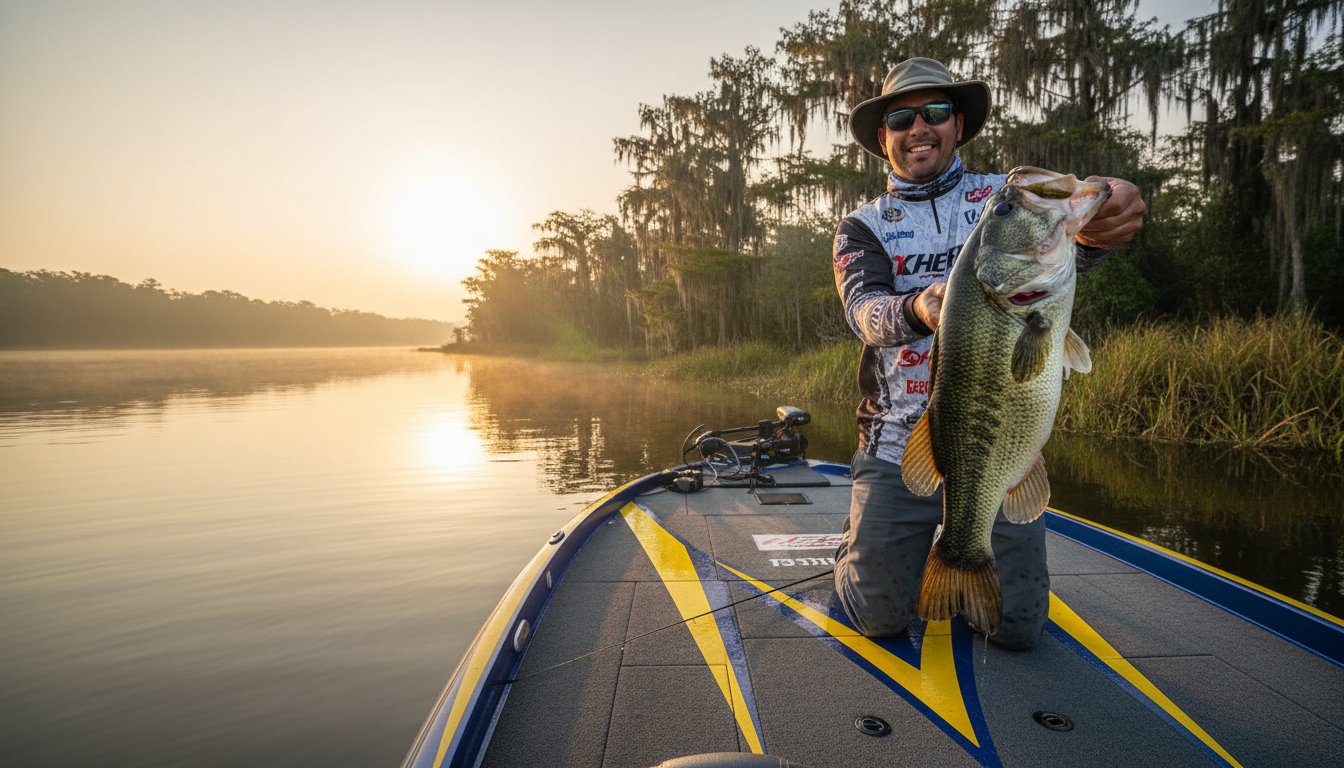

What if the dark, tea-colored water you’ve been avoiding is actually the key to landing your next double-digit lunker? It’s easy to feel overwhelmed when you’re staring at 75,000 acres of tannic water that looks more like morning coffee than a premier bass honey hole. Most anglers get lost in the maze of winding canals or get frustrated when their usual clear-water tactics fall flat. We’ve been there, and we know that the "dirty" look is just a mask for some of the best trophy potential in the Sunshine State.
This guide will unlock the secrets of Harris Chain of Lakes fishing by showing you exactly how to read these unique Florida systems and exploit the high-traffic canal transitions where the biggest hawgs congregate. We’re breaking down the specific lure colors that trigger aggressive strikes in low-visibility conditions, the exact seasonal movements through spots like the Dead River, and the pro-tested setups our guides use to help clients land personal bests. You’ll gain the confidence to navigate these massive lakes and turn a confusing day on the water into a legendary expedition.
Key Takeaways
-
Learn why treating these 75,000 interconnected acres as a single system is the secret to tracking trophy bass across all eight major lakes.
-
Discover how to turn "ugly" tannic water into your biggest advantage by identifying the nutrient-rich areas where big Florida lunkers love to feed.
-
Master the seasonal shift from the sandy spawning pockets of Lake Eustis to the deep, shaded canal ledges that hold fish during the summer heat.
-
Upgrade your harris chain of lakes fishing strategy with field-tested heavy tackle and the specific "Big Three" lures designed to pull hawgs out of thick cover.
-
Navigate the complex lock systems and shallow bars safely while learning how a professional guide can help you bypass years of trial and error.
Table of Contents
The Unique Appeal of Harris Chain of Lakes Fishing
If you’re hunting for the ultimate Florida bass experience, you’ve found it. The Harris Chain consists of eight primary lakes covering over 75,000 acres of prime freshwater. Unlike a single, isolated bowl, Harris Chain of Lakes fishing requires you to think like a navigator. You aren’t just fishing one spot; you’re managing an entire ecosystem where the fish are constantly on the move. This isn’t your average weekend pond; it’s a massive, living network that rewards anglers who understand how these waters breathe.
Many folks compare these waters to St Johns River , but the Harris Chain offers a more diverse tactical playground. While the "Big O" is famous for its massive grass flats, the Harris Chain gives you everything from deep ledges and residential docks to winding canals and thick hydrilla. It’s a place where you can catch a high volume of fish in the morning and a 10-pound "hawg" by lunch. The sheer variety of cover means you can fish your strengths, whether you love flipping heavy mats or burning a crankbait across a shell bar.
The Interconnected Advantage
The canal systems here act as underwater highways for bass movement. When the water moves, the dinner bell rings. Canals create current; current concentrates baitfish. This makes these narrow passages some of the most productive spots on the map. You’ll find incredible variety across the system, from the sprawling 13,000-acre Lake Harris to the more secluded, intimate waters of Lake Yale. This diversity means if the bite dies on one lake, a short boat ride through a scenic canal can put you right back on a fresh school of aggressive fish.
A Trophy Bass Legacy
History doesn’t lie. Tournament weights on this chain frequently top the 30-pound mark for a five-fish limit, proving these waters hold world-class potential. The Harris Chain is one of the most productive nutrient-rich fisheries in the United States. These nutrients fuel the entire food chain, allowing the local Florida bass species to reach massive sizes at an incredible rate. You’re fishing in a trophy factory where every cast has the potential to hook a legendary lunker. Whether you’re a seasoned pro or a beginner, the chance to land the fish of a lifetime is what keeps us coming back to these legendary waters. Anglers looking to compare similar trophy experiences should also explore headwaters lake fishing trips, where flooded timber and world-class hydrilla patterns offer another shot at a true double-digit hawg.
Decoding the Water: Grass, Structures, and the Tannic Secret
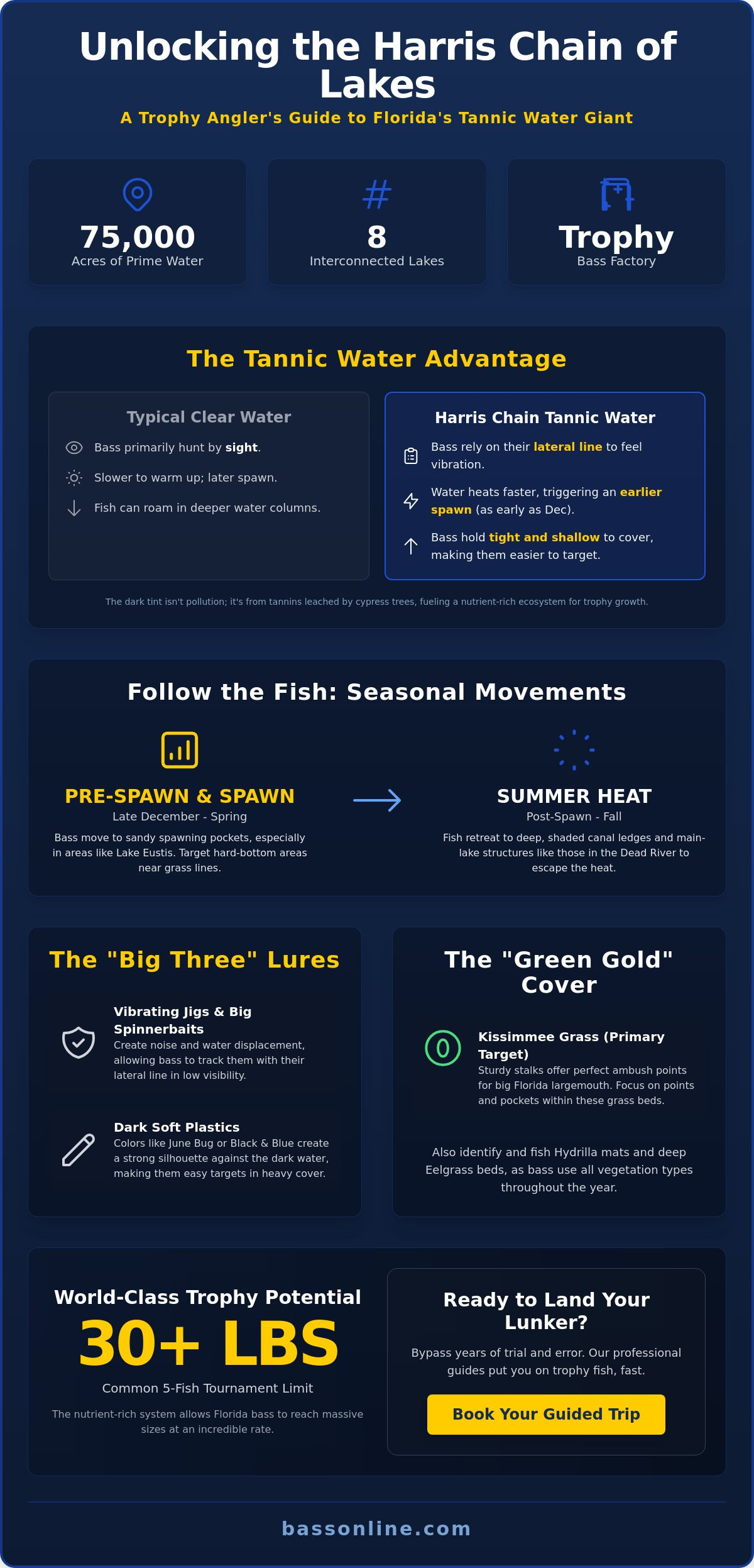
Don’t let the tea-colored water fool you. Newcomers often call it "dirty," but local sticks know that dark tint is exactly what grows trophy Florida bass. This isn’t pollution; it’s a nutrient-rich environment that fuels a massive forage base of shad and golden shiners. When you’re Harris Chain of Lakes fishing, understanding this water chemistry is your first step to a heavy bag. According to the Lake County Water Atlas, this ecosystem thrives on organic runoff that supports the entire food chain, providing the fuel these hawgs need to reach double digits.
Water clarity dictates everything about your lure presentation. In clear water, bass hunt by sight. In this tannic stuff, they rely on their lateral lines to feel movement. You need lures that move water and make noise. Think big-bladed spinnerbaits, vibrating jigs, or rattling crankbaits. If you’re throwing a soft plastic, choose a dark color like June Bug or Black and Blue. These shades create a strong silhouette against the stained background, making it easier for a lunker to target your bait in the shadows.
The Science of Tannic Water
The dark hue comes from cypress trees and decaying organic matter leaching tannins into the lake. It’s like a giant pot of tea. This darkness creates a "Sun Factor" in which the water absorbs heat faster than in clear lakes. In early 2025, we recorded water temperatures hitting 70 degrees in the Harris Chain while clear-water lakes just 30 miles away were still stuck in the mid-60s. This heat triggers an earlier spawn, often starting as early as late December. Because light doesn’t penetrate deep, bass in these dark waters don’t wander into the abyss. They hold tight to shallow cover for security, making them prime targets for flippin’ and pitchin’ techniques.
Harris Chain Vegetation Profiles
The "Green Gold" of the Harris Chain is where the magic happens. Knowing your grass is the difference between a dry day and a haul of lunkers. These three types of vegetation are the most consistent producers on the chain:
-
Kissimmee Grass: This is the primary home for big Florida largemouth. It has a sturdy stalk that offers the perfect ambush point. We focus on the points and pockets of these grass lines where the current moves the baitfish.
-
Lily Pads and Spatterdock: These provide massive amounts of shade. Look for the "holes" or gaps in the canopy. Dropping a weighted fluke or a punch rig into these pockets often results in a violent strike from a hidden hawg.
-
Submerged Hydrilla: While it can be thick, the edges are where the big ones cruise. Find a point where the hydrilla meets a hard bottom or a depth change. In 2024, our most consistent bites came from the outside edges in 6 to 8 feet of water.
If you want to skip the learning curve and get right on the fish, our professional fishing guides spend over 250 days a year on these waters tracking these grass shifts and seasonal movements.
Seasonal Bass Movements Across the Chain
Mastering Harris Chain of Lakes fishing requires a solid understanding of how water temperatures dictate bass behavior. These fish aren’t stationary; they’re constantly shifting with the seasons. If you want to land a double-digit lunker, you’ve got to be in the right place at the right time. The chain offers a diverse mix of environments, from deep ledges to shallow grass flats, and knowing when to transition between them is what separates the pros from the amateurs.
-
Spring: Bass flood the shallow, sandy pockets of Lake Eustis and Lake Dora to spawn. Hard bottoms are the key here.
-
Summer: Fish retreat to 10-foot ledges or seek the oxygen-rich shade of the residential canals to escape the 90-degree heat.
-
Fall: Huge schools of shad migrate into the creeks. Bass follow them closely, making fast-moving topwaters and crankbaits lethal.
-
Winter: The north ends of these lakes catch the most sunlight. They often warm up 2 or 3 degrees faster than the rest of the chain, triggering the first pre-spawn movements.
Navigating the Spawning Cycle
Bedding season on the Harris Chain is a marathon, not a sprint. We typically see three or four distinct spawning waves between January and April. You’ll find the biggest hawgs moving shallow during the full and new moon cycles. Focus on finding "clean" water pockets. While the chain is known for its darker tint, areas with sandy bottoms and clear visibility are where the beds will be most concentrated. This timing is very similar to what we see with the early-season giants at Lake Toho . When the water hits a consistent 62 degrees, it’s game on for sight fishing.
The Canal Strategy
Don’t be afraid to abandon the main lake when conditions get tough. The canals connecting these lakes are more than just transit routes; they’re year-round honey holes. Areas like Haynes Creek and the Burrell Lock offer deep water and vertical structure that bass love. Wind direction is your best friend here. A steady 12 mph wind from the north will stack baitfish against the southern entrances of the canals. If the main lake is whitecapping, move inside. Flip a heavy jig into the deepest dock shadows you can find. You’ll often find that canal fish are more aggressive and less affected by cold fronts than their main-lake cousins. This makes Harris Chain of Lakes fishing incredibly versatile, even in bad weather.
Field-Tested Gear and Lures for Heavy Cover
When you’re tackling Harris Chain of Lakes fishing, leave the light tackle at home. This isn’t a place for finesse; it’s a place for power. To pull a 10-pound hawg out of a thick hydrilla mat, you need gear that won’t snap under pressure. I recommend 50lb braided line for the heavy vegetation and 20lb fluorocarbon for the edges. Braided line cuts through stalks like a saw, while fluorocarbon provides the invisibility needed in slightly clearer pockets. Using anything lighter is a recipe for heartbreak and a lost trophy.
The "Big Three" lures dominate these waters: speed worms, flipping jigs, and topwater frogs. For the Harris Chain, your color palette should stay dark. The water is often stained with tannins, making "Black and Blue" or "June Bug" patterns the most visible to a predatory bass. When you cast into the grass, focus on the "slow fall." Let your lure drift down naturally through the water column. Over 70 percent of strikes happen in the first three seconds of the drop, so be ready to set the hook the moment you feel that distinct "thump."
Flipping and Pitching Mastery
Flipping is the gold standard for catching trophy bass in Florida. To reach the fish hiding under dense mats, you need a 7’6" heavy-action rod, often called a "broomstick." This length gives you the leverage to hoist a lunker out of the muck before it wraps you up. Use a 1-ounce or 1.5-ounce tungsten weight to ensure your lure penetrates the thickest cover. Tungsten is smaller and denser than lead, allowing it to slip through tiny gaps in the weeds where the big ones live. It’s the most effective way to master Harris Chain of Lakes fishing during the heat of the day. Anglers who want to sharpen these same flipping tactics in a different environment will find that headwaters lake fishing trips offer a comparable challenge, with flooded timber and thick hydrilla demanding the same heavy-cover power approach.
Topwater Explosions
Nothing beats the heart-pounding strike of a bass hitting a hollow-body frog over the spatterdock. This is a morning ritual on the Harris Chain. If you’re working the shade of cypress knees, a prop bait provides a distinct splash that triggers aggressive reactions. In open pockets, walking bait is your best friend for quickly covering water. In these tannic waters, the vibration and noise of a lure are more important than the visual details because bass rely on their lateral lines to hunt in low visibility. It’s about making enough commotion to get noticed.
Ready to test your skills against a Florida giant? Book a trip with a local expert and see why we’re the top-rated guide service in the state.
Elevating Your Experience with a Professional Fishing Guide
Mastering Harris Chain of Lakes fishing takes more than a lucky lure and a prayer. This massive system spans over 75,000 acres of water; trying to find a school of bass without a plan is like looking for a needle in a haystack. A professional guide saves you years of trial and error by teaching you the specific seasonal movements that define these Florida waters. We focus on the "why" behind every cast, showing you how water temperature and wind direction push trophy bass into the Kissimmee grass or out to the deep ledges. You skip the learning curve and go straight to catching.
Safety is another massive factor that many anglers overlook. The Harris Chain is famous for its narrow canals and shallow shell bars that can wreck a lower unit in seconds. Navigating the lock system between Lake Griffin and Lake Eustis requires local knowledge to avoid delays or equipment damage. Our pros have logged thousands of hours on these tracks, ensuring you spend your time fishing rather than stuck on a sandbar. We provide access to private honey holes, the specific brush piles and submerged structures that remain hidden from public sonar maps. This chain is the ultimate proving ground for any serious angler looking to level up their game.
Why Bass Online Guides Excel
Our fishing guides bring over 30 years of combined experience to your boat. We don’t just guess where the fish are; we use real-time data from daily trips to stay on the most active schools. We stand by our "No Fish, No Pay" policy because we’re confident in our results every single day. When you head out with us, we provide the high-end rods, reels, and tackle needed to land a giant. You just need to bring a few essentials:
-
A valid Florida freshwater fishing license
-
Polarized sunglasses to see through the tannic water
-
Sun protection and a light rain jacket
-
Your favorite snacks and drinks
Booking Your Expedition
Timing your trip depends on your personal goals for the day. If you want to hunt for a 10-pound trophy, book your trip between January and March during the peak spawn. For high-volume days with 30 to 50 catches, the late spring months are unbeatable for Harris Chain of Lakes fishing. Check out our fishing charter reviews to see the 5-star success stories from last month. Ready to hook into a Florida hawg? Book your Harris Chain of Lakes fishing trip today!
Lock In Your Next Legendary Harris Chain Catch
Success on these waters isn’t about luck; it’s about mastering the grass and understanding how those big Florida bass use the tannic cover to their advantage. You now have the field-tested tactics for seasonal movements and the heavy gear needed to winch a lunker out of the thick stuff. Putting these strategies to work is the secret to consistent Harris Chain of Lakes fishing success. When you combine the right lure selection with a deep understanding of the water, those trophy bites start happening more often.
Why go it alone when you can fish with the pros? BassOnline is the largest outfitter in Florida with over 20 years of experience guiding anglers to the fish of a lifetime. We’ve been voted the #1 freshwater guide service in the region because we deliver results every single day. Our industry-leading "No Fish, No Pay" policy means you can book with total confidence. We know exactly where the giants are hiding, and we’re ready to put you right on top of them.
**Book Your Harris Chain Trophy Bass Adventure Now **
The water is calling, and those trophy bass aren’t going to catch themselves. Let’s get out there and make your season one for the record books.
Frequently Asked Questions
Is the Harris Chain of Lakes good for bass fishing?
The Harris Chain of Lakes is a world-class destination for trophy bass fishing and consistently ranks as a top stop for professional tournament trails. These waters produced multiple 10-pound hawgs during the 2024 season alone. You’ll find thick vegetation and deep ledges that hold massive Florida-strain largemouth. It’s a legendary spot where any cast can result in the catch of a lifetime.
What is the best time of year to fish the Harris Chain?
The absolute best time to hit these waters is from January through April during the spring spawn. This 4-month window offers your best shot at a trophy because the big females move into the shallow reeds. While the Harris Chain of Lakes fishing stays productive year-round, the cooler months provide the most consistent action for landing heavy bags and personal bests.
What lakes are included in the Harris Chain?
The chain consists of 9 interconnected lakes covering over 75,000 acres of water. The primary bodies include Lake Harris, Little Harris, Lake Eustis , Lake Griffin, Lake Dora, Lake Beauclair, Lake Carlton, and the Dead River. Lake Yale is also part of the system, but it isn’t connected by a navigable canal. Each lake offers a different environment, from deep holes in Harris to thick pads in Griffin.
Do I need a special license for Harris Chain of Lakes fishing?
You only need a standard Florida freshwater fishing license to fish these waters legally. Residents and visitors can purchase these through the FWC website or at local tackle shops. If you’re fishing with one of our professional guides, your license is often covered, or we’ll help you secure a 3-day or 7-day permit. Always keep your digital or paper copy ready for inspection by wildlife officers.
What are the best lures for dark, tannic water?
High-visibility colors and vibrating baits are the way to go in this dark, tannic water. I recommend a black and blue 1/2-ounce jig or a gold-bladed ChatterBait to help the fish track your lure. The dark water absorbs light quickly, so loud rattles and heavy vibrations are essential for triggering strikes from aggressive lunkers hiding in the thick hydrilla and eelgrass.
Can you catch peacock bass in the Harris Chain of Lakes?
You won’t find peacock bass in the Harris Chain because these lakes are too far north for them to survive the winter. Peacock bass are tropical fish that stay south of Lake Okeechobee, where water temperatures remain above 60 degrees year-round. If you’re targeting the Harris Chain, you’re looking for world-class largemouth bass, crappie, and shellcracker instead. We’ve got plenty of those hawgs to go around.
How deep are the lakes in the Harris Chain?
Most of the lakes in the chain average between 10 and 12 feet deep, which is deeper than many other Florida systems. Lake Harris is the deepest of the bunch, featuring several holes that drop down to 30 feet. This depth variation is a huge advantage for Harris Chain of Lakes fishing because it gives the bass a cool place to retreat during the hot summer months.
Are there boat ramps available for public use on the chain?
There are over 10 public boat ramps spread across the chain, making it easy to launch your rig. Hickory Point Park on Lake Harris is a premier facility with 12 launch lanes and 76 parking spots. You can also find great access at Venetian Gardens in Leesburg or Buzzard Beach on Lake Eustis. These ramps are well-maintained and provide quick access to the best honey holes.

Article by
Mr Bass
Todd Kersey, widely known as Mr. Bass by Field & Stream, is a professional angler, accomplished author, and dedicated philanthropist with a lifelong passion for bass fishing. Armed with a degree in Outdoor travel, Mr. Bass has expertly combined his knowledge with his practical fishing experience to become one of the most respected names in the bass fishing, his deep understanding of bass habitats, and fish behavior has earned him numerous accolades as a asset of the sport. Serving 8 years as FWC Stakeholder Chairperson. Leading and passing cutting-edge legislation, such as the Black Bass Management plan, and successfully building, passing, and financing the Trophy Catch program. As CEO, he is committed to giving back to the community through his philanthropic efforts. He supports a variety of causes, especially those centered around physical disabilities. Through his advocacy, his mentorship programs inspire anglers to engage in fishing stewardship, helping to raise more than $ 18 million in donations. Mr. Bass continues to inspire anglers and outdoor enthusiasts alike with his commitment to the sport and the world around him.