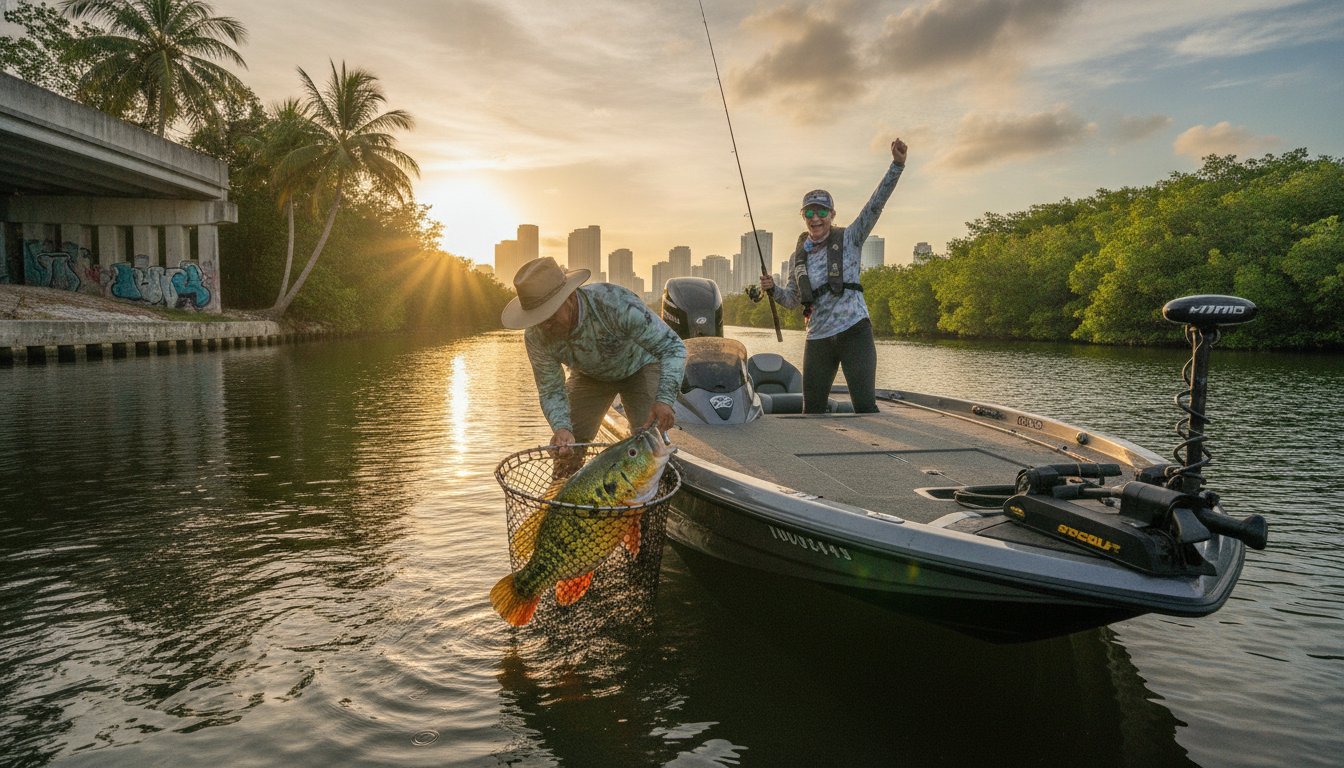

Most anglers treat Peacock Bass like colorful Largemouth, and that is exactly why they go home empty-handed. You know the frustration of staring at miles of concrete urban canals, wondering which bridge piling holds a trophy and which stretch is just a dead zone. It is a common mistake to waste time in unproductive water when you should be targeting high-percentage spots for tropical Peacock Bass fishing. Success isn’t about luck. It’s about understanding a predator that hunts with pure speed and aggression.
This guide will change your approach. I’ll show you how to dominate these unique canal systems with field-tested urban strategies. We’ll master the high-speed retrieves and specific patterns that trigger violent strikes from the biggest Butterfly Peacocks in the system. We are diving deep into seasonal movements, the exact gear setups you need for 2026, and the specific “why” behind their unique behavior. You’ll finish this with a professional blueprint to stop guessing and start landing the kind of fish that define world-class tropical urban angling.
Key Takeaways
- Discover why Miami’s urban canal system is the only reliable place in the continental US to target these exotic Amazonian transplants.
- Identify the 2026 seasonal peaks and spawning cycles to ensure you are on the water when the Butterfly Peacock Bass are at their most aggressive.
- Navigate the best urban “honey holes” for Peacock Bass fishing Miami, from the deep basins of Airport Lakes to the bridge pilings of Snapper Creek.
- Master the “aggression trigger” technique by using high-speed retrieves and specific topwater lures that outperform traditional bass fishing methods.
- Learn how to effectively break down urban structure like riprap and canal intersections to find trophy fish while avoiding common navigation mistakes.
What Makes Peacock Bass Fishing in Miami Unique?
Miami isn’t just a vacation spot; it’s a tropical frontier for anglers. The Peacock bass is an Amazonian transplant that found a perfect home in the hundreds of miles of canals snaking through Dade County. You won’t find a more exciting challenge than Peacock Bass fishing Miami canals because this is the only place in the continental US where they truly thrive. These aren’t true bass; they’re actually members of the cichlid family. One of the most striking features you’ll encounter on a trophy male is the “Nuchal Hump.” This fatty lump on the forehead develops during the spawning season and signals a dominant male ready to defend its territory with extreme aggression.
Peacock Bass vs. Largemouth: A Tactical Comparison
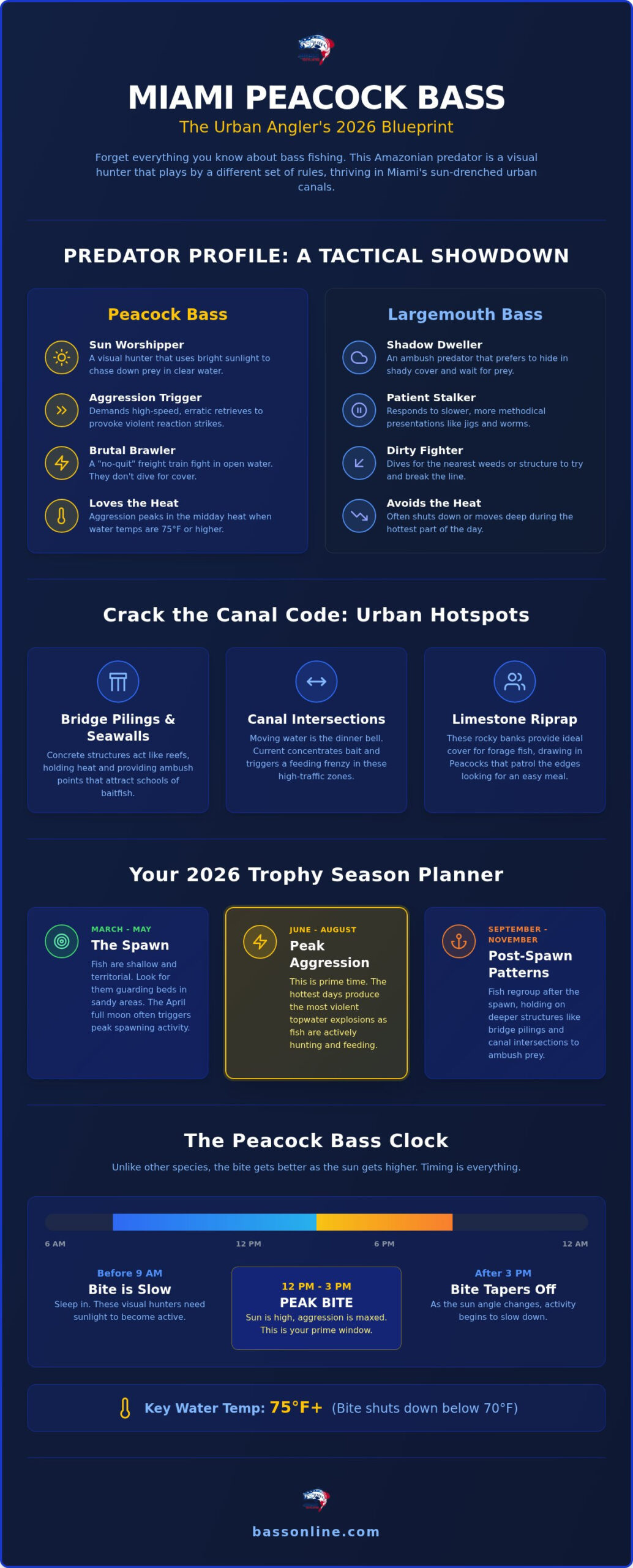
Largemouth anglers often have to unlearn old habits when they start Peacock Bass fishing Miami. While a Largemouth is an ambush predator that hides in the shadows, a Peacock is a visual hunter. They have incredible eyesight and prefer to chase down their prey in clear, sunlit water. This means your lure choice and presentation need to be much faster. They don’t dive for the weeds when they’re hooked. Instead, they provide a “no-quit” fight, using their broad sides to pull like a freight train in open water. Another key difference is their love for the heat. While Largemouth often shut down during the midday Florida sizzle, Peacocks are just getting started. The hotter the sun, the more aggressive their strikes become.
The Urban Canal Ecosystem
The South Florida Water Management District designed these canals for flood control, but they accidentally created a world-class tropical fishery. The concrete bridge pilings, limestone riprap, and residential seawalls act as the coral reefs of this urban jungle. These structures hold heat and provide perfect cover for schools of forage. I always tell my clients to look for moving water. When the gates open and the current picks up, it creates a dinner bell for every predator in the canal. Focus your efforts on canal intersections and culverts where the flow is strongest. This is where you’ll find the highest concentration of active fish waiting to intercept bait. Navigating these Miami waterways requires a local eye, as the best spots are often tucked behind industrial parks or under busy highways.
The Best Time for Peacock Bass Fishing in Miami (2026)
If you hate waking up at 4 AM to hit the water, you’ve found your favorite fish. Unlike most freshwater species, Peacock Bass are sun-worshippers. In 2026, we expect the typical South Florida weather patterns to hold, meaning your best shots at a trophy come when the sun is high and the water is warm. Peacock Bass fishing Miami is most productive when the water temperature stays above 75 degrees. Once it drops below 70, these tropical fighters get lethargic and the bite can shut down almost instantly.
Monthly Breakdown: When to Plan Your Trip
- March to May: This is the prime spawning window. You’ll see fish on ‘beds’ in shallow, sandy areas. In 2026, pay close attention to the full moon cycles in April, as these often trigger the heaviest spawning activity. Always practice ethical fishing; catch them quickly, snap your photo, and release them immediately to protect the nest.
- June to August: This is the peak of aggression. The Florida heat is intense, but the topwater explosions are worth the sweat. The fish are active, hungry, and will chase down fast-moving lures across long distances.
- September to November: As the summer rains taper off, the canals stabilize. Fish move into post-spawn patterns, often holding on deeper bridge pilings or canal intersections where the water is slightly cooler.
Daily Windows: Timing the Bite
I tell my clients to sleep in. The ‘Sun Up’ rule is real. These fish are visual hunters; they need light to track and kill baitfish. You’ll often find the bite doesn’t even start until 9:00 AM, peaking between noon and 3:00 PM when the sun is directly overhead. If you see a heavy cloud bank rolling in, expect the bite to slow down. Bright, high-sky days are your best friend because they push fish toward the shade of docks and bridges, making them predictable and easier to pin down.
In coastal canals, don’t ignore the tide. Even though we’re in freshwater, the push and pull of the ocean affects water levels and flow miles inland. Moving water is the dinner bell. It flushes bait out of drainage pipes and off the riprap, creating a localized feeding frenzy. If you want to time your trip perfectly with these daily cycles, check our availability for a guided outing. We track these tidal shifts and solar cycles daily to ensure we’re on the fish when they’re most active. If a sudden cold front hits, switch to live bait and slow down your presentation. It’s the only way to coax a strike when the mercury dips.
Top Spots for Miami Peacock Bass Fishing
You can literally hear the jets taking off at MIA while you’re pinned against the gunwale by a five-pounder. That’s the reality of Peacock Bass fishing Miami. It’s an urban jungle where world-class angling happens in the middle of a major metro area. To find the biggest fish, you have to look past the traffic and focus on the specific concrete and limestone structures that these Amazonian predators call home. Whether you’re in the deep basins of the airport or the narrow residential cuts of South Dade, the fish are there if you know where to look.
- Snapper Creek (C-2 Canal): This is a marathon of prime habitat. It features miles of productive riprap and bridge pilings that hold heat and baitfish year-round.
- The C-100 Canal System: Located in the southern suburban stretches, these canals are hidden gems. They’re often narrower and offer more shade, which is perfect for high-noon fishing.
- Black Creek: This is where urban Miami meets the Everglades fringe. It’s a great spot for anglers who want a slightly “wilder” feel while still targeting high-density Peacock populations.
Navigating the Airport Lakes
The Miami Airport Lakes fishing experience is unlike anything else in Florida. This system, also known as Blue Lagoon, consists of deep, clear-water basins connected by narrow canals. You aren’t just looking for weeds here; you’re targeting vertical sea walls, massive culverts, and submerged limestone ledges. These fish love to pin bait against the steep drops. If you find a current break where the water is pushing through a narrow opening into a larger basin, park your boat there. That’s the ultimate ambush point for a trophy Butterfly Peacock.
Urban Canal Strategy
Success in the canals comes down to mastering “Shadow Lines.” Peacock Bass have incredible eyesight and use the hard shadows cast by bridges and docks to stay invisible until they strike. I always tell my clients to cast past the shadow and retrieve their lure directly through the light-to-dark transition. Don’t overlook residential docks either. The pilings provide a deep-water sanctuary and a steady supply of forage. If you see a culvert pipe with even a trickle of moving water, hit it. That flow creates a localized feeding window that can turn a slow day into a multi-fish frenzy in minutes.
Pro Techniques: Lures, Bait, and Retrieves
If you think you’re reeling fast enough for a Peacock, you’re probably still going too slow. These fish are high-metabolism machines that hunt with pure speed. Unlike Largemouth, which might be spooked by a lure screaming across the surface, a Peacock Bass is hardwired to chase. This “Aggression Trigger” is the secret to Peacock Bass fishing Miami canals. If you see a fish following your lure but not committing, don’t slow down. Speed up. Force that fish to make a split-second decision before the “prey” gets away.
Topwater lures are the most exciting way to target these fish. Prop baits and “Walk-the-Dog” style lures create the surface commotion needed to draw them out from under a dock or bridge. If the surface bite is slow, I switch to jerkbaits or minnow imitations. These are the staples of canal success because they mimic the small tilapia and shad that Peacocks gorge on. While artificials are rewarding, live bait (specifically small shiners) is the gold standard for numbers and trophy-sized fish, especially when a cold front makes the fish lethargic.
The Perfect Peacock Retrieve
I always teach my clients the “Burn and Pause.” You crank the lure as fast as the reel allows for five or six rotations, then dead-stop it for a fraction of a second. That sudden halt is usually when the strike happens. For sight fishing, accuracy is everything. You want to cast past a cruising fish and bring the lure across its nose. If you land the lure directly on its head, you’ll spook it. Lead the fish by three or four feet and start a high-speed retrieve the moment it tracks the lure.
Tackle and Gear Selection
You need a 7-foot medium-heavy rod with a fast-action tip. That stiff backbone is essential for pulling a five-pounder away from concrete pilings, while the fast tip allows for the pinpoint casting required in tight urban spots. In the clear water of the Miami canal system, line choice matters. I prefer 20-pound braid for the casting distance, but I always run a 15-to-20-pound fluorocarbon leader to keep the presentation invisible. For colors, stick to the “Big Three”:
- Firetiger: High visibility for aggressive reaction strikes.
- Gold/Orange: Mimics the natural hues of local forage.
- Baby Peacock: Because Peacocks are cannibalistic and won’t hesitate to eat their own.
Mastering these retrieves takes practice, but it’s the fastest way to consistent success. If you want to see these techniques in action with a pro, reach out to schedule a trip and we’ll get you dialed in on the water.
Booking Your Miami Peacock Bass Adventure
You can read every strategy guide on the internet, but nothing beats time on the water with someone who lives and breathes these canals. Peacock Bass fishing Miami is a game of precision and local intelligence. While the techniques I’ve shared will give you a massive edge, the urban landscape changes daily. Water levels, gate openings, and localized temperature shifts can turn a “honey hole” into a desert overnight. A professional guide provides the real-time data needed to intercept trophy fish in a concrete maze.
Before we launch, you’ll need to secure a valid Florida freshwater fishing license. For 2026, ensure you’ve checked the latest FWC bag limits and regulations, though we always encourage catch-and-release to preserve this incredible fishery. Miami’s tropical sun is relentless, even in the winter. Come prepared with high-SPF sunscreen, a wide-brimmed hat, and plenty of water. Most importantly, bring a high-quality pair of polarized sunglasses. These aren’t just for eye protection; they are your primary tool for spotting fish against the canal bottom and timing your casts perfectly.
Why a Professional Guide Matters
Our professional Florida fishing guides have spent decades mapping “hidden” spots that don’t show up on any standard GPS. We know which residential culverts are flowing and which bridge pilings hold the alpha males during specific tidal shifts. One of the biggest hurdles for new anglers is mastering the “Peacock hookset.” If you jerk the rod upward like you’re fishing for Largemouth, you’ll pull the lure right out of their mouth. We’ll show you the low-sweep hookset that ensures the hook finds its mark every time.
Ready to Catch a Monster?
Whether you book a quick four-hour morning blast or a full eight-hour urban excursion, come prepared for high-intensity action. We provide the top-tier tackle, specialized lures, and the boat; you just bring the energy. At Bass Online, we lead the market because of our “No Fish, No Pay” confidence. We know these waters better than anyone, and we’re committed to every client’s success. If you’re ready to experience the most vibrant Peacock Bass fishing Miami has to offer, book your Miami Peacock Bass trip today and let’s get a trophy in the net.
Ready to Dominate the Miami Canals?
You now have the blueprint to master this urban jungle. Success on these tropical waterways comes down to two factors: high-speed aggression and precise structure targeting. Remember that Peacock Bass fishing Miami is a game of reaction. If you aren’t reeling fast enough to trigger a strike, you’re missing out on the most violent bites in freshwater. Focus on those shadow lines under bridges and the moving water near culverts to find the biggest fish in the system.
While these strategies give you a massive head start, nothing replaces the decades of intuition provided by a local pro. At Bass Online, we bring over 25 years of professional guiding experience and have been featured on major outdoor networks for our results. We even offer trophy fish guarantees on select trips to ensure your adventure is a success. We’re ready to show you the “insider” spots that make this city a world-class destination.
Don’t wait for the season to pass you by. Secure Your 2026 Miami Peacock Bass Charter now and let’s put a trophy in the net together. I’ll see you on the water!
Frequently Asked Questions
Do I need a special license for Peacock Bass fishing in Miami?
You need a standard Florida freshwater fishing license to target these fish. Residents and visitors alike must have one before hitting the canals. You can easily grab one online through the FWC website or their mobile app. While some saltwater charters include licenses, most freshwater guides require you to have your own. It’s a small investment that supports the conservation of these incredible urban fisheries.
What is the best month to catch a trophy Peacock Bass in 2026?
March through May is your best bet for a trophy in 2026. This is the primary spawning season when the biggest males are most aggressive while guarding their beds. If you want pure numbers and explosive topwater action, the heat of June and July is hard to beat. Just be prepared for the midday sun, as that’s when the bite is usually at its peak.
Can you eat Peacock Bass caught in the Miami canals?
You can eat them, but we don’t recommend it. Peacock Bass were introduced to Florida to manage invasive forage fish and they do a great job at it. Because they live in urban canals, there are often health advisories regarding mercury levels. We practice 100% catch and release for Peacock Bass fishing Miami to ensure the next angler has a shot at a trophy.
What is the difference between a Butterfly Peacock and an Amazonian Peacock?
The Butterfly Peacock found in Florida is a smaller, hard-fighting relative of the giant Speckled Peacocks found in the Amazon. Our local fish usually top out around 8 or 9 pounds, while the Amazonian versions can double that size. Despite the size difference, the Miami variety possesses the same “no-quit” attitude and vibrant colors that make the species famous worldwide.
Are Peacock Bass dangerous to handle?
They aren’t dangerous, but you need to watch your fingers. Peacocks have “sandpaper” teeth that can scuff up your thumb, a badge of honor we call “bass thumb.” Their dorsal fins are also quite sharp. The real danger is usually the lure; these fish fight hard until the very end, and a sudden head shake can easily bury a treble hook in your hand.
What happens if a cold front hits during my Miami fishing trip?
A cold front is the only thing that really slows these fish down. As tropical transplants, they lose their appetite when water temperatures drop below 70 degrees. If the weather turns, we switch our tactics immediately. We’ll move away from fast artificials and rely on live bait fished deeper in the water column where the temperature is more stable and the fish feel secure.
Do I need to bring my own fishing gear on a guided trip?
You don’t need to bring a thing. We provide all the specialized tackle, including high-speed reels and custom-selected lures designed for the canal environment. Our gear is maintained daily to ensure it stands up to the brutal strikes of a trophy fish. Just bring your polarized sunglasses, some sun protection, and a camera to document the vibrant colors of your catch.
How much does a Miami Peacock Bass fishing guide cost?
Guide costs depend on whether you want a half-day blast or a full-day urban expedition. These rates typically include the boat, fuel, an expert local guide, and all your fishing gear. For the most accurate and up-to-date pricing for your 2026 adventure, you should visit our trip selection page. Investing in a seasoned pro is the fastest way to skip the learning curve and get on fish.

Article by
Mr Bass
Todd Kersey, widely known as Mr. Bass by Field & Stream, is a professional angler, accomplished author, and dedicated philanthropist with a lifelong passion for bass fishing. Armed with a degree in Outdoor travel, Mr. Bass has expertly combined his knowledge with his practical fishing experience to become one of the most respected names in the bass fishing, his deep understanding of bass habitats, and fish behavior has earned him numerous accolades as a asset of the sport. Serving 8 years as FWC Stakeholder Chairperson. Leading and passing cutting-edge legislation, such as the Black Bass Management plan, and successfully building, passing, and financing the Trophy Catch program. As CEO, he is committed to giving back to the community through his philanthropic efforts. He supports a variety of causes, especially those centered around physical disabilities. Through his advocacy, his mentorship programs inspire anglers to engage in fishing stewardship, helping to raise more than $ 18 million in donations. Mr. Bass continues to inspire anglers and outdoor enthusiasts alike with his commitment to the sport and the world around him.