
Special Offer

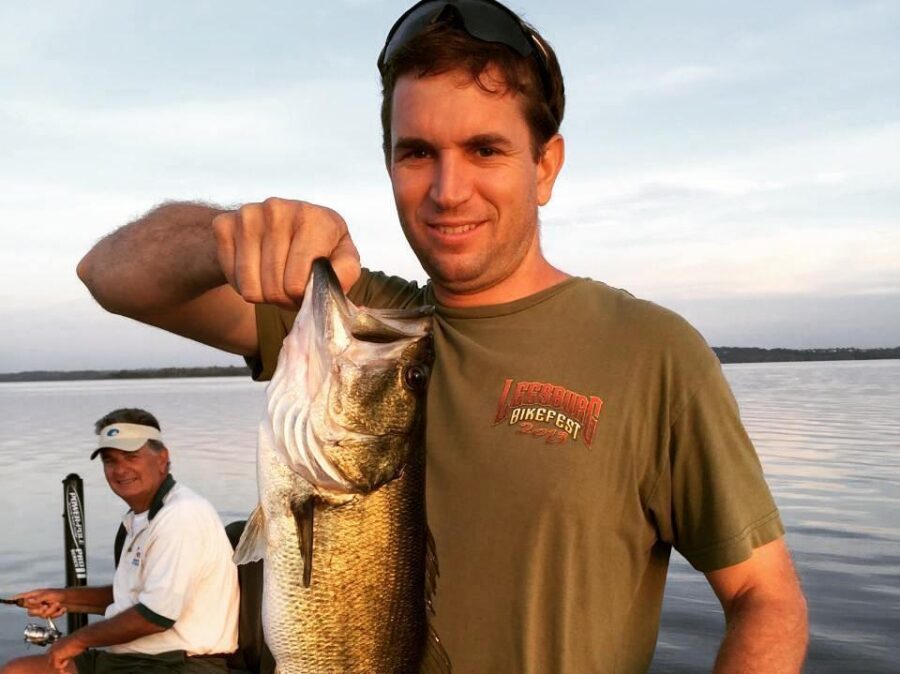

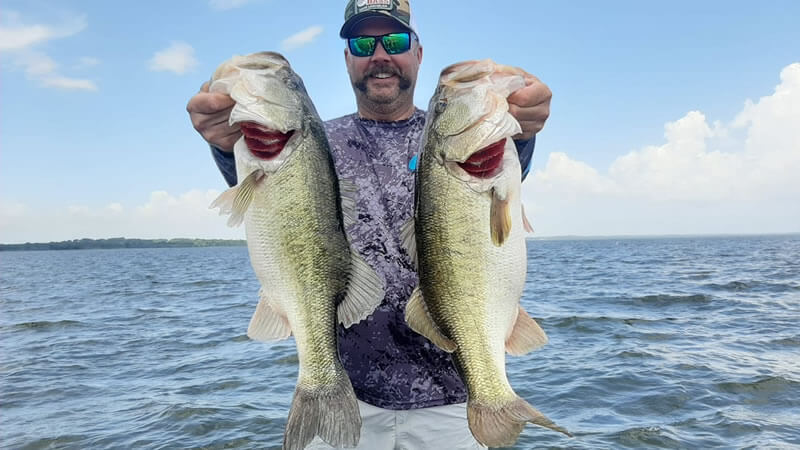

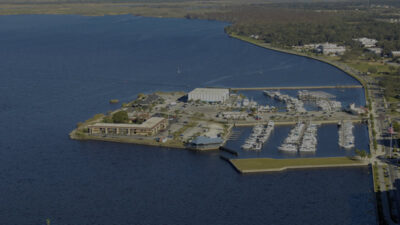
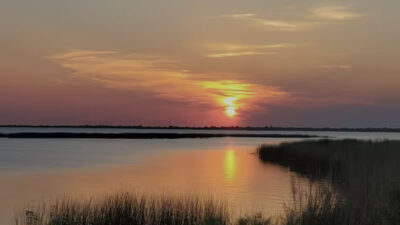
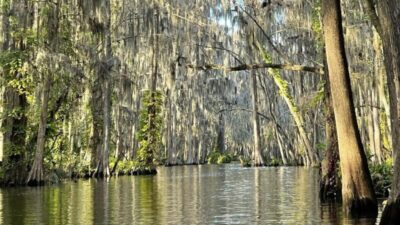
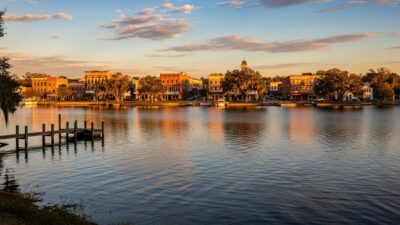

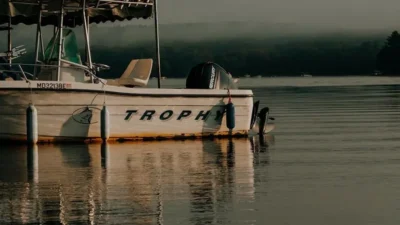
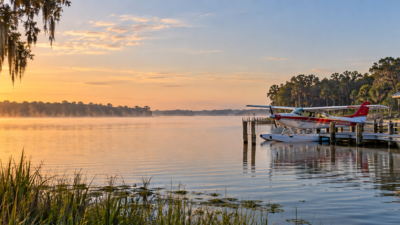
The Harris Chain of Lakes offers bass fishing across a varied Central Florida system near Leesburg, Eustis, Tavares and Mount Dora. Grass edges, canals, docks and deeper structure give anglers several ways to approach a day on the water. This guide covers the chain as a whole; use the individual lake guides below for a closer look at each fishery.
Planning a guided trip? Compare the Harris Chain trips on this page or meet our local Harris Chain fishing guides. Tell your guide whether you prefer artificial lures, live shiners or a lesson-focused outing, and confirm the launch location before traveling.
FWC’s Harris Chain fishing guide lists eight primary lakes totaling about 75,000 acres: Apopka, Harris, Griffin, Eustis, Dora, Beauclair, Carlton and Yale. Big and Little Harris are often discussed separately by anglers. FWC’s broader management plan also includes Denham and Trout, which explains why descriptions of the chain can give different lake counts.
The chain forms part of the Ocklawaha headwaters. Water-control structures, canal conditions and distances between fishing areas matter when planning a route. A lake appearing in the same system does not mean every boat can freely travel between all parts of it. Choose a launch near the water you intend to fish and check access before making a long run.
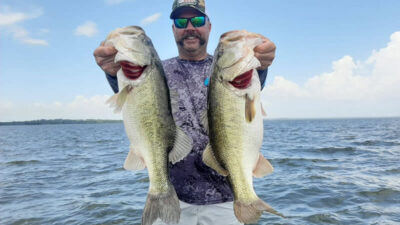
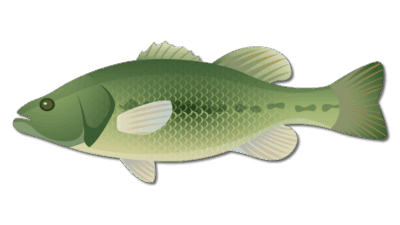
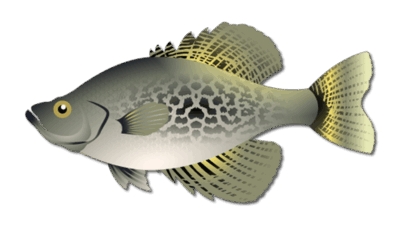
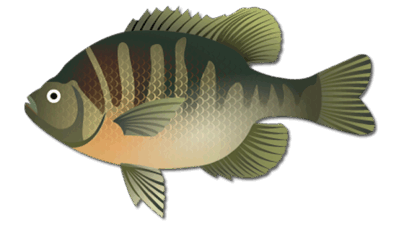
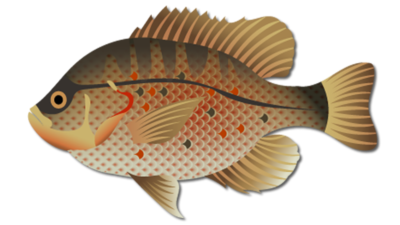
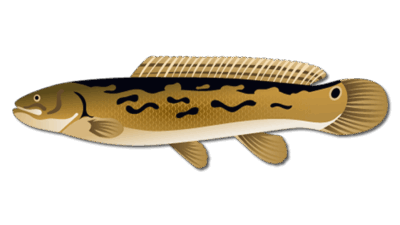
Largemouth bass are the main focus of our Harris Chain charters. Anglers also pursue black crappie, bluegill and redear sunfish, or shellcracker. FWC has stocked sunshine bass in parts of the system. Bowfin and gar can appear as incidental catches.
Our existing seasonal guide highlights February through April for bass, with productive opportunities in other months. Treat those months as planning guidance rather than a promise: a cold front, warming trend, wind change or shift in vegetation can move the bite. The historical reports below show why our guides adapt locations and presentations during the day.
Lake Harris offers shoreline grass, reeds, docks and deeper structure. Our local notes identify the Ninth Street canals and Dead River area as places to consider when wind makes open-water fishing difficult. Actual shelter depends on wind direction, so assess conditions before crossing the lake.
A longstanding guide note describes a deeper ditch along the south shore near Yalaha, with shell along portions of its edges. The historical estimate is roughly 15–17 feet; use current electronics and water levels rather than treating that figure as a navigation depth. Deep-running crankbaits are one presentation anglers have used around this structure.
Lake Eustis connects with Harris through Dead River and with Griffin through Haines Creek. Residential canals offer a different setting from the open lake. Our older local notes also describe the “Gator Hole,” a deeper feature reached through a canal; ask about current access and conditions instead of assuming it is always the best destination.
Canal mouths, vegetation transitions and changes in depth give anglers options when a shoreline pattern stalls. Respect private docks and property, posted speeds and other boat traffic.
Dora, Beauclair and Carlton make up an important southern part of the system. Dora Canal leads toward Eustis, while the Apopka–Beauclair Canal extends toward Apopka. Water-control structures and operating conditions should be checked when planning travel.
Our guides’ local notes emphasize reeds, grass, docks and canal areas here. Flipping or pitching soft plastics and fishing live shiners are established approaches around cover. Boat docks can provide shade, while a change in water clarity may call for a different bait size or presentation. Do not assume a canal described in an older report remains clear or navigable today.
Lake Griffin receives water from Haines Creek and drains toward the Ocklawaha River. Historical guide reports document both canal fishing and offshore vegetation patterns. The notes below retain those observations, including productive hydrilla cuts and spring transitions away from the bank.
For restoration context, use the FWC Harris Chain management plan. It describes nutrient loading, altered water levels and aquatic-plant management across the system.
Lake Apopka has its own restoration history and fishing considerations. Our older Harris material discussed Gourd Neck Springs, but that historical focus should not be treated as the only place to fish today. Use the dedicated Apopka guide and current agency information when planning a separate outing. Lake Yale is also included in FWC’s primary-lake list; confirm a suitable launch for the specific lake you intend to visit.
FWC lists more than 30 public ramps across the chain, along with fishing piers. Examples of public fishing access include Venetian Gardens and Hickory Point on Harris, the Eustis boardwalk and Gilbert Park on Dora. Check the managing agency’s current hours, fees and closures before traveling.
For a guided trip, use the meeting address in your booking confirmation. The address listed on this page is 2030 W Burleigh Blvd, Tavares, FL 32778; your captain will confirm the actual meeting point for your selected trip. Do not choose a ramp solely because it is nearest your hotel. For additional planning, see our Harris Chain boat-ramp guide.
The booking options on this page include four- and six-hour Harris Chain trips. Review the selected product for price, available dates, party size, included equipment and cancellation terms. Confirm live-bait costs, any special tackle requests and suitability for your group with the operator. Bring sun protection, comfortable shoes and the food or drinks specified in your trip instructions.
A Florida freshwater fishing license is generally required unless an exemption applies. Check FWC’s license requirements and exemptions before your trip, including catch-and-release outings. For harvest, consult current freshwater regulations and any waterbody-specific rules.
These reports preserve observations from earlier BassOnline trips. Catch totals describe those outings, not expected results for a future charter. Their practical value is in showing how guides changed location, timing or presentation.
One older Harris Chain trip produced no bites on shiners for roughly three hours. The guide switched to flipping dark soft plastics, then improved the bite further by downsizing the bait to about four inches; that adjustment produced roughly 17 to 18 bass. The durable lesson is to change both presentation and profile when a normally reliable live-bait pattern goes completely quiet.
One Harris Chain guide update on Lake Griffin found bass in canal bedding areas early, then shifted to offshore hydrilla as the day warmed. Lipless crankbaits worked slowly through the grass and ripped free on contact produced repeated bites, with 30-plus bass landed on multiple trips. The durable lesson is to follow the spring transition from canals toward offshore vegetation and use a lipless crankbait to cover grass efficiently once fish pull away from the bank.
One March Harris Chain report found bass using both back canals and offshore grass during the same weather cycle. Senko-style baits and frogs produced in the canals, while deeper submerged hydrilla edges responded to crankbaits and speed worms after the wind eased. On Lake Griffin, larger females moved into canal spawning areas during warming conditions, including multiple 8-pound-class fish that were released after capture. The durable lesson is to follow the daily transition between protected spawning canals and offshore hydrilla instead of treating March as a single-depth pattern.
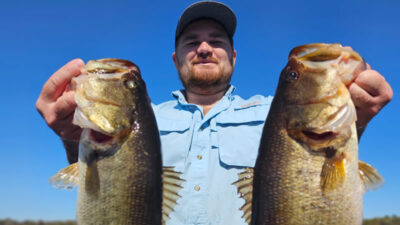
One historic Harris Chain trip produced several quality largemouth bass on both artificial baits and wild-caught live shiners. A spinnerbait produced a 5-pound 2-ounce bass, while a shiner produced a 5-pound 7-ounce fish. Flipping a worm was productive, and a swimbait worked well when dragged across Kissimmee grass.
Another historic fall outing found tougher-than-normal fishing after vegetation treatment, but live shiners around clearer spring-influenced water still produced. The group caught largemouth bass, bowfin, and gar, with the best bass around 4 pounds. The trip also documented the seasonal transition toward colder-water spawning conditions.
A Harris Chain charter that included Lake Griffin produced up to 10 largemouth bass on live shiners. Deeper hydrilla cuts were the most productive areas, and the largest fish was close to 4 pounds. The outing also highlighted the usefulness of local navigation knowledge across the interconnected Harris Chain lakes.
On one early-season Harris Chain outing with Larry, Phil, and Gene, a cool morning produced a slower start before live shiners along seawalls began drawing strikes. Several bass came from the seawall zone, with some fish appearing to be staging or bedding nearby. The trip also produced a bowfin (mudfish), a common bycatch in the system. This is preserved as historical field context rather than a current-condition guarantee.
On a particularly cold Harris Chain outing with Don and Marianne, the trip began by using canal areas to get out of the wind. Fishing improved after the sun rose and temperatures warmed slightly. The day produced several bass and provides useful historical context for adapting location and timing during unusually cold Central Florida mornings. This is preserved as historical field context rather than a current-condition guarantee.
A historical Harris Chain trip showed how summer tournament preparation can reward patient, grass-focused fishing. Two anglers put more than 20 bass in the boat during a six-hour session while practicing flipping and location strategy. As water temperatures climbed and the bite became less aggressive, slow presentations with soft-plastic worms in Houdini and Tap Out colors worked around Kissimmee grass. The useful takeaway is to keep adjusting color, presentation speed, and grass targets when summer heat makes Harris Chain bass less willing to chase.
For additional trip accounts, browse our Harris Chain fishing reports, then confirm current conditions with your guide.
| Species | Jan | Feb | Mar | Apr | May | Jun | Jul | Aug | Sep | Oct | Nov | Dec |
|---|---|---|---|---|---|---|---|---|---|---|---|---|
| Largemouth Bass | ✅ Good | 🔥 Hot | 🔥 Hot | 🔥 Hot | ✅ Good | ✅ Good | ✅ Good | ✅ Good |
No targeted species marked for Jul.
No targeted species marked for Aug.
No targeted species marked for Sep.
No targeted species marked for Oct.