


















Published: February 28, 2012 | Updated: September 11, 2026
Largemouth bass are among North America’s most popular freshwater game fish. Their range, adaptability, explosive strikes, and ability to live in everything from farm ponds to major reservoirs make them accessible to new anglers and endlessly challenging for experienced ones.
This page is the species-level owner for identification, biology, habitat, seasonal behavior, and a practical introduction to catching largemouth bass. For a broader comparison of black bass and other fish commonly called bass, visit our types of bass guide.
Largemouth Bass Identification
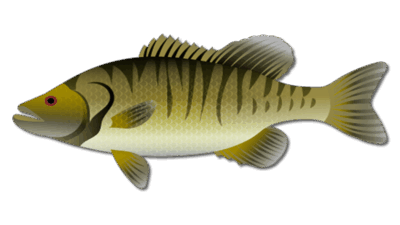
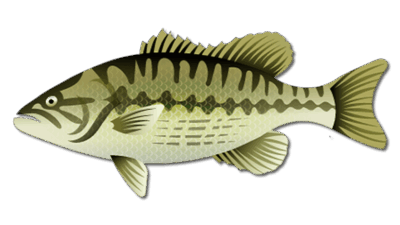
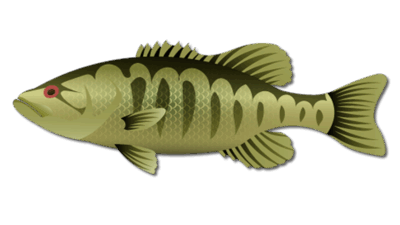
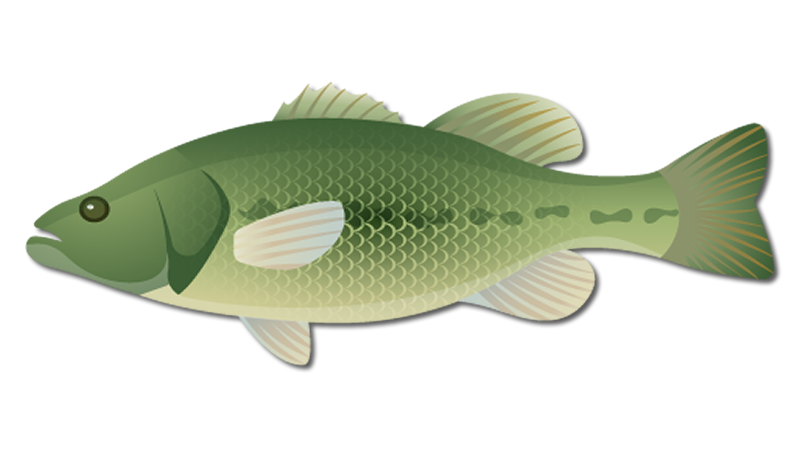
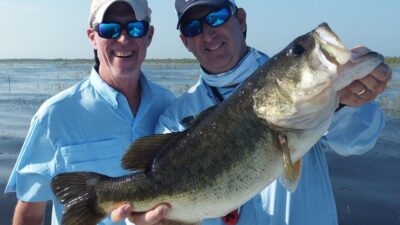
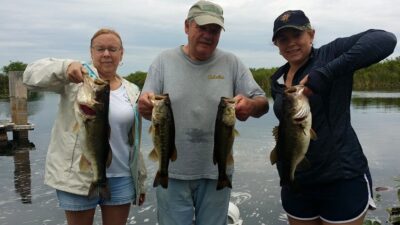
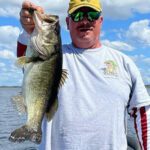
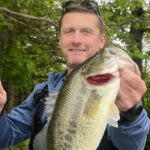
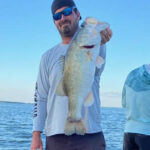
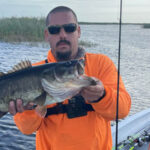
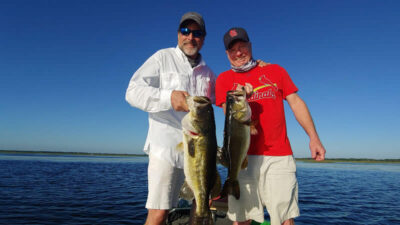
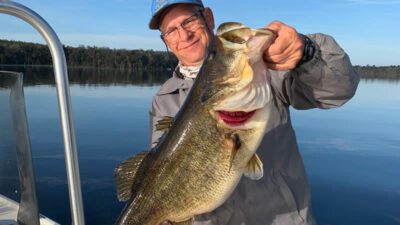
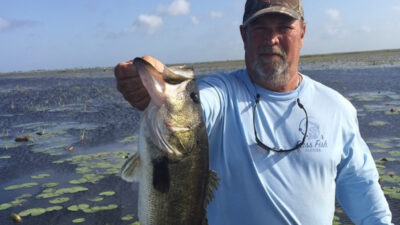
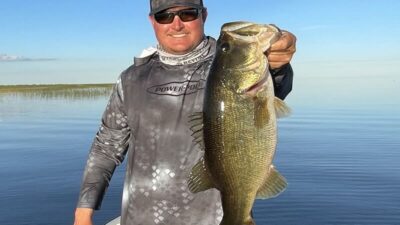
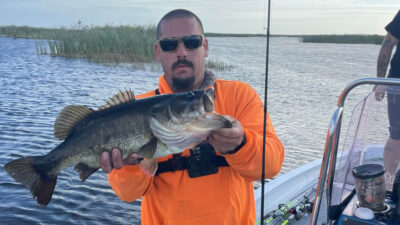
The largemouth bass is typically green to olive with dark blotches forming a horizontal band along each side. Its underside fades from light green to white. The easiest field mark is the upper jaw, which extends beyond the rear edge of the eye when the mouth is closed. The dorsal fin has a deep notch between the spiny front section and the softer rear section.
Common names include black bass, green trout, bigmouth bass, and lineside bass. The scientific name traditionally used for largemouth bass is Micropterus salmoides.
Florida bass and largemouth bass
The Florida Fish and Wildlife Conservation Commission notes that Florida bass has now been designated as a separate species from largemouth bass. The two are visually indistinguishable in the field and continue to be treated together for fishing regulations. This matters when discussing Florida-strain genetics, stocking programs, and record fish: appearance alone is not enough to identify genetic ancestry.
Where Largemouth Bass Live
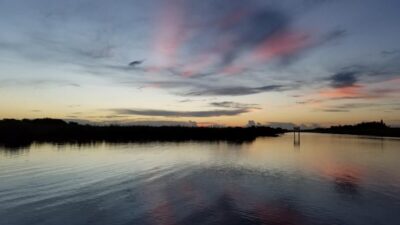
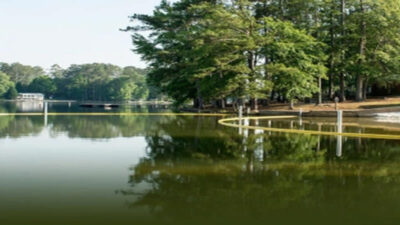
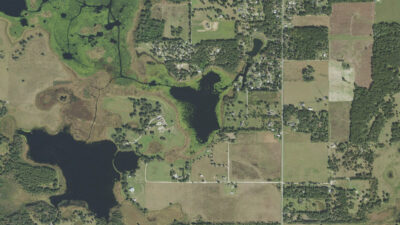
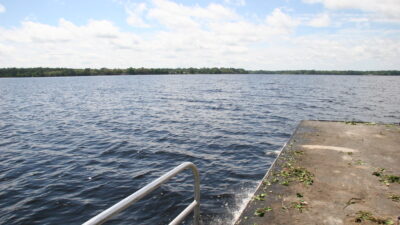
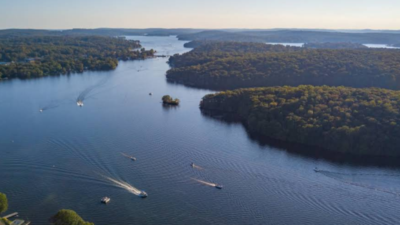
Largemouth bass inhabit lakes, reservoirs, rivers, canals, ponds, and slow-moving backwaters. They use vegetation, fallen timber, brush, docks, rock, ledges, points, and other structure for shade, security, and ambush opportunities. They can tolerate many water conditions, but the most productive habitat usually combines suitable temperature, dissolved oxygen, cover, and abundant forage.
Shallow cover is important during low-light periods and the spawning season. In summer and winter, some fish remain shallow while others use deeper grass lines, channel edges, points, offshore structure, or suspended forage. Water level, current, clarity, vegetation, and prey location can matter more than a simple shallow-versus-deep rule.
What Largemouth Bass Eat
Young bass begin with zooplankton, insect larvae, and very small prey. As they grow, fish and larger invertebrates become increasingly important. Adult largemouth commonly eat shad, shiners, sunfish, perch, crayfish, frogs, insects, and smaller fish, including other bass when the opportunity exists.
The best clue is the forage available in that specific lake. A bass in a shad-driven reservoir may roam with open-water bait, while a fish in a vegetation-rich Florida lake may feed around shiners, bluegill, grass shrimp, frogs, or crayfish. Matching prey size, profile, location, and movement is usually more useful than searching for one universal lure color.
Largemouth Bass Spawning Behavior
Spawning timing varies by latitude, weather, and water temperature. In warmer southern waters it can begin much earlier than in northern states. Males move shallow, clear a nest on firm enough bottom, and guard the eggs and newly hatched fry. The Texas Parks and Wildlife Department notes that nesting commonly begins around 60 degrees Fahrenheit in Texas, but local timing can range widely.
Pre-spawn bass often stage along the first useful cover, points, ditches, or depth changes leading toward spawning areas. During the spawn, some fish occupy visible beds while others remain nearby or move in waves. Post-spawn fish may recover around cover before following bluegill, shad, or other seasonal forage.
Handle bedding fish carefully and follow local regulations. Quickly returning large adults can help protect a fishery’s reproductive potential.
How to Catch Largemouth Bass
Begin by identifying the season, available cover, water clarity, and dominant forage. Then use a presentation that can efficiently reach the fish without becoming needlessly complicated.
Moving baits for locating active fish
Spinnerbaits, vibrating jigs, crankbaits, swim jigs, swimbaits, and topwater lures help cover water and reveal productive zones. They are most useful when bass are feeding actively, wind is moving bait, or the lake offers long stretches of similar-looking habitat. Our search-bait guide explains how to locate fish first and slow down after contact.
Slower presentations for cover and pressured fish
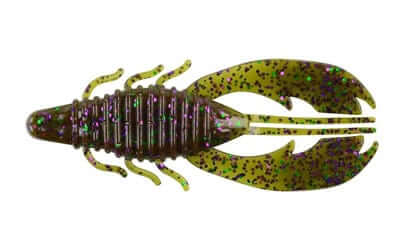
Texas rigs, jigs, weightless soft plastics, drop shots, Ned rigs, and wacky rigs allow more precise work around cover or reluctant fish. Weight and line choice should match depth, wind, vegetation, and the amount of contact needed. See our bass-fishing rigs guide for setup-specific instruction.
Live bait
Where legal, live shiners, minnows, crayfish, and other local forage can be effective. In Florida, wild shiners are widely used for trophy bass. Present live bait near vegetation, edges, points, or other areas where bass can intercept it. Check state rules regarding bait collection, transport, hook requirements, and protected species before fishing.
Seasonal Largemouth Bass Patterns
Spring
Spring centers on pre-spawn staging, spawning areas, and post-spawn recovery. Water temperature and local weather determine the pace. Protecting productive shallow cover and making quiet presentations can be more important than repeatedly changing lures.
Summer
Fish early, late, at night where permitted, or around current and shade. Some bass stay in shallow vegetation, while others use deeper edges and offshore structure. Surface activity can be brief, so keep a slower follow-up bait ready after a missed strike or a short feeding window.
Fall
Cooling water and mobile forage often make moving baits effective. Focus on baitfish location, wind-blown structure, creek arms, and remaining healthy vegetation. Do not assume every bass is shallow; roaming schools can follow bait over open water.
Winter
Cold fronts can slow feeding, but stable warming periods may pull fish toward sun-exposed cover and protected water. Slow presentations are reliable, although a reaction bait can still produce when conditions position fish tightly on structure.
A Guide’s Field Model: Resident Bass and Roaming Bass
Bass Online guides use a practical two-pattern model when learning unfamiliar water. It is a field observation, not a formal biological classification.
Resident bass repeatedly use a dependable home area such as a marina, grass flat, laydown, main-lake point, or creek pocket. The area provides cover, nearby forage, and often suitable spawning habitat. These fish can create repeatable patterns because the same type of place continues to meet their needs.
Roaming bass move with shad, shiners, herring, crayfish, or other forage. They may appear on a point, flat, channel edge, or open-water school for a short window and then leave. Finding them requires attention to wind, current, birds, electronics, bait depth, and recent seasonal movement.
Many fisheries contain both patterns at the same time. Resident fish can provide consistency; roaming fish can create exceptional catches when an angler intercepts the right feeding group. Treat the model as a way to organize observations, then let the actual lake show which pattern is strongest.
Growth, Trophy Size, and Records
Growth varies with climate, genetics, forage, competition, and habitat. TPWD reports approximate growth of 4 to 6 inches in the first year, 8 to 12 inches by age two, and about 16 inches by age three in its general species profile. Those figures are useful reference points, not promises for every fishery.
What counts as a trophy depends on region. FWC’s TrophyCatch program recognizes documented Florida bass at 8 pounds or more, while many northern fisheries use a lower weight benchmark because of shorter growing seasons. FWC lists Florida’s certified state record at 17.27 pounds. For current international records, use the IGFA largemouth bass record database.
Large fish are uncommon and valuable. Support selective harvest, careful handling, and local conservation programs where appropriate.
Best Places to Fish for Largemouth Bass
Largemouth bass occur across much of the United States and have been introduced far beyond their native range. Florida, Texas, California, Alabama, Georgia, and many other states offer productive fisheries, but the best destination depends on season, travel goals, preferred techniques, and whether the priority is numbers or trophy potential.
Start with our popular fishing lakes or explore Lake Okeechobee, one of the country’s best-known vegetation fisheries. Regulations vary by state and sometimes by individual water body, so verify current bag, length, seasonal, and tackle rules with the responsible wildlife agency.
Build a Complete Bass-Fishing Plan
Use this species guide for identification and behavior, then move into the supporting topic cluster that matches your goal:
- How to catch largemouth bass for a complete technique workflow.
- Bait for largemouth bass for live and artificial bait selection.
- Bass-fishing rigs for setup and presentation options.
- Fishing guides for local instruction and trip planning.
The most reliable approach is simple: understand the fish, find suitable habitat and forage, choose a presentation that reaches the strike zone, and adjust from evidence rather than habit.