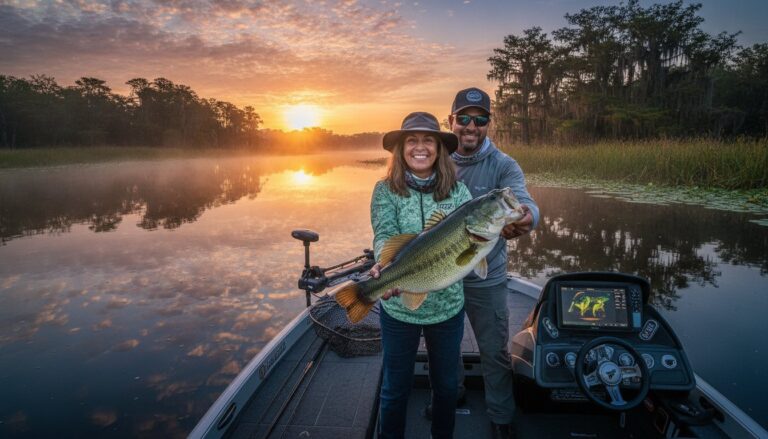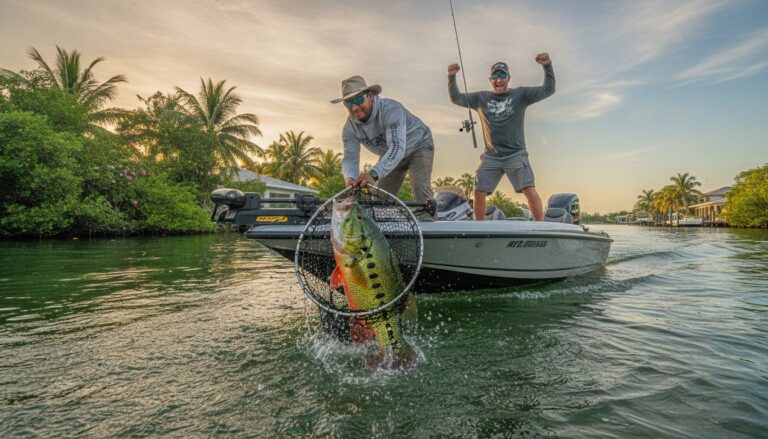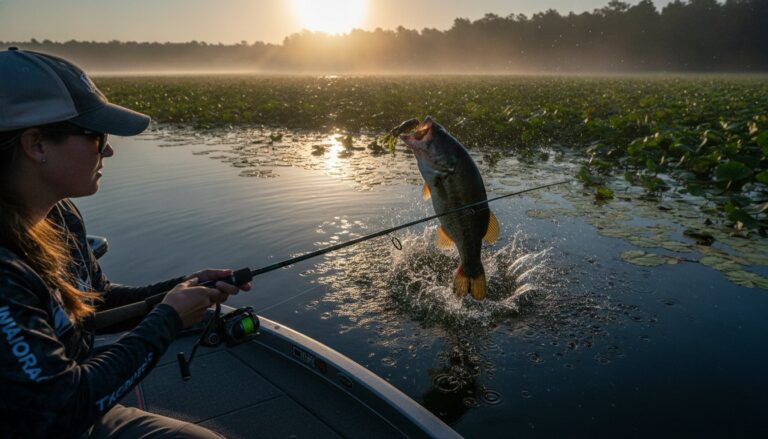
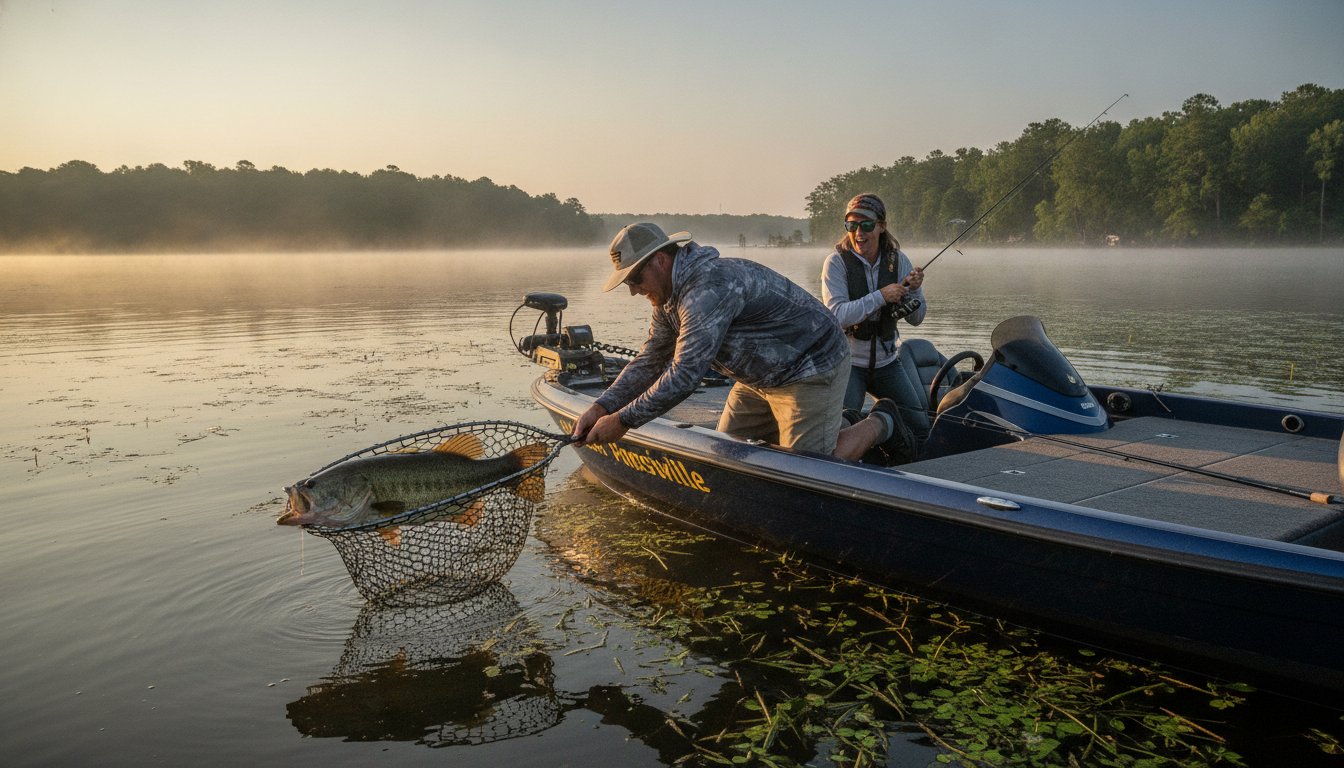

Trophy bass on Guntersville aren’t caught by luck; they’re hunted through aggressive grass management and precise current timing. I know how it feels to stare out at 69,000 acres of water and feel completely overwhelmed by the endless mats of milfoil and hydrilla. It’s easy to get lost in the sheer scale of the Tennessee River system, especially when you’re trying to time the seasonal windows just right to find a double-digit largemouth.
I’m here to take the guesswork out of your next trip. You’re going to learn the secrets of trophy bass fishing on lake guntersville with field-tested tactics that our pro guides use every single day. We’ll master the “Guntersville Effect,” unlock the mystery of fishing heavy vegetation, and ensure you never miss a transition window again. This guide provides a step-by-step breakdown of 2026 seasonal patterns, essential gear selections, and the specific retrieve styles that trigger aggressive strikes from the biggest fish in Alabama. Let’s get to work and put a personal best in your boat.
Key Takeaways
- Understand how the Tennessee River current creates the “Guntersville Effect,” driving massive growth in the lake’s largemouth population.
- Learn to distinguish between milfoil and hydrilla to find the specific “apartments” where 8-plus pounders hide along deep outside edges.
- Master the 2026 seasonal roadmap, from pre-spawn staging in Town Creek to chasing deep river ledges during the summer current pulls.
- Build a high-impact tackle box featuring big-bill crankbaits and swimbaits designed for trophy bass fishing on lake guntersville.
- Discover why leveraging professional local knowledge and advanced sonar is the fastest way to navigate 69,000 acres and land a double-digit bass.
What Makes Lake Guntersville the Trophy Bass Capital of the South?
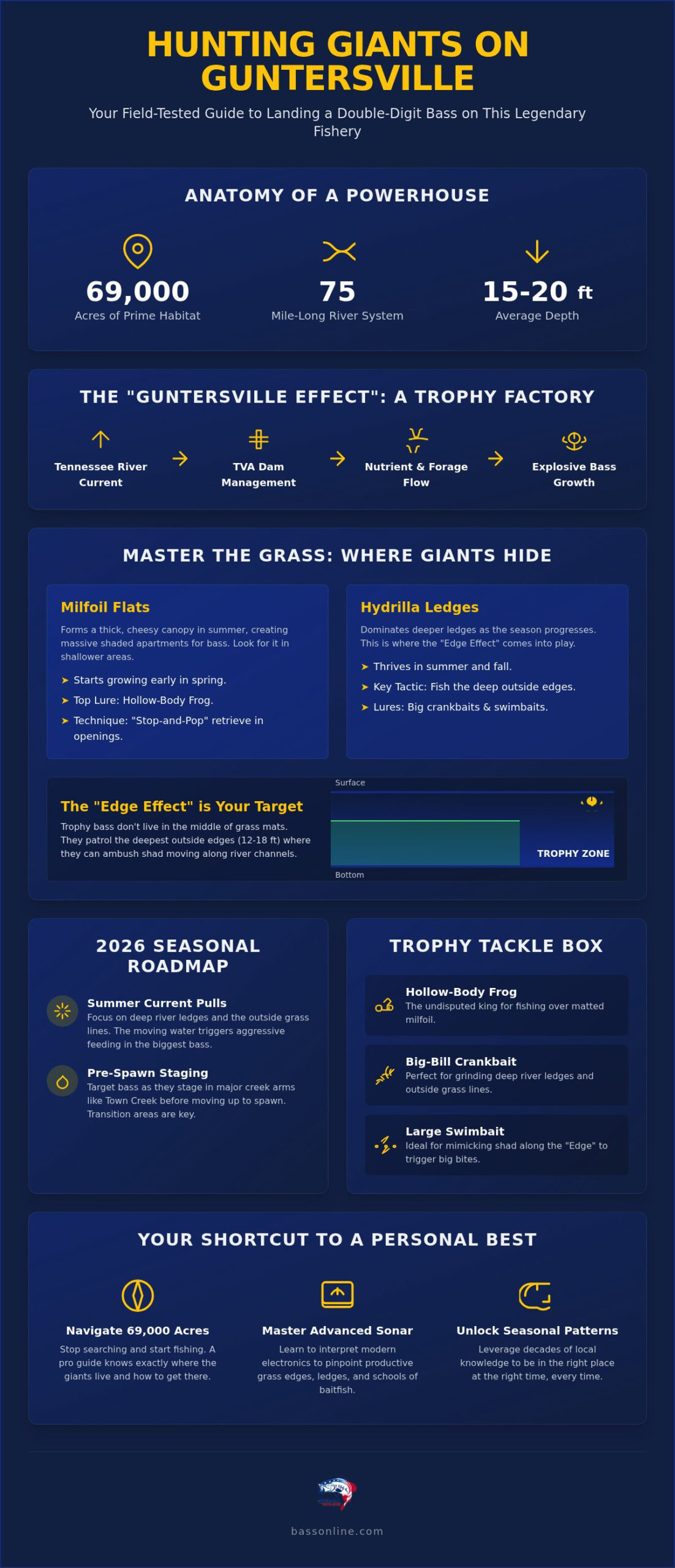
If you’ve ever dreamed of a double-digit largemouth, you’ve likely heard of the “Guntersville Effect.” This isn’t just a catchy name; it’s a biological phenomenon driven by the Tennessee River current. Unlike stagnant reservoirs, Guntersville Lake acts as a massive conveyor belt, constantly pushing nutrient-rich water and forage across 69,000 acres of prime habitat. The Tennessee Valley Authority (TVA) manages this flow, and when they pull water through the Guntersville Dam, the entire food chain wakes up. For anyone serious about trophy bass fishing on lake guntersville, understanding this current is the difference between a quiet day and a legendary one.
In 2026, the lake remains a powerhouse. While many fisheries boast about five-pounders, we’re looking for giants here. Landing a fish in the 8-to-10 pound range is a realistic goal for traveling anglers who know how to read the water. The combination of stable water levels, managed by the TVA, and an explosion of healthy vegetation makes this the ultimate nursery for monster bass. It’s a massive playground stretching from the Nickajack Dam down to the Guntersville Dam, and every mile holds the potential for a personal best.
The Anatomy of a 69,000-Acre Powerhouse
Guntersville isn’t your typical highland reservoir with steep drop-offs and deep, clear water. It’s a river-run lake, meaning it’s relatively shallow, averaging about 15 to 20 feet deep in many areas. This shallow profile allows sunlight to penetrate to the bottom, fueling the growth of massive milfoil and hydrilla flats. These grass beds provide the perfect cover for bass to hunt and grow without much effort. During the heat of the summer, the main river channel ledges become the primary focus. These underwater highways offer cooler, moving water and a direct line to the shad schools that big bass crave. You aren’t just fishing a lake; you’re fishing a 75-mile long river system that happens to be wide and full of grass.
The Legend of the “Guntersville Giant”
The history of this fishery is written in tournament-winning bags that often exceed 30 pounds for five fish. It’s a place where local legends are made and where every cast could hook into a double-digit beast. Guntersville produces more trophy bass per acre than neighboring lakes because its unique combination of river current and extensive grass flats creates a year-round feeding environment that never shuts down. If you’re ready to experience this firsthand, booking one of our Lake Guntersville Fishing Trips is the fastest way to get on the big fish. We focus on the high-percentage spots that have produced giants for decades, ensuring you spend your time catching rather than searching. Don’t waste your trip guessing where the fish are; let’s go where the history of trophy bass fishing on lake guntersville is actually being made.
Mastering the Grass: Milfoil, Hydrilla, and Trophy Patterns
To succeed at trophy bass fishing on lake guntersville, you’ve got to stop looking at the grass as a nuisance and start seeing it as a map. The vegetation here isn’t just a single mass; it’s a complex ecosystem of milfoil and hydrilla that dictates every move a big largemouth makes. In 2026, the grass health is exceptional, providing oxygen-rich cover for giants throughout the summer heat. Understanding the lifecycle is key. Milfoil usually starts earlier in the spring, while hydrilla takes over the deeper ledges as the season progresses. These plants aren’t just weeds; they’re the infrastructure of the lake’s trophy production.
The “Edge Effect” is where the magic happens. The biggest bass on the lake don’t usually sit in the middle of a 50-acre mat. They prefer the deepest outside grass lines where they can ambush shad moving along the main river channel. These edges, often in 12 to 18 feet of water, offer easy access to deep water and high-oxygen current flow. If you’re struggling to find the bite, talk to a local pro who can show you exactly how to identify these high-percentage zones using modern electronics.
Fishing the Milfoil Flats
When the summer heat hits, milfoil often develops a layer of “cheese,” which is that yellowish algae crust that looks solid enough to walk on. This canopy creates a massive shaded apartment for trophy bass. The hollow-body frog is the undisputed king here. I use a “stop-and-pop” retrieve, letting the frog sit in small openings for several seconds before giving it a sharp twitch. This mimics a bluegill or frog struggling on the surface, and the resulting blow-ups are nothing short of violent. It’s a high-stakes game that requires heavy braided line and a stiff rod to pull those giants out of the thickest cover.
Hydrilla Ledges and Deep Water Transitions
Hydrilla is a different beast. It’s stiffer than milfoil and often grows in thick clumps on the ledges managed by the TVA’s Guntersville Reservoir Information. These clumps act as perfect ambush points for trophy bass fishing on lake guntersville during the peak summer current pulls. Use your electronics to find “holes” or depressions within the submerged hydrilla. These are often the exact spots where a resident trophy sits. A “Rip-and-Fall” technique with a lipless crankbait is deadly here. Snag the lure in the grass, rip it free with a hard rod snap, and let it flutter down. That sudden movement is exactly what triggers a 10-pounder to commit when they aren’t actively chasing bait.
Seasonal Roadmaps for Lake Guntersville Bass Fishing
Timing your trip to the Tennessee River is just as important as your lure selection. If you want to master trophy bass fishing on lake guntersville, you need to understand where these giants move as the water temperature fluctuates. Every season offers a distinct window for a personal best, provided you know which part of the 75-mile stretch to target. Before you launch, make sure you’re familiar with the Official Lake Guntersville Bass Regulations to ensure a successful and legal outing.
- Spring (February–May): This is the prime time for a double-digit fish. March is legendary as bass migrate into Seibold and Town Creek. Look for water in the mid-50s to trigger the pre-spawn staging.
- Summer (June–August): As the heat rises, the big ones move to the main river ledges and mid-lake humps in 15 to 25 feet of water. This is a game of current and deep structure.
- Fall (September–November): When the water drops into the low 80s, the “feeding frenzy” begins. Bass follow massive schools of shad into the creeks, leading to some of the year’s best topwater action.
- Winter (December–January): it’s a slow-down game. Target deeper river bends and slow-roll big baits to entice lethargic giants looking for one large meal.
Sectioning the Lake: Where to Focus Your Energy
The Lower End near the dam is a summer haven because it offers the deepest, coolest water on the reservoir. However, the Goose Pond and Mid-Lake areas are widely considered the most consistent trophy producers year-round due to the vast acreage of balanced grass and depth. If you head to the Upper End, you’ll find a more riverine environment. This area is fantastic for navigating current-breaks and targeting big Florida-strain hybrids that thrive in the faster moving water. Each section requires a different mindset, but they all hold the potential for a monster catch.
Current Timing and the TVA Schedule
You can’t talk about trophy bass fishing on lake guntersville without talking about the Tennessee Valley Authority (TVA). The TVA manages the water release schedule, and for a ledge fisherman, that schedule is your bible. When the dams start pulling water, it creates a dinner bell effect. The current positions the baitfish on the upstream side of humps and ledges, making the bass predictable and aggressive. If there’s no current, the big fish often suspend and become much harder to catch. For a deeper dive into regional tactics, check out our Alabama Bass Guide to stay ahead of the curve.
The Trophy Tackle Box: Lures That Land Lunkers
Finding the fish is only half the battle; choosing the right tool to pull a ten-pounder out of the hydrilla is where the real skill comes in. For trophy bass fishing on lake guntersville, I always lean toward a power fishing approach. Big fish want a big meal. A 10-inch ribbon tail worm provides a massive profile that lazy giants can’t ignore, especially when they’re tucked deep into the grass. However, you have to be versatile. When a cold front moves through or the fishing pressure peaks, switching to a finesse shaky head can save your day by enticing those finicky resident fish that have seen every lure in the catalog.
Your gear specs are just as critical as your lure choice. Don’t bring a knife to a gunfight. I recommend a 7’6″ heavy-action rod paired with 65lb braided line for almost all grass applications. That heavy braid is necessary to saw through thick milfoil stems when a giant tries to bury itself. For those looking to build a solid foundation before hitting the Tennessee River, our Bass Fishing 101 guide covers the essential mechanics of trophy hunting in more detail. When it comes to colors, keep it simple. “Rayburn Red” is the undisputed king during the spring crawfish bite, while “Sexy Shad” dominates the summer and fall when bass are focused on the massive schools of forage.
Topwater Explosions: The Frog and the Buzzbait
The walking frog is the most effective trophy bait on the Guntersville mats because it stays in the strike zone longer than anything else. It mimics a struggling bluegill or frog perfectly. If you want to target the true “kicker” fish, don’t be afraid to throw 6-8 inch swimbaits along the grass edges. These large profiles appeal to the predatory instincts of the lake’s biggest inhabitants. Point your rod tip directly at the splash and wait to feel the weight of the fish before you execute a heavy vertical hookset. This brief pause ensures the bass has fully engulfed the bait before you pull.
Deep Diving and Ledge Cranking
When the bass move to the river ledges, you need to reach the 15-22 foot range with oversized, deep-diving crankbaits. The “Dredging” technique is a pro secret here. This involves using a lure designed to dive deeper than the actual water depth, ensuring your bait grinds into the bottom or the top of the submerged hydrilla. This creates a deflected action that triggers reaction strikes from trophies sitting in ambush. If you’re ready to see these techniques in action and put a giant in the boat, book your guided trip today and let’s get on the water.
Why a Professional Lake Guntersville Guide is Your Shortcut to Success
You’ve only got a limited number of days on the water each year. Don’t spend them staring at 69,000 acres of “dead water” trying to find where the fish went. trophy bass fishing on lake guntersville is a game of tiny details that can change by the hour based on current flow and light penetration. I spend nearly every day on this river, tracking the exact way the baitfish move and how the grass beds mature. This daily data is your ultimate shortcut. You aren’t just paying for a boat ride; you’re leveraging years of field-tested patterns to put yourself in front of a giant on your very first cast.
Technology is another huge piece of the puzzle. Mastering advanced sonar like LiveScope or Forward Facing Sonar (FFS) takes hundreds of hours. On my boat, you’ll get a crash course in reading these electronics. We’ll learn to distinguish a trophy largemouth from a carp buried in the hydrilla and, more importantly, how to watch the fish’s reaction to your lure. This real-time feedback is the fastest way to refine your presentation. Plus, you get the “Guide Advantage,” which means access to private, tournament-tested spots that don’t appear on any public map.
Safety shouldn’t be overlooked on a lake this size. The upper sections of the Tennessee River are notorious for hazardous stump fields and shallow bars that can destroy a lower unit in seconds. I’ve got the local knowledge to navigate these tight spots safely, even when the water levels fluctuate. You can focus on the hunt while I handle the navigation through the river’s complex backwaters.
The Educational Experience
A guided trip is more than just a day of catching; it’s a masterclass in situational awareness. We’ll move beyond generic “top 10” lists and focus on the “why” behind every move we make. You’ll learn to read the grass like a pro and understand how the TVA current manages the mood of the fish. This is about building your confidence so you can apply these tactics on any grass-filled fishery. Check out our Lake Guntersville Fishing Charter Reviews to see the massive giants our clients have landed using these exact methods.
Booking Your 2026 Trophy Adventure
If you’re serious about a double-digit bass, plan your 2026 trip around the peak moon phases in March or the heavy current pulls of June. When you’re ready to head out, make sure you’ve got polarized sunglasses, a high-quality rain shell, and a camera that’s fully charged. We provide the elite gear and the local expertise; you just need to bring the energy. Book Your Lake Guntersville Trophy Bass Charter Today! and let’s go make some history on the water.
Land Your 2026 Personal Best on the Tennessee River
You now have the roadmap to conquer Alabama’s most legendary fishery. Success on these 69,000 acres isn’t about luck. It’s about understanding how the TVA current positions giants on the deep grass edges. Whether you’re punching mats in the summer heat or slow-rolling big baits in the winter river bends, the right gear and seasonal timing are your best allies. Mastering trophy bass fishing on lake guntersville is a journey that every serious angler should experience at least once.
Don’t leave your trip to chance. Our team of local USCG-licensed captains brings over 25 years of professional guiding excellence to every outing. We’ve been featured on major outdoor networks because we know how to put clients on the fish of a lifetime. If you’re ready to skip the learning curve and head straight to the most productive ledges and grass flats, it’s time to get on the schedule. Book your Lake Guntersville trophy hunt with Bass Online today. I’ll see you on the water; let’s go find that double-digit largemouth together.
Frequently Asked Questions
When is the best time of year to catch a trophy bass on Lake Guntersville?
March is the premier month to catch a trophy-sized bass as fish move into shallower staging areas during the pre-spawn migration. While giants are caught year-round, water temperatures in the mid-50s trigger the lake’s biggest inhabitants to become more aggressive and predictable. This spring window offers your highest percentage chance at a double-digit fish before the spawning cycle begins in earnest.
Do I need an Alabama fishing license if I am fishing with a guide?
Yes, all anglers between the ages of 16 and 64 must possess a valid Alabama freshwater fishing license, regardless of whether they are on a guided trip. For the 2026 season, a resident annual license is $17.00, while non-residents can purchase a 7-day trip license for $37.00. You can easily obtain these online at outdooralabama.com or at local probate offices and tackle shops before we hit the water.
What is the “Guntersville Effect” everyone talks about?
The “Guntersville Effect” describes the unique biological phenomenon where the Tennessee River current and 69,000 acres of aquatic vegetation create an ideal environment for rapid bass growth. This current acts as a nutrient conveyor belt, keeping forage active and allowing largemouth to reach massive sizes. It is the core reason why trophy bass fishing on lake guntersville remains the gold standard for anglers across the Southeast.
Is Lake Guntersville better for numbers or for trophy-sized bass?
Lake Guntersville is one of the few elite fisheries that offers both high catch volumes and legitimate trophy potential on any given day. While it is famous for five-fish tournament bags exceeding 30 pounds, it is not uncommon to land twenty to thirty aggressive bass during a standard outing. If your goal is a personal best, we focus our efforts on the deep hydrilla edges where the true giants reside.
What are the best boat ramps to use on the mid-lake section of Guntersville?
Goose Pond Colony and the Waterfront boat ramp are the most strategic locations for accessing the mid-lake section of the reservoir. These ramps put you within a short run of iconic trophy producers like Seibold Creek and the expansive main river grass flats. Utilizing these central locations allows for more time spent trophy bass fishing on lake guntersville and less time navigating the 75-mile length of the lake.
Can I catch trophy bass on Lake Guntersville using only artificial lures?
You can absolutely land a trophy bass using only artificial lures, as most of the lake’s legendary catches come on frogs, swimbaits, and oversized crankbaits. The predatory nature of these fish makes them highly susceptible to power fishing techniques that mimic large shad or bluegill. While live bait has its place, the thrill of a topwater explosion on a hollow-body frog is a hallmark of the Guntersville experience.
How much does a professional bass fishing guide cost on Lake Guntersville in 2026?
The cost for a professional guide varies depending on the length of the trip and the number of anglers in your party. Most local captains offer flexible options including half-day, six-hour, and full-day charters to accommodate different schedules. To get the most accurate rates for our specific trips, we recommend visiting our booking page or contacting us directly so we can tailor a package to your needs.
Is forward-facing sonar necessary to catch big fish on this lake?
Forward-facing sonar is a valuable tool for modern anglers, but it is certainly not a requirement for catching big fish on this specific fishery. The extensive grass beds and river ledges provide clear, predictable structure that bass have utilized for decades. While we use the latest technology to stay ahead of the curve, traditional grass-reading skills and local knowledge remain the most consistent ways to find resident trophies.

Article by
Mr Bass
Todd Kersey, widely known as Mr. Bass by Field & Stream, is a professional angler, accomplished author, and dedicated philanthropist with a lifelong passion for bass fishing. Armed with a degree in Outdoor travel, Mr. Bass has expertly combined his knowledge with his practical fishing experience to become one of the most respected names in the bass fishing, his deep understanding of bass habitats, and fish behavior has earned him numerous accolades as a asset of the sport. Serving 8 years as FWC Stakeholder Chairperson. Leading and passing cutting-edge legislation, such as the Black Bass Management plan, and successfully building, passing, and financing the Trophy Catch program. As CEO, he is committed to giving back to the community through his philanthropic efforts. He supports a variety of causes, especially those centered around physical disabilities. Through his advocacy, his mentorship programs inspire anglers to engage in fishing stewardship, helping to raise more than $ 18 million in donations. Mr. Bass continues to inspire anglers and outdoor enthusiasts alike with his commitment to the sport and the world around him.