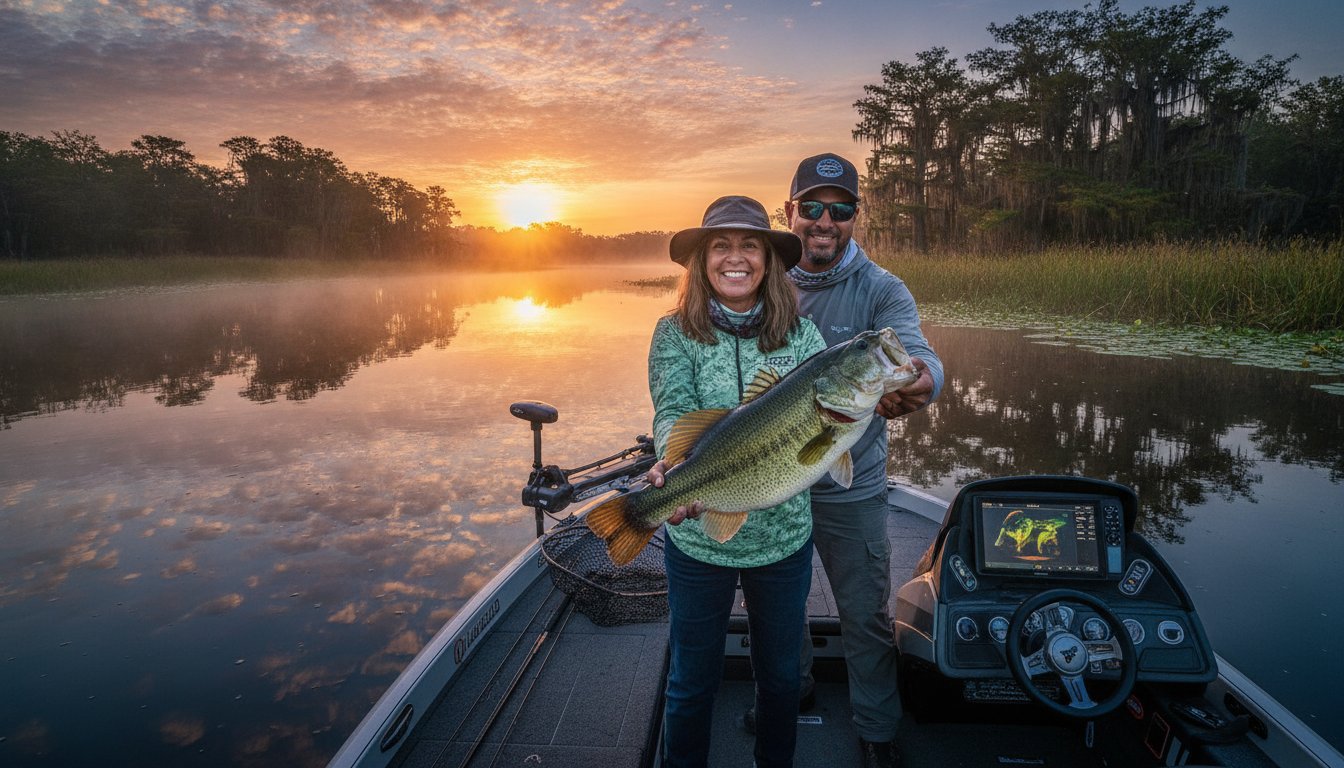

What if the secret to landing a 10-pound Florida bass isn’t your lure, but your ability to read a river that flows backward? The St. Johns River is a 310-mile puzzle that leaves most anglers scratching their heads. You’ve likely felt the frustration of choosing between 3,000 connected lakes while trying to guess how the tide affects freshwater behavior. It’s a massive system that demands respect and local knowledge. That’s why finding a seasoned St. Johns River fishing guide is the smartest move you can make to navigate these complex, north-flowing currents successfully.
This manual is your roadmap to mastering the “Liquid Chameleon” in 2026. We promise to equip you with expert tactics for targeting trophy largemouth and navigating the shifting tides with ease. You’ll get an inside look at the seasonal shad run, the debate between wild shiners and artificials, and a breakdown of the most productive basins for your specific skill level. It’s time to stop guessing and start catching the fish of a lifetime. Let’s get out on the water and show you what this river is truly capable of delivering.
Key Takeaways
- Master the unique navigation of Florida’s longest river, where the north-flowing current and tidal shifts dictate bass behavior.
- Learn why the St. Johns produces world-class lunkers and where to find river-run striped bass in the deeper channels.
- Discover the “Wild Shiner” advantage for landing 10-pounders and when to switch to artificials, a strategy perfected by any top-tier St. Johns River fishing guide.
- Time your trip perfectly by understanding the winter trophy spawn and the legendary American Shad run from December through March.
- Gain the tactical edge by learning how professional guides track daily fish patterns across 310 miles of shifting water and hazardous sandbars.
Understanding the St. Johns River: The Liquid Chameleon
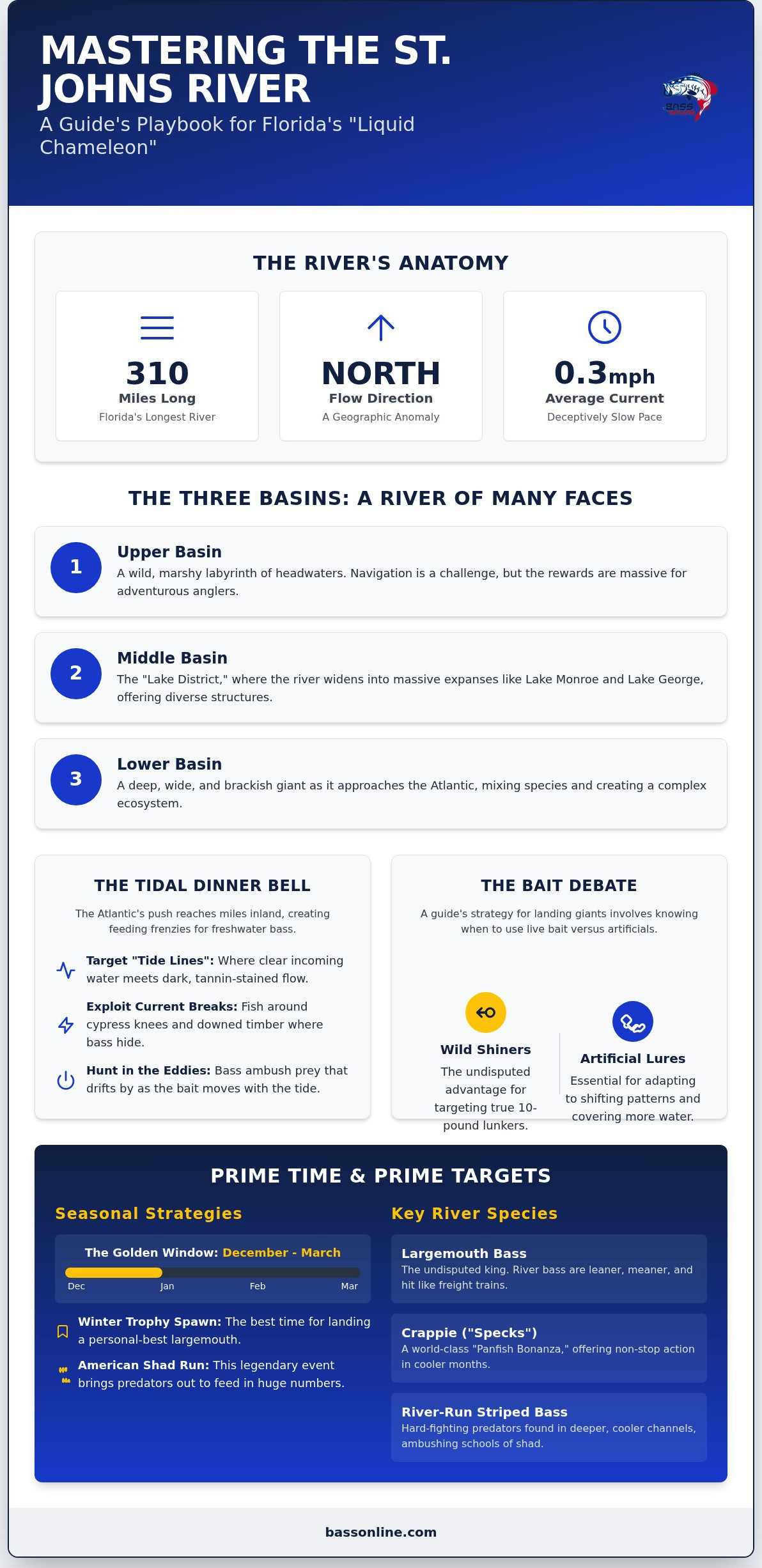
The St. Johns River isn’t just another waterway; it’s a 310-mile anomaly that defies the rules of geography. As Florida’s longest river, it’s one of the few in the United States that flows north, a fact that dictates every move a successful St. Johns River fishing guide makes. We call it the “Liquid Chameleon” because its personality shifts with every mile, forcing you to adapt your lure selection and strategy on the fly. Whether you’re flipping mats in the marsh or cranking deep ledges, you’re fishing a moving puzzle that requires a seasoned eye to solve.
The river’s pace is deceptively slow, averaging just 0.3 mph. This sluggish current is a double-edged sword. While it keeps the water from becoming a raging torrent, it also creates “dead water” pockets where oxygen levels can drop, making bass lethargic. You need to hunt for the moving water. Even a slight increase in flow can trigger a feeding frenzy, as moving water carries the oxygen and forage that trophy largemouth crave. Understanding this flow is the difference between a dry boat and a record-breaking day.
To better understand how we rig up to handle these unique conditions and target heavy bags, watch this helpful video:
The Three Basins: Upper, Middle, and Lower
Success depends on knowing which river you’re actually fishing. The Upper Basin is a wild, marshy labyrinth of headwaters where navigation is a challenge but the rewards are massive for adventurous souls. Moving north, the Middle Basin transforms into the “Lake District,” where the river widens into massive expanses like Lake Monroe and Lake George. Finally, the Lower Basin becomes a deep, wide, and brackish giant as it approaches the Atlantic. It offers a mix of species and environments that can overwhelm the uninitiated without a professional St. Johns River fishing guide at the helm.
Tidal Influence on Freshwater Bass
Tides aren’t just for saltwater anglers here. In the St. Johns, the Atlantic’s push reaches miles inland, acting as a literal dinner bell for river largemouth. You’ll want to watch for “tide lines” where clear, incoming water meets the dark, tannin-stained flow of the river. These edges are prime hunting grounds. Position your boat to exploit current breaks around cypress knees and downed timber. When the tide moves, the bait moves, and the bass will be waiting in the eddies to ambush anything that drifts by. It’s high-octane fishing that rewards those who can read the water’s subtle shifts.
Targeting Trophy Largemouth and River Species
Hunting for giants on the St. Johns requires an understanding of a complex food web. This isn’t a stagnant pond. The St. Johns River Water Management District monitors the water quality that sustains a massive forage base of golden shiners, shad, and crawfish. These high-protein snacks are the reason our “lunkers” possess such incredible girth. When you hook into a double-digit bass here, you’re feeling the power of a fish raised in a rich, moving environment. It’s a high-octane experience that demands heavy gear and sharp instincts.
Largemouth Bass: The Undisputed King
River bass are a different breed. Unlike their cousins in still lakes, these fish spend their lives battling the current. They’re leaner, meaner, and hit like a freight train. You’ll find them buried deep in cypress roots or patrolling the edges of lily pad fields and submerged hydrilla. To truly master the hunt, you should understand Florida Bass: The Science and Strategy. This knowledge, combined with the expertise of a St. Johns River fishing guide, turns a “maybe” into a certainty when you’re looking for that trophy wall-hanger.
While bass are the stars, the “Panfish Bonanza” is a legitimate world-class event. We target massive crappie, or “specks,” as they move into the pads during the cooler months. They provide non-stop action for families and seasoned pros alike. For those seeking a different kind of pull, river-run striped bass hold in the deeper, cooler channels. They use the river’s depth to ambush schools of shad, providing a high-speed fight that tests your drag and your patience.
The Brackish Transition Species
The surprise factor in the lower basin is unmatched. As the river nears the Atlantic, the water becomes brackish. This creates a unique crossover zone where the rules of freshwater fishing fly out the window. You might flip a jig for a bass and pull out a hard-fighting Redfish instead. Salinity levels act as a shifting boundary that dictates where the largemouth “line” stops. A skilled St. Johns River fishing guide monitors these salt-lines daily to find the sweet spot where freshwater and saltwater species collide. It’s one of the few places on earth where a multi-species “slam” is a regular occurrence.
If you’re itching to experience this unique river-run action and target the diverse species of the St. Johns, you can check our availability for the upcoming season and secure your spot on the water.
Essential Tactics: Live Bait vs. Artificial Lures
Choosing between a bucket of wild shiners and a box of artificials is the ultimate angler’s dilemma on this river. If your goal is a double-digit trophy, wild shiners are the gold standard. There’s simply no substitute for the scent, sound, and erratic movement of a native shiner. However, a professional St. Johns River fishing guide knows that while shiners land the trophies, artificials find the schools. Switching to lures allows you to cover massive stretches of water and trigger reaction strikes from aggressive fish that might ignore a stationary bait. To stay ahead of the game, check the latest FWC St. Johns River Fishing Forecast for real-time data on seasonal movements and water levels.
The Art of Shiner Fishing
Success with live bait isn’t as simple as “set it and forget it.” We utilize two primary rigging techniques: suspending bait under a float to target specific pockets in the vegetation or free-lining in the current to let the shiner swim naturally into ambush zones. Managing your bait in the Florida heat is critical. If your shiners lose their “thump,” they lose their effectiveness. You must learn to distinguish the frantic vibration of a shiner being chased from the annoying peck of a bluegill. When that shiner starts dancing, get ready; a lunker is seconds away from inhaling your bait.
Top Artificial Patterns for the River
When the sun is high or the fish are scattered, we transition to high-impact artificials. Topwater explosions are the highlight of any trip. We use hollow-body frogs and buzzbaits to skim over heavy lily pads where giants hide. In the Middle Basin, we shift focus to submerged shell bars and steep drops, where deep-diving crankbaits mimic the river’s shad population. If the bite slows, our “river worm” strategy involves dragging heavy plastics through submerged timber. It’s a slow, methodical process that requires patience and a light touch to detect the subtle “tick” of a bass in the current.
Regardless of the tactic, our guides operate with a strict “No-Yelling” philosophy. We’re here to be your expert coaches, not your critics. Whether you’re a tournament pro or a first-timer, you’ll find that a St. Johns River fishing guide from our team focuses on professional reliability and sharing the thrill of the hunt. We ensure every cast is a learning opportunity, making the complex river system accessible and exciting for everyone on board. It’s about more than just catching fish; it’s about mastering the environment alongside a seasoned expert who is committed to your success.
Seasonal Strategies: Timing the St. Johns Shad Run
Mastering the St. Johns River requires more than just a lucky lure; it demands a deep understanding of the river’s biological clock. Seasonality here isn’t just about the weather. It’s about massive migratory shifts that turn quiet bends into battlegrounds. From December through February, we focus on the peak of the trophy bass spawn. This is followed immediately by the American Shad run, a world-class migratory event that brings life to the river every spring. A veteran St. Johns River fishing guide tracks these movements daily, ensuring you aren’t casting into empty water while the real action is happening miles away.
Fishing the Spawn
The St. Johns is famous for its soft, mucky bottom, which makes finding suitable nesting sites a challenge for largemouth. We hunt for rare “hard bottom” areas, focusing on shell bars, sandy points, and firm edges around cypress knees. It’s a game of precision and patience. We prioritize the health of the fishery, so we practice strict catch-and-release ethics during this sensitive time to protect the 10-pounders of tomorrow. Before you launch, ensure you’re legal by reviewing the Florida Fishing License: 2026 Guide. Getting your permit early means more time with your line in the water.
The Spring Shad Run Tactics
The American Shad run is the river’s best-kept secret, occurring typically from December through March with a peak in January and February. These “poor man’s tarpon” move upriver from the Atlantic in massive schools, creating “Shad Alleys” in current bottlenecks. We utilize small silver spoons and 1/8-ounce jigs to mimic the silver flash of these baitfish. While catching your 10-per-day limit of shad is a blast, the real prize is the feeding frenzy it triggers. The river’s biggest bass follow these schools like wolves, providing a window for some of the most aggressive strikes of the year. If you want to experience the raw power of a spring feeding frenzy, contact us to schedule your trip during the peak of the shad migration.
As the heat of summer takes hold, we transition our strategy to finding “cool zones.” These are areas near spring-fed tributaries where the water temperature remains stable even in July. By September and October, the fall transition begins. We follow the baitfish as they retreat from the main river into the deeper creeks. This constant movement is why the St. Johns never stays the same for long. You’ve got to stay mobile and stay aggressive to keep up with the “Liquid Chameleon” throughout the year.
Why a Professional St. Johns River Fishing Guide is Mandatory
Navigating 310 miles of Florida’s longest river isn’t a hobby; it’s a full-time job. While the “Liquid Chameleon” offers the reward of a lifetime, it’s also a shifting maze of submerged hazards and deceptive currents. For many, a DIY trip quickly turns into a frustrating day of staring at empty water or, worse, a rescue mission. Securing a veteran St. Johns River fishing guide is the only way to bypass the learning curve and get straight to the action. We don’t just guess where the fish are; we track their movement across massive basins every single morning. This “daily pattern” knowledge is what separates a world-class expedition from a long boat ride.
At Bass Online, we combine national standards with the raw, “river rat” knowledge required to dominate these waters. You’ll hunt from high-performance, $80k tournament-ready bass boats specifically designed to handle the river’s unique demands. These machines allow us to reach remote areas quickly and safely, providing a stable platform for every cast. Whether we’re chasing the shad run or flipping heavy mats for a 10-pounder, you’re backed by professional reliability and the best equipment in the industry.
Navigating the Complexities
Don’t rely solely on your GPS. The St. Johns is a living ecosystem where a floating island of vegetation, known as a tussock, can block an entire creek mouth overnight. We also manage the “wind-on-tide” effect, a phenomenon where the wind blows against the north-flowing current to create a dangerous river chop. Our guides know how to read these conditions and access “secret” oxbows that aren’t found on standard maps. It’s this insider access that puts you on fish that haven’t seen a lure all week.
Booking Your Expedition
When you’re ready to hunt, come prepared. We recommend high-quality polarized glasses to spot submerged timber, plenty of sun protection, and a “ready to hunt” attitude. We offer flexible trip lengths to fit your schedule, from half-day “quick strikes” targeting specific tidal windows to full-day trophy hunts that cover multiple basins. Every trip is an insider journey led by a professional who is personally committed to your success. Ready to land the lunker of a lifetime? Contact our St. Johns River experts today!
Dominate the Liquid Chameleon in 2026
The St. Johns River is a beast that rewards the bold and the prepared. You now have the blueprint to handle the “Liquid Chameleon,” from reading tidal lines in the lower basin to hunting hard-bottom spawning beds in the headwaters. Mastering the American Shad run and knowing exactly when to switch from high-action artificials to the “wild shiner” strategy are the tactical edges that lead to 10-pound trophies. Reading about the river is the first step, but conquering these 310 miles of shifting currents and hidden oxbows requires an expert at the helm.
Our team brings over 25 years of professional guiding excellence to every expedition. We’re top-rated on TripAdvisor and FishingBooker, with our expert guides frequently featured on national fishing networks for their rugged, results-driven approach. When you step onto our high-performance boats, you aren’t just booking a trip; you’re gaining a massive insider advantage. Hiring a premier St. Johns River fishing guide ensures your day is spent fighting legendary Florida bass rather than fighting the river’s navigational hazards.
Book Your St. Johns River Trophy Bass Hunt Now and experience the raw excitement of Florida’s most iconic waterway. The lunker of a lifetime is waiting for you in the pads. Let’s go get it.
Frequently Asked Questions
Do I need a special license for St. Johns River fishing?
You must have a valid Florida freshwater fishing license to fish the St. Johns River legally. As of August 2026, a resident annual license costs $17.00, while non-residents can choose between a 3-day option for $17.00 or an annual license for $47.00. You don’t need a special permit beyond this unless you’re targeting specific management areas like Farm 13. We recommend purchasing your license online before you arrive at the dock.
What is the best time of year to catch a trophy bass on the St. Johns?
The peak season for trophy largemouth runs from December through March. This period aligns with the Florida bass spawn and the legendary American shad run. During these months, the biggest females are at their heaviest weight and most aggressive state. If you want to land a double-digit lunker, this is the time to book your St. Johns River fishing guide. The cooler water temperatures keep the giants active throughout the day.
Can I catch saltwater fish in the St. Johns River?
Yes, the St. Johns is famous for its brackish water species in the Lower Basin. Because the river flows north into the Atlantic, saltwater pushes inland. It’s common to land redfish or even the occasional flounder alongside largemouth bass in the same creek. In the deeper channels, you’ll also find river-run striped bass that provide a high-speed fight. It’s a unique crossover environment that keeps every cast exciting and unpredictable.
Are wild shiners better than artificial lures for bass?
Wild shiners are undeniably the most effective bait for catching 10-pound trophy bass. Their natural scent and erratic movement trigger a primal response that artificial lures often can’t match. However, artificials are superior for covering large sections of the river to locate active schools. A pro St. Johns River fishing guide often uses a mix of both. We use shiners to anchor in trophy zones and artificials to hunt for new patterns.
What should I wear for a guided fishing trip in 2026?
You should wear lightweight, moisture-wicking clothing and a high-SPF sun shirt for your expedition. Florida’s sun is intense, even in the winter months. A wide-brimmed hat and high-quality polarized sunglasses are mandatory for spotting submerged timber and tracking your line. Don’t forget non-slip, closed-toe shoes to stay steady on the deck of our high-performance bass boats. We always suggest bringing a light rain jacket just in case a quick afternoon shower passes through.
Is the St. Johns River safe for kids and families?
The St. Johns River is a fantastic destination for families and young anglers. Our tournament-ready boats are equipped with all required safety gear and provide a stable platform for kids to fish comfortably. We tailor the experience to be educational and engaging, ensuring everyone stays safe while learning the ropes. It’s a great way to introduce the next generation to the raw beauty of Florida’s wild outdoors in a controlled, professional environment led by a St. Johns River fishing guide.
What happens if it rains during my guided fishing trip?
We continue to fish in light rain, but we immediately seek shelter if lightning or dangerous winds develop. Florida’s weather can change in minutes, so we monitor radar constantly to keep you out of harm’s way. If a trip is cut short due to severe weather, we work with you to reschedule or adjust the time. Your safety and the quality of your experience are our primary concerns whenever we leave the dock.
Where do we meet the guide for the trip?
Meeting locations are strategically chosen based on where the fish are biting in the 310-mile river system. We typically meet at established public ramps in regional hubs like Sanford, DeLand, or Palatka. Your guide will contact you the evening before your trip to confirm the exact ramp and time. This flexibility ensures we spend less time running the boat and more time with your lures in the most productive water available.

Article by
Mr Bass
Todd Kersey, widely known as Mr. Bass by Field & Stream, is a professional angler, accomplished author, and dedicated philanthropist with a lifelong passion for bass fishing. Armed with a degree in Outdoor travel, Mr. Bass has expertly combined his knowledge with his practical fishing experience to become one of the most respected names in the bass fishing, his deep understanding of bass habitats, and fish behavior has earned him numerous accolades as a asset of the sport. Serving 8 years as FWC Stakeholder Chairperson. Leading and passing cutting-edge legislation, such as the Black Bass Management plan, and successfully building, passing, and financing the Trophy Catch program. As CEO, he is committed to giving back to the community through his philanthropic efforts. He supports a variety of causes, especially those centered around physical disabilities. Through his advocacy, his mentorship programs inspire anglers to engage in fishing stewardship, helping to raise more than $ 18 million in donations. Mr. Bass continues to inspire anglers and outdoor enthusiasts alike with his commitment to the sport and the world around him.