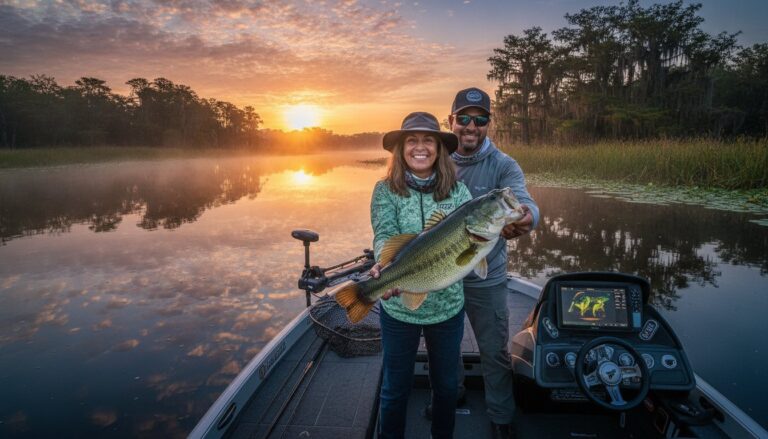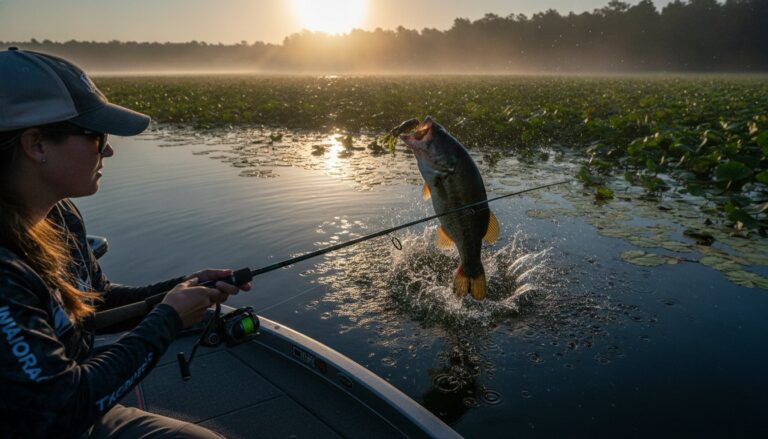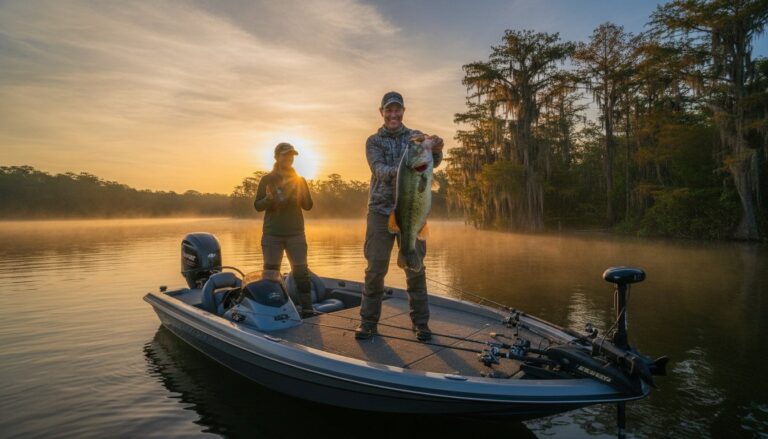
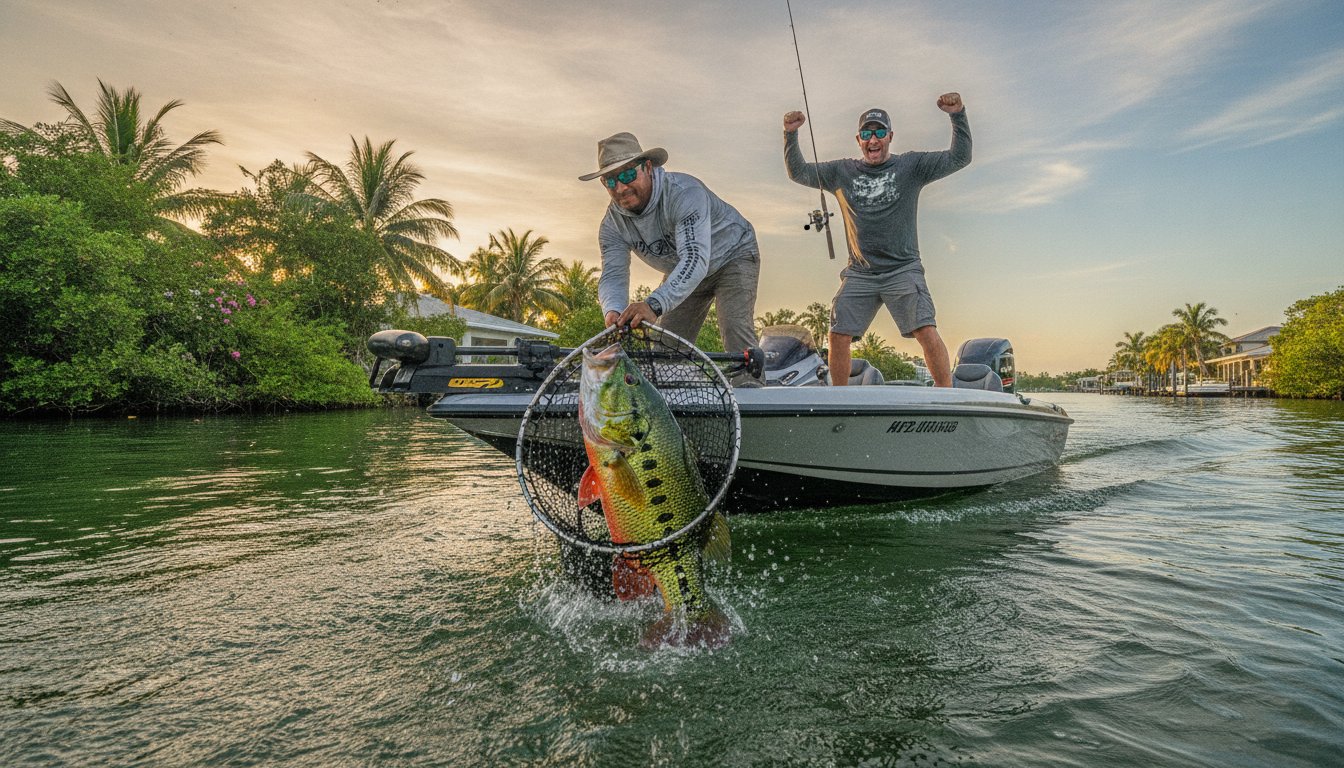

What if I told you that most anglers spend half their trip just looking at empty water because they hired a boat driver instead of a hunter? You’ve likely felt that frustration, watching the clock tick while your guide struggles to find the bite. You’re searching for the adrenaline of a five-pound Butterfly Peacock Bass slamming a topwater plug, not a slow scenic tour of a South Florida canal. Finding the right Peacock Bass fishing guide is the difference between a high-energy victory and a wasted afternoon on the water.
I understand the drive to land a trophy fish because I live for that strike every single day. In this guide, I’ll teach you to master the tactics of the world’s most aggressive freshwater fighter and show you how to select a professional service that guarantees results. We’ll break down the 2026 seasonal patterns, including the March through June peak window, and explore the professional-grade sight-fishing techniques that separate the experts from the amateurs. Get ready to turn your next tropical hunt into a seamless, high-intensity adventure that puts trophy-class fish in the boat.
Key Takeaways
- Learn why high-speed “Shock and Awe” retrieves are the secret to triggering explosive strikes from these tropical fighters.
- Discover how to vet a Peacock Bass fishing guide by checking for professional credentials and high-end equipment rather than just a boat ride.
- Find out why the midday sun and the “Dog Days” of summer provide the ultimate advantage for targeting active Peacock Bass.
- Understand the behavioral differences between true bass and these aggressive cichlids to ensure you’re using the right gear for the job.
- See why choosing a service with local authority and decades of field-tested experience guarantees a trophy-class expedition.
Why Every Angler Needs a Peacock Bass Fishing Guide
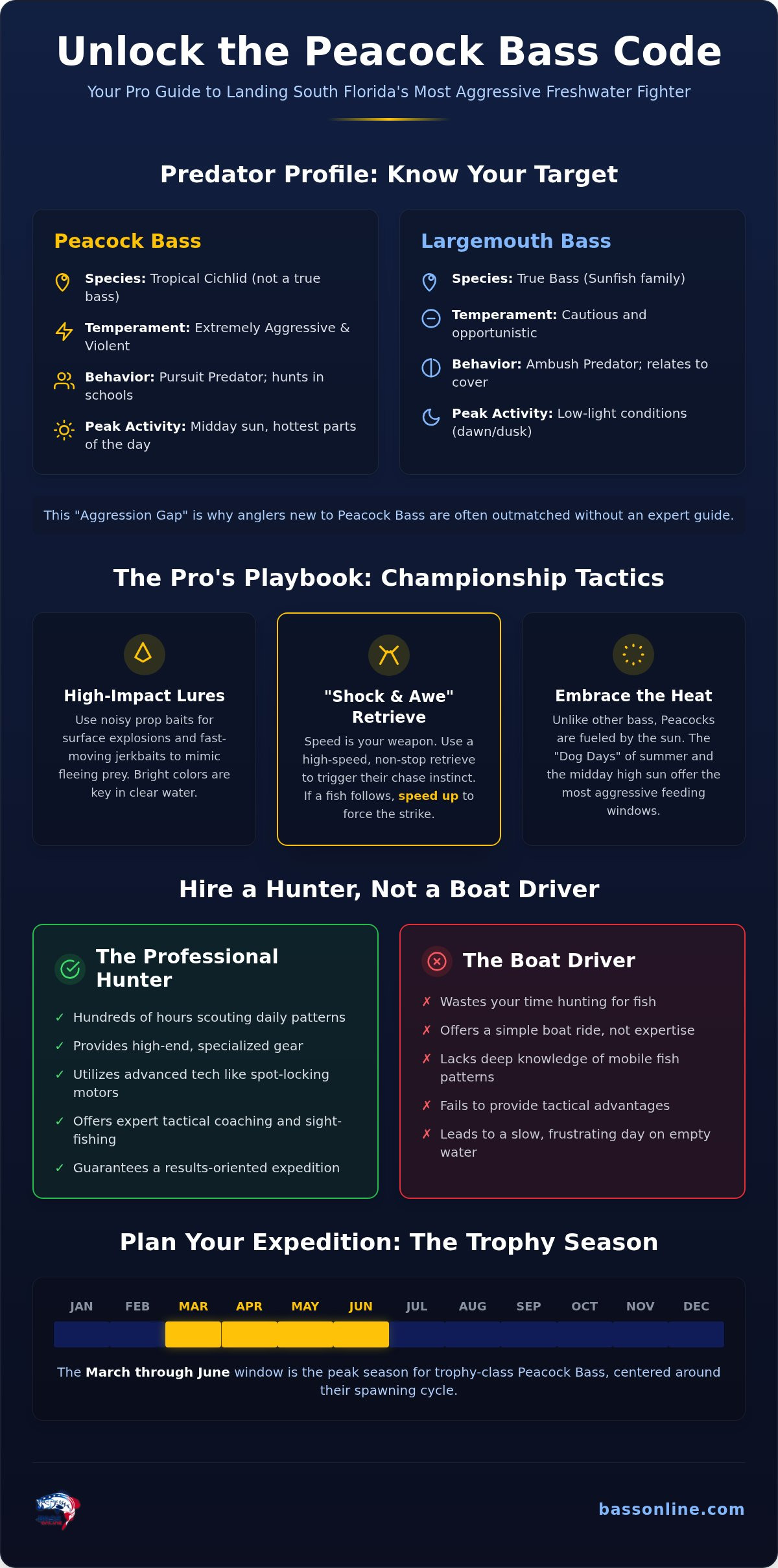
Let’s get one thing straight: if you go into this expecting a lazy day of flipping worms under a dock like you’re chasing Largemouth, you’re in for a rude awakening. The Peacock Bass isn’t even a bass. It’s a member of the Peacock bass (Cichla) genus, which makes it a tropical cichlid. While a Largemouth prefers to hide and wait for a meal to drift by, the Peacock is a pure pursuit predator. While their 20 pound Speckled cousins in the Amazon get all the glory in magazines, our domestic Butterfly Peacocks in Florida are pound-for-pound just as mean. They don’t just bite; they attack with a level of violence that snaps lines and bends hooks. This “Aggression Gap” is why most newcomers find themselves outmatched without a seasoned Peacock Bass fishing guide to coach them through the strike.
To better understand this concept and see these predators in action, watch this helpful video:
The Biology of a Fighter
When you’re out on the water, you’ll notice the big males often sport a prominent nuchal hump on their heads. This isn’t just for show; it’s a sign of dominance and high testosterone during the spawning cycle. Unlike our domestic bass that get lockjaw when the sun gets high, Peacocks have a high-speed metabolism fueled by heat. They feed most aggressively during the hottest parts of the day. If you aren’t out there when the sun is beating down, you’re missing the peak window. Their hunting style is relentless. They’ll often school up to corral baitfish against a seawall or shoreline, creating a chaotic surface explosion that requires a professional eye to spot before the opportunity vanishes.
The Advantage of Professional Scouting
Navigating the maze of South Florida’s canal systems is a challenge even for locals. A professional Peacock Bass fishing guide doesn’t just go fishing; we spend hundreds of hours scouting daily movement patterns. These fish are highly mobile. They might be on a bridge piling at 10:00 AM and a mile down the canal by noon. We use high-end tech and spot-locking trolling motors to hold position in heavy wind, ensuring you have the perfect angle for a sight-fishing shot. For a deeper dive into how these fish behave in our local waters, check out this detailed guide on Peacock Bass Florida. Identifying a trophy fish from a dink in shifting light takes years of field-tested training. We help you read the shadows and the push of the water that signals a big fish is stalking your lure. That’s the level of expertise we bring to every charter.
Mastering the Hunt: Tactics and Gear Your Guide Should Provide
Speed is your greatest ally when hunting these tropical predators. If you pause your lure out of habit, you’ve already lost the battle. The “Shock and Awe” presentation is a high-speed retrieve designed to trigger a Peacock’s territorial instinct. Unlike other species that might shy away from a fast-moving target, these fish are hardwired to chase down anything trying to escape. A professional Peacock Bass fishing guide provides the tactical edge by ensuring you don’t slow down when a fish flashes behind your bait. We teach you to speed up, forcing the fish to make a split-second decision to kill.
Lure Selection for Aggressive Strikes
Your guide’s deck should be loaded with a variety of tools for different water conditions. Prop baits are the gold standard for surface action; the spinning blades create a distinct “chugging” sound that drives Peacocks wild. When the surface bite cools, we switch to jerkbaits to mimic wounded baitfish in the middle of the water column. For fly anglers, placement is everything. Because these fish often hold tight to structure or deep in canal corners, having an expert on the polling platform is vital for getting your fly into the strike zone. The Florida Fish and Wildlife Conservation Commission notes that these fish are highly visual, so clear water and bright lures often produce the best results.
While artificials are thrilling, the live bait debate is settled by the results. Professional guides often prefer high-energy shiners when the goal is a trophy-class fish over five pounds. These aren’t your average bait shop minnows; they are large, active athletes that swim hard and signal distress. A big Peacock can’t resist the vibration of a struggling shiner, and this often leads to the biggest catch of the day. If you’re ready to see this action firsthand, you can reach out to our team to start planning your trip.
The Technical Tackle Setup
Don’t bring a knife to a gunfight. We use medium-heavy rods with fast action to provide the backbone needed for that initial “freight train” run. Your Peacock Bass fishing guide should have their drag settings dialed in perfectly; too loose and the fish reaches the rocks, too tight and the line snaps on the strike. We typically run 20lb braided line for its zero-stretch hook-setting power, often paired with a heavy fluorocarbon leader for abrasion resistance. For those targeting these fish on the fly, you must master the strip-set, which means using your stripping hand to pull the line tight against the fish rather than lifting the rod tip. Lifting the rod is a guaranteed way to lose a trophy in the first three seconds.
Choosing the Right Charter: What Separates a Pro from a Boat Driver
Hiring a Peacock Bass fishing guide shouldn’t feel like a roll of the dice. Too many anglers end up on a scenic tour because they didn’t know how to spot a part-time hobbyist. A professional guide is a tactical coach, not just someone who owns a boat and a cooler. They understand the nuances of the Florida Fish and Wildlife Conservation Commission profile on Peacock Bass and how that data translates to the specific canal or lake you’re fishing today. You need a leader who has the credentials, the high-end gear, and a track record of performance to back it up.
The Pro Guide Checklist
Start by looking for local authority. A guide who lives on these waters knows exactly where the fish move when a sudden cold front hits or when the water management district starts moving water. They should also offer significant educational value. If your guide just hands you a rod and nets the fish without explaining the why behind the spot, you’re missing half the experience. Before you book, scan through fishing charter reviews to see if past clients mention learning new techniques. A true professional wants you to leave the boat as a better angler than when you stepped on.
High-performance equipment is non-negotiable in this game. If you’re stepping onto a boat with frayed lines and rusted hooks, your trophy fish is already gone before you make the first cast. Look for modern bass boats equipped with the latest sonar and reliable outboards that won’t leave you stranded. Regarding the “No Fish, No Pay” promises you see online; be wary. Fishing has no certainties, but a professional-grade service offers a performance-based commitment to work harder than anyone else to put you on the bite. That’s the hallmark of a career angler who takes your success personally.
Communication and Expectations
Professionalism starts long before you hit the boat ramp. You should receive a clear pre-trip briefing at least 24 hours in advance. This should cover the latest weather conditions, specific meeting locations, and a list of what you need to bring. Safety is the silent priority that separates the pros from the amateurs. Every Peacock Bass fishing guide should have a clear safety protocol, including accessible life jackets, weather monitoring tools, and up-to-date emergency gear. Spotting a part-timer is easy; they usually have a day job and only fish when it’s convenient. A full-time pro is on the water over 200 days a year, tracking the fish every single day so you don’t have to guess where they are.
Preparation & Timing: Planning Your Peacock Bass Expedition
If you’re used to waking up at 4 AM to beat the sun, you can hit the snooze button on this trip. Unlike Largemouth that often retreat to deep cover when the sun gets high, Peacock Bass are solar-powered predators. They have a high-speed metabolism that kicks into overdrive as the water temperature rises. Your Peacock Bass fishing guide will likely suggest a later start because the best action happens when the sun is directly overhead. This provides the high-noon visibility required for elite sight-fishing, allowing you to spot a trophy fish before it ever sees your lure. If you are traveling from out of town to experience this unique fishery, you can discover Ocean Breeze to help coordinate your flights and hotel stays for the expedition.
The “Dog Days” of summer, typically July and August, are actually peak times for these tropical fighters. While other anglers are heading home to escape the heat, we’re usually just getting started. High water temperatures mean these fish have to eat constantly to maintain their energy levels. Clear water is your best friend here. When the canals are crystal clear, it creates a high-stakes game of hide-and-seek where your guide’s ability to spot movement in the shadows becomes your greatest advantage. If you’re ready to schedule your own high-energy outing, you can contact our team today to secure your dates.
The Seasonal Cycle
Timing your trip around the spawning season, which typically peaks from March through June, offers some of the most consistent action of the year. During this window, dominant males are easy to identify by their large nuchal humps and aggressive defensive behavior. Winter patterns are the only true challenge in South Florida. Because these are tropical fish, a sudden cold front that drops water temperatures below 60 degrees can shut down the bite instantly. We also keep a close eye on water levels. When the water is lower in the canal systems, it concentrates the fish in specific deep-water holes and under bridges, making them much easier to target in large numbers.
Your Personal Gear List
Your Peacock Bass fishing guide provides the boat and the tackle, but your personal gear determines your comfort and success. Polarized sunglasses are the single most important tool you can bring. I recommend bronze or copper-tinted lenses for freshwater because they provide the highest contrast against the sandy bottoms and structure where Peacocks hide. Without them, you’re fishing blind.
- UPF-Rated Apparel: You’ll be fishing during the hottest part of the day. Wear long-sleeve performance shirts and face gaiters to protect your skin without overheating.
- Hydration: High-noon fishing is a marathon. We keep plenty of water on board, and staying hydrated is key to maintaining your focus for those split-second strikes.
- Camera Gear: These fish are famous for their vibrant oranges, greens, and golds. Have your phone or camera ready for a quick photo before we release the fish to fight another day.
Why Bass Online is the Gold Standard for Peacock Bass Charters
Choosing a professional fishing guides is an investment in your success, and since 1997, Bass Online has been the undisputed leader in South Florida’s freshwater systems. We’ve built our reputation on over 20 years of market leadership and proven results. Our “Local Authority” model ensures that you aren’t just getting a boat ride; you’re getting an insider journey led by a Peacock Bass fishing guide who knows every bridge piling and seawall in their specific region. We don’t hire generalists. We hire specialized hunters who live and breathe these tropical waters every single day.
Our fleet matches the intensity of the fish we chase. You’ll step onto modern, high-performance bass boats equipped with the latest sonar technology and shallow-water anchors. These tools allow us to stay on the fish in the tightest canal corners and wind-blown shorelines where trophies hide. We’ve simplified the booking process to be as fast-paced as the fishing itself, getting you off the computer and into the action with just a few clicks.
The Bass Online Experience
We believe every trip should be a masterclass in tactical fishing. Our guides provide personalized coaching, helping you perfect the high-speed retrieves and sight-fishing techniques we’ve discussed. We’re committed to results, and our track record for landing 5lb+ Peacock Bass is backed by decades of performance metrics. If you want to see the variety of systems we fish, from the urban canals of Miami to the wild expanses of the Everglades, visit our explore page. We bring the gear, the knowledge, and the passion; you just bring the drive to win.
Ready to Book Your Hunt?
Deciding on a trip duration depends on your goals. A half-day trip is perfect for a high-energy session, while a full-day expedition allows us to cover more ground and target multiple schools of trophy fish. For those looking to share the excitement, we offer gift certificates that make the perfect surprise for any serious angler. Don’t settle for a standard boat charter. Join us for a professional expedition where the environment is raw, the fish are mean, and the victory is guaranteed by the best in the business. It’s time to put a trophy Peacock Bass in your hands.
Ready for Your Tropical Battle?
Landing a trophy Peacock Bass isn’t about luck; it’s about being on the right water at the right time with the right coach. You’ve learned that the midday heat is your greatest ally and that a high-speed “Shock and Awe” retrieve is what triggers these fighters to strike. Most importantly, you now know that a true Peacock Bass fishing guide is a tactical expert who tracks these fish daily to ensure you aren’t just driving around looking at scenery. You want the specialized gear and the local knowledge that turns a simple boat ride into a successful hunt.
We’ve been leading the industry since 1997, providing over 25 years of professional guiding experience to anglers from around the world. Our top-rated guides bring deep local expertise to every outing, and we include specialized high-performance tackle to make sure your equipment never fails when a five-pounder hits. Don’t leave your bucket-list trip to chance. Book Your Professional Peacock Bass Charter with Bass Online Today! It’s time to experience the raw power of South Florida’s most aggressive predator. I’ll see you on the water.
Frequently Asked Questions
Do I need a special license for a guided Peacock Bass trip?
Yes, you must have a valid Florida Freshwater Fishing License before we hit the water. Residents can pick up an annual license for $17.00, while non-residents have several options including a 3-day license for $17.00 or a 7-day license for $30.00. You can easily purchase these through the Florida Fish and Wildlife Conservation Commission (FWC) website or at most local tackle shops.
What is the best time of year to hire a Peacock Bass fishing guide?
The warmer months from March through June and September through December are the peak windows for the most consistent action. Because these are tropical fish, they are most active when the water is warm and the sun is bright. Hiring a Peacock Bass fishing guide during these months ensures you’re on the water when their metabolism is highest, leading to those violent surface strikes we’re after.
Will my guide provide all the fishing tackle and bait?
We provide all the high-end rods, reels, and artificial lures needed for your expedition. If you decide to use live shiners, which are the most effective bait for trophy fish, there is typically an additional cost of $8 to $20 per dozen. Your guide handles all the bait logistics so the boat is fully stocked and ready for action when you arrive at the ramp.
Can I keep the Peacock Bass I catch on a guided trip?
Florida regulations allow a daily bag limit of two Butterfly Peacock Bass, but only one of those can be 17 inches or longer. It’s important to remember that it is illegal to kill or possess any Speckled Peacock Bass. While you can keep your legal limit, we strongly encourage catch and release to protect the fishery and ensure trophy fish are there for the next angler.
Is Peacock Bass fishing suitable for children or beginners?
This is an ideal species for kids and novices because the action is fast and the catch rates are high. On a typical urban canal trip, it’s common to boat between 25 and 60 fish, which keeps everyone on the boat engaged and excited. Your Peacock Bass fishing guide will provide all the necessary coaching to help a beginner master the retrieve and land their first tropical prize.
What happens if the weather is bad on the day of my charter?
Safety is our top priority, so we’ll reschedule or cancel the trip if there’s a threat of lightning or severe tropical storms. High winds are usually manageable with our modern boats and spot-lock technology, but a sudden cold front can shut down the bite. If the water temperature drops significantly, we’ll discuss the best options to make sure you still have a successful day.
How much should I tip my Peacock Bass fishing guide?
The standard tip for a professional fishing guide is between 15% and 20% of the total trip cost. Tipping is a great way to show your appreciation for the hours of scouting, tackle prep, and expert coaching provided throughout the day. It’s always at your discretion based on the quality of the service and the effort your guide puts into making the trip a success.
What is the difference between a half-day and full-day guide trip?
A half-day trip lasts 4 hours and is perfect for a high-intensity session in the urban canal systems where fish are concentrated. An 8-hour full-day trip gives us the time to explore deeper into the Everglades or hit multiple locations to hunt for a trophy over five pounds. Full days are the best choice for serious anglers who want to maximize their time in the field and see everything the system has to offer.

Article by
Mr Bass
Todd Kersey, widely known as Mr. Bass by Field & Stream, is a professional angler, accomplished author, and dedicated philanthropist with a lifelong passion for bass fishing. Armed with a degree in Outdoor travel, Mr. Bass has expertly combined his knowledge with his practical fishing experience to become one of the most respected names in the bass fishing, his deep understanding of bass habitats, and fish behavior has earned him numerous accolades as a asset of the sport. Serving 8 years as FWC Stakeholder Chairperson. Leading and passing cutting-edge legislation, such as the Black Bass Management plan, and successfully building, passing, and financing the Trophy Catch program. As CEO, he is committed to giving back to the community through his philanthropic efforts. He supports a variety of causes, especially those centered around physical disabilities. Through his advocacy, his mentorship programs inspire anglers to engage in fishing stewardship, helping to raise more than $ 18 million in donations. Mr. Bass continues to inspire anglers and outdoor enthusiasts alike with his commitment to the sport and the world around him.