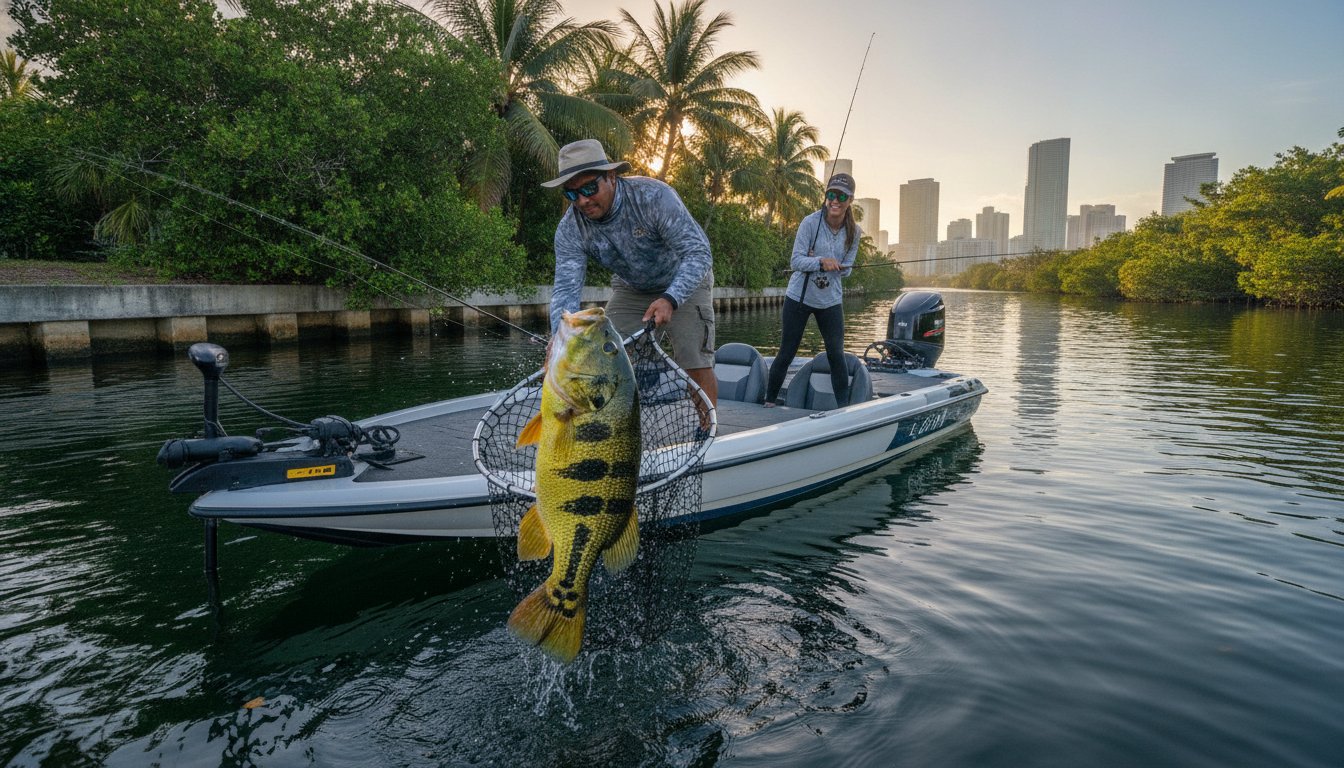

What if I told you that the hardest-hitting, most colorful trophy fish in North America is currently swimming in a concrete canal right behind a Miami airport? It sounds wild, but Miami Peacock Bass fishing offers a world-class experience that rivals any remote jungle expedition. You’ve likely spent hours staring at maps, wondering which neighborhood waterway holds the big ones or if you should be throwing topwater lures or live shiners. I understand the frustration; these urban systems are a complex maze and these exotic predators don’t play by the same rules as your local largemouth.
In this guide, I’m sharing the field-tested strategies our captains have refined over decades on the water. You’ll learn exactly how to trigger that famous aggressive strike and where to find trophy Butterfly Peacocks when the South Florida sun is at its peak. We’re going to break down the best seasonal patterns, essential gear setups, and the specific structure types that hold the biggest fish in the city. By the time we’re done, you’ll have the confidence to turn a simple canal bank into your own personal urban safari.
Key Takeaways
- Learn why the “Heat Rule” is your best friend, as trophy Peacock Bass become most active when the South Florida sun is at its peak intensity.
- Discover why domestic golden shiners are the ultimate tactical advantage and which topwater poppers trigger the most aggressive strikes in the canals.
- Master the navigation of complex urban waterways like the Airport Lakes and Snapper Creek to maximize your success during a Miami Peacock Bass fishing expedition.
- Understand the aggressive bedding behavior of the spring spawn to land a true Butterfly Peacock trophy while mastering the fight of these powerful exotics.
- See how professional guide insights and high-speed bass boats cut through the learning curve of the “urban jungle” to put you on fish faster.
The Exotic Appeal of Miami Peacock Bass Fishing
You don’t have to pack a passport or fly to the Amazon to experience the raw power of a jungle predator. Right here in South Florida, we have a world-class exotic fishery that rivals anything you’ll find in South America. The Butterfly Peacock Bass was introduced to the region in 1984 to help control invasive forage fish, and it has since turned the local waterways into a high-stakes arena for anglers. Known scientifically as Cichla ocellaris, this specific Peacock Bass species has adapted perfectly to our climate, creating a unique urban safari where you can land a trophy fish while hearing the roar of jets taking off from Miami International.
Miami Peacock Bass fishing is unlike any other freshwater pursuit in the country. The city’s massive network of man-made canals acts as an artificial Amazonian habitat, providing the deep, limestone-lined corridors and warm water these tropical fighters need to thrive. When you’re out on the water with us, you’ll see these vibrant fish patrolling seawalls, bridge pilings, and culverts. They aren’t shy, they aren’t subtle, and they certainly don’t give up easily. Expect explosive topwater strikes that sound like a bowling ball hitting the water and relentless, drag-peeling runs that will test every bit of your tackle.
To better understand the intensity of these fish, watch this helpful video:
A Tale of Two Bass: Peacock vs. Largemouth
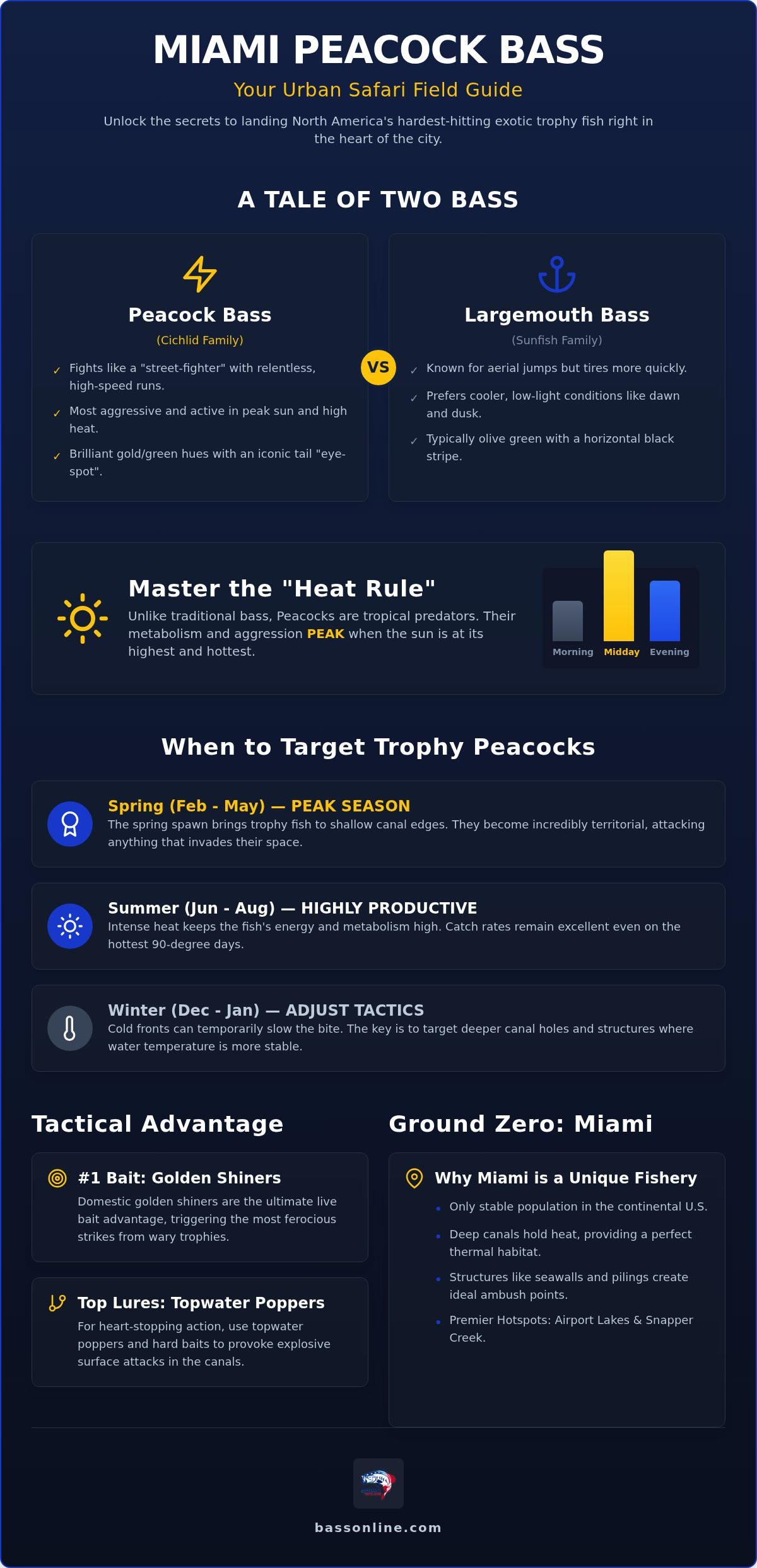
One of the first things I tell my clients is that a Peacock Bass isn’t actually a bass at all; it’s a large cichlid. This biological difference is why they fight so differently than the largemouth you’re used to. While a largemouth might give you a few good jumps and then tire out, a Peacock is a street-fighter. They’re the bullies of the canal, known for their extreme aggression and high-speed bursts. You can identify them by their brilliant gold and green hues, three vertical black bars, and the iconic "eye spot" on their tail, which mimics a larger eye to confuse predators. If you want to learn more about the different fish we target, check out our breakdown of Florida species.
The Urban Fishery: Why Miami is Ground Zero
Miami is the only place in the continental United States where these fish have established such a dominant and stable population. The primary reason is the thermal advantage of our deep-cut canals. These waterways hold heat during the winter, preventing the water temperatures from dropping below the Peacock’s survival threshold. The architecture of the canals also plays a huge role. Concrete seawalls, rip-rap rocks, and underwater ledges provide elite ambush points. For anglers visiting Miami, the accessibility is unbeatable. You can step off a plane and be casting for a five-pound trophy in under thirty minutes. It’s a rugged, results-driven fishery that exists right in the heart of the city.
Seasonal Patterns: When to Target Trophy Peacocks
If you’re used to waking up at 4:00 AM to catch the morning bite, you can throw that alarm clock out the window. Miami Peacock Bass fishing follows a completely different set of rules than traditional bass fishing. These fish are tropical imports, and their metabolism is hard-wired to the sun. While other species shut down when the mercury climbs, Peacocks are just getting started. This is what we call the "Heat Rule," and it’s the foundation of a successful urban safari.
From late February through May, we see the most intense action of the year during the spring spawn. This is when Florida’s Butterfly Peacock Bass move into the shallow canal edges to guard their nests. They become incredibly territorial, attacking anything that enters their space with a ferocity that’s unmatched in freshwater. Summer is equally productive. Even on 90-degree days in July and August, the catch rates remain high because the intense heat keeps their energy levels peaked and their hunger constant.
Winter is the only time we really have to adjust our tactics. A sudden cold front can temporarily slow the bite, so we target deeper canal holes and bridge pilings where the water temperature stays stable. If you’re planning a trip during the cooler months, it’s a good idea to check the latest field reports to time your outing between these weather shifts for the best results.
Decoding the Nuchal Hump and Spawning Aggression
During the spawning season, you’ll notice male Peacocks developing a prominent, fatty "bump" on their forehead. This is the nuchal hump. It’s a hormonal signal of dominance and peak physical condition. When a male has a full hump, he’s at his most aggressive and will defend his territory against any perceived threat. Sight-fishing for these bedding pairs is a massive thrill, but it requires a disciplined approach. We focus on triggering a reaction strike by repeatedly placing a lure or bait in their "strike zone" until they can’t stand it anymore. It’s high-stakes, visual fishing at its finest.
Daily Feeding Windows: Chasing the Sun
Peacocks are visual hunters that rely on bright light to ambush schooling forage. I always tell my clients to enjoy a late breakfast because the bite rarely gets going before the sun is high enough to penetrate the water column. The real "magic hour" in Miami is usually between 10:00 AM and 2:00 PM. This is when the water is warmest and the fish are most active. Optimal water temperature for peak Peacock Bass activity is consistently above 75°F. If the water is cooler than that, the fish tend to hunker down and wait for the sun to do its job.
Tactical Breakdown: Baits, Lures, and Gear for 2026
To succeed at Miami Peacock Bass fishing, you have to understand that these fish aren’t just strong; they’re violent. They don’t just bite your lure; they try to murder it. To handle that kind of aggression, your gear must be up to the task. We don’t use light tackle here unless we’re looking for heartbreak. I always recommend a 7-foot medium-heavy rod with a fast action tip. This setup gives you the backbone needed to turn a big Peacock’s head before it dives under a bridge piling or into a submerged culvert. You’ll want a high-quality 20 to 30 pound braided line because the concrete seawalls in these canals will shred monofilament in seconds.
For those looking for the most effective Peacock Bass Fishing Tips, start with the basics of presentation. Whether you’re using live bait or lures, your goal is to trigger a predatory response. These fish are visual hunters, and they react to speed and erratic movement. If your bait looks like it’s trying to escape, a Peacock will chase it down just to prove it can. It’s a game of chicken where the fish usually wins if you aren’t prepared for the strike.
Live Bait vs. Artificials: The Guide’s Perspective
I’ll be honest with you: domestic golden shiners are the ultimate "cheat code" for this fishery. If you want a high-volume day or you’re bringing a beginner along, live bait is the way to go. There’s nothing like seeing a shiner get nervous right before a five-pound Peacock explodes on it. However, if you crave the challenge of artificials, topwater poppers and jerkbaits are king. The trick is the "rip-and-pause" retrieve. You want to move that lure fast and then stop it dead. Most strikes happen the second you stop moving. For a deeper look at the specific lures we’re using this season, you can explore our Outdoor Blog for more detailed reviews.
The Fight: Handling and Landing Exotic Fish
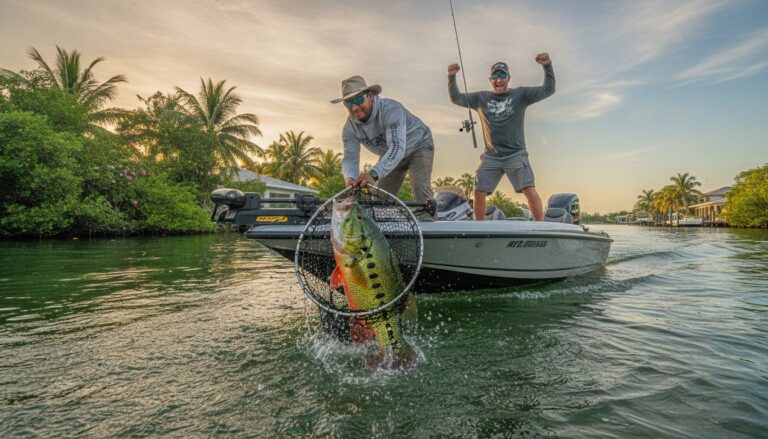
The first five seconds of the fight determine if you’re going to land that trophy. When a Peacock hits, keep your rod tip high. If you drop the tip, the fish will use its power to drive straight into the nearest structure, and it’s game over. These fish have incredible stamina, so don’t expect them to give up at the boat. When it comes to landing them, I prefer a rubberized net or a pair of lip-grippers. Peacock Bass possess razor-sharp gill plates that can easily slice through your skin, so never try to gill-rake them or put your fingers near the plates during the unhooking process. Safe handling keeps the fish healthy and your fingers intact for the next cast.
Miami’s Premier Canal Systems and Hotspots
Miami is a sprawling maze of over 200 miles of canals, but not all water is created equal. To find the big ones, you have to target areas with high oxygen levels and consistent forage. These fish aren’t randomly scattered; they congregate where the environment gives them a tactical advantage. For the latest updates on where the bite is moving this week, check our Miami Fishing Locations page. We spend every day on these waters, and the patterns can shift based on water levels and wind direction.
The most successful Miami Peacock Bass fishing trips often focus on the southern and central canal systems. These areas have the most established populations and the deepest water, which provides a thermal refuge during the occasional winter cold snap. Whether you’re fishing under the shadow of the airport or winding through a residential neighborhood, the key is finding water with movement. If the water is stagnant, the fish are usually lethargic. If it’s moving, they’re hunting.
Airport Lakes: The Gateway to Trophies
The Airport Lakes, specifically the Blue Lagoon, are legendary for a reason. This system sits right against Miami International Airport, and the construction of the runways created unique underwater contours you won’t find anywhere else. You’ll find deep water holes that serve as sanctuaries and current breaks where predators wait to ambush schools of tilapia. For a more exhaustive breakdown of this specific area, read our Airport Lakes fishing guide. The secret here is targeting the "drop-offs" near the runway edges. Peacocks love to sit on the ledge where the shallow flats fall into the deep pits, waiting for the current to push bait right to their nose.
Canal Strategy: Fishing the "Street" Structure
When you’re deep in the residential canals like Snapper Creek (C-2) or Black Creek, you have to think like a street fighter. This isn’t about lily pads and timber; it’s about bridges, culverts, and concrete. Bridges and culverts are the lifeblood of the canal system. They create bottlenecks that accelerate current flow, which acts as a dinner bell for hungry Peacocks. I always look for the "eddy" or the calm water right behind a bridge piling. That’s where the biggest fish in the school will sit to conserve energy while waiting for a meal to drift by.
Don’t ignore the miles of residential docks and seawalls. Big resident males love the shade provided by a backyard boat lift. I like to skip a jerkbait or a fly-and-bubble rig as far under the structure as possible. Precision matters. If you’re six inches off the seawall, you might get a look, but if you’re scraping the concrete, you’ll get the strike. Covering water is essential. We often run five to ten miles of canal in a single day to find the most active schools. If you’re ready to see these legendary urban hotspots for yourself, reach out to our team to get on the water.
Why a Guided Charter is the Ultimate Miami Advantage
You can certainly walk the banks of a canal with a spinning rod, but you’ll only see a fraction of what this fishery has to offer. Miami Peacock Bass fishing is a high-speed game of mobility and local intelligence. While the fish are abundant, they’re also nomadic. A school that was crushing bait under a bridge yesterday might move two miles downstream today based on a slight change in water flow. When you’re on a boat with a pro, we cut that learning curve down to zero. We save you the years of trial and error it takes to figure out which culverts are active and where you can actually launch a boat in this urban maze.
One of the biggest hurdles for DIY anglers is the logistics of live bait. As I mentioned earlier, golden shiners are the ultimate tactical advantage, but they’re notoriously difficult to source and keep alive in the Florida heat without a professional-grade aeration system. We handle all of that for you. We provide the specialized tackle, the freshest bait, and the high-speed bass boats necessary to cover ten or fifteen miles of canal in a single day. This allows us to "run and gun" until we find the most aggressive trophy fish in the system. To see who you’ll be fishing with, you can meet our Professional Fishing Guides who live and breathe these South Florida waterways.
The Bass Online Difference: Expertise Since 1997
We’ve been leading expeditions into the urban jungle since 1997, and that longevity matters. Our captains aren’t just boat drivers; they’re local authorities who understand the subtle seasonal shifts of the Miami canal network. We know which seawalls hold heat in the winter and which bridges create the best current breaks during the spring spawn. Safety and comfort are also top priorities. Navigating an urban environment with heavy boat traffic and tight canal bends requires a seasoned hand. Our reputation is built on thousands of successful trips, and you can see the results for yourself by reading our latest Fishing Charter Reviews.
Booking Your Adventure: What to Bring
When you’re ready to jump into the action, you don’t need much to have a world-class day. I always tell my clients that high-quality polarized sunglasses are the most important tool in their bag. You can’t catch what you can’t see, and sight-fishing for a five-pound Peacock is much easier when you can cut through the surface glare. Make sure to pack plenty of sun protection and a camera; the vibrant oranges and greens of these fish are something you’ll want to document. Before we push off the dock, make sure you have your Florida Fishing License ready to go for 2026.
A Miami Peacock trip is more than just a fishing outing; it’s a bucket-list experience that puts you face-to-face with one of the most beautiful and aggressive predators on the planet. Whether you’re a seasoned pro or a first-timer, there’s nothing that beats the thrill of an exotic strike in the heart of the city. We’ve got the gear and the knowledge to make it happen, so let’s get out there and find your trophy.
Conquer the Urban Jungle in 2026
Miami Peacock Bass fishing is a high-stakes hunt where exotic biology meets street-smart tactics. We’ve covered why the "Heat Rule" is your best friend on the water and how the right gear setup prevents heartbreak against concrete seawalls. From the deep contours of the Airport Lakes to the winding maze of Snapper Creek, success comes down to understanding the aggressive nature of these tropical transplants and staying mobile to find the active schools.
Don’t waste your limited time on the water trying to guess where the fish are hiding. We’ve been leading expeditions since 1997, and our top-rated captains are frequently featured on national outdoor networks for their local expertise. Every outing is an all-inclusive experience where we provide the high-end rods, reels, and specialized tackle you need to win the fight. We take the guesswork out of the logistics so you can focus entirely on the strike.
If you’re ready to experience the raw power of a trophy Butterfly Peacock, it’s time to secure your spot on the boat. Book your Miami Peacock Bass adventure with Bass Online today!
The "urban jungle" is calling, and there’s a trophy waiting for you behind the next bridge piling. Let’s get out there and make it happen.
Frequently Asked Questions
Do I need a special license for Peacock Bass fishing in Miami?
You need a standard Florida freshwater fishing license to target Peacock Bass in any of Miami’s canal systems. This requirement applies to both residents and visitors, though the specific permits vary based on your residency and the duration of your trip. You can purchase these easily through the Florida Fish and Wildlife Conservation Commission (FWC) website or at most local sporting goods stores before we hit the water.
What is the best time of year to catch Peacock Bass in Florida?
The best time of year for Miami Peacock Bass fishing is during the spring spawning months from late February through May. While you can catch them year-round in South Florida, the spring window offers the most aggressive territorial strikes as fish move into the shallow canal edges. The summer months are also highly productive because these tropical fish remain active even when temperatures climb into the 90s.
Are Peacock Bass in Miami good to eat or catch-and-release only?
While Butterfly Peacock Bass are edible and often compared to snapper in flavor, we strongly recommend catch-and-release to preserve this world-class trophy fishery. These fish grow slowly and are highly susceptible to overfishing in urban canal systems. Letting them go ensures that the population remains healthy and that the next angler has the chance to experience the same heart-pounding fight you just enjoyed.
Can I catch Peacock Bass from the shore in Miami?
You can catch Peacock Bass from the shore in Miami, but access is often the biggest challenge for land-based anglers. Many of the most productive canal banks are bordered by private property or gated communities. Using a boat allows you to reach bridge pilings, deep culverts, and remote seawalls that are impossible to hit from the bank, significantly increasing your chances of finding active fish.
What is the average size of a Peacock Bass in the Miami canals?
The average Peacock Bass in Miami typically weighs between one and three pounds, though they are much stronger for their size than a largemouth. Landing a fish over five pounds is considered a trophy catch in Florida’s canal systems. These larger specimens are often older males with prominent nuchal humps that have survived several seasons of intense competition in the "urban jungle."
What kind of lures work best for Miami Peacock Bass?
Small jerkbaits and topwater poppers are the most effective artificial lures for triggering a violent reaction strike. You want lures that mimic the erratic movement of a wounded baitfish, as Peacocks are visual hunters that respond to speed and sound. If you prefer a more subtle approach, a "fly-and-bubble" rig allows you to present small streamers to skittish fish while still maintaining enough weight for long casts.
Are Peacock Bass more aggressive than Largemouth Bass?
Peacock Bass are significantly more aggressive than largemouth bass and will often chase a lure across the entire canal just to kill it. Their strike is explosive, and they don’t tire as quickly as their northern cousins. While a largemouth might give up after a few jumps, a Peacock will continue to make powerful, drag-screaming runs until it is safely in the net.
How much does a guided Peacock Bass fishing trip in Miami cost?
The cost of a guided trip depends on the duration of the outing and the number of anglers in your party. We offer half-day and full-day expeditions that include all the high-end tackle, fuel, and professional expertise needed for a successful day. To get accurate information for your specific dates and group size, please check our current availability and trip options on the booking page.

Article by
Mr Bass
Todd Kersey, widely known as Mr. Bass by Field & Stream, is a professional angler, accomplished author, and dedicated philanthropist with a lifelong passion for bass fishing. Armed with a degree in Outdoor travel, Mr. Bass has expertly combined his knowledge with his practical fishing experience to become one of the most respected names in the bass fishing, his deep understanding of bass habitats, and fish behavior has earned him numerous accolades as a asset of the sport. Serving 8 years as FWC Stakeholder Chairperson. Leading and passing cutting-edge legislation, such as the Black Bass Management plan, and successfully building, passing, and financing the Trophy Catch program. As CEO, he is committed to giving back to the community through his philanthropic efforts. He supports a variety of causes, especially those centered around physical disabilities. Through his advocacy, his mentorship programs inspire anglers to engage in fishing stewardship, helping to raise more than $ 18 million in donations. Mr. Bass continues to inspire anglers and outdoor enthusiasts alike with his commitment to the sport and the world around him.