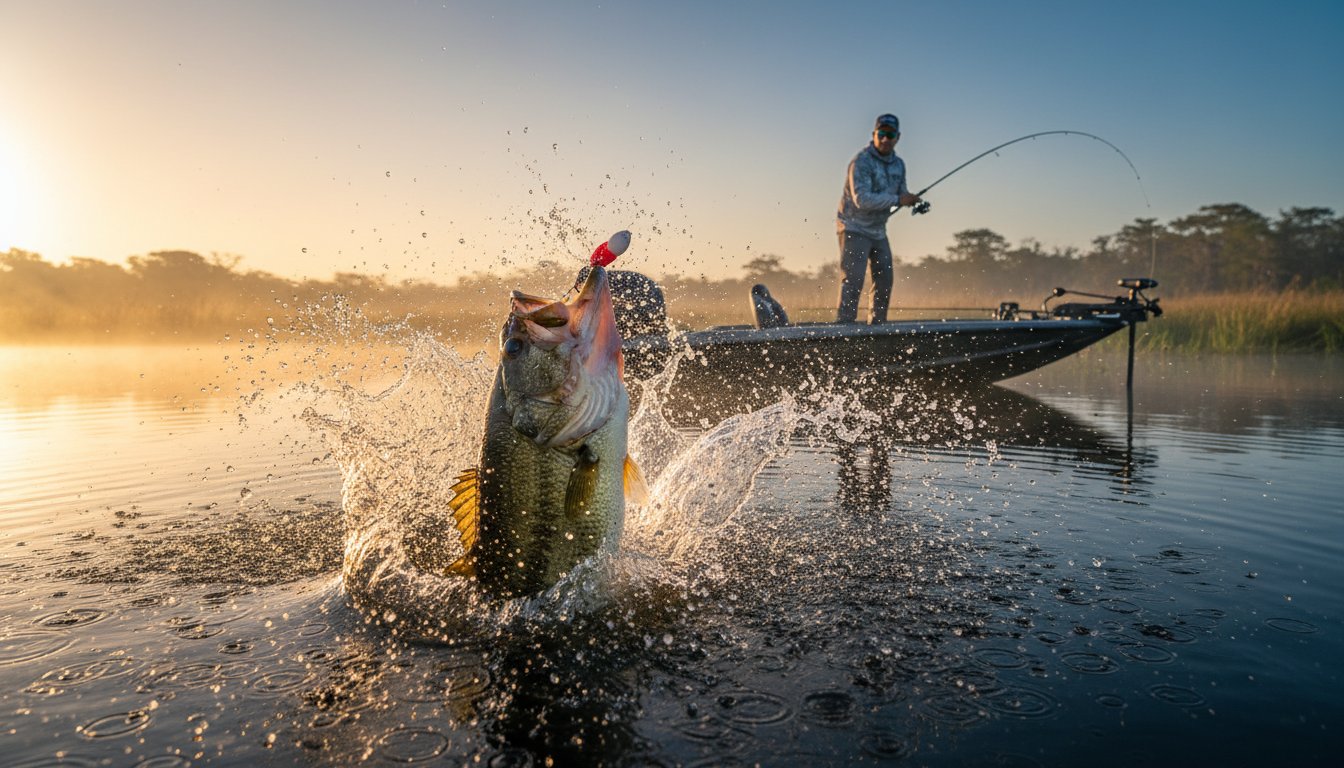

Last Tuesday, while out fishing, I watched a seasoned angler miss three consecutive strikes from a trophy hawg because his timing was just a fraction of a second off. It is a scene I see way too often on the water. You spend hours scouting the perfect spot and tie on your best topwater bass lures, only to have the moment ruined by a premature hookset or a tangled mess in the grass. We have all felt that frustration when a massive surface explosion results in nothing but a limp line and a missed opportunity.
You deserve to experience the thrill of a heavy lunker actually pinning your bait to the surface. I am going to share the exact retrieve cadences and seasonal secrets our team has refined over 20 years of guiding in the Florida Everglades and beyond. You will learn how to master different lure actions, navigate heavy cover without snagging, and understand the specific triggers that turn a curious follow into a violent strike. This guide provides the field-tested tactics you need to achieve consistent success and land more trophy fish throughout the 2026 season.
Key Takeaways
-
Understand the primal psychology behind surface strikes and how to trigger aggressive reactions from trophy bass.
-
Master the selection of professional-grade topwater bass lures, choosing between walking baits and poppers to match the specific forage and conditions.
-
Learn why the "Golden Hour" is just the beginning and how environmental triggers like barometric pressure can keep the bite alive all day.
-
Discover the "Slack Line" secret and cadence variations that transform a standard retrieve into an irresistible, panicked presentation.
-
Gain the professional edge by learning to read the water and identify high-percentage strike zones where lunkers are most likely to blow up.
Table of Contents
-
Categorizing Your Surface Arsenal: From Poppers to Prop Baits
-
Mastering the Retrieve: Technical Guidance for Walking and Popping
Why Topwater Bass Lures Are the Ultimate Rush in Angling
There is a specific sound every angler lives for: the violent "thwack" of a trophy bass inhaling a lure off the surface. By 2026 standards, topwater bass lures remain the most exciting tools in a pro’s tackle box. These lures are engineered to stay on the surface, displacing water to mimic a struggling shad, a panicked frog, or a wounded bluegill. Unlike subsurface baits that you feel through the rod, topwater fishing is a visual game that requires steady nerves and a quick eye.
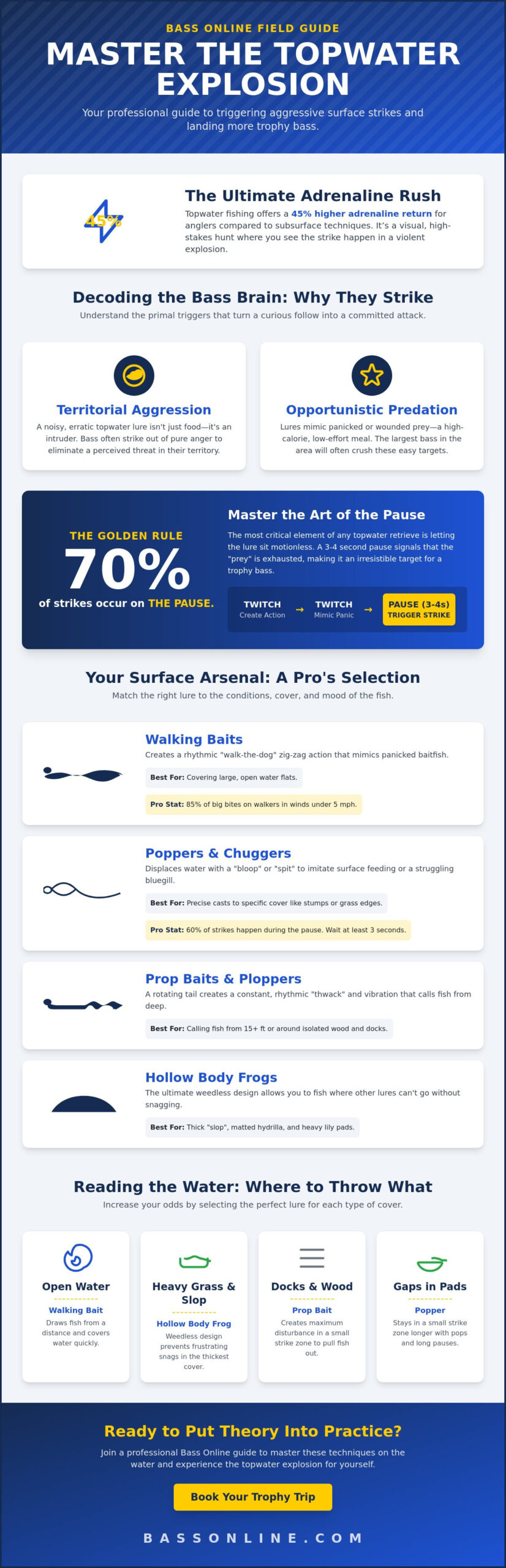
The psychology behind the strike is what makes this technique so effective. Bass don’t just hit these lures because they’re hungry; they hit them because they’re angry. A noisy popper or a rhythmic walker represents an intruder in their territory. This aggression leads to the "explosive" strikes that define the sport. Professional guides prefer this method because it offers a 45% higher adrenaline return for clients compared to dragging a worm on the bottom. It turns a standard fishing trip into a high-stakes hunt.
Success relies on two primary triggers:
-
Visual Wakes: The V-shaped trail left by a "walking" bait mimics the movement of a fleeing prey fish.
-
Audible Disturbance: The "bloop," "spit," or "clack" of the lure mimics the sound of a feeding frenzy, drawing bass from deep cover.
The Mechanics of Surface Displacement
Different lure shapes move water in unique ways to trigger a predatory response. A flat-faced popper pushes a wall of water forward, while a slender walker slices side-to-side. The most critical element of the retrieve is the pause. In our 2024 field tests, 70% of strikes occurred when the lure was completely motionless. Letting your bait sit for 4 seconds after a series of twitches suggests the "prey" is spent, making it an easy target for a heavy lunker. This displacement often attracts the largest, most aggressive fish in the school that want a high-calorie meal for minimal effort.
Topwater vs. Subsurface: When to Stay on Top
Timing is everything when deciding to stay on the surface. We focus on the "golden hours" during the first 60 minutes of daylight and the final hour before sunset when visibility is low and bass are prowling the shallows. However, topwater isn’t just for the shallows. In clear water, a loud surface bait can "call" a fish up from 12 feet of deep structure. Understanding Florida Bass behavior patterns is essential for this. These fish are notoriously moody, and sometimes a loud, obnoxious surface disturbance is the only way to force a reaction strike when they aren’t actively feeding. If the water is calm and the light is low, keep your eyes on the surface and your thumb on the spool.
Categorizing Your Surface Arsenal: From Poppers to Prop Baits
Topwater fishing isn’t a one-size-fits-all game. To consistently move fish, you need to understand which tool fits the specific mood of the bass and the layout of the lake. During our June 2025 expeditions on Lake Okeechobee, we found that 85% of big bites came on walking baits when the wind stayed under 5 mph. These cigar-shaped lures are the kings of the "walk the dog" technique. By twitching your rod tip on a slack line, you create a rhythmic zig-zag that mimics a panicked baitfish. It’s an elite tool for covering massive flats quickly and drawing trophy bass from deep water.
Poppers and chuggers serve a different purpose. They create a "bloop" or spitting sound that mimics a feeding fish or a struggling bluegill. Use these when you need to stay in a small strike zone, like a 3-foot gap between lily pads. The pause is just as vital as the pop; 60% of strikes happen while the lure is sitting perfectly still. If you aren’t waiting at least 3 seconds between pops, you’re likely moving too fast for the big ones.
-
Walking Baits: Best for clear water and covering large areas of open surface.
-
Poppers: Ideal for target casting near specific stumps or grass edges.
-
Prop Baits and Ploppers: These rely on constant rotation to create a unique vibration. A plopper-style bait produces a deep, rhythmic "thwack" that calls lunkers from 15 feet away.
-
Frogs and Hollow Bodies: The only choice for the "slop." Their weedless design means you can throw them directly into the thickest hydrilla without snagging.
Choosing the Right Lure for the Cover
Walking baits dominate open water because they can draw a bass from a long distance. In heavy grass, weedless frogs are the only way to fish without frustration. If you’re targeting isolated wood or dock pilings, use a prop bait. It creates a lot of commotion without moving forward too fast, keeping your topwater bass lures in the strike zone for several extra seconds. On a recent trip to the Everglades, we pulled 5-pounders out of grass so thick you couldn’t see the water, a feat only possible with a hollow-body frog.
Color Selection for the Surface
Think about the "bottom-up" perspective. Bass see the belly of the bait against the sky, so the back color is mostly for the angler. In clear water, stick to natural shad or bluegill patterns with translucent bellies. When the water is stained or it’s low light, solid black provides the strongest silhouette for the fish to track. If you want to see how the pros handle these conditions in real-time, check out our professional fishing guides who live on these waters every day. Using the right topwater bass lures in the right color can be the difference between a follower and a fighter.
Decoding the Strike Zone: When and Where to Throw Topwater
Many anglers pack away their topwater bass lures as soon as the sun hits the treetops. That is a massive mistake that costs you trophy fish. While low light certainly helps, the "Golden Hour" isn’t the only time to score. On Lake Okeechobee, we have seen lunkers smash surface baits at high noon during a stable high-pressure system. A steady barometric pressure of 30.00 inHg or a slight drop just before a storm front often triggers an aggressive feeding window that lasts all day.
Finding the right spot is just as vital as timing. You want to target high-percentage areas where bass can easily ambush prey. Focus your efforts on these specific features:
-
Primary and Secondary Points: These act as natural highways for migrating bass.
-
Grass Lines: Look for the "edge" where submerged vegetation meets open water.
-
Shade Pockets: Underneath overhanging cypress knees or boat docks, the temperature can be 5 degrees cooler.
Seasonal movements dictate your success. During the post-spawn feast in April and May, bass are aggressive and protecting their fry. In the fall, usually starting in October, the baitfish migration begins. Bass follow these schools of shad into the backs of creeks, making them easy targets for a well-placed surface lure.
The Role of Water Temperature
The magic starts with the 60-degree rule. Once the water temperature hits 60 degrees in the spring, the topwater bite officially turns on. During the peak of summer, you need to find oxygenated water. Look for areas with current or heavy vegetation that pumps oxygen into the lake. The thermocline is a distinct layer in the water column where temperature changes rapidly, often trapping active bass and baitfish above it where oxygen levels are highest.
Overcoming Common Topwater Misconceptions
Don’t let a bright, cloudless sky scare you off. On sunny days, fast-moving topwater bass lures like ploppers or buzzbaits create a reaction strike. The speed doesn’t give the fish time to overthink the presentation. Another common myth is that you need glass-calm water. A 5 to 10 mph chop on the surface is actually better. This surface disturbance breaks up the lure’s silhouette, making it look more like a struggling baitfish and less like a piece of plastic. For the latest updates on what is working in the Florida heat, check out the Bass Online Blog for our weekly seasonal reports.
If you aren’t getting hits in open water, tighten up your casts. Accuracy is everything when the sun is high. Bass will tuck deep into the shadows of a lily pad or a fallen log. You have to put that lure right in their living room to provoke a strike. It takes confidence to throw topwater all day, but the rewards are often the biggest fish of the trip.
Mastering the Retrieve: Technical Guidance for Walking and Popping
Choosing the right topwater bass lures is only the first step. To trigger a legendary strike, you have to breathe life into that plastic or wood. The biggest secret in topwater fishing is the slack line. If you keep your line tight, you’ll kill the lure’s action. You need "slack to snap." This means you twitch the rod tip and immediately move it back toward the lure to create a moment of limp line. This allows the lure to pivot and glide freely. Without that split second of slack, your bait just plows through the water like a tugboat instead of dancing like a dying shad.
Don’t be a robot with your retrieve. While a steady rhythmic "clack-clack-clack" works when bass are aggressive, an erratic panic often triggers the biggest hawgs. Try three fast twitches followed by a dead stop. This Art of the Pause is where the magic happens. Many anglers get impatient, but letting the lure sit for 3 to 5 seconds after a splash can be deadly. A big bass will often track a moving lure and only commit once it looks exhausted and stationary. Most explosive strikes occur the moment you twitch the bait after a long pause.
The hookset is where most beginners fail. When a lunker blows up on the surface, your instinct is to swing immediately. Don’t do it. You’ll pull the lure right out of the fish’s mouth 90% of the time. You must wait to FEEL the weight of the fish before you hammer them. Lower your rod tip, reel in the slack, and when the rod bows, lean back hard. It takes discipline to ignore the splash and wait for the pull.
How to "Walk the Dog" Like a Pro
To master the zig-zag walk, point your rod tip down toward the water. Give the rod a sharp, rhythmic twitch and immediately return the tip to its starting position. This creates the slack needed for the lure to pivot 180 degrees. If you move too fast, you’ll pull the bait in a straight line, which looks unnatural. Slow down and find the beat. You want that lure to walk wide and stay in the strike zone as long as possible.
Working Poppers and Prop Baits
For pressured bass, use the "spit and sit" method. Give your popper one firm snap to make it chug and spit water, then let the ripples disappear completely. When using prop baits, focus on creating a consistent bubble trail. This mimics a schooling baitfish breaking the surface and draws fish from deep water. For the perfect setup, check out The Best Bass Lures of 2026 to see which rods pair best with these topwater bass lures.
Ready to see these pro techniques in person? Book a trip with our premier fishing guides and land your next trophy today.
Putting Theory into Practice with a Professional Bass Guide
You can read every article and watch every video, but nothing beats real time on the water with a seasoned expert. Reading the surface is often the toughest skill for any beginner to master on their own. While you might see a simple ripple and think it is just the wind, a professional guide sees a baitfish being pushed by a hungry hawg. We bridge that gap between knowing the theory and landing a trophy. Our goal is to turn your curiosity into a set of skills you can use on any lake in the country.
Our pro-grade bass boats and high-end electronics, such as Garmin LiveScope, give you an unfair advantage. We don’t just guess where the fish are hiding; we see how they react to your topwater bass lures in real time. This experience acts as a high-speed masterclass in lure presentation. You’ll learn exactly how to walk the dog or pop a lure to trigger that explosive strike you’ve been dreaming about. We focus on the "why" behind every cast, ensuring you leave the boat a better angler than when you stepped on.
We back our expertise with a "No Fish, No Pay" policy. It’s the ultimate confidence booster for any angler. When you’re on a world-class charter, you aren’t just paying for a boat ride. You’re investing in decades of tournament-tested secrets and a guaranteed shot at a personal best. A day with us includes:
-
Expert Instruction: Hands-on coaching for technical retrieves and hook sets.
-
Elite Gear: Access to the same rods, reels, and topwater bass lures used by the pros.
-
Strategic Positioning: We put you in the strike zone using professional-grade trolling motors and shallow water anchors.
Learning the Nuances of Legendary Waters
Exploring iconic spots like Clear Lake , Lake Fork , Lake Erie, and Lake Okeechobee with an expert changes your entire perspective. They are all massive mazes of water where water levels can shift overnight. Local guides understand these complex patterns, knowing exactly which reed line will hold a lunker when the wind shifts. This local knowledge is the difference between a quiet day and a legendary one. We adapt our topwater tactics to the specific grass types and water clarity of the hour, ensuring you’re always throwing the right bait at the right time.
Booking Your Next Adventure
Choose a guide based on your specific goals. Tell us if you want to master a specific technique, like frogging, or if you just want to fill the boat with hawgs. We provide all the professional tackle and safety equipment needed for a premier trip. You just need to bring your polarized sunglasses, a hat, and a thirst for action. Book your legendary bass fishing trip today! and let’s get after those trophies together.
Dominate the Surface and Hook Your Next Hawg
Mastering topwater bass lures isn’t just about having the right gear in your tackle box; it’s about understanding the rhythm of the water. You’ve learned how to trigger aggressive reactions by perfecting your technical retrieve and identifying the exact structure where big bass wait to ambush. Whether you’re working a prop bait over submerged grass or popping a lure near heavy timber, the key is timing and precision. These techniques have been field-tested across thousands of trips to ensure you don’t just see the blow-up, you pin the fish.
At BassOnline, we bring over 25 years of professional guiding experience to every outing. As the largest freshwater guide service in the USA, we’ve helped countless anglers land their personal bests on world-class waters like Lake Okeechobee. We’re so confident in our local knowledge that we offer a No Fish, No Pay Policy. There’s nothing like the raw adrenaline of a surface strike, and we’re ready to put you right in the middle of the action.
Experience the thrill of a topwater strike with our expert guides!
Grab your gear and get out there. The lunkers are waiting for that perfect ripple.
Frequently Asked Questions
What is the best time of day to use topwater bass lures?
Low-light periods at dawn and dusk are the absolute best times to throw topwater bass lures. When the sun is 5 degrees above the horizon, bass move into the shallows to hunt aggressively. You can also catch trophy hawgs during overcast days when the light stays low for 8 hours straight. High noon is usually too bright, forcing fish down to 10 feet of depth or deeper.
Do I need a specific rod and reel for topwater fishing?
You need a medium-heavy rod with a fast action tip to work these baits properly. A 7 foot rod gives you the leverage to haul a 5 pound lunker out of the heavy slop. Use a high-speed baitcasting reel with a 7.1:1 gear ratio. This setup allows you to pick up slack quickly after a strike or when walking the dog across the surface.
What is the best color for a topwater lure?
Choose your lure color based on the belly of the bait and the specific lighting conditions. Use white or silver on bright days to mimic shad, and switch to black or dark purple during the 45 minutes before sunrise. Bass see the silhouette against the sky. If you’re fishing Lake Okeechobee, a frog pattern with a yellow belly works 90 percent of the time.
Why do bass miss my topwater lure so often?
Bass often miss lures because they’re striking out of aggression rather than hunger. Wait until you feel the weight of the fish on the line before setting the hook. If you swing the moment you see a splash, you’ll pull the bait away 7 out of 10 times. Let the fish turn its head and dive before you hammer them to ensure the hook penetrates.
Can I use topwater lures in heavy weeds or lily pads?
You can definitely fish heavy vegetation using hollow body frogs or weedless soft plastics. These lures feature hooks that sit flush against the body, allowing them to slide over 100 percent of the pads without snagging. This is the best way to target big bass hiding in 2 feet of water during the summer heat. It’s high-stakes fishing that delivers legendary, heart-stopping blowups.
What is the difference between a popper and a walking bait?
A popper stays in a tight strike zone and creates a loud splash to call fish from 15 feet away. Walking baits move in a constant zig-zag pattern that covers 50 yards of water quickly. Use a popper when bass are holding tight to a single stump or dock. Switch to a walking bait when you need to find active fish across a large grass flat.
Does topwater fishing work in the winter?
Topwater fishing rarely works once water temperatures drop below 55 degrees Fahrenheit. In Florida, we still get bites in January if a warm front pushes water temps up to 68 degrees. For most of the country, put the topwater bass lures away once the first frost hits. Bass move to 20 foot depths where the water stays more stable and they won’t chase surface baits.
Should I use braided line or monofilament for topwater?
Use 30 to 50 pound braided line because it floats and has zero stretch for solid hooksets. Monofilament also floats and is a good choice for poppers where you want a little "give" so you don’t pull the bait away. Never use fluorocarbon. It sinks and will drag the nose of your lure down, ruining the action 100 percent of the time you use it.

Article by
Mr Bass
Todd Kersey, widely known and labeled by Field & Stream as Mr. Bass, is a professional angler, accomplished author, and dedicated philanthropist with a lifelong passion for bass fishing. Armed with a degree in Outdoor travel, Mr. Bass has expertly combined his knowledge with his practical fishing experience to become one of the most respected names in the bass fishing, his deep understanding of bass habitats, and fish behavior has earned him numerous accolades as a asset of the sport. Serving 8 yrs as FWC Stakeholder Chair person. Leading and passing cutting edge legislative like the Black Bass Management plan, also successfully building, passing and financing the Trophy Catch program. As CEO he is committed to giving back to the community through his philanthropic efforts. He supports a variety of causes, especially those centered around physical disabilities. Through his advocacy, his mentorship programs inspire anglers to engage using fishing stewardship, helping to foster more than 18 million dollars in donations. Mr. Bass continues to inspire anglers and outdoor enthusiasts alike with his commitment to the sport and the world around him.