Top Rated
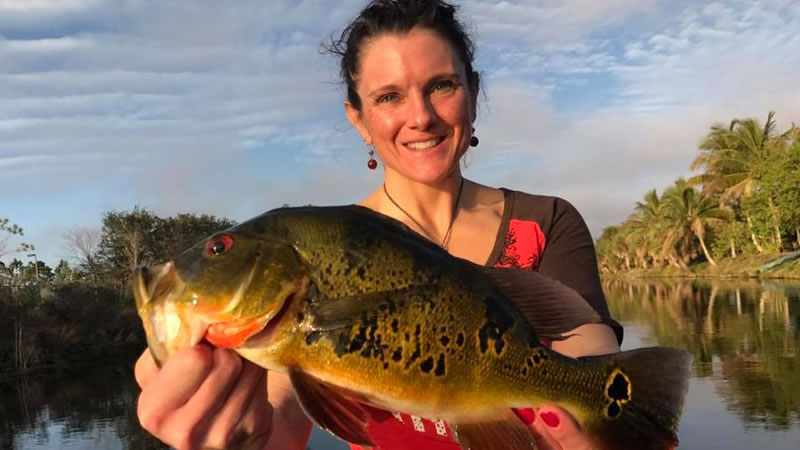
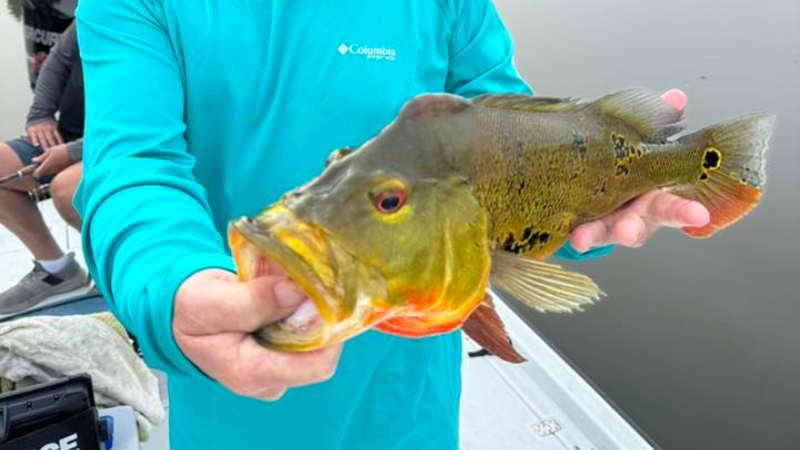
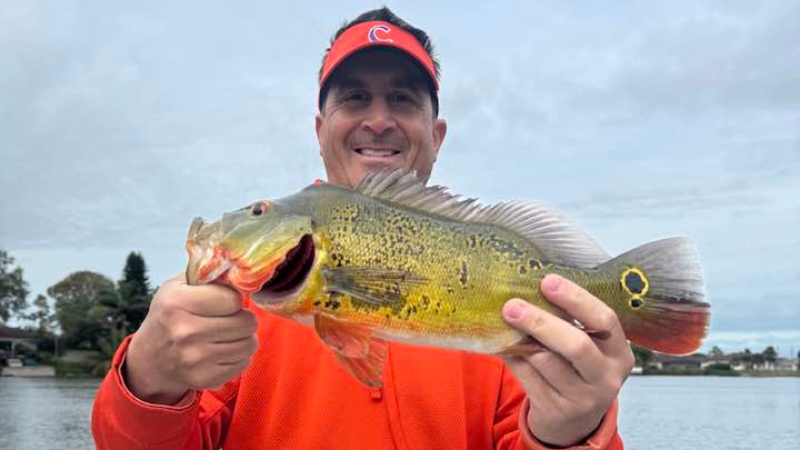
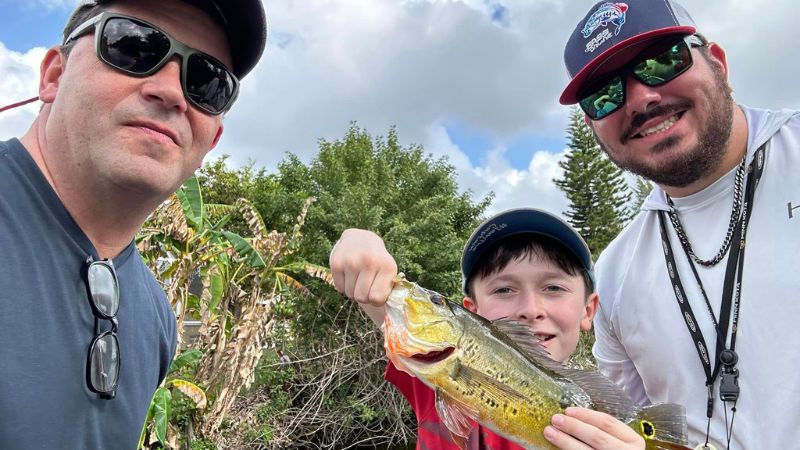
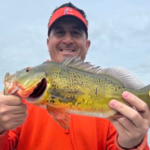
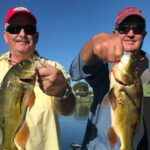
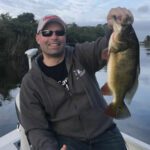

The Golden Gate Canal System is a freshwater fishery on the eastern side of Naples in Collier County, Florida. It is best known for butterfly peacock bass, largemouth bass, snook and productive panfish water close to the city. The system is not one natural lake: it is a managed network of canals, laterals, water-control structures and the connected 16-acre Lake Sapphire.
The Florida Fish and Wildlife Conservation Commission’s Golden Gate Canal angler guide identifies more than seven miles of boat-accessible freshwater canals. Those fishable reaches are part of a much larger drainage network; the South Florida Water Management District describes the broader Golden Gate system as nearly 70 miles of canals serving a 120-square-mile watershed. That distinction matters when planning a trip because water-control structures divide the system and not every canal is navigable from the public ramp.
Golden Gate gives anglers an unusual South Florida combination: native freshwater bass and panfish, tropical peacock bass, several established exotic species and occasional snook in the same connected fishery. The canals average about eight feet deep in the FWC-managed fishing area, while Lake Sapphire averages roughly 10 to 12 feet. Canal bends, bridge shade, lateral intersections, seawalls, riprap and fallen trees create concentrated cover that can be worked efficiently from a boat.
Water movement is a major part of the pattern. After rainfall or water-control changes, current can strengthen in the main canal. Active fish may hold on the downstream side of bridge pilings, culverts and spillway areas, while quieter lateral canals, cutouts and dead ends provide refuge. Never approach or fish too close to a water-control structure, and obey all posted restrictions.
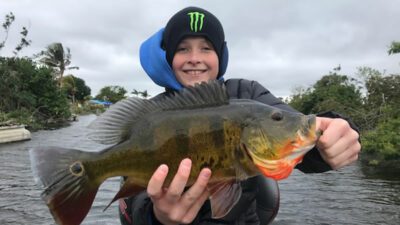
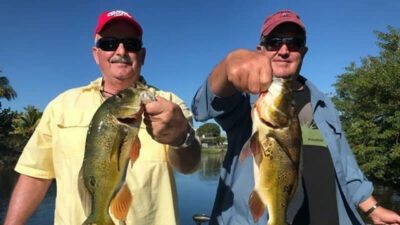
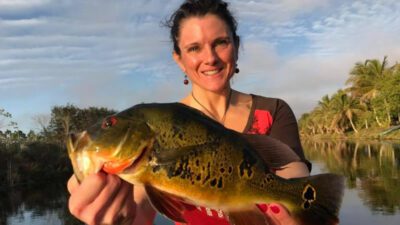
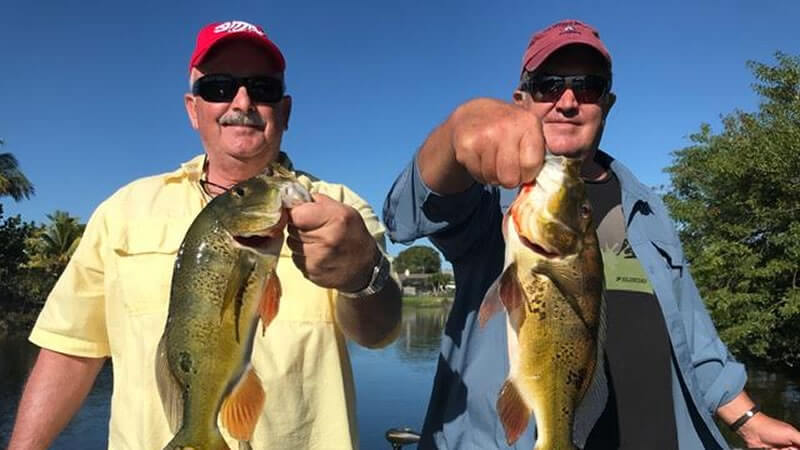
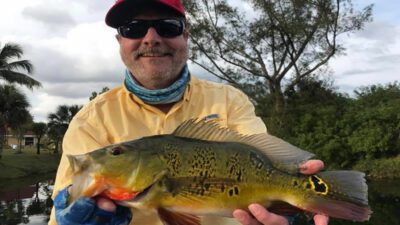
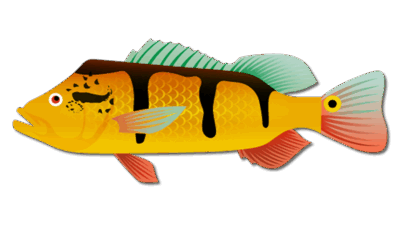
Butterfly peacock bass are the signature warm-water target. FWC reports that they were not part of the agency’s original southeast Florida stocking area but have maintained a fishable Golden Gate population since approximately 2009. Peacock bass feed during daylight and often hold close to shoreline cover. Fast-moving minnow plugs, small jerkbaits, jigs and flies can trigger reaction strikes, while live golden shiners are a dependable choice when fish are reluctant to chase.
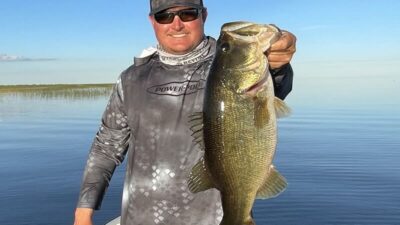
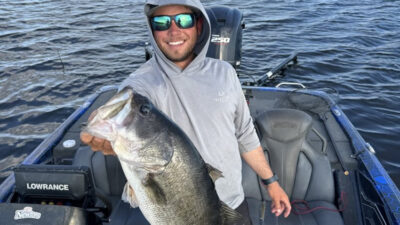
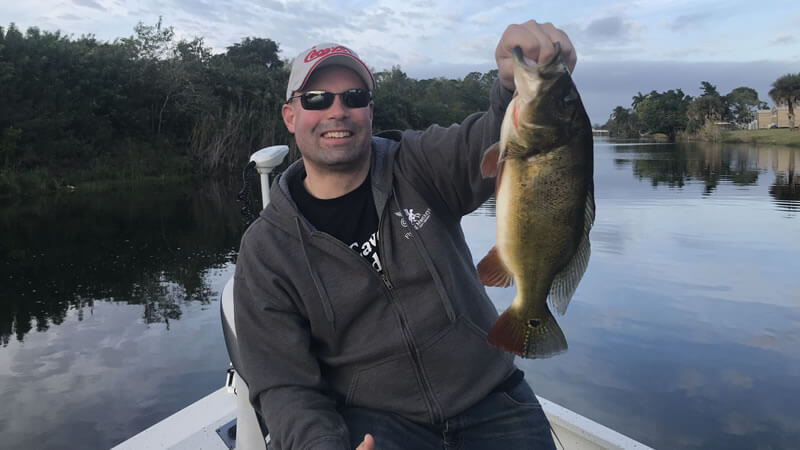
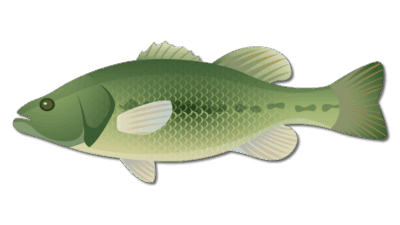
Largemouth bass use many of the same structures, especially fallen trees, vegetation edges, seawalls and breaks in current. Soft-plastic worms, spinnerbaits and live shiners are proven options. During hot weather, focus effort early, late or around shaded structure. FWC notes that the cooler winter period is often the most productive season for Golden Gate largemouth.
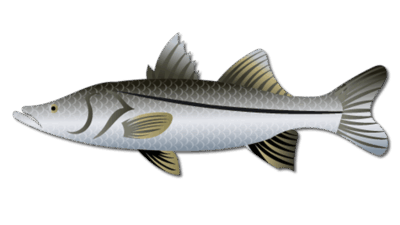
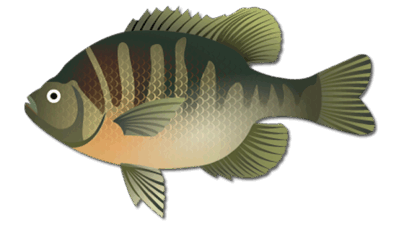
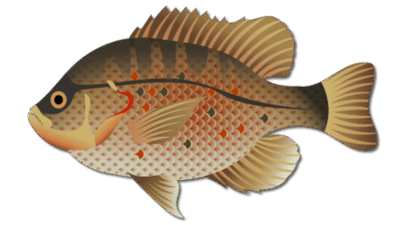
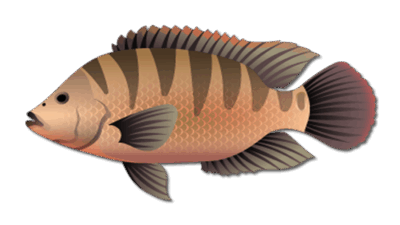
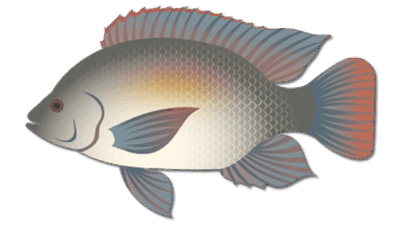
The canal also supports snook, bluegill, redear sunfish, Oscar, Mayan cichlid and spotted tilapia. Bluegill and redear respond well to worms, crickets and small jigs. Snook often relate to bridges and vegetated shorelines, but saltwater species have separate seasons, size limits and permit requirements even when caught in freshwater.
Peacock bass fishing is generally strongest from March through May, although fish are caught throughout the year when water temperatures remain favorable. Because peacock bass are temperature-sensitive, a major cold event can slow the bite or reduce local numbers. Bright, warming conditions can help, and peacocks normally feed only during daylight.
Largemouth bass often improve from late fall through early spring as Southwest Florida water temperatures moderate. Summer can still produce, particularly around dawn, late afternoon and shaded structure. Bluegill and other panfish provide a year-round option, with spring spawning periods often concentrating fish near protected banks and canal pockets.
Start with canal intersections, sharp bends, bridge shade, culverts and any visible change in shoreline material. Fish the current seam rather than the fastest water when the main canal is moving. In low-current periods, cover water with a moving bait, then slow down around productive shade, seawalls or wood. The entrance to Lake Sapphire and the main lateral canal network is east of the public ramp, but navigation is constrained by water-control structures.
Bank anglers can find opportunities from legal public areas, but much of the shoreline borders homes or private property. Do not cross fences, enter residential lots or block traffic. Park only where permitted, stay well clear of roadways and confirm that the bank or bridge access is public before fishing.
The principal public launch is the Golden Gate Boat Ramp at Golden Gate Community Park. FWC identifies it as the public boat ramp for the fishable canal section. The paved two-lane facility provides access to the main canal, lateral canals and Lake Sapphire. Check the county’s current page before traveling for operating hours, fees, closures and local rules; those details can change.
Canal levels and current can vary with rainfall and water-management operations. Watch for submerged objects, narrow passages and posted no-entry areas. Slow down near shore anglers, docks and residential property, and use extra care around bridges and control structures.
Anglers must follow current FWC freshwater fishing regulations. A Florida freshwater fishing license is generally required to take or attempt to take freshwater fish unless an exemption applies. Snook are governed by saltwater regulations and may require a saltwater license and snook permit. Review the current rules before every trip because seasons, size limits and bag limits can change.
Never release a nonnative fish into another water body and never use prohibited nonnative fish as bait. FWC specifically notes that goldfish and other nonnative fish may not be used as bait. When practicing catch-and-release, minimize handling time and return peacock bass and other sport fish to the water quickly.
A local guide can shorten the learning curve on this segmented canal system by matching the day’s water movement, temperature and fish behavior to the most productive sections. Browse Golden Gate Canal fishing guides for availability, trip lengths and booking options. Naples is the primary nearby city, with Marco Island, Cape Coral and Fort Myers retained as regional relationships for trip planning and site filtering.
| Species | Jan | Feb | Mar | Apr | May | Jun | Jul | Aug | Sep | Oct | Nov | Dec |
|---|---|---|---|---|---|---|---|---|---|---|---|---|
| Peacock Bass | 🔥 Hot | 🔥 Hot | 🔥 Hot | |||||||||
| Largemouth Bass | 🔥 Hot | 🔥 Hot | 🔥 Hot | 🔥 Hot | 🔥 Hot | |||||||
| Freshwater Snook | ✅ Good | ✅ Good | ✅ Good | ✅ Good | ✅ Good | ✅ Good | ✅ Good | ✅ Good | ✅ Good | ✅ Good | ✅ Good | ✅ Good |
| Bluegill | ✅ Good | ✅ Good | ✅ Good | ✅ Good | ✅ Good | ✅ Good | ✅ Good | ✅ Good | ✅ Good | ✅ Good | ✅ Good | ✅ Good |
| Redear Sunfish | ✅ Good | ✅ Good | ✅ Good |