
Are There Bass in Lake Erie?
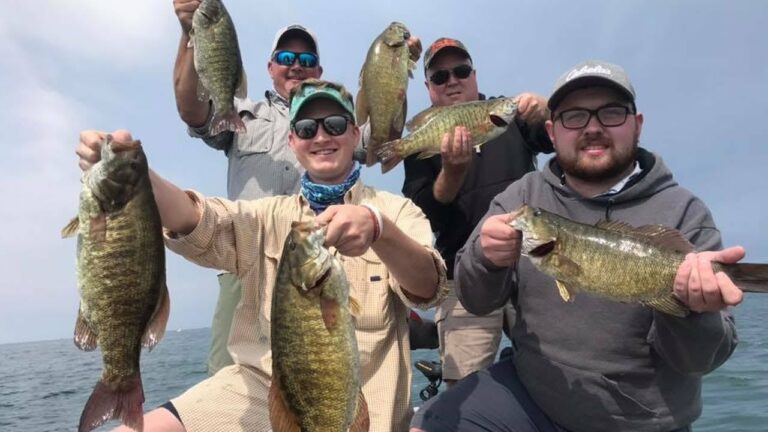
Yes. Lake Erie supports excellent bass fishing, especially for smallmouth bass. Largemouth bass are also present, but they use different habitat and are not the species most anglers associate with open-water Lake Erie fishing. If your goal is to catch big bass on Lake Erie, understanding that difference is the first step.
Smallmouth bass thrive around the lake’s rocky structure, reefs, shoals, ledges, points, drop-offs and hard-bottom transitions. Largemouth bass are more likely to use protected bays, marinas, backwaters, vegetation and other calmer habitat. Both species can be part of a Lake Erie trip, but the fishing style can feel completely different.
Start with our Lake Erie fishing hub to compare New York, Pennsylvania, Ohio and Michigan, or use this guide to understand where Lake Erie bass live and how anglers target them.
Smallmouth Bass Are Lake Erie’s Signature Bass
Lake Erie is widely known for smallmouth bass. Pennsylvania’s Fish and Boat Commission lists bass among the lake’s popular game fish, and Michigan’s Department of Natural Resources describes the southeastern Great Lakes coast through Lake Erie as nationally known for the size and number of its smallmouth bass.
That reputation makes sense when you look at the habitat. Smallmouth bass are built for rocky water. They commonly relate to structure such as reefs, boulders, ledges, gravel, hard-bottom transitions and areas where current or wind concentrates forage.
For a deeper tactics guide, read our Lake Erie smallmouth bass fishing strategies page.
Are There Largemouth Bass in Lake Erie?
Yes, largemouth bass are found in the Lake Erie system, but anglers should not expect them to use the same open-lake habitat as smallmouth. Largemouth generally favor warmer, calmer and more protected water with vegetation, docks, marina cover, backwaters or slower-moving areas.
Protected bays and shoreline features can therefore create better largemouth opportunities than exposed offshore structure. Presque Isle Bay in Pennsylvania is a good example of how a protected area can provide a different bass environment from the open lake.
That means the answer to “Are there largemouth bass in Lake Erie?” is yes, but the better question is “Where should I look for them?” If you want largemouth, think protected habitat. If you want classic Lake Erie bass fishing, smallmouth are usually the primary target.
Smallmouth vs. Largemouth Bass on Lake Erie
| Feature | Smallmouth Bass | Largemouth Bass |
|---|---|---|
| Primary habitat | Rock, reefs, ledges, shoals, hard bottom | Protected bays, vegetation, marina and backwater habitat |
| Typical Lake Erie setting | Open lake and offshore structure | More protected shoreline environments |
| Common techniques | Drop shot, tube, Ned rig, swimbait, jerkbait | Jigs, worms, crankbaits, spinnerbaits, topwater |
| Main attraction | Powerful Great Lakes smallmouth fishing | Additional bass opportunity in suitable habitat |
How Big Do Lake Erie Bass Get?
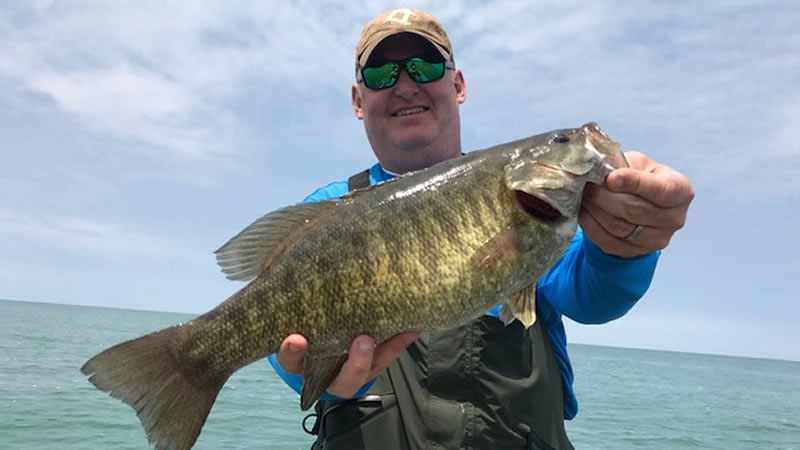
Lake Erie can produce quality bass, particularly smallmouth. The lake’s productive food web, large amount of habitat and extensive forage give fish the opportunity to grow. Trophy fishing is never guaranteed, but anglers routinely travel to Lake Erie specifically because of its reputation for strong, heavy smallmouth.
Big fish are often less forgiving than average fish. They may use subtle structure, feed during shorter windows and move when conditions change. Electronics, boat control and current local knowledge can make a major difference when the goal is quality over simple numbers.
Where to Find Big Smallmouth Bass
Big Lake Erie smallmouth are often associated with hard structure and nearby access to deeper water. Productive features can include:
- Rock piles and boulder fields
- Offshore reefs and shoals
- Ledges and drop-offs
- Hard-bottom transitions
- Points extending toward deeper water
- Areas holding schools of baitfish
- Current seams or wind-influenced structure
The exact depth changes with season, basin, weather and forage. Instead of memorizing one number, use mapping and sonar to identify structure and confirm that fish or bait are actually present.
Best Lures for Lake Erie Bass
No single lure dominates every day. Lake Erie’s changing wind, depth, water clarity and fish position reward anglers who can move between finesse and reaction presentations.
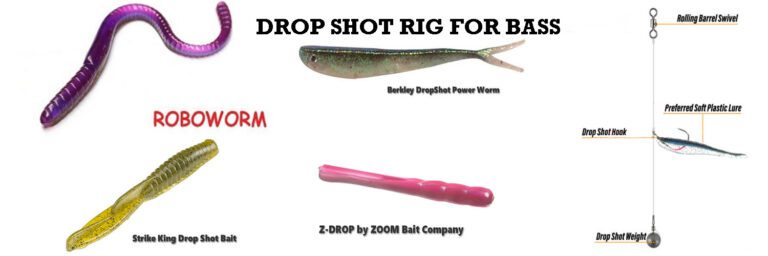
Drop-Shot Rigs
A drop shot is one of the most reliable presentations for smallmouth holding around deeper structure. It keeps the bait controlled and close to fish while allowing subtle movement.
Tubes
Tubes are a Great Lakes staple because they imitate bottom-oriented forage such as gobies and crayfish. Drag or hop them across rock and transitions.
Ned Rigs
Ned rigs offer a compact profile for pressured or less aggressive bass. They can be especially effective when fish want a slow presentation close to bottom.
Swimbaits and Jerkbaits
When bass are chasing baitfish, small swimbaits and jerkbaits can cover water and trigger aggressive fish. These presentations are useful when bass are not pinned directly to the bottom.
Topwater
Topwater can be excellent during low-light periods or when fish are feeding high in the water column. The window may be short, so be ready to switch when conditions change.
Best Time for Big Bass Fishing on Lake Erie
Lake Erie bass can be caught across a long season, but their location changes dramatically.
Spring
Spring brings fish toward shallower structure as water temperatures rise and smallmouth move through their spawning cycle. This can be an exciting period for quality fish, but anglers must follow the current rules for the state waters they are fishing.
Summer
Summer often pushes smallmouth toward deeper structure. Early mornings may provide shallower or topwater opportunities, while midday fishing frequently becomes more electronics-driven. Our Lake Erie August smallmouth guide explains this late-summer pattern in more detail.
Fall
Cooling water can trigger aggressive feeding as bass respond to changing forage and prepare for winter. Fall can produce excellent smallmouth fishing, although Great Lakes weather becomes an increasingly important part of trip planning.
Bass Fishing Lake Erie by State
Lake Erie touches four U.S. states, and each section offers a different fishing experience.
Pennsylvania
Erie and Presque Isle provide access to both the open lake and more protected water. This makes Pennsylvania especially useful for anglers interested in comparing offshore smallmouth habitat with bay-oriented bass fishing. Visit the Lake Erie Pennsylvania page for guides, regulations, meeting areas and trip options.
New York
New York’s eastern basin waters around Dunkirk, Westfield and Buffalo are known for deeper rocky structure and excellent smallmouth opportunities. See the Lake Erie New York page.
Ohio
Ohio provides extensive Lake Erie access from the Western Basin through Cleveland and farther east. Islands, reefs, shoals and rocky structure create opportunities for smallmouth along with the state’s famous walleye fishery. Explore the Lake Erie Ohio page.
Michigan
Michigan’s Lake Erie shoreline is smaller, but southeastern Michigan and the Detroit River connection provide access to productive western-basin water. Visit the Lake Erie Michigan page.
Use Electronics to Find Bass Faster
Lake Erie is too large to fish efficiently by guessing. Mapping, sonar and GPS help anglers locate rock, depth changes, bait and individual groups of fish. Once productive structure is found, good boat position helps keep the lure in the strike zone longer.
Electronics do not replace fishing skill, but on a Great Lake they dramatically reduce the amount of unproductive water an angler has to eliminate.
Lake Erie Bass Fishing Safety
Lake Erie should always be treated like a Great Lake, not a small inland reservoir. Wind can build waves quickly, and conditions can change during the day. Marine forecasts, safe boat operation and a willingness to change plans are essential.
Regulations also vary by jurisdiction. Pennsylvania, New York, Ohio and Michigan each manage their own waters, and anglers should review current state fishing rules before a trip. The Pennsylvania Fish and Boat Commission provides current Lake Erie information and bass identification and fishing guidance.
Plan a Lake Erie Bass Fishing Trip
Lake Erie is one of the best places in the country to experience powerful Great Lakes smallmouth bass. Largemouth bass add another option in the right protected habitat, while walleye, yellow perch, steelhead and other species make the lake far more than a one-species fishery.
If bass are your priority, decide first whether you want open-water smallmouth fishing or protected-water largemouth opportunities. From there, choose the state, season and fishing style that fits the trip.
Use the Lake Erie hub to compare all four states, or explore Lake Erie fishing trip packages if you are planning a larger getaway.
Lake Erie Bass FAQ
Does Lake Erie have bass?
Yes. Lake Erie has excellent smallmouth bass fishing and also supports largemouth bass in suitable protected habitat.
Is Lake Erie better for smallmouth or largemouth bass?
Smallmouth bass are the signature Lake Erie bass species, especially around open-water rocky structure. Largemouth are more likely around protected bays, vegetation, marinas and backwaters.
Are there big bass in Lake Erie?
Yes. Lake Erie is known for quality smallmouth bass and attracts anglers specifically looking for trophy-class fish. Catch size varies with season, location and conditions.
What is the best lure for Lake Erie smallmouth?
Drop shots, tubes, Ned rigs, swimbaits, jerkbaits and topwater lures can all work. The best presentation depends on fish depth, structure, forage and activity level.