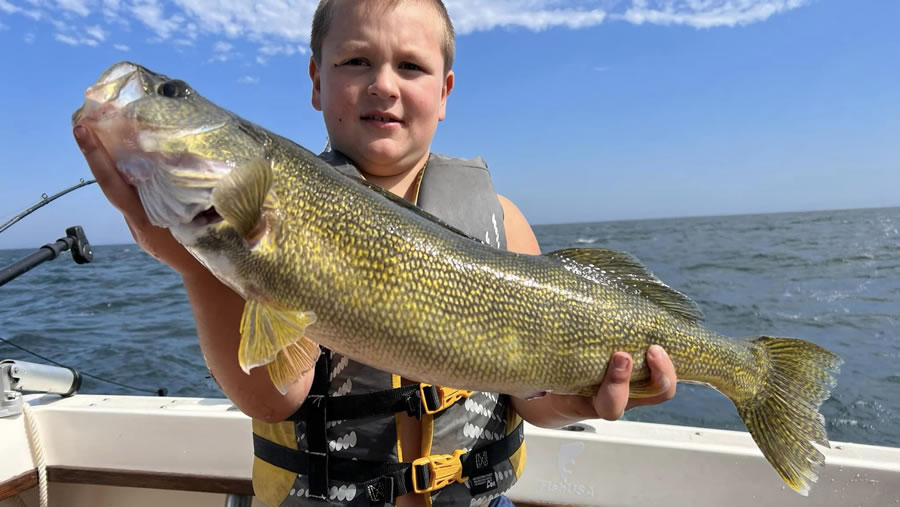

A useful Lake Erie fishing forecast should answer a different question from a fishing report. A forecast helps you choose the right season, basin and target species before you book travel. A fishing report tells you what anglers are seeing right now.
This page is the seasonal planning guide. For current on-the-water updates, use our Lake Erie fishing reports. For state-specific regulations and trip options, start with the Lake Erie fishing hub.
2026 Lake Erie Fishing Outlook: Quick Snapshot
The broad 2026 outlook remains especially strong for walleye. Ohio fisheries information for the 2026 season notes that strong recent year classes continue to support a large walleye population, while yellow perch opportunity is more uneven by zone. Ohio’s current 2026–2027 rules set a six-fish daily walleye limit with a 15-inch minimum, while yellow perch limits vary between the west, central and east zones.
Those limits apply to Ohio waters and anglers landing at Ohio ports; Lake Erie crosses multiple jurisdictions. Always follow the rules for the water you are actually fishing.
Check Ohio’s 2026–2027 Lake Erie walleye and perch limits.
Lake Erie Fishing Forecast by Season
Early Spring: Walleye, Tributaries and Weather Windows
Early spring can offer excellent walleye opportunity, but weather controls the schedule. Cold water, wind and rapid weather changes make protected water and safe launch decisions especially important. In the western end of the lake, anglers often plan around spawning-season walleye movements, while tributaries and nearshore areas can attract seasonal fish.
Planning advantage: be flexible with travel dates and avoid building a trip around one exact GPS location. Wind can make one shoreline or basin fishable while another is not.
Late Spring: Smallmouth and Post-Spawn Walleye
Late spring is one of the most versatile windows on Lake Erie. Smallmouth bass use rocky habitat and structure, while walleye begin spreading away from concentrated spawning areas. This is a good period for anglers who want options rather than a one-species trip.
If bass is the priority, see our Lake Erie smallmouth bass fishing guide.
Early Summer: Expanding Open-Water Opportunity
As Lake Erie warms, open-water fishing becomes a bigger part of the program. Walleye can cover large distances, and trolling or electronics-driven searching becomes important in many areas. Smallmouth may also shift deeper as summer develops.
Early summer is a strong trip-planning window because daylight is long and multiple species are available, but anglers should still build flexibility into launch location and fishing style.
Mid to Late Summer: Walleye, Deep Smallmouth and Perch Differences
Summer is when the scale of Lake Erie becomes obvious. Fish can be spread across large areas and may relate to depth, forage and temperature more than shoreline landmarks.
Ohio’s 2026 outlook is particularly strong for walleye. Yellow perch are more complicated: current Ohio information indicates the west zone has the best 2026 perch outlook, while central and east-zone success has been less consistent.
For bass anglers, August often means combining early low-light opportunity with deeper daytime structure. Our August Lake Erie smallmouth guide covers that seasonal pattern in detail.
Early Fall: Feeding Fish and Changing Weather
Early fall can be excellent because cooling water changes forage movement and fish location. Smallmouth can feed aggressively, walleye remain a major target, and nearshore opportunities may improve in some markets.
The tradeoff is weather volatility. Fall anglers should leave room in the itinerary for wind delays or a change of launch location.
Late Fall: Nearshore Opportunity and Short Weather Windows
Late fall can bring fish closer to harbors, tributaries and nearshore areas in some parts of the lake. Ohio’s current perch outlook notes that central and east-zone anglers may find better late-fall opportunities near harbors as adult perch move inshore.
This is also when current local reports become more valuable than any evergreen forecast. Cleveland Metroparks, for example, publishes its fishing report weekly during much of the fall-through-spring period.
Check the current Cleveland Metroparks fishing report.
Winter: Limited Open-Water Windows and Ice Considerations
Winter fishing depends heavily on weather and safe access. Lake Erie does not behave the same way every winter, and ice conditions can vary dramatically. Never use an evergreen article as proof that ice is safe. Verify local conditions from official or trusted current sources before stepping onto ice or launching in cold-weather conditions.
Best Time to Fish Lake Erie by Target Species
Walleye
Walleye can support a long Lake Erie season, but the location and technique change. Spring attracts anglers to spawning-related patterns; summer often becomes a broader open-water search; fall can bring another transition as water cools.
Smallmouth Bass
Spring through fall can all be productive for smallmouth, but structure use and depth change. Anglers planning specifically around bass should separate seasonal bass strategy from general walleye forecasting.
Yellow Perch
Perch fishing is highly regional. In Ohio, current regulations and expectations differ across west, central and east zones. Check the newest state information before planning a perch-focused trip.
Steelhead and Tributary Fishing
Steelhead opportunity is strongly seasonal and closely tied to tributaries, weather and stream conditions. If steelhead is your primary target, use current local reports rather than a lake-wide annual forecast.
Lake Erie Forecast by State
Lake Erie crosses four Bass Online state markets, and each deserves its own planning page:
- Lake Erie New York — Buffalo, Dunkirk, Westfield and western New York planning.
- Lake Erie Pennsylvania — Erie, Presque Isle, guides and Pennsylvania regulations.
- Lake Erie Ohio — western and central basin access, Ohio regulations and trip options.
- Lake Erie Michigan — southeast Michigan access and state-specific information.
Forecast vs. Fishing Report vs. Weather Forecast
These three tools should not compete with each other:
- Seasonal forecast: use this page to choose the month, species and part of the lake for a future trip.
- Fishing report: use the Lake Erie reports page for recent fish activity and fishing-specific updates.
- Weather/marine forecast: use a current marine-weather source for wind, waves and safety decisions immediately before fishing.
Do not use a seasonal fishing article as a substitute for a current marine forecast.
How to Plan Around a Lake Erie Fishing Forecast
- Pick your target species first. The ideal walleye trip and ideal smallmouth trip may use different states, depths and techniques.
- Choose the state and launch market. Use the four state Lake Erie pages rather than treating the whole lake as one destination.
- Check current regulations. Rules vary by jurisdiction and can change by season.
- Watch current reports as the trip approaches. Seasonal patterns narrow the window; reports help narrow the actual area.
- Check wind and waves immediately before departure. Safety outranks the fishing plan.
- Keep a backup plan. A different launch, protected area or rescheduled day can save a trip when Lake Erie changes mood.
Should You Book a Guide?
Lake Erie’s size makes local knowledge especially valuable. A guide can shorten the search process, choose a safer launch for the wind direction, and adapt techniques when fish move. To compare options without mixing the forecast and charter intents, use our dedicated Lake Erie fishing charters guide.
If your goal is a packaged vacation rather than charter research, go directly to Lake Erie fishing trip packages.
Frequently Asked Questions
What is the Lake Erie fishing forecast for 2026?
The broad 2026 outlook is especially favorable for walleye, while yellow perch opportunity varies by zone in Ohio. Exact fishing conditions still change with weather, water clarity, forage and fish movement.
What is the best month to fish Lake Erie?
There is no single best month for every species. Spring is popular for walleye and smallmouth patterns, summer expands open-water opportunity, and fall can produce strong feeding activity with shorter weather windows.
Where can I get today’s Lake Erie fishing conditions?
Use current fishing reports and a current marine-weather forecast. This page is designed for seasonal trip planning, not same-day conditions.
Does Lake Erie have good fishing all year?
Fishing opportunity exists through much of the year, but access, target species and safety conditions change substantially by season.
Lake Erie Fishing Month by Month
This calendar gives the old month-specific Lake Erie reports one durable home. It is a planning guide, not a promise that the same pattern will happen on the same date every year.
January and February
Cold-weather access and safety dominate the plan. Open-water and ice opportunities depend completely on current conditions. Verify ice, wind and marine conditions locally before fishing.
March
Walleye planning becomes a major focus in the western end of the lake and connected spawning areas. Weather windows can be short, so flexibility matters more than a fixed fishing spot.
April
Spring transitions accelerate. Walleye remain important, tributary and nearshore opportunities change quickly, and smallmouth activity begins building as water warms.
May
May is an important smallmouth month in many Lake Erie markets. Rocky structure, protected bays and warming nearshore habitat can all matter. This is also a strong month to compare Pennsylvania and New York bass options before booking.
June
June expands the number of viable patterns. Smallmouth remain a major target while open-water walleye opportunity grows. Longer daylight gives guides more flexibility to adjust locations and techniques.
July
Summer patterns become established. Walleye may be spread across large areas, and bass anglers increasingly use deeper structure as the day progresses.
August
August can reward anglers who combine early low-light opportunities with deeper daytime structure. For a dedicated bass plan, see the Lake Erie smallmouth fishing in August guide.
September
September is a transition month. Cooling nights begin changing bait and predator movement, while smallmouth and walleye can still provide excellent open-water opportunity. Watch wind closely because fall weather becomes a larger planning factor.
October
October can produce strong smallmouth feeding activity and changing nearshore opportunities, but safe weather windows become more important. A guide may change launch location or fishing area based on wind direction.
November
November smallmouth fishing can remain productive during suitable weather windows, especially when anglers locate late-fall structure and bait. Cold-water safety is critical, and current reports should override any old trip diary.
December
Winter conditions increasingly control access. Treat December as a current-conditions month rather than a fixed seasonal pattern and verify marine or ice safety immediately before fishing.