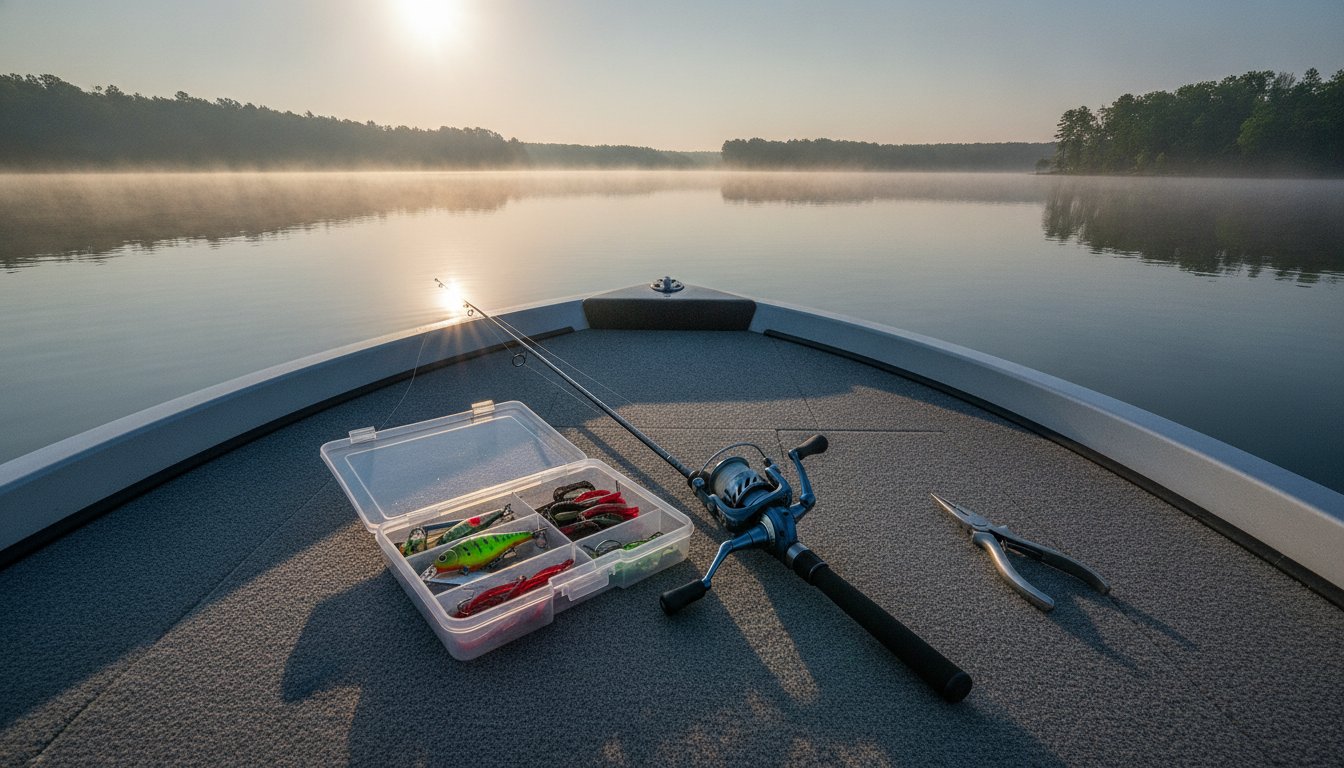

You don’t need a thousand-dollar bass boat or a wall full of technical lures to land a trophy on your very first outing. It’s a common trap to think that more expensive gear equals more fish, but the truth is that over 54 million anglers in the U.S. started exactly where you are right now. If you’re asking, “What gear do I need for my first freshwater fishing trip,” you’re likely staring at aisles of tackle feeling overwhelmed by terms like “medium-heavy” and “fast action.” It’s frustrating to worry about wasting money on equipment that’ll just collect dust in your garage.
I’ve spent years guiding on the water, and I can tell you that a simple, versatile system is always better than a complicated one. This guide will help you skip the guesswork and discover the exact gear you need to land your first freshwater trophy without overspending on unnecessary tackle. We’ll break down a prioritized shopping list, including why a 6 to 7 foot spinning rod is your best friend and how to pick a line that won’t snap when that first big bass hits. You’ll walk away with the confidence to hit the water and the knowledge to use your new tools like a seasoned pro.
Key Takeaways
- Master the basics by starting with a 6’6” medium-action spinning rod, which is the most versatile tool for targeting multiple freshwater species.
- Stop wondering “What gear do I need for my first freshwater fishing trip” and focus on a prioritized list that avoids expensive, unnecessary tackle.
- Learn why smaller hook sizes and simple terminal tackle often outperform complex rigs when you are just starting out.
- Pack essential safety and utility tools like fishing pliers and line snips to ensure you can handle catches and gear changes with ease.
- Consider a guided fishing trip as the ultimate gear shortcut, providing you with professional equipment and expert knowledge in a single outing.
The Foundation: Choosing Your First Rod, Reel, and Line
You are ready to hit the water, but the tackle shop aisles look like a maze of carbon fiber and confusing numbers. When people ask me, “What gear do I need for my first freshwater fishing trip,” they usually expect a list of fifty different items. In reality, your success starts with three core components: the rod, the reel, and the line. Getting this foundation right means you’ll spend your time actually catching fish instead of untangling knots on the bank.
Before you dive into the specifics, it’s helpful to understand the bigger picture of the sport. A solid Recreational fishing overview shows that while techniques vary, the equipment remains the bridge between you and the fish. I always tell my clients to invest in quality basics rather than cheap gimmicks. A reliable setup builds the muscle memory you need to become a proficient angler. It’s about having tools that respond to your movements without fighting you back.
To see how you can assemble a professional-grade kit on a budget, watch this helpful video:
The Spinning Reel Advantage
Beginners often get pushed toward spincast reels with the little push-button. Don’t fall for it. A spinning reel is the “Goldilocks” choice because it’s easy to master and doesn’t suffer from the “birds nest” tangles that plague advanced baitcasters. A spinning reel is an open-face reel mounted on the underside of the rod for maximum balance. For most freshwater lakes and rivers, a 2500 or 3000 series reel is the sweet spot. It’s light enough for panfish but has the drag power to stop a five-pound bass in its tracks. It’s a reliable workhorse that grows with your skill level.
Rod Action and Power Simplified
Choosing a rod is where most people get tangled in technical jargon. You need to understand two terms: Power and Action. Power refers to how much weight the rod can move, while Action describes where the rod actually bends. For your first trip, a 6’6” rod with Medium Power and Fast Action is the universal tool. It’s forgiving for new casters and sensitive enough to feel a subtle bite. I recommend a graphite rod over fiberglass because it’s lighter and offers much better feedback from the underwater world. You want to feel everything that happens on the other end of that line.
Finally, let’s talk line. Skip the high-tech braids for your first outing. A spool of 8-10lb test monofilament is your best starting point. Monofilament stretches, which acts as a shock absorber when a fish lunges. It’s also much easier to tie knots with than slippery fluorocarbon. Whatever you do, avoid the “bargain bin” combos that come pre-spooled with cheap, kinky line. Those setups usually tangle after three casts and will ruin your day faster than a sudden rainstorm. Spend a few extra dollars on a reputable combo and you’ll be glad you did when you’re landing your first trophy.
Terminal Tackle: The Small Essentials That Make a Big Difference
You have your rod and reel ready to go. Now you need the gear that actually connects you to the fish. I see many beginners make the mistake of buying those $20 pre-made tackle kits at big-box stores. Don’t do it. Those kits are usually 70% filler items that you’ll never use. When people ask me, “What gear do I need for my first freshwater fishing trip,” I tell them to focus on the “Big Three” of terminal tackle: hooks, weights, and bobbers. Buying these components individually ensures you have high-quality tools that won’t fail when a trophy bass finally hits your line.
Terminal tackle is where the real action happens. It’s the most critical part of your setup because it dictates how your bait moves and how well you can set the hook. For a reliable Beginner’s freshwater checklist, you should aim for simplicity and versatility. You don’t need a hundred different options; you just need the right ones for the water you’re fishing today.
The Beginner’s Hook Guide
Hooks come in endless shapes, but you only need three types to start. Bait hooks are perfect for live worms or minnows. Circle hooks are a beginner’s best friend because the design naturally rotates into the corner of the fish’s mouth, meaning the fish basically hooks itself. Finally, worm hooks are essential if you want to try soft plastic lures like a classic rubber worm. Stick to sizes between 2 and 2/0. A common mistake is using hooks that are too large. Remember, a big fish can eat a small hook, but a small fish can’t fit a massive hook in its mouth. Always check the point of your hook against your thumbnail. If it doesn’t stick with light pressure, it’s dull and needs to be replaced.
Weights and Bobbers
Getting your bait to the right depth is the difference between a strike and a boring afternoon. Pinch-on split shot weights are the easiest way to manage this. You can add or remove them in seconds to adjust for current or wind. For bobbers, the classic red-and-white plastic float is great for shallow water. However, if you’re fishing deeper than six feet, a slip bobber is a much better choice because it allows your line to slide through the float until it hits a pre-set stop. Some days, the fish stay right on the bottom. In those cases, ditch the bobber entirely and let your weight sit on the floor of the lake. This “bottom bouncing” technique is often how the biggest bass are caught during the heat of the day.
If you want to see these rigs in action and learn the nuances of tackle selection from a pro, you can always reach out to us to plan your next adventure on the water.
Lures vs. Live Bait: Which Should You Start With?
One of the biggest debates on the dock is whether to start with live bait or artificial lures. When you’re asking, “What gear do I need for my first freshwater fishing trip,” the answer depends on your goal. If you want to guarantee a bent rod and learn the ropes fast, live bait is the undisputed king. It smells, moves, and tastes like the real thing because it is the real thing. For a beginner, using bait is a “sure thing” that helps you understand what a bite actually feels like. You need to learn the difference between a fish pecking at your hook and your weight simply bumping a rock.
Artificial lures offer the thrill of the hunt and the convenience of a clean tackle box. You don’t have to worry about keeping anything alive in a bucket, and you can cover a lot of water quickly. However, lures require a specific retrieve and a bit more finesse to fool a fish. I always suggest my clients check out these Essential gear recommendations to see how pros balance their tackle bags. Once you’ve mastered the basics of live bait, transitioning to lures becomes much more intuitive.
The Case for Live Bait
Nightcrawlers are the universal currency of the freshwater world. Almost every species, from bluegill to massive largemouth bass, will eat a worm. If you’re targeting bigger predators, minnows are your best bet. For those chasing panfish in the lily pads, crickets are like candy. The secret is keeping your bait lively. A dead minnow or a shriveled worm won’t get much attention. Keep your bait out of the direct sun and use a bucket with an aerator for minnows to keep them swimming strong. You can find more details on species-specific diets in our Bass Fishing 101 guide.
Top 3 Beginner-Friendly Lures
When you’re ready to make the jump to artificials, don’t overcomplicate it. You don’t need a hundred different crankbaits. Start with these three “idiot-proof” options that catch fish in almost any water condition:
- The Inline Spinner: This is the ultimate “cast and reel” lure. The blade spins as you pull it through the water, creating flash and vibration that fish can’t resist.
- The Soft Plastic Worm: Specifically, a stick-style bait. You can rig it “weightless” and just let it sink slowly. It’s the king of bass fishing lures for a reason.
- The Spoon: These simple, shiny metal attractors mimic a wounded baitfish. They cast a mile and work wonders on aggressive fish like pike or trout.
Starting with these tools ensures you spend your time fishing rather than struggling with complex gear. It’s about building confidence one catch at a time.
The “Must-Haves” Beyond the Rod and Reel
Your most important safety tool is a solid pair of fishing pliers. You should never use your fingers to remove a hook from a fish’s mouth, especially if you’re targeting species with sharp teeth or if the hook is set deep. Pliers give you the leverage and reach to pop the hook out quickly, which is better for the fish and safer for your hands. Along with pliers, keep a pair of nail clippers or dedicated line snippers handy. Cutting 10lb test monofilament with your teeth is a bad habit that can damage your enamel; a cheap pair of clippers makes every rig change fast and clean.
The Legal Side: Fishing Licenses
You can’t fish without the most important piece of paper in your wallet: a state fishing license. Most states require anyone over the age of 16 to carry a valid license while on the water. These laws are strictly enforced to fund conservation efforts that keep our fisheries healthy. In 2026, an annual resident freshwater fishing license in Alabama costs $17.00, while South Carolina residents pay just $10.00 for their annual permit. You can usually buy these instantly online through state wildlife agency websites. If you are planning a trip to the Sunshine State, check out our guide to fishing in Florida to ensure you are fully prepared before you cast your first line.
Polarized Sunglasses: Your “X-Ray” Vision
Polarized sunglasses are not just about looking the part; they are a functional necessity. Standard sunglasses just make things darker, but polarized lenses cut through the surface glare of the water. This allows you to see underwater structure, submerged logs, and even the fish themselves. It’s like having X-ray vision for the lake. As a beginner, you don’t need to drop $200 on high-end frames. Even a budget-friendly pair of polarized glasses will provide the benefit. Beyond seeing the fish, they protect your eyes from sun damage and the occasional flying hook during a missed set.
Don’t forget the basics of personal comfort. A wide-brimmed hat and high-SPF sunscreen are mandatory for long days in the sun. If you’re feeling unsure about the local regulations or the specific gear requirements for your next outing, reach out to our expert team today to get the professional guidance you need for a successful trip.
The Ultimate Gear Shortcut: Booking a Guided Trip
After walking through the technical details of rods, reels, and terminal tackle, you might still feel like you are staring at a mountain of expensive choices. If you are still asking, “What gear do I need for my first freshwater fishing trip,” the most effective answer isn’t found in a retail aisle. It is found on the deck of a professional bass boat. Booking a guided trip is the ultimate shortcut for any beginner. It transforms a confusing shopping trip into a high-energy, results-driven adventure where every piece of equipment is already optimized for the day’s specific conditions.
When you step onto a pro’s boat, you are gaining access to over $50,000 worth of elite gear. This includes high-end electronics that find the fish, tournament-grade rods that let you feel every vibration, and the perfect bait for the current water temperature. It is a “try before you buy” opportunity that most anglers never get. Instead of dropping hundreds of dollars on a setup you might not like, you can test-drive professional brands and see exactly how they perform when a trophy is on the line. This experience helps you make much smarter purchasing decisions later on.
Everything is Included
One of the biggest hurdles for a first-timer is the sheer logistics of the trip. At Bass Online, our guides handle the entire gear checklist for you. We provide the rods, reels, and the freshest bait available. We even help you navigate the licensing requirements for the specific body of water we are fishing. You don’t have to worry about whether your line is too heavy or if your hooks are the right size. We use the same high-performance tackle we use in professional competitions, ensuring that your first experience on the water is backed by the best tools in the business.
Building Your Confidence Fast
A guided trip is essentially an “on-the-water” classroom. You aren’t just using the gear; you are learning the mechanics behind it from a seasoned expert. Our fishing guides show you how to cast with precision, how to read the water, and most importantly, how to set the hook when a big bass strikes. These are skills that usually take months or years to master through trial and error. We condense that learning curve into a single afternoon. The best gear in the world is useless if you don’t know where the fish are hiding. By the time you step off the boat, you’ll have the confidence and the field-tested knowledge to tackle your next solo trip like a pro. Your first freshwater outing should be about the thrill of the catch, not the stress of the tackle shop.
Grab Your Gear and Hit the Water
You now have the field-tested blueprint for a successful day on the lake. By focusing on a reliable spinning setup and mastering simple terminal tackle, you’ve already bypassed the most common beginner mistakes. Remember to prioritize high-quality basics over cheap, pre-packaged kits that fail when a real trophy is on the line. Whether you are using live worms or testing out your first inline spinner, the goal is to build confidence with every cast and learn how the fish respond to your presentation.
If you are still feeling unsure about exactly what gear do I need for my first freshwater fishing trip, there is no better way to learn than by doing. You don’t have to navigate the tackle aisles alone. With over 300 professional guides nationwide and 10,000 plus 5-star reviews, we specialize in helping anglers of all skill levels find success. Every trip includes all the top-tier gear and bait you need, allowing you to focus on the thrill of the hunt while we handle the technical details.
Book a Guided Trip and Skip the Gear Headache today. The water is calling, and your first freshwater trophy is waiting just beneath the surface. Let’s go catch some fish!
Frequently Asked Questions
Do I really need a specialized rod for my first trip?
No, you don’t need a specialized rod; you need a versatile one. A 6’6” or 7’ medium-power spinning rod is the best tool because it handles a wide range of species and techniques. Avoid rods designed for specific tasks like ultra-light trout fishing or heavy flipping until you’ve mastered the basics and decided which species you enjoy chasing most.
What is the best fishing line for a beginner?
Monofilament line in the 8 to 10 pound test range is the gold standard for new anglers. It is much easier to tie than fluorocarbon and more forgiving than braid because it stretches when a fish lunges. A 300-yard spool of quality monofilament typically costs around $10, making it an affordable and effective choice for your first setup.
Is it better to fish with live bait or lures when starting out?
Starting with live bait like nightcrawlers or minnows is usually the best way to ensure action on your first outing. When you are figuring out what gear do I need for my first freshwater fishing trip, bait is essential because it teaches you how a real bite feels. Once you can distinguish a fish strike from a snag, you can confidently transition to artificial lures.
What size hooks should I buy for freshwater fish?
Hooks ranging from size 2 to size 2/0 are the most effective for common freshwater species like bass, catfish, and larger panfish. Using a hook that is too large is a common mistake that prevents fish from getting the point in their mouths. Stick to these mid-range sizes to ensure you can hook everything from a half-pound bluegill to a five-pound bass.
Do I need a net to land my first fish?
A net isn’t strictly required for small fish, but it is a valuable tool for landing larger trophies and protecting the fish. Using a net reduces the time you spend wrestling with a fish at the water’s edge, which helps preserve its protective slime coat if you plan to release it. If you are fishing from a high bank or a pier, a net becomes a safety necessity.
How much should I expect to spend on a basic starter setup?
A reliable beginner fishing setup typically costs between $80 and $255 for the rod, reel, line, and basic tackle. If you are on a tight budget, you can assemble a functional starter kit for approximately $60 to $95. For example, a durable spinning combo like the Ugly Stik GX2 costs around $60 and will last for years of heavy use.
Can I use saltwater gear in freshwater lakes?
You can use saltwater gear in freshwater, but it is often too heavy and lacks the sensitivity needed for smaller lake species. Saltwater rods are built to withstand corrosive environments and massive fish, which means they might feel like a broomstick when a two-pound bass hits. If you use it, ensure you thoroughly clean the reel to prevent any salt residue from contaminating the freshwater ecosystem.
How do I know if I need a fishing license?
Almost every angler over the age of 16 needs a state-issued freshwater fishing license to fish legally in public waters. Regulations and costs vary by state; for instance, an annual resident license in Alabama is $17.00 as of 2026. Always check the official website of the state’s wildlife or natural resources agency for the most current rules and permit requirements before you cast.

Article by
Mr Bass
Todd Kersey, widely known as Mr. Bass by Field & Stream, is a professional angler, accomplished author, and dedicated philanthropist with a lifelong passion for bass fishing. Armed with a degree in Outdoor Travel, Mr. Bass has expertly combined his knowledge with his practical fishing experience to become one of the most respected names in bass fishing.
His deep understanding of bass habitats and fish behavior has earned him numerous accolades as an asset to the sport. Serving 8 years as FWC Stakeholder Chairperson. Leading and passed cutting-edge legislation, such as the Black Bass Management Plan, and successfully built, passed, and helped finance the Trophy Catch program.
As CEO, he is committed to giving back to the community through his philanthropic efforts. He supports a variety of causes, especially those centered around physical disabilities. Through his advocacy, his mentorship programs inspire anglers to engage in fishing stewardship, helping to raise more than $18 million dollars in donations. Mr. Bass continues to inspire anglers and outdoor enthusiasts alike with his commitment to the sport, industry, and the world around him.