
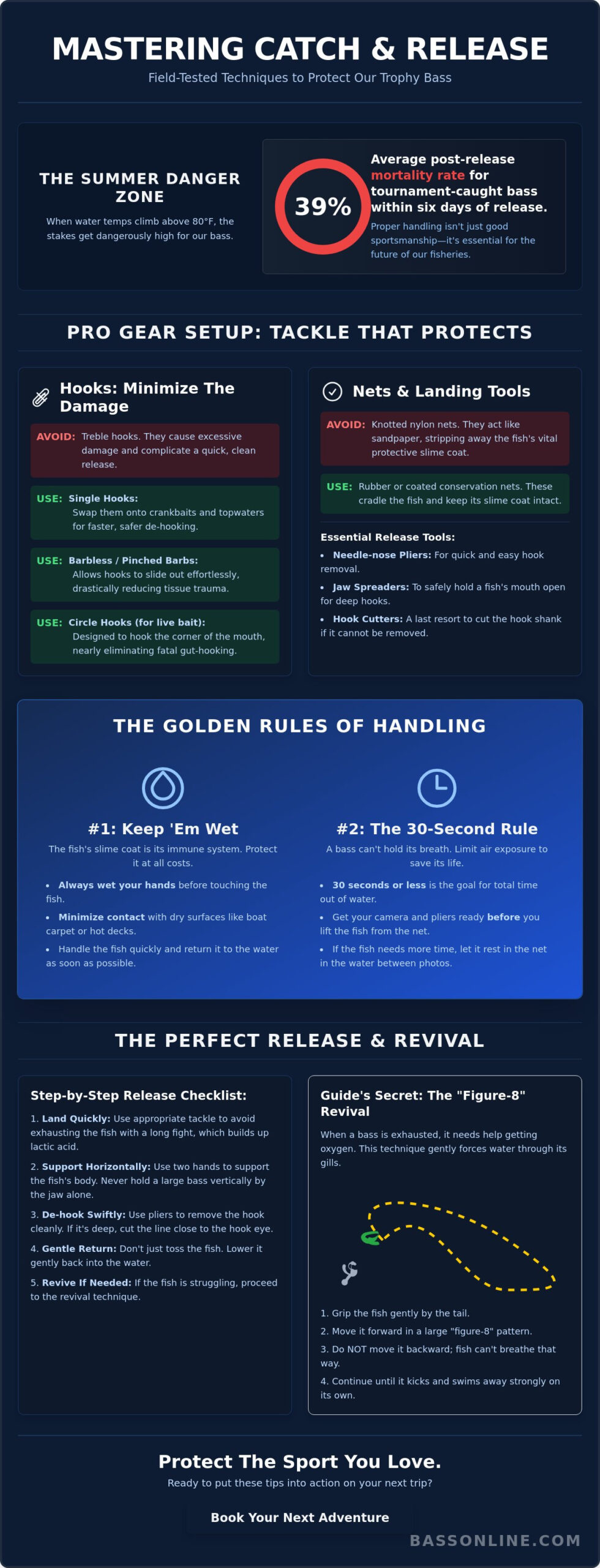
Did you know that in water temperatures above 80 degrees, the mortality rate for tournament-caught bass can average as high as 39 percent within just six days of release? That is a staggering number for any angler who cares about the health of our lakes. Mastering catch and release best practices for bass isn’t just about being a good sportsman. It’s about protecting the future of the legendary fisheries we call home, from the grass mats of Lake Okeechobee to the rocky points of Lake Erie.
We’ve all felt that sinking feeling when a trophy fish doesn’t immediately kick away after a hard fight. It’s a common struggle, and the confusion over the correct way to hold a big fish or handle a deep-set hook can be overwhelming. I’m here to change that. I will show you the exact field-tested techniques professional guides use to ensure every bass swims away healthy. We will dive into the "Keep Em Wet" philosophy, proper revival methods for stressed fish, and the gear adjustments that make a life-saving difference. Let’s get you ready to handle your next personal best with total confidence.
Key Takeaways
- Protect your trophy’s health by switching to barbless or single hooks to minimize tissue damage and ensure a lightning-fast release.
- Master the 30-second rule and “Keep Em Wet” philosophy to significantly lower post-release mortality for every bass you land.
- Learn how to implement catch and release best practices for bass during the summer heat when water temperatures exceed the 80-degree danger zone.
- Discover the “Figure-8” revival technique that professional guides use to oxygenate stressed fish before they head back to the depths.
- Identify the signs of barotrauma and learn the field-tested steps for handling big fish pulled from deep-water structure.
Table of Contents
Why Catch and Release Best Practices Matter for Trophy Bass
Every time you set the hook on a monster, you are interacting with a living piece of history. Catching a trophy is the pinnacle of our sport, but the job isn’t finished until that fish powers back to its lair. Following Catch and release protocols effectively is the only way to ensure our local fisheries stay world-class. When we ignore catch and release best practices for bass, we risk losing the very "lunkers" that make legendary spots like Lake Okeechobee or Guntersville famous. Post-release mortality is often a silent killer. A fish might swim away in the moment, but if it’s handled poorly, it could succumb to exhaustion or infection days later.
To see these principles in action, check out this breakdown on safe handling:
Big female bass are the biological engines of our lakes. These fish have survived years of predators and shifting weather to reach trophy size, carrying the elite Florida Bass genetics that produce the next generation of giants. When a big girl is stressed during a long fight or held improperly, the physiological cost is massive. We aren’t just protecting one fish. We are protecting the genetic potential for dozens of future trophies. Proper handling preserves the health of the entire ecosystem.
The Science of the Slime Coat
A bass’s skin is covered in a specialized mucus layer that acts as a chemical and physical shield. This layer is vital for the fish’s immune system. The slime coat is a bass’s primary defense against parasites. When you touch a fish with dry hands or let it flop on the boat carpet, you are literally rubbing away its immune system. This leaves the fish vulnerable to bacteria and fungal infections that can be fatal. Always wet your hands before touching your prize to keep that barrier intact.
Lactic Acid and Recovery Time
Think about the last time you sprinted until your lungs burned. That is exactly what a bass feels during a fight. As they struggle, lactic acid builds up in their muscles, creating a chemical "burn" that takes time to clear. Long fights on ultra-light tackle might be a blast for the angler, but they push the fish toward total exhaustion. To give them the best chance of survival, use gear that lets you to bring the fish to the boat quickly. Balancing the excitement of the hunt with a fast, efficient landing is the hallmark of a true professional.
Pro Gear Setup: Choosing Tackle that Protects the Fish
Success on the water starts long before you make your first cast. If you want to master catch and release best practices for bass, you have to look at your tackle box through the eyes of a conservationist. The right gear makes the difference between a clean, fast release and a fish that struggles to recover. I always tell my clients that our goal is to minimize the "touch time." The faster and cleaner we can get that hook out, the better the odds for that bass. This approach is backed by NOAA Fisheries best practices, which emphasize using gear that reduces deep hooking and physical trauma.
Hook Selection and Modifications
Your hook is the primary point of contact with the fish. While treble hooks are standard on many bass fishing lures, they can be a nightmare for a quick release. Switching to single hooks on your crankbaits or topwaters makes de-hooking a breeze and reduces the risk of pinning the fish’s mouth shut. If you aren’t ready to swap hooks, use a pair of pliers to pinch down the barbs. It’s a simple move that allows the hook to slide out with zero resistance. For those using live bait, circle hooks are non-negotiable. They are designed to hook the fish in the corner of the mouth, almost entirely eliminating the risk of fatal gut-hooking.
Nets and Landing Tools
The net you choose is just as vital as your rod. Old-school knotted nylon nets are effectively sandpaper for a bass’s skin. They scrape away the protective slime coat we talked about earlier. Instead, invest in a knotless, rubber-coated net. It’s much gentler on the scales and prevents the fish from getting tangled and thrashing. Be careful with lip-gripping tools like BogaGrips when handling heavy fish. Hanging a double-digit bass solely by its lower jaw can cause permanent damage to its skeletal structure. If you want to see how we handle these giants in person, you can reach out to book a session with one of our pros.
Finally, keep your "surgery kit" ready on the deck. A professional setup includes long-nose pliers for deep hooks, jaw spreaders for toothy predators like peacock bass, and high-quality line cutters. Having these tools accessible is one of the most overlooked catch and release best practices for bass. If a fish is hooked deep in the gullet, don’t rip it out. Cut the line as close to the hook as possible. Most modern hooks will rust out or pass safely if left alone, but a torn throat is a death sentence. Being prepared with the right tools ensures you are ready for any scenario the lake throws at you.
Landing and Handling: The ‘Keep Em Wet’ Philosophy
Once the fight is won, the real work begins. The 30-second rule is my gold standard on the boat. If you can’t hold your breath while that bass is in the air, she can’t either. Air exposure is the fastest way to stress a fish after a hard battle. Always start by dunking your hands in the lake. We already talked about the slime coat; dry skin is like sandpaper to a bass. When you are out on one of our guided fishing trips, you’ll see our pros keep the fish in the water or the net until the camera is actually ready. This is the core of the ‘Keep Em Wet’ philosophy. It keeps the oxygen flowing and the stress levels low.
Different species require different approaches. A chunky 4-pound Smallmouth is a dense muscle that needs a firm but gentle grip. A trophy Largemouth, however, has a massive frame that her jaw wasn’t designed to support out of the water. Following catch and release best practices for bass requires understanding that these fish are practically weightless in the lake. Once you pull them into our world, gravity becomes their enemy. Supporting the body is the only way to prevent internal damage and ensure a successful release.
The Mechanics of a Safe Hold
When you "lip" a bass and crank it to a 45-degree angle, you are putting massive pressure on a tiny jaw hinge. This often leads to a mechanical failure where the jawbone pops or breaks. The fish might swim away, but she won’t be able to hunt or flare her gills to eat. For any fish over 5 pounds, you must use two hands. One hand grips the lower lip, while the other supports the belly near the anal fin. This keeps the spine straight and the internal organs in place. The vertical hang is the safest one-handed hold for smaller bass, as it allows the weight to distribute naturally along the spine without stressing the jaw joint.
Safe Hook Removal Techniques
Speed is everything during removal. If the hook is in the roof of the mouth, a quick pop with long-nose pliers usually does the trick. However, if the fish is deep-hooked, don’t play surgeon. Ripping at a hook buried near the throat will cause fatal bleeding. If you can’t reach it easily through the mouth, try the "through the gill" method. Carefully reach under the gill plate with pliers to turn the hook and back it out. If that doesn’t work within a few seconds, just cut the line. It’s better to leave a piece of metal behind than to tear the fish’s vitals. You can learn more about the different bass species we target and how their anatomy differs to better prepare for your next outing.
Managing Environmental Stress: Water Temp and Depth
The environment is the silent factor in every catch. When the sun is baking the surface and the mercury climbs, your margin for error shrinks to zero. Following catch and release best practices for bass means adapting your technique to the thermometer. In water over 80°F, oxygen levels plummet and a bass’s metabolism goes into overdrive. A 2025 study in Oklahoma found that tournament-caught bass in these temperatures faced a 39 percent mortality rate within six days of release. That is a massive hit to the population. You have to be faster, more efficient, and more prepared when the heat is on.
Summer Bass Survival
Summer bass are living on the edge. Every second they spend out of the water is a second they aren’t getting the critical oxygen needed to recover from the fight. If you’re using a livewell for a quick photo, you need to manage it like a pro. Keep the water about 5 degrees cooler than the lake, but don’t overdo it. A massive temperature shock is just as deadly as the heat itself. Use ice sparingly and utilize oxygen additives to help the fish stabilize. If you see a fish gasping or struggling to stay upright, it’s already in the danger zone. Speed is life during the summer months.
Dealing with Deep Water (Barotrauma)
When you’re pulling Smallmouth off deep humps on Lake Erie or deep structures in our northern lakes, you’re dealing with extreme pressure changes. Barotrauma happens when a fish is brought up from deep water too quickly, causing its swim bladder to expand. You’ll see the signs immediately: a bloated belly, protruding eyes, or the stomach actually pushing out of the mouth. For the average angler, a descender tool is the safest option. These weighted clips take the fish back down to its original depth where the pressure equalizes naturally.
Fizzing, or using a needle to vent the bladder, is a precision move that requires expert training to avoid hitting vital organs. It should be a last resort. As a general rule, if you’re fishing deeper than 25 feet, you need to have a plan for barotrauma before you even drop your line. Managing these stressors is what separates the weekend warriors from the seasoned pros. If you want to see how we handle deep-water giants or summer lunkers in the field, get in touch with us to book a trip. We’ll show you these pro techniques in real-time on the water.
Executing the Perfect Release: A Step-by-Step Checklist
This is the moment of truth. You’ve fought the fish, handled it with care, and now it’s time to say goodbye. Executing the final step properly is the capstone of catch and release best practices for bass. I see too many anglers simply toss a fish back and hope for the best. That "splash and dash" approach is a mistake. A stressed bass needs a moment to regain its bearings and get oxygen flowing back through its system before it can safely submerge and return to cover.
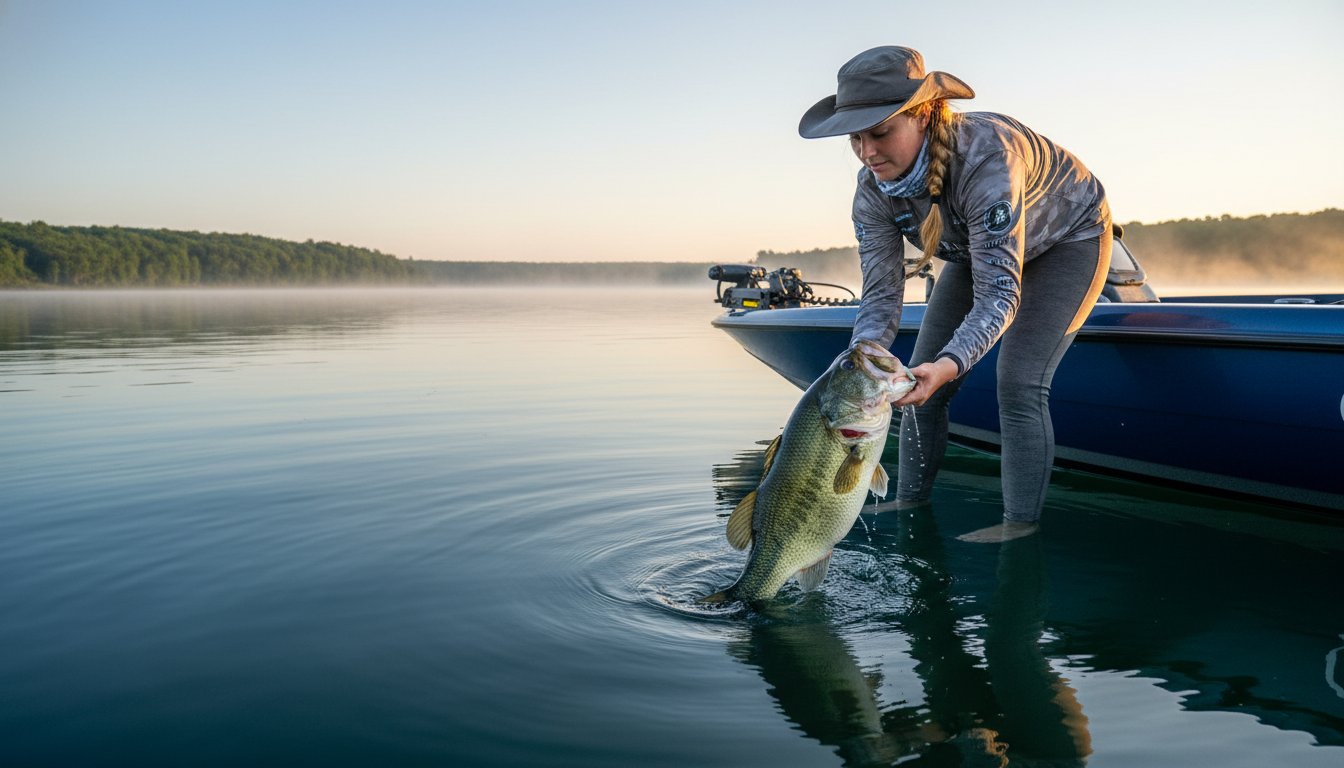
When you place the fish back in the lake, always face it into the current or the direction of the wind. This naturally forces oxygen-rich water over the gills without the fish having to work for it. If the water is still, use the "Figure-8" revival technique. Gently move the fish in a wide side-to-side pattern. Never pull a bass backward. Moving a fish back and forth can actually drown it by forcing water the wrong way through the delicate gill filaments. You want to mimic the natural flow of water until you feel that unmistakable "kick" against your hand.
The Revival Process
Patience is your best tool during the release. Hold the bass upright in the water until it regains its equilibrium. If you let go too soon and the fish rolls belly-up, don’t panic. Reach back in, support the belly, and resume the Figure-8 motion. It might take a minute or two, especially in warmer water or after a long fight. Never give up on a fish until it powers away on its own. Seeing that tail slap as they disappear into the dark water of Lake Okeechobee or the grass of the Everglades is the ultimate reward for any true sportsman.
The Final Takeaway
Leading by example is how we protect our sport for the next generation. If you want to capture the memory, keep the photo session short and stay low to the water. A horizontal hold with full belly support is always the best look for a trophy and the safest for the fish. If you really want to master these skills, there is no substitute for time on the water with a pro. Booking a fishing guide is the fastest way to learn these handling nuances in real-world conditions. Whether you are on the St. Johns River or the flats of Lake Toho, these pro tips will ensure your personal best lives to fight another day. Every healthy release is a deposit into the future of the legendary fisheries we love.
Protect the Future of Your Local Fishery
Mastering catch and release best practices for bass is the ultimate mark of a pro. It’s about more than just a quick photo; it’s about ensuring that ten pounder is there for the next angler to experience. You now have the tools to manage slime coat protection, barotrauma, and proper revival techniques. By prioritizing a fast release and using the right gear, you are making a direct investment in the health of our lakes. These field-tested techniques for trophy survival are what keep our fisheries world class and our legends growing.
Our expert local guides have decades of experience on the water and a 100 percent commitment to sustainable catch and release. We don’t just put you on the fish; we show you the professional handling skills that protect these incredible animals. If you’re ready to hit the water and see these tactics in action, it’s time to get out there with the best in the business. Book a Guided Bass Trip and Learn Pro Handling Skills! We can’t wait to help you land, handle, and release the trophy of a lifetime. See you on the water!
Frequently Asked Questions
Is it okay to hold a bass by its jaw?
You can safely lip a smaller bass vertically, but never crank a heavy fish to a horizontal angle without belly support. Holding a trophy by the jaw alone can snap the lower hinge or damage internal organs due to the sheer weight. Always use a second hand to support the weight of any fish over five pounds to keep its spine and jaw intact.
How long can a bass stay out of the water?
A bass should spend less than one minute out of the water to ensure a full recovery. A 2025 study on striped bass highlighted that air exposure is the most critical factor in fish survival. If you can’t get your photo and hook removal done in the time you can hold your own breath, the fish is likely suffering from significant physiological stress.
Should I cut the line if a bass is gut-hooked?
You should always cut the line as close to the hook as possible if the fish is hooked deep in the throat or gullet. Ripping at a buried hook causes massive internal bleeding that the fish cannot survive. Modern hooks are often made of materials that will eventually pass or corrode; giving the bass a much better chance at life than a torn throat.
Does ‘fizzing’ a bass really work for barotrauma?
Fizzing is effective at venting the swim bladder, but it’s a precision procedure that can easily go wrong if you hit a vital organ. For most weekend anglers, using a descender tool is a safer way to follow catch and release best practices for bass. These tools use weights to return the fish to its original depth, allowing the pressure to equalize without the need for needles.
Why do bass go belly-up after being released?
Bass roll over because of extreme lactic acid buildup or air trapped in the swim bladder. When a fish fights to total exhaustion, its muscles lose the power to maintain an upright position. If this happens, you need to provide extra revival time in the water. Never let a fish go until it can stay upright and kick away under its own power.
Can I use a dry towel to hold a slippery bass?
Never use a dry towel or any abrasive material to handle a bass. Dry fabrics act like a squeegee, stripping away the protective mucus layer that prevents infections and parasites. If you’re struggling to hold a fish, wet your hands thoroughly first. A wet, bare-handed grip is the only way to keep that biological shield intact.
What is the best way to revive a tired bass in hot weather?
Use the Figure-8 technique in the coolest, most oxygenated water available, such as near a spring or a shaded bank. In the summer heat, water holds less oxygen, so the revival process takes significantly longer. Keep the fish’s head pointed into any available current and wait for a strong, purposeful kick before you let go.
Does catch and release actually help fish populations?
Catch and release is the backbone of modern trophy management. By returning healthy fish to the water, you’re preserving the genetics and the lunker potential of the lake. Following catch and release best practices for bass ensures that even in high-pressure areas, the population remains stable and big females can continue to spawn for years to come.

Article by
Mr Bass
Todd Kersey, widely known as Mr. Bass by Field & Stream, is a professional angler, accomplished author, and dedicated philanthropist with a lifelong passion for bass fishing. Armed with a degree in Outdoor travel, Mr. Bass has expertly combined his knowledge with his practical fishing experience to become one of the most respected names in the bass fishing, his deep understanding of bass habitats, and fish behavior has earned him numerous accolades as a asset of the sport. Serving 8 years as FWC Stakeholder Chairperson. Leading and passing cutting-edge legislation, such as the Black Bass Management plan, and successfully building, passing, and financing the Trophy Catch program. As CEO, he is committed to giving back to the community through his philanthropic efforts. He supports a variety of causes, especially those centered around physical disabilities. Through his advocacy, his mentorship programs inspire anglers to engage in fishing stewardship, helping to raise more than $ 18 million in donations. Mr. Bass continues to inspire anglers and outdoor enthusiasts alike with his commitment to the sport and the world around him.