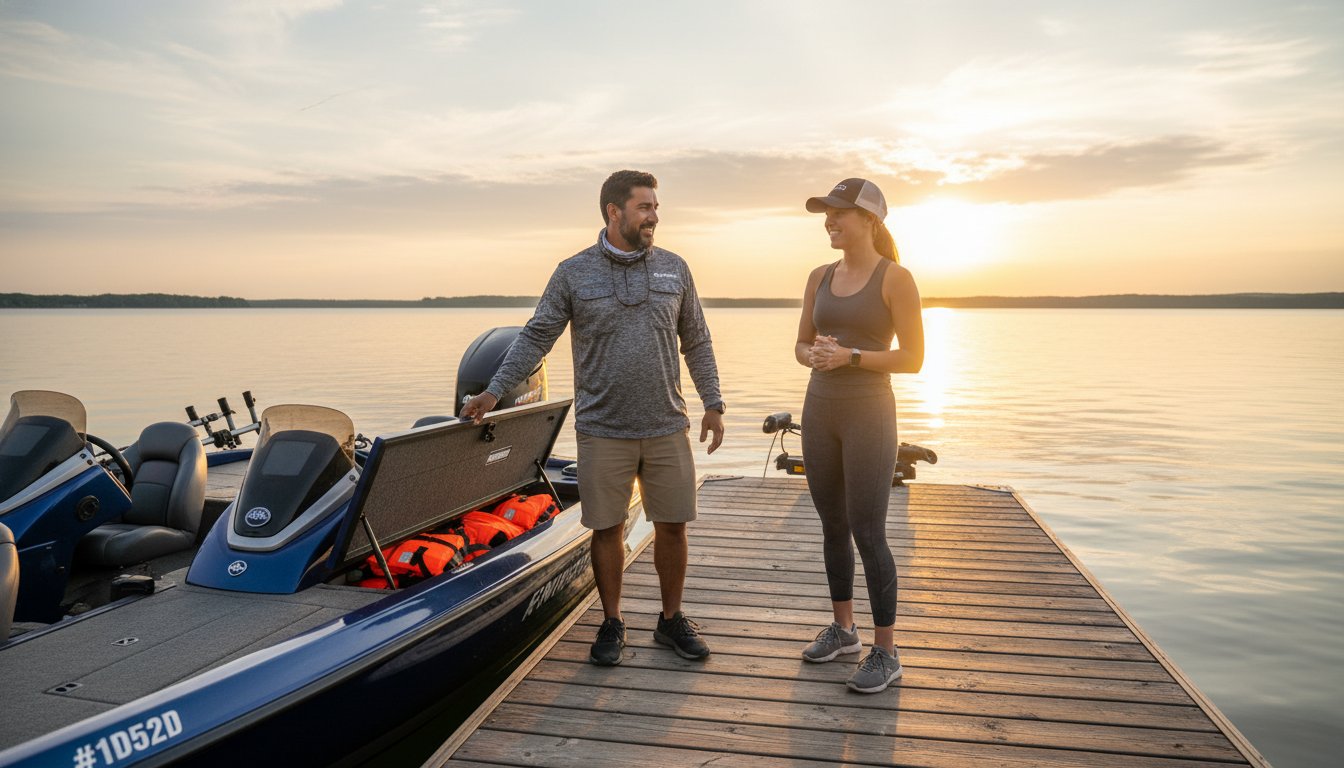

A shiny boat and a high-end sonar unit don’t make a guide professional; their commitment to the safety gear you hope to never use does. You’ve likely heard stories about “cowboy” guides who prioritize the catch over the crew, leaving you to worry about sudden weather shifts or whether there’s actually a life jacket within reach. It’s natural to feel some anxiety when you’re heading out onto big water, especially when you’re not sure what equipment the captain provides versus what you should bring yourself. Using a proper fishing charter safety checklist is the only way to ensure your day on the water stays focused on the fish.
I’m going to give you my field-tested framework so you can vet any captain like a pro and step onto the deck with total confidence. You deserve to focus on landing a trophy bass, not wondering if the equipment is up to code. We’ll walk through how to inspect a vessel for 2026 USCG compliance, what specific freshwater emergencies you need to prepare for, and exactly how to evaluate a guide’s credentials before you ever hand over a deposit. Whether you’re hitting Lake Okeechobee or the Everglades, safety starts at the dock.
Key Takeaways
- Learn how to verify a captain’s USCG credentials and insurance coverage to separate seasoned pros from “cowboy” guides who cut corners.
- Use our fishing charter safety checklist to perform a quick dockside audit of life jackets and emergency signals before the engine even starts.
- Master the “Lightning Rule” and wildlife etiquette to stay safe from the unique hazards found in freshwater environments like the Everglades.
- Gain the confidence to evaluate any vessel’s safety protocols so you can keep your focus entirely on landing a trophy bass.
Why a Safety Checklist is Your Most Important Piece of Tackle
Safety isn’t just a boring set of rules; it’s the foundation of every successful day on the water. A “cowboy” guide might have a fast boat and a loud personality, but if they’re cutting corners on maintenance or safety protocols, they’re gambling with your time and your life. Professional guides know that a successful trip is one where everyone comes home safely. This is where a fishing charter safety checklist becomes your best friend. It helps you spot the difference between a seasoned expert and someone just looking for a quick buck. You’re paying for an experience, and that experience should never include wondering if the life jackets are buried under a pile of wet ropes.
To better understand the basics of staying safe on your next outing, watch this helpful video:
The Reality of Freshwater Risks
There’s a common myth that lakes are “safe water” compared to the open ocean. I’ve seen Lake Okeechobee turn from glass to six-foot rollers in less than twenty minutes. Freshwater environments pose unique threats like rapid lightning strikes and hidden submerged timber that can shear off a lower unit in a heartbeat. Understanding recreational boating safety is just as vital on a reservoir as it is ten miles offshore. We prioritize these protocols on every guided fishing trip because we know how fast the environment can change. Professional navigation in shallow, stump-filled water requires a captain who isn’t distracted by anything other than the task at hand. When the sky turns dark, you want a guide who already has a plan to get you back to the ramp.
The Cost of a “Cheap” Charter
You might save fifty bucks on a “budget” guide, but you’re likely paying for it in hidden risks. Unlicensed guides often skip out on commercial insurance, leaving you and your family unprotected if an accident happens. A clean boat and a well-maintained engine are usually the first signs of a guide who respects the water. When a captain invests in high-end safety gear and follows a strict fishing charter safety checklist, it shows they have the same attention to detail when it comes to finding trophy bass. Equipment failure isn’t just an inconvenience; it’s a safety hazard. A professional standard ensures that the boat is as reliable as the person driving it, allowing you to focus on the bite instead of the bilge pump.
This commitment to professional-grade protection is a mindset that carries over from the home to the water; just as you might rely on Boss Security Screens to secure your sliding doors, you should expect your guide to have invested in the best safety gear available.
Safety is a shared mission. When you’re an informed guest who knows what to look for, you help the captain keep things running smoothly. A quick five-minute dockside audit of the PFDs and emergency signals isn’t about being pushy. It’s about being prepared. By being an active participant in your own safety, you become a better angler and a more confident passenger. Trust your gut; if the gear looks neglected, the service probably is too. Stick with the pros who treat safety with the same passion they treat the pursuit of a new personal best.
Vetting Your Captain: The Pre-Booking Safety Audit
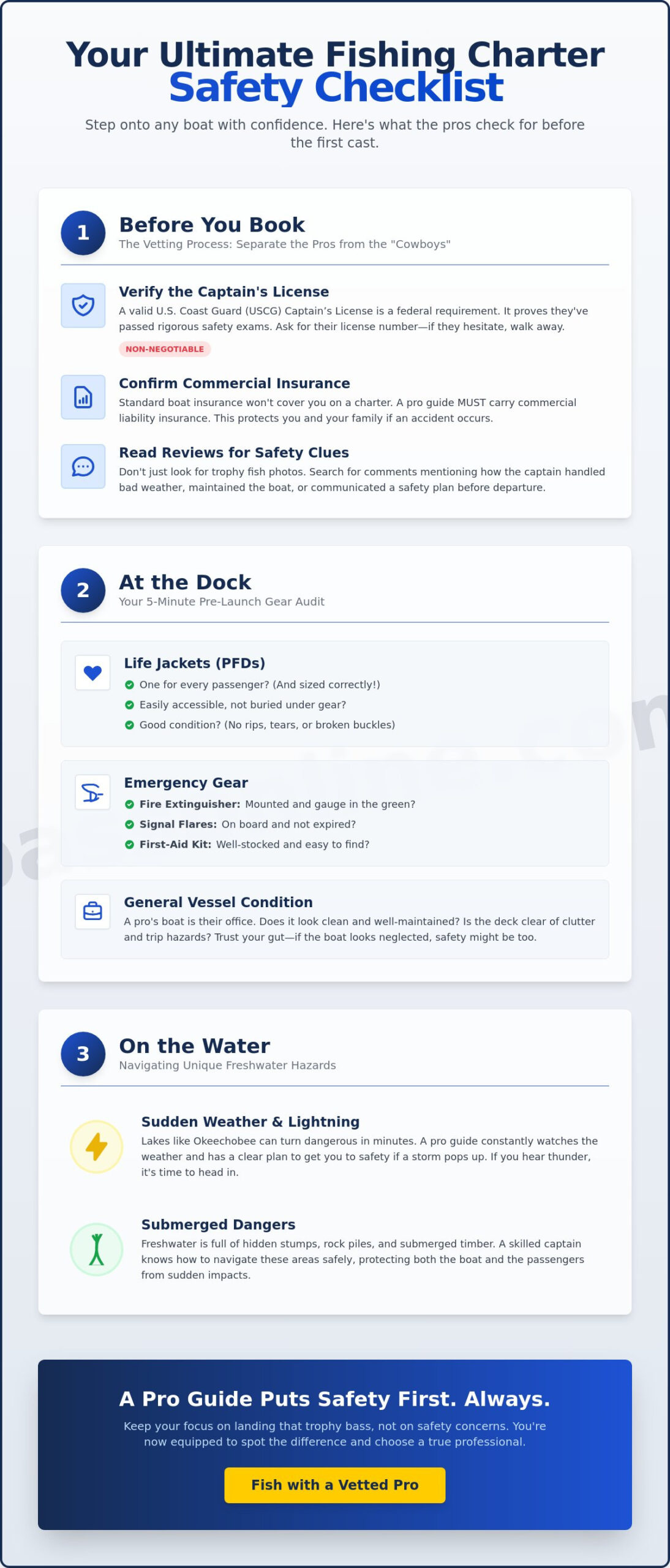
Most anglers start their search by scrolling through photos of giant bass, but your vetting process needs to start with the captain’s paperwork. You wouldn’t jump into a stranger’s car for a cross-country trip without knowing they have a license; the same logic applies to the water. A valid U.S. Coast Guard (USCG) Captain’s License isn’t a suggestion; it’s a federal requirement for any for-hire operation. This credential proves the captain has passed physicals, drug tests, and rigorous exams on U.S. Coast Guard boating safety regulations. If a guide is hesitant to provide their license number, that’s your cue to keep looking. This is the first and most critical step on your fishing charter safety checklist.
Beyond the license, a professional freshwater guide must carry commercial liability insurance. Standard boat insurance often doesn’t cover “for-hire” activities, which leaves you exposed if something goes wrong. When you’re narrow-down your options, take a moment to do a deep-dive into fishing charter reviews. Don’t just look for “we caught fish.” Look for comments about how the captain handled a sudden afternoon thunderstorm or if the boat felt clean and organized. A captain who maintains a tidy deck is usually a captain who maintains their safety gear with the same level of discipline.
Questions to Ask Before You Pay
- “What is your weather cancellation policy?” A pro will have a clear, transparent policy. If they insist on going out during a small craft advisory, they’re prioritizing your deposit over your safety.
- “Do you have a first aid kit and an E-towel on board?” You want to know they’re prepared for minor hooks in fingers or more serious emergencies.
- “Are your life jackets modern or old orange horse-collars?” Modern Type III PFDs are comfortable and actually get worn, whereas the old orange ones usually stay buried in a locker.
Red Flags in Local Listings
Keep an eye out for red flags that scream “cowboy guide.” If a listing is missing a license number or uses vague language about their equipment, be wary. Professional listings should mention specific gear like GPS units, VHF radios, and high-quality livewells. If you ask about emergency procedures and get a “don’t worry about it” or a shrug, that’s a major warning sign. A real pro is proud of their safety record and will happily walk you through their protocols. If you have any doubts about what to look for in a local guide, feel free to reach out to our team for expert advice.
Vessel suitability is another factor often overlooked. A boat that’s perfect for the tight, winding creeks of the Everglades might be dangerously undersized for the open water of Lake Erie. Ensure the boat the captain uses is specifically designed for the conditions you’ll be facing. A professional will always match the right tool to the job, ensuring the boat is stable, seaworthy, and equipped with the latest navigation technology to keep you on the fish and out of harm’s way.
The Essential On-Board Gear Checklist for 2026
When you step onto the deck, your eyes should move past the rods and reels for a moment. You’re looking for the gear that ensures you get back to the ramp. A real-world fishing charter safety checklist starts with what you can see and touch before the lines are even untied. Start with the fire extinguisher. It should be mounted in a reachable spot, and the pressure gauge must be in the green. If the inspection tag is years out of date, it tells you everything you need to know about the captain’s maintenance habits. A “cowboy” guide might ignore these details, but a pro never does. Next, ask where the visual distress signals are kept. Even on a freshwater lake, having flares or an SOS light is a requirement when the sun goes down.
PFD Standards for the Modern Angler
By 2026, the U.S. Coast Guard has fully transitioned to a new buoyancy level labeling system. You want to see Level 70 or higher PFDs on board rather than the old “Type” labels. I always recommend wearing a standard foam vest while the big motor is running. Inflatables are comfortable for fishing, but they require manual or water-activated triggers that can fail if not maintained. If you have kids with you, ensure the vest is the right size. A life jacket that’s too big will just float up over their head in the water. We follow National Safe Boating Council guidelines to ensure every guest has a vest that fits perfectly and is ready for immediate use. Our professional guides lead by example and usually have their vests on before the engine starts.
Emergency Electronics
Don’t rely solely on your cell phone. In remote areas like the Everglades or the center of Lake Okeechobee, signal bars disappear fast. A professional guide will have a fixed-mount VHF radio and likely a satellite messenger. These tools provide a lifeline when towers are out of reach. Check that the captain has a modern GPS with a clear bread-crumb trail. If the electronics go dark, they need a backup power supply to navigate home. For remote expeditions, an EPIRB (Emergency Position Indicating Radio Beacon) is the ultimate insurance policy. It sends a distress signal directly to satellites, ensuring help is on the way even if all other systems fail.
The first aid kit is the final piece of your fishing charter safety checklist. A bass boat needs more than just band-aids. Look for a kit that includes wire cutters for hook removal, antiseptic wipes, and pressure bandages. Hook injuries are the most common mishap on the water. A pro will have the tools to handle it quickly so you can get back to the action without a trip to the emergency room.
Weather, Water, and Wildlife: Navigating Freshwater Hazards
Freshwater environments are dynamic systems that demand constant respect. While the previous sections of your fishing charter safety checklist focused on the boat and the captain, this part covers the variables you cannot control: the elements and the inhabitants. Lightning is the most immediate threat on a lake. A graphite fishing rod is essentially a lightning rod; if you hear thunder, you are already in the strike zone. Professional guides follow the “30-30” rule. If you see a flash and hear thunder within thirty seconds, the storm is within six miles. We don’t wait for the rain to start; we head for the ramp immediately. Most “cowboy” guides might try to squeeze in one more cast, but a pro knows that a personal best bass isn’t worth the risk of a strike.
Heat management is another critical safety factor, especially during the 100-degree days common on Southern reservoirs. Dehydration and heatstroke can sneak up on you when the bite is hot. A professional guide will always have plenty of water on board and will encourage you to drink it before you feel thirsty. If you start feeling dizzy or stop sweating, the trip is over. Safety means knowing when to call it a day to ensure everyone stays healthy for the next outing.
Freshwater Wildlife Awareness
When you are fishing the Everglades or Lake Okeechobee, you are sharing the water with apex predators. Alligator safety is simple: keep your hands and feet inside the vessel at all times. Never reach into the water to lip a fish without the captain’s green light. Snakes are another factor to consider when flipping heavy cover or reaching for a snagged lure in the reeds. Knowing how to identify a harmless water snake versus a venomous cottonmouth is a skill our fishing guides use every single day. We maintain a safe distance from nesting birds and alligators to ensure we don’t provoke a defensive reaction, keeping the experience adventurous yet secure.
Tackle and Hook Protocol
Hook injuries are the most frequent medical issue on a bass boat. One bad backcast or a head-shaking fish can put a treble hook deep into a hand or, worse, an eye. This is why polarized glasses are eye protection first and fishing tools second. They provide a physical barrier against flying lures. We also practice strict communication regarding casting zones. Before you launch a long cast, check your surroundings and let your partner know where you are aiming. Always keep a pair of high-quality pliers ready for every catch. The “Hook-Out” technique ensures the fish is released quickly and your fingers stay clear of the barbs. If you want to book your next adventure with a safety-first professional, make sure they prioritize these small but vital details.
The Bass Online Standard: Professionalism on Every Cast
I’ve spent years on the water, and I can tell you that a great day of fishing starts long before the first cast. At Bass Online, we don’t leave your safety to chance or rely on a “best guess” approach. Every captain in our network undergoes a rigorous vetting process that goes far beyond just checking a license. We verify their on-water experience, their local reputation, and their commitment to the same fishing charter safety checklist I’ve shared with you today. We only partner with the best because your time on the water is too valuable to spend with anything less than a seasoned pro.
Our commitment to excellence extends to the equipment we use. We invest in state-of-the-art boats and the latest safety gear to ensure every trip is as secure as it is successful. Local expertise is our secret weapon for safety. Knowing exactly where a submerged stump sits or how a sandbar shifts after a storm prevents accidents that a less experienced guide might miss. We believe that safety and success are never mutually exclusive. In fact, the most prepared anglers are usually the ones who land the biggest fish. When you step onto one of our boats, you’re stepping into a environment designed for peak performance and total reliability.
Why Thousands Trust Our Guides
- Regional Authority: We have decades of experience across Florida, Alabama, and several other top-tier fishing states, giving us an unmatched understanding of local waters.
- Conservation First: We practice safe catch-and-release to protect the resource, ensuring these trophy fisheries remain healthy for future generations.
- The Pre-Flight Briefing: Every trip starts with a “Safety First” briefing so you know exactly where the gear is and what the plan is for the day.
Booking Your Next Adventure
Finding the right guide shouldn’t be a gamble. Our platform makes it easy to find the safest bass fishing trips available today. When you’re preparing for your trip, remember to pack your polarized glasses, plenty of sunblock, and a positive attitude. We’ll handle the heavy lifting, the navigation, and the safety protocols. This allows you to stay locked in on the bite. Take the final step and book with confidence. You’re not just hiring a boat; you’re joining an insider journey led by the best in the business. Let’s get out there and find your next trophy.
Every cast is an opportunity, and we make sure those opportunities happen in the safest environment possible. Our guides are results-driven and approachable, ready to share their knowledge while keeping a watchful eye on the horizon. Trust the standard that thousands of anglers rely on every year. Your success on the water is our personal commitment, and it starts with the peace of mind that only a professional operation can provide. We’ve done the vetting so you can do the fishing.
Step Onto the Deck with Total Confidence
You now have the exact framework needed to separate the true professionals from the “cowboy” guides. By following a rigorous fishing charter safety checklist, you ensure that every minute on the water is spent hunting for trophy bass rather than worrying about what might go wrong. Remember to always verify a captain’s USCG credentials, inspect the on-board safety gear before leaving the dock, and stay vigilant about rapid freshwater weather changes. Safety isn’t just a set of rules; it’s the foundation for every successful expedition we lead.
We’ve built our reputation on over 25 years of professional guiding experience. Our network features top-rated captains with verified USCG licenses and thousands of 5-star safety-focused reviews from anglers just like you. We handle the technical details and risk management so you can focus on the thrill of the strike. The water is ready, and the big ones are biting. Book Your Safe and Professional Bass Fishing Charter Today! and let’s turn your next trip into a legendary story.
Frequently Asked Questions
What is the most important safety item on a fishing charter?
A properly fitted life jacket is the single most important safety item on any boat. While high-tech GPS and first aid kits are vital, a PFD is the only thing that keeps you afloat if you end up in the water unexpectedly. I always tell my clients that the best life jacket is the one you’re actually wearing, not one tucked in a locker. Including this in your fishing charter safety checklist ensures you never leave the dock unprepared.
Do I need to bring my own life jacket on a guided fishing trip?
You don’t have to bring your own, as every licensed charter is required by law to provide USCG-approved PFDs for every passenger on board. However, many serious anglers prefer to bring their own high-quality, breathable fishing vest for a better fit and better range of motion while casting. If you’re bringing a child, I often recommend bringing their personal vest to ensure it fits their specific weight and height perfectly for the duration of the trip.
What happens if the weather turns bad during our charter?
Your captain will make the call to head back to the ramp or seek immediate shelter if lightning or high winds move in. We monitor weather radar constantly because freshwater storms can develop in minutes. If we have to cut the trip short for safety, we’ll discuss rescheduling or pro-rating the time based on our weather policy. Never pressure a guide to stay out when the sky turns black; no trophy bass is worth a lightning strike.
Are children required to wear life jackets at all times on the boat?
Yes, federal and state regulations almost always require children under a certain age, often 13 and under, to wear a USCG-approved life jacket at all times while the vessel is underway. Even if the law in a specific state is more relaxed, my personal rule is that kids keep their vests on from dock to dock. It’s about building good habits and ensuring that a sudden wake or turn doesn’t catch them off guard during the trip.
How can I tell if a fishing guide is properly licensed and insured?
Ask the guide for their U.S. Coast Guard Merchant Mariner Credential number before you book. A professional will have this readily available and won’t be offended by the question. You should also verify they carry commercial liability insurance, as standard boat policies don’t cover paying passengers. Verifying these documents is a critical step in your fishing charter safety checklist to ensure you’re hiring a legitimate pro rather than an unlicensed “cowboy” guide who cuts corners.
What should I do if I get a hook stuck in my skin while fishing?
Notify the captain immediately and don’t try to rip the hook out yourself. If the barb is buried, we typically use the “string-pull” method or push the barb through to snip it with wire cutters. We keep antiseptic and bandages in the first aid kit to clean the wound right away. If the hook is near an eye or a joint, we’ll head to the dock so a medical professional can handle it safely and effectively.
Is it safe to fish in areas with alligators or other wildlife?
It is perfectly safe as long as you maintain a respectful distance and keep all body parts inside the boat. Alligators are generally wary of humans and will move away as the boat approaches. Problems only arise when people try to feed them or get too close to a nest. My job is to position the boat so you can get the perfect cast without ever putting us in a position where the wildlife feels threatened.
What is a float plan and should I file one for a guided trip?
A float plan is a simple document that describes your boat, your passengers, and your expected return time. While your guide likely has a system in place with their home base, it’s always a smart move to let a family member or friend know which lake you’re on and who you’re with. This ensures that if you aren’t back by sunset, someone on land knows exactly where to start looking for your group to ensure a safe return.

Article by
Mr Bass
Todd Kersey, widely known as Mr. Bass by Field & Stream, is a professional angler, accomplished author, and dedicated philanthropist with a lifelong passion for bass fishing. Armed with a degree in Outdoor travel, Mr. Bass has expertly combined his knowledge with his practical fishing experience to become one of the most respected names in the bass fishing, his deep understanding of bass habitats, and fish behavior has earned him numerous accolades as a asset of the sport. Serving 8 years as FWC Stakeholder Chairperson. Leading and passing cutting-edge legislation, such as the Black Bass Management plan, and successfully building, passing, and financing the Trophy Catch program. As CEO, he is committed to giving back to the community through his philanthropic efforts. He supports a variety of causes, especially those centered around physical disabilities. Through his advocacy, his mentorship programs inspire anglers to engage in fishing stewardship, helping to raise more than $ 18 million in donations. Mr. Bass continues to inspire anglers and outdoor enthusiasts alike with his commitment to the sport and the world around him.