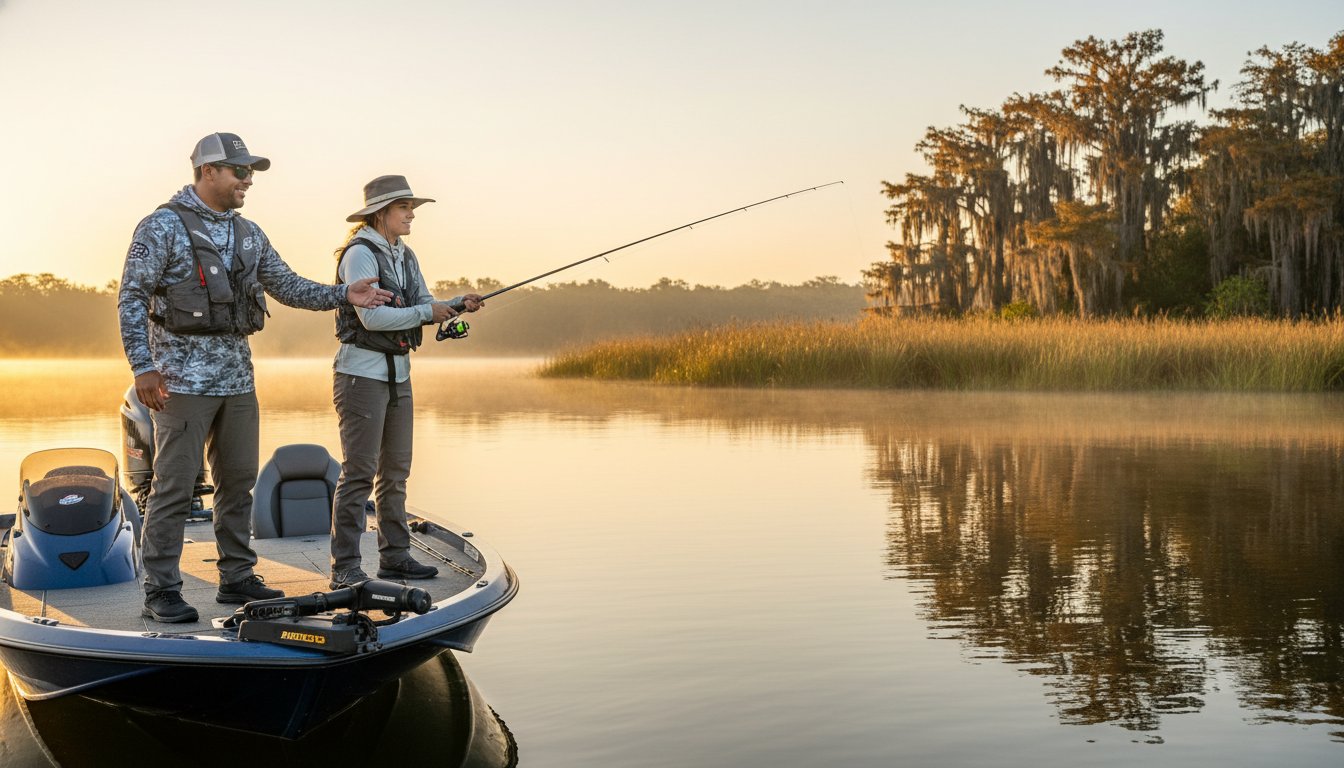

You are standing on the dock at Lake Okeechobee as the sun starts to burn through the morning mist, feeling a mix of raw adrenaline and the nagging fear that you are about to look like a total rookie in front of a pro. It is completely normal to feel a bit of dock anxiety when you are preparing for your first guided fishing trip. You want to land that trophy bass, but you aren’t sure if you should bring your own gear or if you will just be in the way. I have spent thousands of hours behind the console, and I know that a little bit of the right prep makes the difference between a frustrating day and a personal best record.
I am going to show you exactly how to communicate with your guide, what tackle to leave at home, and how to navigate 2026 license regulations without a headache. We will break down the essential gear checklist and the etiquette secrets that turn a standard charter into an elite, stress-free learning experience. From managing motion sickness to mastering new techniques, this guide ensures you hit the water with the confidence of a seasoned local expert. You will leave the dock ready to focus on the only thing that matters: the strike.
Key Takeaways
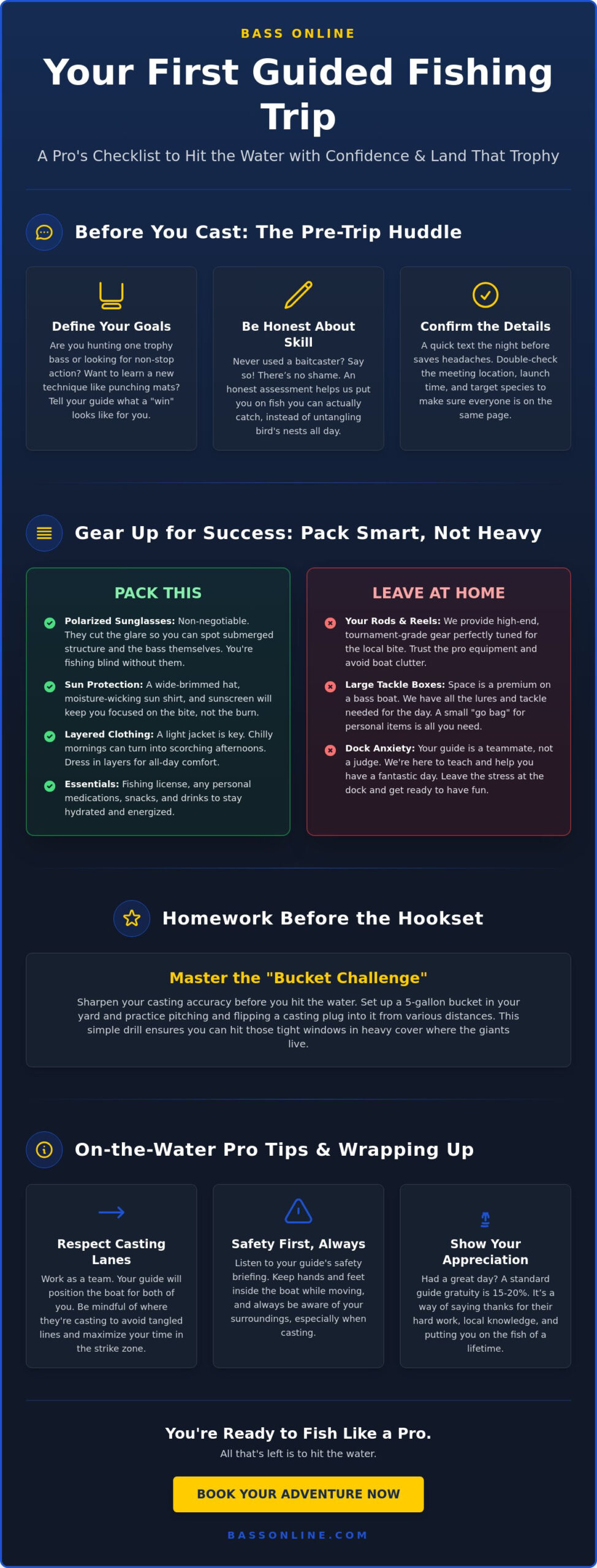
- Build a real partnership with your guide by being honest about your skill level so they can put you in the best position to land a trophy.
- Streamline your gear and avoid boat clutter by relying on the professional tackle provided, which is a vital step when preparing for your first guided fishing trip.
- Master the “Bucket Challenge” at home to sharpen your casting accuracy before you hit the water, ensuring you can hit tight windows in heavy cover.
- Understand on-the-water etiquette regarding casting lanes and boat safety to keep the day running smoothly and maximize your time in the strike zone.
- Learn the proper standards for catch-and-release and guide gratuity to wrap up your expedition with the professionalism of a seasoned angler.
Table of Contents
Communication and Honesty: Setting the Stage Before You Hit the Dock
A successful day on the water doesn’t begin at the boat ramp. It starts the second you finalize your booking. Think of your guide as a teammate rather than a chauffeur. When you’re preparing for your first guided fishing trip, that initial phone call or email is your chance to align your expectations with the guide’s local knowledge. Recreational fishing is about enjoyment, but that enjoyment is built on a foundation of clear communication.
To better understand this concept, watch this helpful video:
Confirming the small details early saves massive amounts of time later. Double-check your meeting location, the exact launch time, and which species you’re targeting. For instance, if you’re heading to Lake Okeechobee or Lake Toho in 2026, you want to be sure about which gate or marina you’re meeting at, as these can change based on water levels or seasonal patterns. A quick text the night before ensures everyone is on the same page.
Defining Your Goals for the Day
What does a "win" look like to you? Some anglers want to hunt for one 10-pound trophy bass, even if it means fewer bites. Others want to keep the rods bent all day with high numbers of aggressive schoolers. If you want to learn a specialized technique like "punching" heavy mats or "flipping" into timber, tell your guide. They can rig the right gear before you even arrive. Mention any physical needs or mobility issues too. We can accommodate almost anything, but knowing ahead of time helps us pick the right boat and location for your comfort.
The Honesty Policy: Your Skill Level Matters
Don’t feel pressured to act like a pro. I’ve seen plenty of folks try to hide their inexperience, only to spend half the morning untangling "professional" bird’s nests in their baitcasters. Your guide wants you to be brutally honest. If you’ve never touched a baitcasting reel and prefer a spinning rod, say so. There’s no shame in it. Being transparent about your baseline casting ability allows the guide to tailor their instruction and boat positioning so you’re always in the strike zone.
-
Be specific: Mention if you’re comfortable casting into tight cover or if you need open water.
-
Gear familiarity: Clarify if you need a quick tutorial on the latest 2026 sonar electronics.
-
Instruction level: Let us know if you want a silent partner or a hands-on coach.
A guide who knows your limits can put you in positions where you’ll actually succeed, rather than struggling with a presentation that’s outside your current comfort zone. Taking the time to talk through these points is the most important part of preparing for your first guided fishing trip.
The Ultimate Packing List for Bass Fishing Success
When you’re preparing for your first guided fishing trip, the urge to pack every piece of tackle you own is strong. Resist it. On a professional bass boat, space is at a premium and clutter is the enemy of a clean hookset. We provide high-end, tournament-grade rods and reels specifically tuned for the local bite, so you don’t need to worry about bringing your own heavy gear. Most anglers find that they can prepare for the trip effectively by focusing on personal comfort rather than terminal tackle.
Your most critical piece of equipment isn’t a rod; it’s a pair of high-quality polarized sunglasses. These are non-negotiable. Polarization cuts through the surface glare, allowing you to see submerged grass lines, stump fields, and the bass themselves. Without them, you’re fishing blind while I’m seeing the trophy move. Combine these with a moisture-wicking sun shirt and a wide-brimmed hat to handle the 2026 heat. Layering is your best friend. A chilly morning on the St. Johns River can quickly turn into a scorching afternoon, so wearing a light jacket over a breathable shirt keeps you in the game all day.
Personal Essentials and Protection
Protection from the elements keeps you focused on the lure. Use lotion-based sunscreen rather than sprays. Aerosol sprays make the deck slippery and can damage the sensitive electronics on the console. A high-quality lip balm with SPF is also a lifesaver when the wind picks up. For rain gear, always pack a lightweight shell. Even if the forecast shows zero percent chance of rain, a sudden Florida downpour or the spray from a fast run across the lake can soak you to the bone. Finally, wear proper footwear with non-marking soles. Professional bass boats have specialized gel coats and carpets that can be easily ruined by black-soled boots or street shoes.
Tackle and Gear: What to Bring vs. What to Leave
-
The Lucky Rod: You’re welcome to bring one personal rod if it has sentimental value, but trust our setups. We’ve rigged our gear for the specific structure we’re hitting.
-
Legal Requirements: Don’t wait until you’re at the dock to check your Florida fishing license . Having this ready on your phone saves time and avoids legal headaches.
-
Dry Storage: Bring one small, waterproof bag for your phone, wallet, and keys. We have dedicated lockers to keep your valuables safe and dry while we’re running.
Keeping your gear streamlined ensures we spend more time casting and less time digging through bags. If you have questions about specific regional gear for an upcoming outing, feel free to reach out to our team for a quick recommendation based on current water conditions.
On-the-Water Etiquette: How to Work with Your Guide
The deck of a professional bass boat is a high-performance workspace. When you are preparing for your first guided fishing trip, understanding the unwritten rules of the boat is just as vital as knowing how to cast. Think of the guide as the quarterback and yourself as the wide receiver. We are here to put you in the best position to score, but the success of the play depends on how well we work together. The guide is the captain, and their word is final on everything from safety protocols to exactly where the boat sits in relation to a submerged grass line.
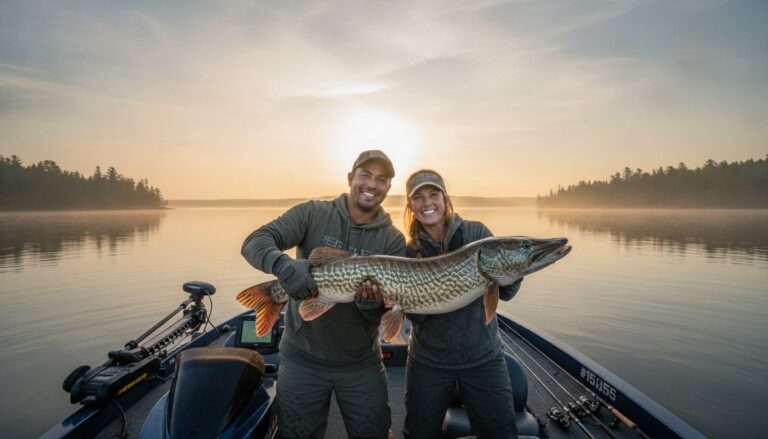
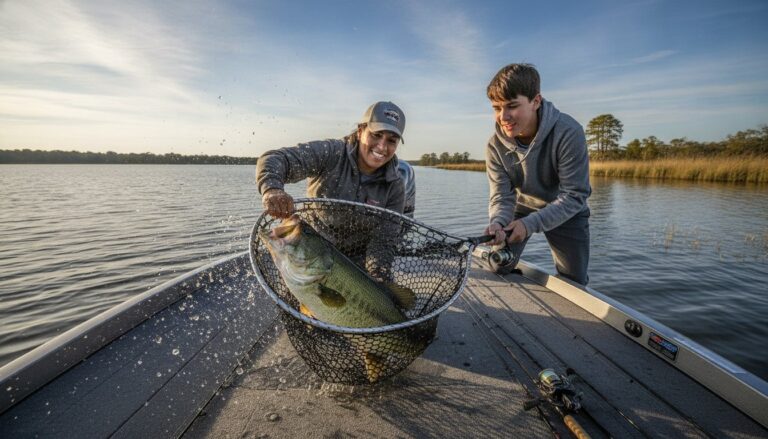
One of the most common points of confusion is "The Front of the Boat." Generally, the guide stays on the trolling motor at the bow to navigate and spot fish. I will usually point out specific casting lanes for you. If I tell you to "pitch to the 10 o’clock position," I’m seeing a piece of structure or a sonar return that you might miss. Listening to "The Pitch" is how you maximize your time. When we hook into a giant, let me handle the landing. I have a specific way of netting or lipping fish to ensure they stay healthy for release, and I’ll make sure we get the perfect trophy photo before the fish goes back into the water.
Safety and Boat Rules
Safety is the one thing I never compromise on. You should always keep your life jacket accessible, and in 2026, many pros require you to wear it whenever the big outboard motor is running. Awareness is your best tool. Always glance behind you before you launch a cast; a hook in the guide’s ear is a fast way to end a great day. Also, remember to stay hydrated. The wind on the water can trick you into thinking you aren’t sweating, so keep drinking water even if you don’t feel thirsty. For more on safety and basic prep, check out this Beginner’s Fishing Checklist from the U.S. Fish & Wildlife Service.
Listening to the Expert
If I suggest changing your retrieve speed, try to match my instructions immediately. Often, bass are keyed into a very specific vibration or fall rate that changes by the hour. Don’t be afraid to ask "Why?" I love explaining the mechanics of the bite because it makes you a better angler for your next trip. Most importantly, trust the spot. If we are sitting on a ledge or a specific clump of hydrilla, it’s because my electronics or years of experience tell me the fish are there. Stay focused, keep your lure in the water, and be ready for that strike.
Working in sync with your guide turns a simple boat ride into a precision strike. By following these etiquette steps, you ensure that every minute on the water is spent hunting fish rather than fixing avoidable mistakes.
Sharpening Your Skills Before You Hit the Dock
You don’t need to be a tournament pro to have an incredible day on the water, but a little homework goes a long way. When you are preparing for your first guided fishing trip, the goal is to spend your time with the lure in the strike zone, not untangling line from a cypress limb. Accuracy is your best friend. A trophy bass often hides in a tiny pocket of shade or deep under a specific mat of vegetation. If you can put your bait exactly where I point, your catch rate will skyrocket.
I recommend trying the "Bucket Challenge" in your backyard. Set a five-gallon bucket twenty feet away and practice landing your lure inside it without a splash. Focus on underhand pitches and sidearm casts. These lower-profile movements are quieter and keep the lure from spooking fish in shallow water. Mastering this stealthy approach is a core part of bass fishing success. It is also smart to practice casting into a breeze. Large lakes are rarely dead calm, and knowing how to thumb your spool against the wind prevents the dreaded bird’s nest.
Practicing Your Casting Accuracy
-
Stealth counts: If you can pitch a jig under a dock or between lily pads with minimal surface disturbance, you’re already ahead of most weekend warriors.
-
Wind management: Practice casting with the wind blowing toward you. This helps you develop the "thumb feel" needed to prevent backlashes on the water.
-
The Palomar Knot: Master this one knot. It is the strongest and easiest connection for braided and fluorocarbon lines. If you can re-rig yourself quickly after a break-off, we keep the boat moving.
Visualizing the strike is the next step. Beginners often mistake a "thump" for a snag. A snag is a steady, heavy weight that doesn’t move. A bass strike is usually a distinct "tap-tap" or a sudden, unexplained slack in your line. When you feel that vibration, don’t hesitate. Swing for the fences and set that hook hard.
Understanding Bass Seasonal Patterns
Bass behavior shifts with the water temperature. Before we head out, research the species we are after. Largemouth bass behave differently than aggressive Miami Peacock bass. Knowing whether the fish are in a spawn, post-spawn, or summer pattern helps you understand why I am choosing certain depths or structures. I always suggest reading our latest outdoor blog reports. They give you the real-time scoop on water clarity and what the local lunkers are eating right now.
Ready to put these skills to the test on a world-class lake? If you want to talk through specific techniques or seasonal patterns before we launch, get in touch with our expert guides today.
Wrapping Up the Day and Planning Your Next Adventure
The final run back to the dock is the time to reflect on the patterns we cracked and the fish we landed. While the adrenaline is still pumping, you need to understand the final steps of a professional outing. When you are preparing for your first guided fishing trip, the experience doesn’t end when the rods are stowed. Proper fish handling and dockside etiquette ensure that the resource stays healthy and the partnership with your guide remains strong for years to come.
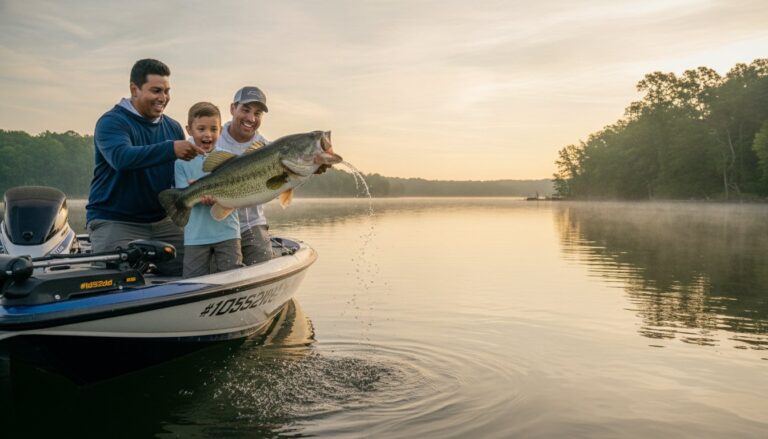
Handling a trophy bass requires a delicate touch. We practice strict catch and release to preserve the genetics of these incredible fisheries. Always wet your hands before touching a fish to protect its protective slime coat. If we’re taking a photo, keep the fish over the water and minimize its time out of the livewell. A quick, vertical hold for a scale weight or a horizontal support for a photo is all you need before we slip that lunker back into the depths.
Tipping and Gratuity Etiquette
One of the most frequent questions I get involves how to handle the end of the day. In the fishing industry, tipping is a standard practice that recognizes the guide’s pre-trip prep, equipment maintenance, and on-the-water instruction. Standard gratuity in 2026 typically ranges from 15% to 20% of the trip’s total price. For an $800 full-day trip, a tip of $120 to $160 is the professional benchmark. This is a key detail to remember when preparing for your first guided fishing trip.
Base your tip on the effort and knowledge the guide shared rather than just the number of fish in the boat. Some days the bite is tough, but a great guide works twice as hard to find a solution. Cash is always the preferred method at the dock. It’s a direct way to show appreciation for the hustle. If you had a world-class experience, leaving a detailed review online is another huge way to support a local business. Mentioning your guide by name helps other anglers know they’re in good hands.
Booking Your Next Trophy Hunt
Before you step off the boat, talk to your guide about the upcoming seasons. Bass patterns change fast. What worked today on the grass flats won’t be the same in three months. If you want to see how these fish behave in different environments, check out other lakes across the region or explore different states for a new challenge.
Many of the best dates for 2026 are already filling up. It’s often best to book your next adventure while the lessons from today are still fresh. Whether you want to chase Peacock bass in Miami or giant Largemouth on Lake Guntersville, staying consistent on the water is the fastest way to master the sport. You came as a client, but you’re leaving as a more capable angler. I’ll see you on the next cast.
Hit the Water with Absolute Confidence
Success on a professional charter isn’t about luck; it’s about the partnership you build before the first cast. By prioritizing honest communication with your captain and keeping your gear streamlined, you’ve already won half the battle. Mastering a few backyard casting drills and understanding basic boat etiquette turns your day into a smooth, high-speed hunt for the biggest fish in the lake. Preparing for your first guided fishing trip is the first step toward an obsession that lasts a lifetime.
We bring over 25 years of professional guiding experience to the table, ensuring you’re paired with 100% professional local guides who know every submerged stump and grass line in their territory. We provide top-tier tackle and tournament-ready boats so you can focus entirely on the strike. Don’t let uncertainty keep you on the dock. The lunker of your dreams is waiting in the weeds, and we have the expertise to put it in your hands.
Ready to land your first trophy? Book a professional guide today!
Frequently Asked Questions
Do I need to bring my own fishing rod and reel?
You don’t need to bring your own rod and reel because we provide tournament-grade setups for every client. If you have a specific lucky rod, you are welcome to bring it, but our gear is already tuned for the local structure and target species. Preparing for your first guided fishing trip is much easier when you don’t have to worry about hauling heavy tackle through an airport or loading it into your truck.
What happens if the weather is bad on the day of my trip?
Safety is our absolute priority, so the captain makes the final call on weather cancellations. We often fish through light rain and wind, but lightning or dangerous gusts will keep us at the dock. If the conditions are unsafe, we will work with you to reschedule the trip for the next available opening. We want your day on the water to be productive and comfortable, not a battle against the elements.
Is a fishing license included in the price of the guided trip?
Fishing licenses are not included in the trip price and must be purchased before you arrive. For the 2026 season, many states like California offer 365-day licenses for $64.54, while Michigan resident annual licenses are approximately $26. Preparing for your first guided fishing trip involves checking these local regulations to ensure you are legal. Having your digital license ready on your phone ensures we can get lines in the water immediately after we launch.
Can I bring alcohol or my own snacks on the boat?
You should definitely bring your own snacks and plenty of water to stay energized. While some captains allow limited alcohol, we generally discourage it to ensure everyone stays safe and focused on the fishing. Hydration is critical when you are out in the sun all day, so pack a small cooler with sports drinks and easy-to-eat sandwiches. Always confirm the specific boat rules with your guide before you arrive at the ramp.
What is the standard tip for a fishing guide?
The standard industry tip for a professional guide is 15% to 20% of the trip’s total price. For example, if you book an $800 full-day trip, a tip of $120 to $160 is considered a professional benchmark. Gratuity is a direct way to reward your guide’s hard work, local expertise, and the extensive prep they do before you even hit the dock. Base your tip on the quality of the overall experience and instruction.
I have never fished before; can I still book a guided trip?
Absolutely, beginners are always welcome on our boats! Many of our most successful clients started with zero experience, and our guides act as coaches to teach you everything from basic casting to advanced lure presentation. We take pride in helping new anglers land their first bass and building their confidence on the water. Our goal is to make sure you leave the boat with a new set of skills and a great story.
What should I wear for a full day of freshwater bass fishing?
Dressing in layers is the best way to stay comfortable from the morning mist to the afternoon heat. Wear a moisture-wicking sun shirt with a high SPF rating, a wide-brimmed hat, and polarized sunglasses to cut the surface glare. Make sure to wear non-marking rubber-soled shoes. This footwear keeps you stable on the deck while protecting the boat’s finish from scuffs and damage during a high-energy day of fishing.
Can we keep the fish we catch on the trip?
Most of our trophy bass trips are strictly catch and release to ensure these fisheries remain world-class for future generations. We want to preserve the genetics of these lunkers so other anglers can experience the same thrill. We will help you get high-quality photos and measurements so you can order a custom replica mount. This practice keeps the local ecosystem healthy and ensures the big fish stay in the water where they belong.

Article by
Mr Bass
Todd Kersey, widely known as Mr. Bass by Field & Stream, is a professional angler, accomplished author, and dedicated philanthropist with a lifelong passion for bass fishing. Armed with a degree in Outdoor travel, Mr. Bass has expertly combined his knowledge with his practical fishing experience to become one of the most respected names in the bass fishing, his deep understanding of bass habitats, and fish behavior has earned him numerous accolades as a asset of the sport. Serving 8 years as FWC Stakeholder Chairperson. Leading and passing cutting-edge legislation, such as the Black Bass Management plan, and successfully building, passing, and financing the Trophy Catch program. As CEO, he is committed to giving back to the community through his philanthropic efforts. He supports a variety of causes, especially those centered around physical disabilities. Through his advocacy, his mentorship programs inspire anglers to engage in fishing stewardship, helping to raise more than $ 18 million in donations. Mr. Bass continues to inspire anglers and outdoor enthusiasts alike with his commitment to the sport and the world around him.