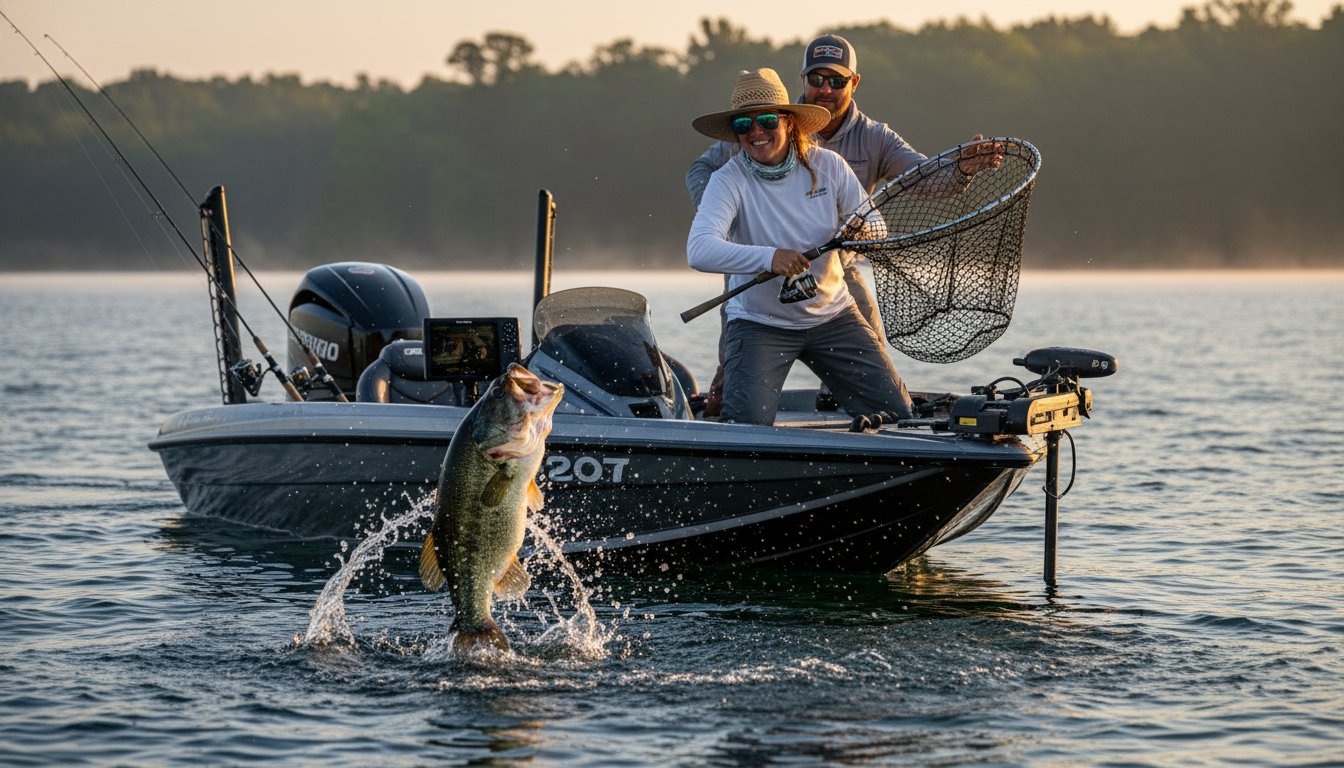

You’re miles from the dock on Lake Okeechobee, the morning mist is burning off, and you suddenly realize your polarized glasses are sitting on the kitchen counter. It’s a gut-wrenching feeling that every angler has faced; it can quickly turn a dream outing into a frustrating struggle against the elements. Knowing exactly what to bring on a fishing charter trip is the difference between fighting a trophy largemouth and fighting a nasty sunburn. You’ve booked this trip to experience the raw thrill of the strike, so don’t let a simple oversight at the boat ramp kill your momentum.
I’ve spent years guiding folks through the thick grass of the Everglades and the legendary ledges of Lake Guntersville, and I’ve seen how being unprepared stalls a great day. We’re going to make sure you’re ready for anything the water throws your way. This guide provides a field-tested checklist of essential gear, from high-performance UPF clothing to the latest 2026 Florida licensing requirements for non-residents. We’ll break down what you need to carry, what your captain provides, and how to stay sharp from the first cast to the final bag limit.
Key Takeaways
- Learn why professional guides provide the specific tackle needed for local conditions, allowing you to leave your heavy gear bags at home.
- Discover how to layer your clothing to handle shifting lake temperatures and why polarized sunglasses are your most important tool for spotting bass.
- Get the definitive checklist for what to bring on a fishing charter trip, including the best ways to pack fuel and hydration for a full day of casting.
- Navigate the latest 2026 freshwater license requirements so you arrive at the dock with the correct documentation ready for local wildlife officers.
- Follow a simple 24-hour countdown to confirm your launch details and adjust your gear for the latest weather forecast.
Table of Contents
-
The Charter Split: What the Guide Provides vs. What You Bring
-
Documentation and Logistics: Don’t Leave the Dock Without These
The Charter Split: What the Guide Provides vs. What You Bring
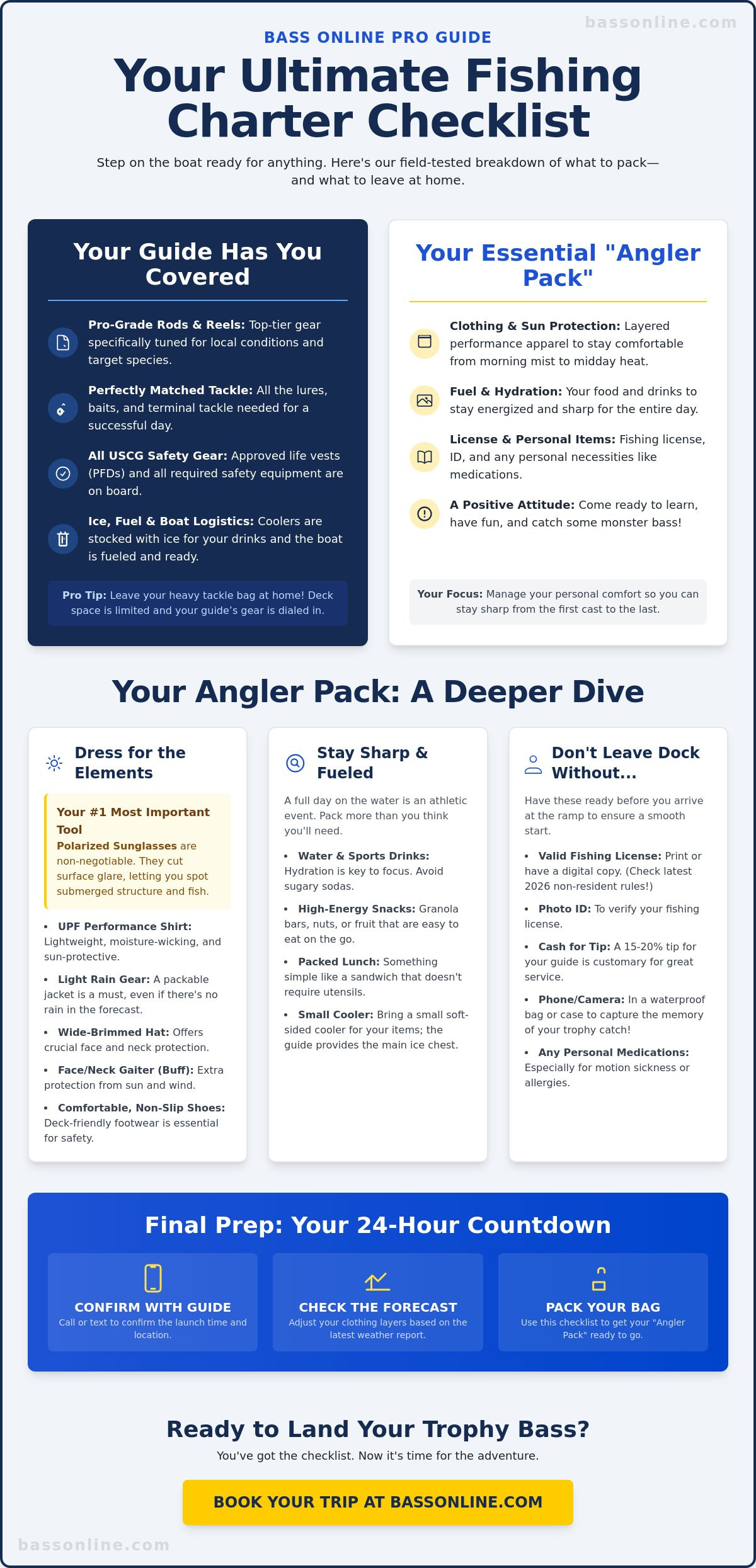
Success on the water isn’t just about the cast. It’s about the synergy between the angler’s focus and the captain’s preparation. When you step onto the deck of a professional bass boat, you’re stepping into a mobile office designed for one thing: finding and pinning trophy bass. Knowing exactly what to bring on a fishing charter trip starts with understanding the division of labor. Your captain provides the specialized tools and local intel, while your job is to manage your personal comfort and stamina so you can stay sharp when the big bite finally happens.
Most professional guides operate on a "full service" model. This means we provide the heavy hitters: high-end rods, smooth-drag reels, and the best bait available for the current conditions. We choose this gear based on years of watching how local bass react to different presentations. For example, if we’re punching mats on Lake Okeechobee, I’m handing you a stout rod and heavy braided line that can horse a seven-pounder out of the thickest hydrilla. If you want to dive deeper into the gear itself, check out this comprehensive guide to fishing tackle to see how different setups impact your catch.
To better understand this concept, watch this helpful video:
The Tackle Dilemma: Should You Bring Your Own Rods?
I get asked this all the time. While I love seeing an angler’s favorite "lucky" setup, I usually recommend using the guide’s pro gear. Our equipment is specifically tuned to the local environment and the species we’re targeting. High-performance bass boats have limited deck space, and extra rods can quickly become a tripping hazard or, worse, end up snapped in a rod locker. If you have a specific specialty setup you’re dying to use, like a custom swimbait rod, always call your captain 24 hours before departure to make sure it fits the day’s plan.
What’s Already on the Boat
A professional charter is a streamlined operation. You don’t need to worry about the logistical heavy lifting. When you’re planning what to bring on a fishing charter trip, remember that the boat is already stocked with the essentials for a safe and productive day. A fully-rigged bass boat is a high-speed, tournament-ready vessel equipped with advanced sonar, a powerful trolling motor, and specialized storage for elite-level tackle.
-
Safety First: USCG-approved life vests (PFDs) are always on board for every passenger.
-
The Essentials: Ice, fuel, and all necessary terminal tackle are included in your trip.
-
The Service: Your guide is there to handle the "dirty work," including re-tying lures after a break-off and safely handling fish for photos.
Takeaway: Trust your guide’s equipment for the heavy lifting, and focus your packing on personal items that keep you comfortable in the sun and rain.
The Essential ‘Angler Pack’: Clothing and Sun Protection
Freshwater bass fishing is a game of endurance. You’ll likely start your morning in a 60-degree mist and end it in 90-degree humidity. This "Morning Chill vs. Midday Heat" cycle means layering is your best friend. Ditch the heavy cotton hoodies. Cotton holds moisture like a sponge, making you cold in the morning and swampy by noon. Instead, reach for lightweight performance fabrics. According to verified 2026 apparel trends, moisture-wicking and UPF-rated textiles are the gold standard for staying comfortable while you’re working a topwater lure through the lily pads.
Polarized sunglasses are non-negotiable tools. Unlike saltwater trips, where you might just be looking at the horizon, bass fishing requires you to see into the water. You need to spot submerged logs, grass lines, and even the bass themselves during the spawn. Without polarized lenses, the glare off the water surface acts as a blindfold. If you’re new to the sport, checking out a beginner’s fishing checklist can help you organize these basics before you hit the ramp.
Sun Defense Beyond the Bottle
Sunscreen is a start, but it isn’t the whole solution. UPF 50+ sun shirts and "buff" neck gaiters provide a physical barrier that doesn’t wear off or get greasy. I always recommend a wide-brimmed hat over a standard baseball cap. Baseball caps leave your ears and the back of your neck exposed to the afternoon sun. When you do use sunscreen, stick to lotions. Aerosol sprays are a captain’s nightmare. They coat the deck in a fine mist that makes the boat as slippery as an ice rink, creating a serious safety hazard for everyone on board.
Footwear for Freshwater Success
Your feet take a beating during an eight-hour day of standing on a casting deck. Determining what to bring on a fishing charter trip includes choosing footwear that protects your body and the boat. While it’s tempting to wear flip-flops, they offer zero lateral support when the boat is moving or when you’re leaning into a heavy hook set. You need non-slip, non-marking sneakers that grip the deck even when it’s wet. Captains prefer white-soled or light-colored shoes because they don’t leave ugly black scuff marks on the vessel’s high-performance gelcoat. If you’re unsure if your gear is right for the location, contact our local experts for advice tailored to your specific lake.
Takeaway: Technical fabrics and polarized lenses aren’t just for looks; they’re essential equipment that keeps you in the game when the temperature climbs.
Fuel and Hydration: Staying Sharp for the Strike
Standing on a casting deck for eight hours is a physical marathon that many folks underestimate. Between the constant balancing against the boat’s motion and the repetitive motion of hundreds of casts, you’re going to experience the "Bass Fishing Burn." This isn’t a lazy day on the couch; you’re burning calories and losing fluids at a rapid clip, especially on wide-open waters like Lake Erie or the sun-drenched Everglades. If you want to keep your reaction time sharp for that split-second strike, you have to fuel your body correctly. When you’re planning what to bring on a fishing charter trip, your nutrition strategy is just as vital as your lure selection.
Space is at a premium on a high-performance bass boat. I always ask my clients to follow the "Small Footprint" rule for their lunch. Please don’t show up at the ramp with a massive 65-quart hard-sided cooler. It clutters the deck, creates a tripping hazard, and kills the boat’s mobility. Most captains have an on-board cooler with ice ready for your items; a soft-sided lunch bag is usually all you need to carry your day’s rations. For hydration, I recommend a strict 2-to-1 ratio: for every soda or Gatorade you drink, knock back two bottles of plain water. Dehydration is the fastest way to end a trip early with a pounding headache.
One rule is absolute: no glass bottles. A single dropped bottle can send shards into every corner of the carpeted deck, creating a nightmare for the captain and a safety risk for anyone wearing thin-soled shoes. Stick to cans or plastic containers for everything you bring on board.
Smart Snacking for the Boat
Efficiency is the name of the game when the bite is on. I suggest packing high-energy, mess-free foods like protein bars, beef jerky, or trail mix. Avoid greasy foods like fried chicken or oily potato chips. That grease transfers to your hands and then to your rod handle, making it nearly impossible to maintain a solid grip when a five-pounder starts peeling drag. Use a small dry bag to keep your sandwiches and snacks fresh and away from any moisture in the storage lockers.
Alcohol and Charter Etiquette
While a cold beer can be part of a relaxing day, it’s always subject to "Captain’s Discretion." Most professional freshwater guides are fine with a few cans of beer or wine, but hard liquor is generally a no-go. Safety is my primary concern, and the combination of high heat, boat motion, and alcohol is a recipe for severe dehydration and poor decision-making. If you choose to bring a few drinks, save the celebration for the end of the day and keep your focus on the fish while the sun is up.
Takeaway: Pack light, stay hydrated with a 2-to-1 water ratio, and choose high-protein snacks to keep your energy levels high until the final cast.
Documentation and Logistics: Don’t Leave the Dock Without These
Nothing kills the excitement of a day on the water faster than a run-in with a wildlife officer when you’re missing your paperwork. While we handle the high-performance boat, the fuel, and the elite tackle discussed earlier, the legal right to fish rests on your shoulders. Part of knowing what to bring on a fishing charter trip is ensuring your documentation is airtight before you ever step onto the ramp. Whether you’re chasing peacock bass in Miami or trophy largemouth on Lake Toho, your license is your "ticket to play."
A common misconception is that your charter fee automatically covers your individual fishing license. On most freshwater trips, this isn’t the case. You need to have your credentials ready to show FWC or local wildlife officers. While digital copies on your smartphone are generally accepted, I always recommend saving a screenshot in case you lose cell service in the middle of the marsh. If you’re unsure about the specifics, check out our Florida Fishing License: The Complete 2026 Angler’s Guide for a deep dive into the rules.
Securing Your Fishing License
For Florida residents, an annual freshwater license costs $17.00 as of May 2026. If you’re visiting from out of state, the rules have recently changed. While you can still buy an annual non-resident license for $47.00 online, Florida no longer allows non-residents to purchase short-term 3-day or 7-day licenses through the website or app. You’ll need to visit a licensed agent, such as a county tax collector’s office or a major retailer like Walmart, to buy those in person. If you have questions about where to find a local agent near your launch site, reach out to our team before your trip date.
Tipping Your Guide: The Pro Standard
Once the paperwork is set and the cooler is packed, it’s time to talk about the "after-action" logistics. Industry standards for rewarding a hardworking guide typically range from 15% to 25% of the trip cost. Remember, your tip should reflect the service, effort, and expertise provided throughout the day, not just the total number of fish in the boat. Cash is king at the boat ramp; it’s the most direct way to show your appreciation as we’re trailering the boat. Beyond the tip, leaving a detailed review or tagging your guide in your social media photos helps us maintain our status as local experts.
Finally, protect your electronics. While you’ll want your phone ready for that trophy shot, the environment is wet and unforgiving. Bring a waterproof floating case or a simple heavy-duty freezer bag to keep your device safe between bites. This ensures your digital license and your photos stay dry even if we hit a sudden afternoon rain squall.
Takeaway: Buy your license 24 hours in advance, carry cash for the tip, and keep your phone in a waterproof case to ensure a stress-free day of documentation and memories.
Final Prep: The 24-Hour Countdown to Your Adventure
The sun is about to go down on the day before your launch. You’ve sorted your technical fabrics, packed your high-protein snacks, and secured your license. Now, it’s all about the final logistics. A professional bass charter is a high-speed operation, and the final 24 hours are when we lock in the winning strategy. If you’ve followed this guide, you already know what to bring on a fishing charter trip, but these final steps ensure you actually arrive at the right place at the right time. Being prepared for the departure is just as important as being prepared for the strike.
First, make that confirmation call. I can’t stress this enough. Water levels on lakes like Okeechobee or the St. Johns River can shift overnight due to wind or local rain. I might decide to move our meeting location to a different ramp to give us a tactical advantage and put us closer to the fish. During this call, we’ll also check the 24-hour weather forecast. If a cold front is pushing through, you’ll want to pack that extra windbreaker or rain suit we discussed in the clothing section. This is also when we define the mission: are we hunting for one giant trophy, or are we looking for a high-volume day of catching schoolies?
Communication is Key
Be upfront about your experience level and any physical needs. If you’re a beginner, I’ll spend more time on casting mechanics and lure presentation. If you’re a pro, we’ll dive straight into the technical details of the bite. If you have a bad knee, heart condition, or any other health concerns, let me know so I can adjust how I maneuver the boat in rough water. This open line of communication is a major reason to hire a professional fishing guide; we are here to be your host and coach, ensuring you stay safe while you focus on the fish.
Ready for the Big One?
The night before, do one final sweep of your gear bag. Check for your polarized glasses, your sun buff, and your waterproof phone case. Double-check that your non-marking shoes are by the door and your lunch is prepped. There is nothing quite like the adrenaline of the first cast on a premier US bass lake at dawn. When you’ve done the prep work, you can step onto the deck with total confidence. At Bass Online, our local experts are the gold standard because we live and breathe these seasonal patterns every single day. We handle the boat and the bait; you bring the focus. Book your next trophy bass adventure with Bass Online today!
Takeaway: Confirm your ramp location 24 hours out, communicate your goals clearly to your guide, and do a final gear sweep to ensure a seamless morning departure.
Lock in Your Legend: Time to Hit the Water
You’ve got the checklist. You know how to layer for the morning mist and why polarized lenses are your secret weapon for sight-fishing. Most importantly, you understand the split between the captain’s elite gear and your personal comfort pack. Mastering what to bring on a fishing charter trip is the final hurdle before you’re standing on the deck, feeling that rod tip pulse with the weight of a trophy largemouth. When you prepare like a pro, you can focus entirely on the strike instead of worrying about a missing license or a sunburn.
At Bass Online, we bring over 25 years of professional guiding experience to every outing. We provide access to the most iconic bass lakes in the US, spanning from the sprawling grass mats of Florida to the deep ledges of Alabama. Our thousands of top-rated reviews from satisfied anglers prove that we don’t just find fish; we create expeditions that you’ll remember for a lifetime. Don’t leave your success to chance when the trophy of a lifetime is just one cast away.
Ready to hit the water? Book your professional bass fishing charter here!
The water is calling, and the bite is on. Let’s get you out there and put a monster in the boat.
Frequently Asked Questions
Do I need to bring my own life jacket for a fishing charter?
No, you don’t need to bring your own life jacket. Every professional charter boat is required by the U.S. Coast Guard to carry enough approved personal flotation devices (PFDs) for every passenger on board. These are typically stored in easily accessible lockers. If you have a specific, high-performance fishing vest you prefer to wear while casting, feel free to bring it, but the captain always has you covered for safety.
Is it okay to bring a cooler on the boat?
You should avoid bringing large, hard-sided coolers on the boat. Most high-performance bass boats have built-in, insulated coolers with ice ready for your drinks and lunch. A large cooler on the deck creates a tripping hazard and limits our ability to move quickly when the bite shifts. A small, soft-sided lunch bag is a great addition to your list of what to bring on a fishing charter trip because it can be tucked away easily.
What happens if it rains on the day of my fishing trip?
We typically fish through the rain unless lightning or high winds make it unsafe to be on the water. Bass often become more active during light rain as it breaks up the surface tension. If the forecast looks wet, make sure your gear bag includes a quality rain suit or a lightweight poncho. Your captain will monitor the radar constantly to ensure everyone stays safe from severe weather.
How much should I tip my fishing guide at the end of the day?
Tipping your guide 15% to 25% of the trip cost is the standard practice in the industry. This gratuity is a direct reflection of the guide’s effort, local expertise, and the service provided throughout the day. While catching a trophy fish is the goal, the tip rewards the hard work that goes into preparation and coaching. Cash is the preferred method at the boat ramp once we wrap up the day.
Can I bring my own fishing rod and favorite lures?
You are welcome to bring your own gear, but I recommend checking with your captain first. We provide top-tier rods and reels tuned specifically for local bass behavior and structure. If you have a favorite lucky rod, bring it along, but remember that deck space is limited. Bringing too many setups can clutter the boat and lead to accidental breakage during high-speed runs across the lake.
Should I take motion sickness pills for a freshwater lake trip?
Motion sickness is rarely an issue on freshwater lakes compared to offshore trips. The water is generally much calmer, and you are almost always within sight of land, which helps your equilibrium. However, if you are particularly sensitive to motion, taking a pill the night before and the morning of the trip is a smart precaution. Wind can still create a chop on large bodies of water like Lake Erie.
Are children allowed on bass fishing charters?
Children are absolutely allowed and encouraged on our bass fishing charters. Introducing the next generation to the outdoors is a huge part of what we do. We can adjust our coaching style and target areas with higher numbers of fish to keep younger anglers engaged. Just let your guide know the ages of the kids beforehand so we can ensure we have the correctly sized safety gear ready.
What is the best type of clothing for a hot day on the water?
The best clothing for a hot day is UPF-rated, moisture-wicking performance fabric. These shirts are designed to breathe and pull sweat away from your skin while providing a physical barrier against UV rays. When deciding what to bring on a fishing charter trip, prioritize light-colored long sleeves and a wide-brimmed hat. This setup keeps you significantly cooler than a standard cotton t-shirt by allowing airflow and preventing sun damage.

Article by
Mr Bass
Todd Kersey, widely known as Mr. Bass by Field & Stream, is a professional angler, accomplished author, and dedicated philanthropist with a lifelong passion for bass fishing. Armed with a degree in Outdoor travel, Mr. Bass has expertly combined his knowledge with his practical fishing experience to become one of the most respected names in the bass fishing, his deep understanding of bass habitats, and fish behavior has earned him numerous accolades as a asset of the sport. Serving 8 years as FWC Stakeholder Chairperson. Leading and passing cutting-edge legislation, such as the Black Bass Management plan, and successfully building, passing, and financing the Trophy Catch program. As CEO, he is committed to giving back to the community through his philanthropic efforts. He supports a variety of causes, especially those centered around physical disabilities. Through his advocacy, his mentorship programs inspire anglers to engage in fishing stewardship, helping to raise more than $ 18 million in donations. Mr. Bass continues to inspire anglers and outdoor enthusiasts alike with his commitment to the sport and the world around him.