
The biggest mistake most anglers make on a professional charter happens before they even step onto the deck. You might think booking a world-class guide means you can just show up and reel in a hawg, but the real success comes when you understand exactly what to expect on a guided fishing trip. Whether we are hunting lunkers on Lake Okeechobee or chasing peacocks in the Miami heat, knowing the blueprint separates the casual observers from the true trophy hunters.
- Sun-Rated Hoodies: A lightweight, UPF 50+ hoodie from a specialized brand like Phatt Guy Fishing keeps you cool and prevents a nasty burn that can ruin a multi-day trip.
I know the stress of spending your hard-earned cash and worrying about a slow day or bringing the wrong gear. It is natural to feel some anxiety about boat etiquette or how the tipping process works when the lines are pulled in. This article is your field-tested guide to mastering the logistics and tactics of a professional trip so you can land your next personal best. We will break down 2026 license requirements, the industry standard 15 to 20 percent gratuity, and the specific ways you can help your guide put more fish in the boat. Get ready to step on board with total confidence.
Key Takeaways
- Prepare your gear and mindset at least 48 hours in advance to ensure you arrive at the ramp ready to focus entirely on the hunt.
- Master the morning “dock talk” and loading routine to understand exactly what to expect on a guided fishing trip before the first cast.
- Discover how professional guides utilize high-tech electronics to pinpoint lunkers hiding in submerged vegetation and deep-water ledges.
- Follow essential boat etiquette by respecting the 15-20% tipping standard and leaving superstitions like bananas at the dock.
- Leverage local expertise on legendary waters like Lake Okeechobee to bypass years of trial and error and land your trophy bass today.
Table of Contents
Pre-Trip Preparation: Gear, Licenses, and the Pro Mindset
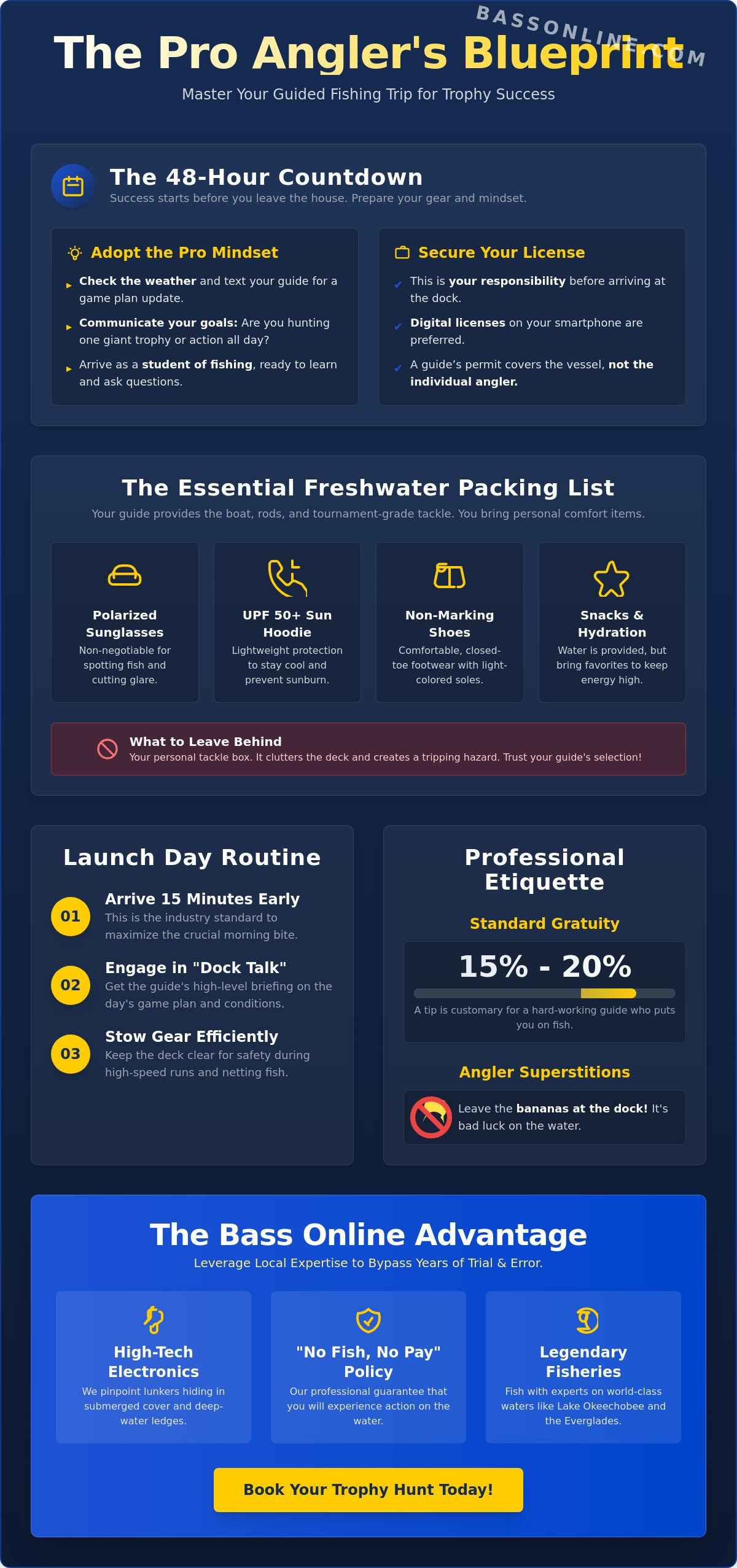
The real work starts 48 hours before your boots hit the boat ramp. If you want to know what to expect on a guided fishing trip, start with your own mental and physical preparation. I’ve seen too many anglers show up exhausted or unprepared, which kills the momentum before the first cast. Use that two-day window to check the local weather and reach out to your guide. Are the fish moving deep because of a sudden cold front? Is the moon phase affecting the morning bite? A quick text can help us dial in the game plan and ensure we’re both on the same page.
Adopting the "Pro Mindset" is your biggest asset on the water. Don’t just show up to be served like you’re at a restaurant; show up as a student of recreational fishing. The best clients ask why we’re targeting a specific ledge or why we’ve switched from a topwater lure to a weighted worm. Also, tell me your goals early. If you’re hunting for a double-digit trophy, we’ll fish differently than if you want to keep the rods bent all day with high-volume schoolies. Managing these expectations about weather and fish activity helps prevent frustration when the bite gets tough under bluebird skies.
The Essential Freshwater Packing List
Keep your gear lean and mean. Your guide provides the high-end rods, reels, and the "heat," which are the secret baits that are currently producing lunkers. Bringing a massive tackle box just clutters the deck and creates a tripping hazard in the cockpit. Focus on your personal comfort instead, so you can stay in the hunt for the full 8-hour pull.
-
Polarized Sunglasses: These are non-negotiable. They allow you to see through the surface glare to spot submerged vegetation and tracking bass.
-
Sun-Rated Hoodies: A lightweight, UPF 50+ hoodie keeps you cool and prevents a nasty burn that can ruin a multi-day trip.
-
Non-Marking Footwear: Wear comfortable, closed-toe shoes with light-colored soles to keep the boat deck clean and your feet protected.
-
Snacks and Hydration: We always have plenty of water on board, but bring your favorite high-energy snacks to keep your focus sharp when the big bite happens.
Understanding Licensing and Legal Requirements
You need your paperwork squared away before you arrive at the dock. Whether we’re fishing the legendary Big O or the winding trails of the Everglades, securing your Florida fishing license is your primary responsibility. In 2026, digital licenses stored on your smartphone are perfectly acceptable and preferred by wildlife officers. Just make sure your device is fully charged before we launch.
By law, a guide’s commercial permit covers the vessel and the captain, but not the individual angler, in most freshwater jurisdictions. Having your permit ready saves valuable fishing time at the ramp and ensures we stay legal if an FWC officer pulls alongside for a routine check. It’s a small detail that defines what to expect on a guided fishing trip with a true professional.
From Launch to First Cast: The Morning Routine
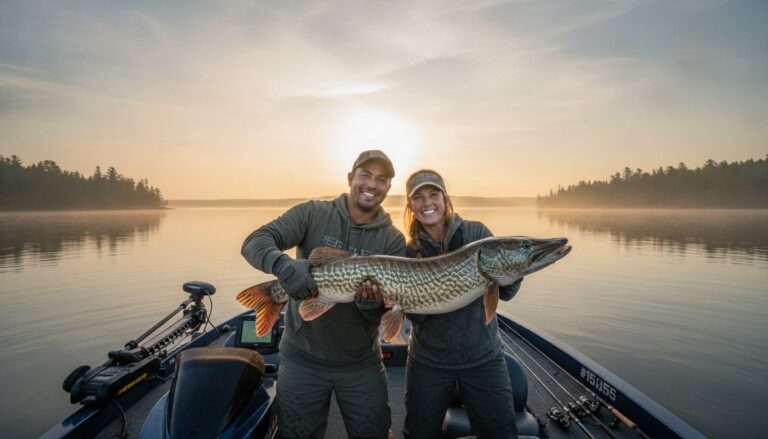
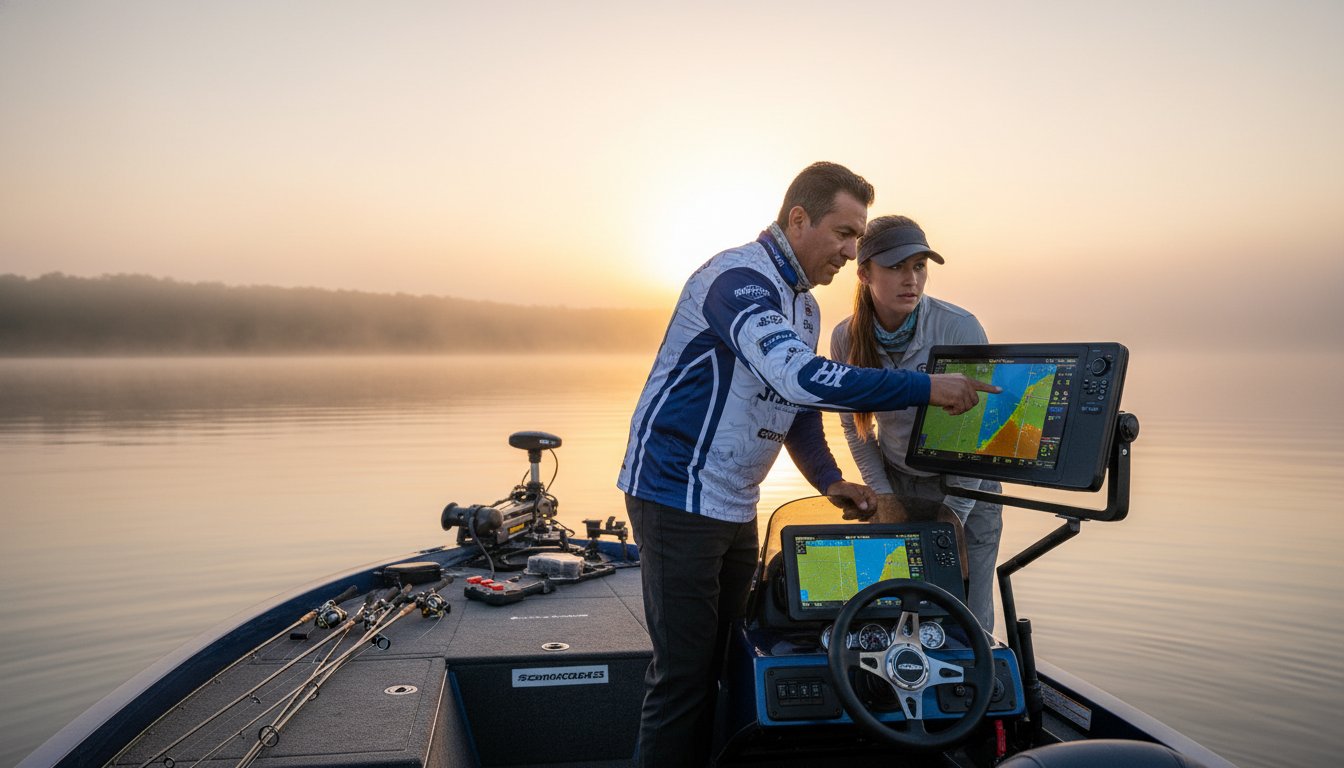
The sun is barely peeking over the horizon, and the mist is still thick on the water. This is where the hunt begins. When you are figuring out what to expect on a guided fishing trip, the morning routine at the ramp is the most critical phase. Arriving 15 minutes early is not just a courtesy; it is the industry standard that ensures we make the most of every second of the morning bite. This early window allows for the "dock talk," a high-level briefing where I break down the day’s game plan based on the latest water temps and barometric pressure readings.
Loading the boat efficiently keeps us on schedule. Most professional bass boats are precision machines with limited floor space. I will show you exactly where to stow your rain gear and snacks in designated "dry" hatches. Keeping the deck clear of loose bags and stray tackle prevents accidents when we are running at high speeds or moving quickly to net a trophy. The first 30 minutes of the run dictate our success. It is the time when I am watching the birds, the bait movement, and the sonar to see if the fish are holding where they were yesterday. If you have questions about the logistics of your specific location, feel free to reach out to our team before your trip.
I stand behind our results with a "No Fish, No Pay" policy. This is a professional guarantee that you will experience action on the water. It reflects our commitment to your success and our confidence in the legendary fisheries we call home. We are not just boat drivers; we are results-driven experts dedicated to your personal best.
The Captain’s Briefing and Vessel Safety
Safety is the foundation of every expedition. Before the big motor cranks, we cover the US Coast Guard requirements. I will point out the location of life jackets, fire extinguishers, and the emergency kill switch. You also need to understand the boat-specific rules, such as where to stand during the run and how to move safely on the casting decks. I will also give you a quick primer on the electronics, showing you how to read the Sonar and LiveScope so you can see the lunkers before you even make a cast. For more on the legal side of things, you can check out this Fishing License Information for an idea of how state agencies manage these resources.
Skill Assessment and Tackle Calibration
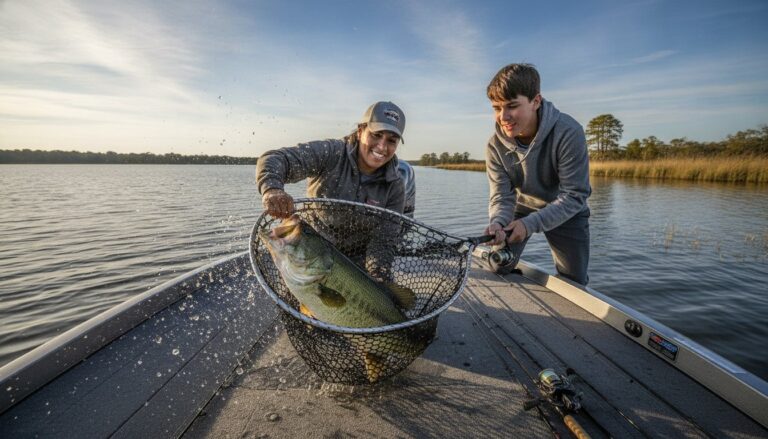
Once we reach the first spot, the "casting test" begins. I watched your first few presentations not to judge, but to adjust our tactics. If the wind is kicking up, I might suggest a heavier tungsten weight or a different rod combo to help your accuracy. We use high-end, professional-grade rods and reels that are calibrated for specific lures. Learning the difference between a "slack line" hook set for a Largemouth and the aggressive "strip set" or fast reel-down needed for a Peacock Bass is the key to landing the one that usually gets away.
Strategy on the Water: How Your Guide Finds the Hawgs
Finding fish isn’t a matter of luck; it is a calculated hunt. When you step on board, you are tapping into decades of local knowledge combined with the latest technological advancements in bass fishing. In 2026, we don’t just cast blindly into the reeds. We use high-definition side imaging and forward-facing sonar to scan submerged vegetation, ledges, and drop-offs in real time. This tech allows me to see how the fish are positioned and how they react to your lure. It is a game-changer that turns "searching" into "catching" within minutes of reaching a new spot.
Reading structure is where a pro guide truly earns their salt. While most weekend warriors spend their day "beating the bank," I am often looking for offshore transition zones. This might be a subtle shell bed on a flat or a specific point where the current breaks around a ledge. Understanding what to expect on a guided fishing trip means realizing that we move with purpose. If we haven’t seen an active bite within 20 minutes, we pull the trolling motor and move. This "20-minute rule" ensures we stay on active schools of fish rather than waiting for a lethargic bite to turn on.
Once we locate a school of lunkers, the energy on the boat shifts instantly. I will position the vessel to give you the best casting angle, often using the wind to our advantage. My job is to keep you in the "strike zone" as long as possible. Your job is to stay focused and ready for the thump. This transition from scanning to catching is the most electric part of the day, and it is where all that preparation finally pays off.
Adapting to Weather and Seasonal Patterns
The weather is our greatest ally if you know how to read it. A falling barometric pressure often triggers a feeding frenzy, while a shifting wind direction can push baitfish right into our target zone. I’ve found that "bad" weather for humans, like a drizzly, overcast morning, is often "great" weather for trophy bass. These conditions break up the surface light, making hawgs feel more secure and aggressive. We adapt our spots hourly based on these shifting patterns to keep the livewell heavy.
Communication: The Key to a Heavy Livewell
Clear communication is the secret sauce of a successful trip. I use the "Clock System" to call out targets quickly. If I shout, "Cast at 11 o’clock, 30 feet out," you should look toward the front left of the boat. This precision helps you hit the exact piece of structure where I can see a fish holding on the sonar. Don’t be afraid to ask why we are using a specific lure or why we moved. Understanding the "why" behind the tactic is how you become a better angler. Even during a lull, trust the process; the next cast could be your personal best.
Professional Etiquette: Tipping, Photos, and Conservation
Leave the bananas in the truck. Seriously. While it sounds like a joke, the "no bananas on the boat" rule is a deep-seated maritime superstition that every pro guide respects. Part of knowing what to expect on a guided fishing trip is understanding these unwritten laws of the water. Beyond the fruit, professional etiquette is about building a partnership with your captain. When a lunker shakes the hook at the side of the boat, keep your cool. We are just as frustrated as you are when a trophy gets away, but staying positive keeps the momentum high for the next cast. Mutual respect is the fuel that drives a successful eight-hour pull.
Respecting the "Secret Spots" is another non-negotiable part of the pro angler’s blueprint. We spend hundreds of hours and thousands of dollars in fuel every year to locate specific honey holes. Please do not use your phone to GPS-tag our locations or post photos with identifiable landmarks on public forums. We want you to share your success, but protecting these fisheries ensures they remain world-class for your next visit. If you have questions about how to share your catch safely, just ask your guide during the trip.
The Industry Standard for Tipping
Tipping is a standard part of the maritime industry, similar to how you would treat a high-end service professional. A gratuity of 15 to 25 percent of the total trip cost is the expected range for a job well done. Remember that your tip should be based on the guide’s effort, preparation, and professionalism rather than just the final fish count. If your guide worked hard to find active schools under tough conditions or spent extra time teaching you a new technique, show your appreciation. For large group charters or multi-guide trips, it is best to tip each guide individually to ensure the person who worked with you directly receives the credit.
Catch-and-Release and Trophy Photography
We are dedicated to conservation so that the next generation can experience the thrill of a 10-pound hawg. Proper fish handling is the key to a successful release. Always wet your hands before touching a fish to protect its protective slime coat and avoid the "gill hold" at all costs. We follow a strict 30-second rule: the fish should never be out of the water longer than you can hold your breath. This ensures the fish has the best chance of survival after the release.
Handling Peacock Bass Florida requires a different approach than Largemouth. Peacocks are tropical fighters and can be more delicate in high-heat conditions, so we often keep them in the water while setting up the camera. We will help you get that perfect trophy shot quickly so we can get that lunker back into the strike zone where it belongs.
The Bass Online Advantage: Why a Pro Guide Beats Going Solo
Going solo on a new body of water is often a recipe for a long boat ride and an empty livewell. When you understand what to expect on a guided fishing trip, you realize you aren’t just paying for a boat ride; you’re paying for a shortcut to success. Navigating a massive fishery like Lake Okeechobee without local knowledge can take years to master. A pro guide collapses that learning curve into a single morning. We provide the platform, the expertise, and the high-performance equipment to ensure your time is spent catching, not searching.
The "time on the water" factor is our greatest asset. Most of our captains spend over 250 days a year tracking fish movements across shifting seasons. This means we know exactly where the hawgs moved after last night’s cold front. You also get to fish with the best tools in the industry. We run $80,000 bass boats equipped with the latest shallow-water anchors and $600 rod and reel combos that are perfectly balanced for the technique of the day. Beyond the gear, there is the safety factor. Navigating the complex, winding trails of the Everglades or the vast open water of the Great Lakes requires a veteran hand at the helm.
Local Secrets and Exclusive Structure
Public fishing apps and maps only tell half the story. Our guides have access to "private" knowledge developed through thousands of hours on the surface. We track specific brush piles, rock veins, and submerged vegetation that don’t appear on any standard GPS chip. When you calculate the ROI of a guide, compare it to the cost of boat ownership, fuel, maintenance, and the years of trial and error required to find these honey holes. A single trip often yields more "aha" moments than a full season of solo fishing.
Booking Your Next Adventure
The first step to a successful outing is doing your homework. Look at our fishing charter reviews to see real-world results from anglers just like you. Choosing the right duration is also key. A 4-hour trip is great for a quick fix, but our 8-hour "marathon" sessions allow us to run to distant spots where the real giants live. Whether you want to master a new technique or chase a personal best, we have the expertise to make it happen.
Ready to land your personal best? Book a pro guide with Bass Online today!
Step Onto the Deck with Confidence
Mastering the details of what to expect on a guided fishing trip transforms a simple day on the water into a legendary expedition. You now have the professional blueprint for everything from the 48-hour preparation window to the technical strategy we use to hunt hawgs. We have refined these tactics over 25 years of professional experience to ensure every client leaves the dock as a more skilled and confident angler. Trusting the process and respecting the fishery are the final pieces of the puzzle.
As the largest freshwater guide service in the USA, we take pride in our top-rated reputation at premier locations like Lake Okeechobee and Lake Toho. You don’t have to spend years in trial and error when you have a veteran expert at the helm. It is time to stop dreaming about that personal best lunker and start the countdown to your first cast. We are ready to put the "heat" in your hands and lead you to the strike zone.
Book Your World-Class Bass Fishing Trip Now and experience the raw excitement of a professional hunt. The water is calling; let’s go catch some giants!
Frequently Asked Questions
Is gear provided on a guided fishing trip?
Yes, we provide all the high-end gear you need, including professional rods, reels, and the exact lures the fish are hitting right now. You don’t need to worry about bringing your own tackle unless you have a specific favorite. This is a core part of what to expect on a guided fishing trip with a premier service. We ensure every piece of equipment is maintained to tournament standards so it won’t fail when a lunker strikes.
How much should I tip my fishing guide in 2026?
The industry standard for tipping a fishing guide in 2026 is 15 to 20 percent of the total trip price. If the service was exceptional or you landed a personal best, a tip of 25 percent is a great way to show appreciation. Gratuity should reflect the guide’s hard work, local knowledge, and preparation rather than just the number of fish in the boat.
What happens if it rains during my scheduled trip?
We fish in the rain unless there is lightning or wind speeds that make navigation unsafe. Bass often become more aggressive during overcast or drizzly conditions because the surface light is broken up. You should bring a high-quality rain suit to stay comfortable. If the weather turns dangerous, we will work with you to reschedule or provide a refund based on our safety protocols.
Do I need to know how to fish before hiring a guide?
No, you do not need any prior experience to have a successful day on the water. We specialize in teaching beginners the fundamentals of casting, lure presentation, and how to set the hook. Our guides are patient experts who enjoy helping new anglers land their first trophy. It is a perfect way to learn the sport without the steep learning curve of going solo.
Can I bring my own rod and reel on a charter?
You are welcome to bring your own rod and reel, but we recommend limiting it to one or two favorite setups. Most professional bass boats have specific storage requirements to keep the deck clear. Since we provide $600 rod and reel combos perfectly balanced for the day’s conditions, you might find our gear performs better for the specific tactics we are using.
Is food and drink included in the trip price?
We provide plenty of cold bottled water on every trip, but you are responsible for your own food and specialty drinks. Most anglers bring a small lunch bag with sandwiches and high-energy snacks like protein bars. Staying hydrated and fed is essential for maintaining your focus during a full 8-hour pull in the sun. We always have space in our coolers to keep your items cold.
What is the ‘No Fish, No Pay’ policy and how does it work?
Our "No Fish, No Pay" policy is a professional guarantee that you will experience action during your trip. If the boat does not land a single fish, you are not charged for the guide’s time. This commitment reflects our confidence in our 25 years of experience and the world-class fisheries we manage. It ensures that you get the results you are paying for when booking a pro.
Are children allowed on guided bass fishing trips?
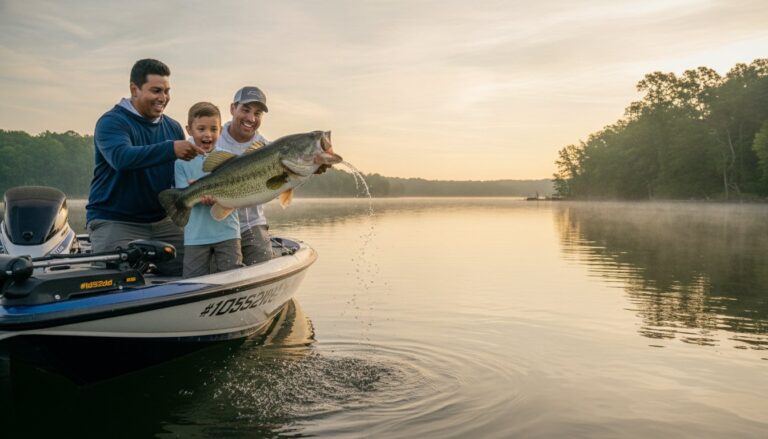
Yes, children are absolutely allowed and encouraged on our guided bass fishing trips. We love introducing the next generation to the outdoors and seeing the excitement when they land their first hawg. We provide youth-sized life jackets and tackle that is easier for smaller hands to manage. It is a fantastic way to create lasting family memories on the water while learning what to expect on a guided fishing trip.

Article by
Mr Bass
Todd Kersey, widely known as Mr. Bass by Field & Stream, is a professional angler, accomplished author, and dedicated philanthropist with a lifelong passion for bass fishing. Armed with a degree in Outdoor travel, Mr. Bass has expertly combined his knowledge with his practical fishing experience to become one of the most respected names in the bass fishing, his deep understanding of bass habitats, and fish behavior has earned him numerous accolades as a asset of the sport. Serving 8 years as FWC Stakeholder Chairperson. Leading and passing cutting-edge legislation, such as the Black Bass Management plan, and successfully building, passing, and financing the Trophy Catch program. As CEO, he is committed to giving back to the community through his philanthropic efforts. He supports a variety of causes, especially those centered around physical disabilities. Through his advocacy, his mentorship programs inspire anglers to engage in fishing stewardship, helping to raise more than $ 18 million in donations. Mr. Bass continues to inspire anglers and outdoor enthusiasts alike with his commitment to the sport and the world around him.